Increase Farm Yield & Reduce Costs: Season-Wise Tractor Usage Guide for Kharif, Rabi & Zaid (2026)
 Add CMV360 on Google
Complete guide on tractor usage across Kharif, Rabi, and Zaid seasons in India. Learn HP needs, implements, harvesting methods, challenges, and best tractor models for higher farm productivity.

By Robin Kumar Attri

India’s agriculture runs on timing, precision, and efficiency, and tractors sit at the center of this entire ecosystem. From preparing land before sowing to transporting harvested crops, tractors are not just machines; they are the backbone of modern farming.
With three major crop seasons-Kharif (monsoon), Rabi (winter), and Zaid (summer)-farmers need different strategies, implements, and tractor power at different times of the year. Soil conditions change, moisture levels vary, and crop requirements differ significantly. This means choosing the right tractor, the right horsepower (HP), and the right implements becomes critical for productivity and profitability.
Today, leading brands like Mahindra, Swaraj, Sonalika, New Holland, and John Deere offer tractors designed specifically for these seasonal needs. Some models perform better in wet paddy fields, while others excel in dry wheat farming or light summer cultivation.
But the real question is: Which tractor, power range, and implements should you choose for each season to get maximum yield and minimum cost?
Let’s explore this in detail.
Understanding India’s Three Crop Seasons
India’s farming cycle is divided into three major seasons:
Season | Duration | Key Crops | Nature |
Kharif | June - October | Rice, Maize, Cotton, Soybean | Wet, monsoon-driven |
Rabi | October - March | Wheat, Mustard, Gram | Dry, winter-based |
Zaid | March - June | Watermelon, Vegetables, Maize | Hot, irrigated |
Each season demands different tractor usage, timing, and field operations.
Kharif Season (June - October)
Kharif crops depend heavily on rainfall. Fields are often wet, sticky, and difficult to manage, especially for crops like rice.
Tractor Usage Timeline
Pre-Sowing (May-June): Wet ploughing and land preparation
Sowing/Transplanting (June-July): Seed drills and puddling
Mid-Season (Aug-Sept): Weeding and spraying
Harvest (Sept-Oct): Combine harvesting and transport
Best Implements for Kharif (Especially Rice Puddling)
Puddling is one of the most important operations in rice farming.
Key Implements
Puddlers with cage wheels
Disc harrows (notched/drum type)
Rotavators
Why Puddling is Important
Creates a soft, muddy bed for transplanting
Improves water retention
Controls weeds naturally
Enhances root growth
Result: Reduces labour by 30-50% and improves yield significantly.
Tractor HP Requirement in Kharif
Operation | Ideal HP |
Puddling | 40-55 HP |
Mid-season weeding | 35-50 HP |
Harvesting support | 45+ HP |
Always keep a 20% extra power buffer in Kharif due to heavy soil resistance.
Common Challenges in Kharif Tractor Usage
Waterlogging and slippage
Tractor getting stuck in the mud
Field access delays
Soil erosion
Solutions
Use 4WD tractors
Install cage wheels
Maintain proper tyre pressure
Kharif Harvesting Techniques
Harvest crops at 20-25% moisture
Use combine harvesters for efficiency
Process
Cutting → Threshing → Winnowing (all in one pass)
Performance
Capacity: 1-2 hectares/hour
Loss: Only 2-5%
Tractors play a key role in:
Pulling harvesters
Transporting grains
Powering threshers
Rabi Season (October - March)
Rabi crops grow in dry and cool conditions. Irrigation is essential.
Tractor Usage Timeline
Post-Kharif Prep (Oct-Nov): Deep ploughing
Sowing (Nov-Dec): Seed drills
Mid-season (Dec-Feb): Spraying and cultivation
Harvest (March-April): Threshing and transport
Best Implements for Rabi
Chisel ploughs (for breaking hardpan)
Rotavators
Seed-cum-fertilizer drills
These help in creating a fine soil structure (tilth) for crops like wheat.
Tractor HP Requirement in Rabi
Operation | Ideal HP |
Land preparation | 35-50 HP |
Mid-season spraying | 30-45 HP |
Harvest operations | 40+ HP |
Common Challenges in Rabi
Soil compaction after the monsoon
Dust is affecting engine efficiency
Irrigation dependency
Solution
Deep ploughing
Regular filter cleaning
Proper irrigation planning
Rabi Harvesting Techniques
Harvest when grains are hard, and stalks turn yellow
Process
Reaper or manual cutting
Threshing using PTO-powered machines
Tractors help in:
Running threshers
Transporting produce
Loading and stacking
Also Read: Top 10 Types of Farming Practiced in India 2026: Explained with Crops, Benefits and Schemes
Zaid Season (March - June)
Zaid's crops grow in extreme heat and rely fully on irrigation.
Tractor Usage Timeline
Land Prep (March): Quick tillage
Sowing (March-April): Precision planting
Growth (April-May): Light weeding
Harvest (May-June): Transport and light harvesting
Best Implements for Zaid
Light cultivators
Bed makers
Rotavators
Tractor HP Requirement in Zaid
Operation | Ideal HP |
Land prep | 25-40 HP |
Weeding | 25-35 HP |
Harvest transport | 30-40 HP |
Common Challenges in Zaid
Extreme heat (35-45°C)
Equipment wear and tear
Irrigation dependency
Zaid Harvesting Techniques
Mostly manual for delicate crops like fruits
Tractors used for transport and light threshing
Tractors help:
Carry produce quickly
Prevent spoilage
Power irrigation systems
Top Tractor Brands and Models in India (2026)
Brand/Model | HP | Key Strength | Price Range (₹ Lakh) |
50 | Versatile, all-season | 7-8 | |
55 | Strong in mud | 8-9 | |
New Holland 4710 Paddy | 47 | Paddy specialist | 7-8 |
50 | Fuel efficiency | 8-9 | |
~25 | Low operating cost | 10-12 |
Diesel vs Electric Tractors: Which is Better?
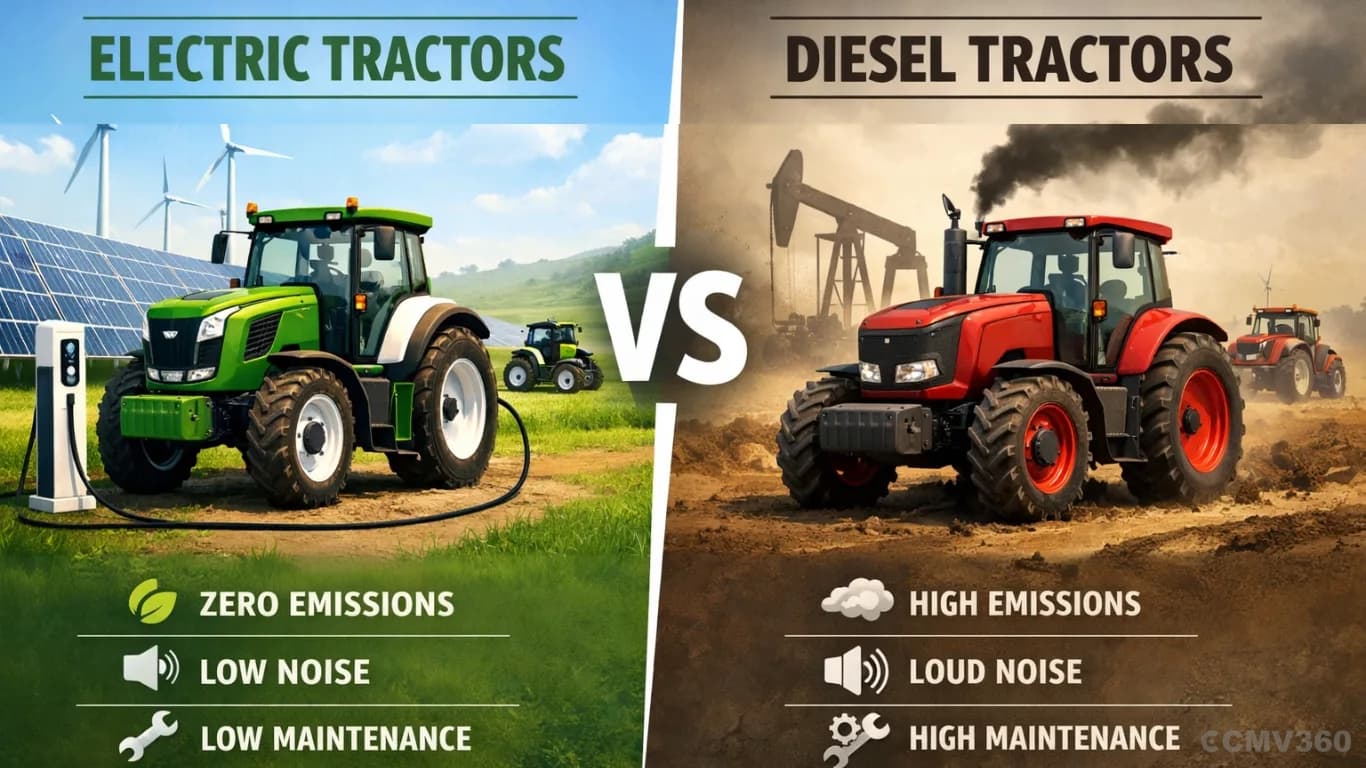
Diesel Tractors
High torque
Suitable for heavy work (Kharif)
Fuel cost: ₹1.2-1.5 lakh/year
40-45% cheaper to run
Low maintenance
Best for light work (Zaid/Rabi)
Best Strategy:
Diesel for heavy-duty work
Electric for light and orchard farming
Also Read: Diesel Tractor vs Electric Tractor in India (2026)
Pre-Sowing Field Preparation (All Seasons)
Kharif
2-3 wet ploughings
Puddling and levelling
Rabi
Deep ploughing
Rotavation
Zaid
Quick tillage
Proper leveling
Improves yield by 15-25%
Manual vs Mechanical Harvesting
Season | Manual | Mechanical |
Kharif | Cheap but slow | Fast, low loss |
Rabi | Flexible | Efficient |
Zaid | Best for fruits | Limited use |
Mechanical harvesting reduces losses to 2-5%
Common Mistakes Farmers Make
Harvesting too early or late
Overloading tractors
Ignoring maintenance
Poor tyre management
Tractor Maintenance Tips Before Rabi Harvest
Clean mud and dust
Change engine oil
Check tyres (18-22 PSI)
Inspect hydraulics
Test PTO
Saves ₹10,000+ in breakdown costs
Fixing Common Hydraulic Leaks
Tighten fittings
Replace damaged hoses
Change seals
Refill hydraulic oil
Cost Comparison: Best Tractors for Rice Puddling
Model | Price (₹ Lakh) | Annual Cost | Efficiency |
New Holland 4710 | 7.5-8.2 | ₹1.2-1.5L | 1.5-2 acre/hr |
Swaraj 855 | 8-8.8 | ₹1.1-1.4L | 1.8 acre/hr |
Mahindra 585 DI | 7.8-8.5 | ₹1.3L | 1.6 acre/hr |
₹ 6.13 - 6.78 | ₹1.4L | 2 acre/hr |
Safety Tips During Harvesting
Wear fitted clothes
Avoid loose items near PTO
Stop the engine before repairs
Keep a fire extinguisher
Use seat belts and ROPS
Environmental Impact: Manual vs Mechanical
Factor | Mechanical | Manual |
Emissions | High | Zero |
Efficiency | High | Low |
Losses | Low | High |
Hybrid use is the best solution.
Also Read: Tractor Tyre Puncture Repair in the Field: A Practical Step-by-Step Guide for Farmers in India
CMV360 Says
Tractor usage in India is no longer just about owning a machine-it is about using the right tractor at the right time with the right implements. Whether it is heavy puddling in Kharif, precision sowing in Rabi, or quick harvesting in Zaid, each season demands a different approach.
Farmers who plan their tractor usage based on season, soil condition, and crop type can improve productivity by 20-30% while reducing costs significantly. With modern tractors and advanced implements, Indian agriculture is becoming faster, smarter, and more efficient than ever.
The real success lies in understanding your farm’s seasonal needs and choosing the right tractor strategy accordingly.

Robin Kumar Attri is a content and video professional with 2.7 years of experience in the commercial vehicle d .....