


Ad
Ad
Tractor Tyre Puncture Repair in the Field: A Practical Step-by-Step Guide for Farmers in India


 Views
Views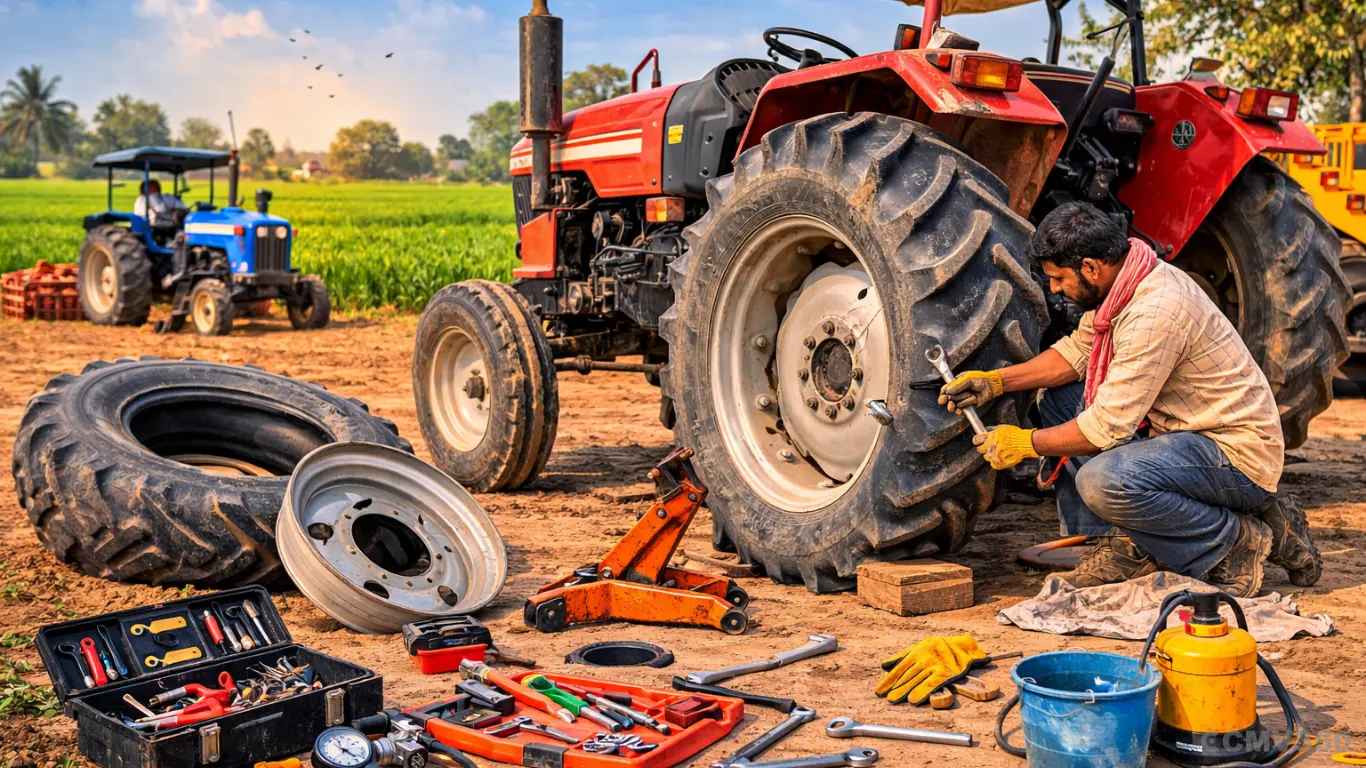
In Indian farming, tractors are the backbone of almost every field operation, from ploughing and sowing to transporting crops. Whether a farmer owns a powerful tractor like the Mahindra 575 DI XP Plus or a versatile machine like the Sonalika DI 745 III, one small problem can bring the entire day’s work to a halt: a tyre puncture.
A punctured tractor tyre in the middle of a field can waste several valuable hours, especially during busy farming seasons such as sowing or harvesting. Unlike smaller vehicles, tractor tyres are heavy, thick, and designed to handle rough terrain. Because of this, repairing them requires the right tools, safety precautions, and a proper step-by-step approach.
Many farmers rely on mechanics for tyre repairs, but the truth is that a tractor tyre puncture can easily be repaired directly in the field if you know the correct process. Learning how to fix a puncture yourself can save you time, reduce downtime, and also prevent unnecessary repair costs.
Modern tractors from brands like Mahindra Tractors, Sonalika Tractors, and Swaraj Tractors are built to handle difficult field conditions, but even the best tyres can get damaged by sharp objects, rocks, or excessive load.
Some tractors still use tube-type tyres, while many newer models are now equipped with tubeless tyres. Both have different repair methods, tools, and safety requirements.
So the big question for farmers is: Can you repair a tractor tyre puncture yourself safely and correctly without professional help?
The answer is yes, if you follow the right process, tools, and safety practices.
This complete guide explains everything farmers need to know, including:
Why tractor tyre punctures happen
Tools required for repair
Important safety precautions
Step-by-step puncture repair process
Tube-type vs tubeless tyre repair methods
Common mistakes farmers should avoid
Professional tips to prevent tyre damage
Let’s begin with the most common reasons tractor tyres get punctured in the first place.
Also Read: Diesel Tractor vs Electric Tractor in India (2026)
Common Reasons for Tractor Tyre Punctures
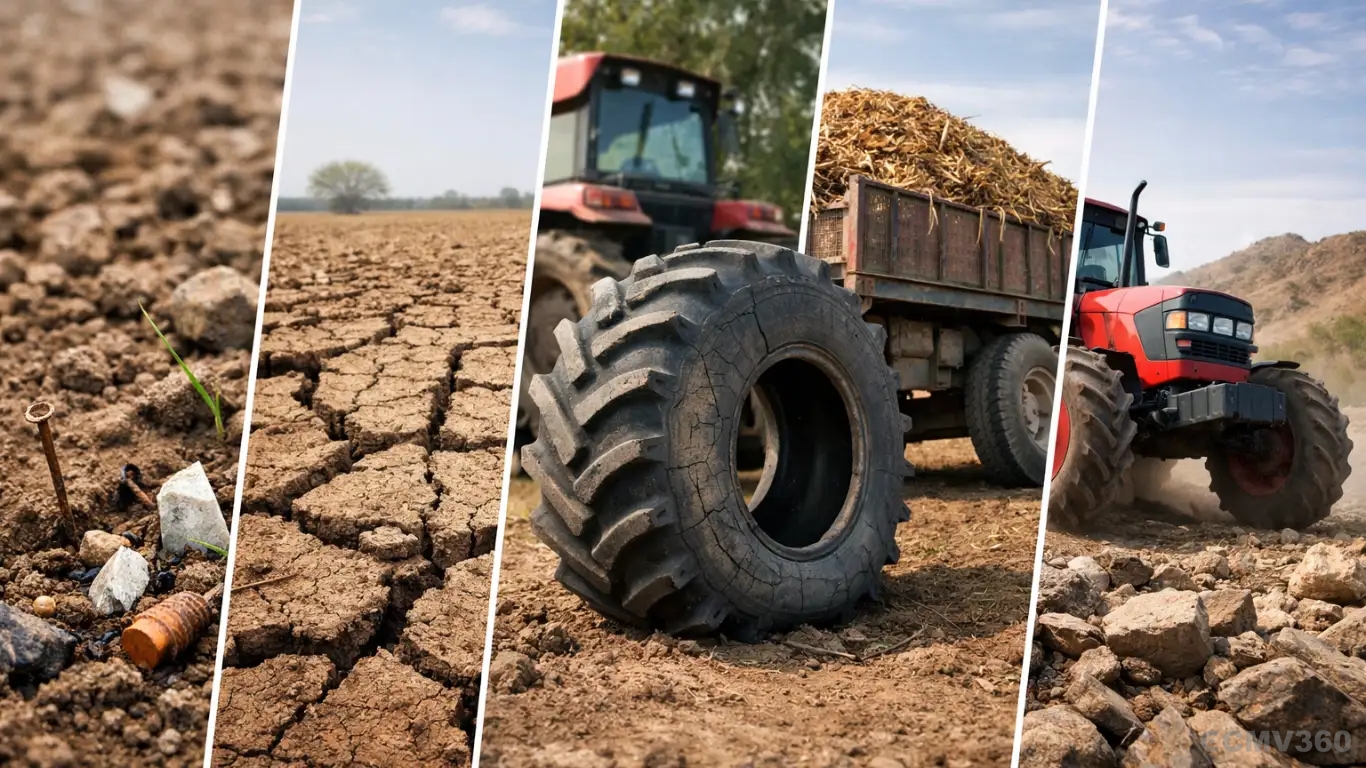
Tractor tyres are built for rough terrain, but farming environments often expose them to sharp and harsh conditions.
Here are the most common reasons why tractor tyres get punctured.
1. Sharp Objects in the Field: One of the biggest causes of punctures is sharp objects hidden in the soil.
Examples include:
Nails
Broken glass
Metal pieces
Thorns from plants
Sharp stones
When a tractor drives over these objects, they can penetrate the tyre and damage the inner tube.
2. Dry and Cracked Soil: In many parts of India, especially during summer, the soil becomes extremely dry and develops deep cracks.
These rough surfaces create additional pressure on tyres and can weaken the rubber over time.
3. Old or Worn-Out Tyres: Tyres that are older than 5–6 years lose their flexibility and become more prone to damage.
Old tyres can develop:
Sidewall cracks
Weak rubber structure
Reduced grip
This makes them easier to puncture.
4. Overloading the Tractor: Every tractor has a recommended load capacity. When farmers overload the tractor beyond its limit, the tyres carry excessive pressure, increasing the risk of punctures or bursts.
5. High Speed on Rocky Surfaces: Driving tractors quickly over rocky terrain can damage the tyre surface and cause punctures.
Farm tractors are designed for torque and pulling power, not high speed.
Tools Required to Fix a Tractor Tyre Puncture
Before repairing a tractor tyre puncture, farmers must ensure they have the correct tools available.
Most of these tools are inexpensive and easily available at local hardware stores.
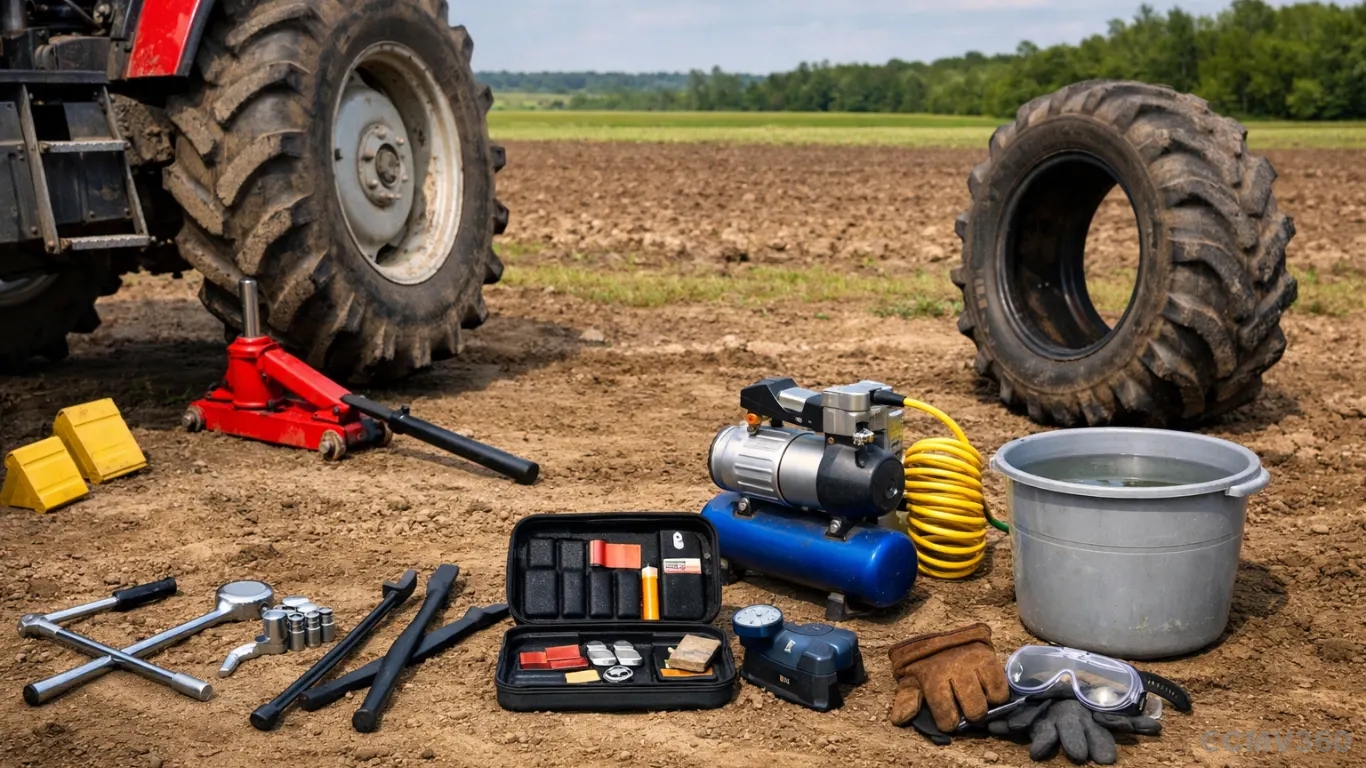
Essential Tractor Tyre Repair Tools
Tool | Purpose |
Hydraulic Jack | Lifting the tractor safely |
Wheel Chocks | Prevent tractor movement |
Lug Wrench / Wheel Spanner | Removing wheel nuts |
Tyre Levers (2–3) | Removing tyre from rim |
Puncture Repair Kit | Patches, rubber solution, sandpaper |
Air Pump or Compressor | Re-inflating the tyre |
Bucket of Water | Finding the puncture location |
Gloves | Safety during repair |
For heavy tractors (40–60 HP), rear tyres can weigh 200–400 kg, so assistance or lifting equipment may be required.
Important Safety Precautions Before Fixing a Tractor Tyre
Repairing tractor tyres involves heavy machinery and high air pressure. Without proper precautions, injuries can occur.
Follow these safety steps before starting.
Basic Tractor Tyre Safety Checklist
Park the tractor on flat and firm ground
Turn off the engine completely
Engage the handbrake
Place wheel chocks or stones behind other tyres
Wear gloves and safety glasses
Never work under a tractor supported only by a jack
Always deflate the tyre fully before removing it
Professional mechanics often use inflation cages and torque wrenches to prevent accidents during repairs.
Step-by-Step Guide to Fix a Tractor Tyre Puncture
Now let’s understand the full process of repairing a tractor tyre puncture.
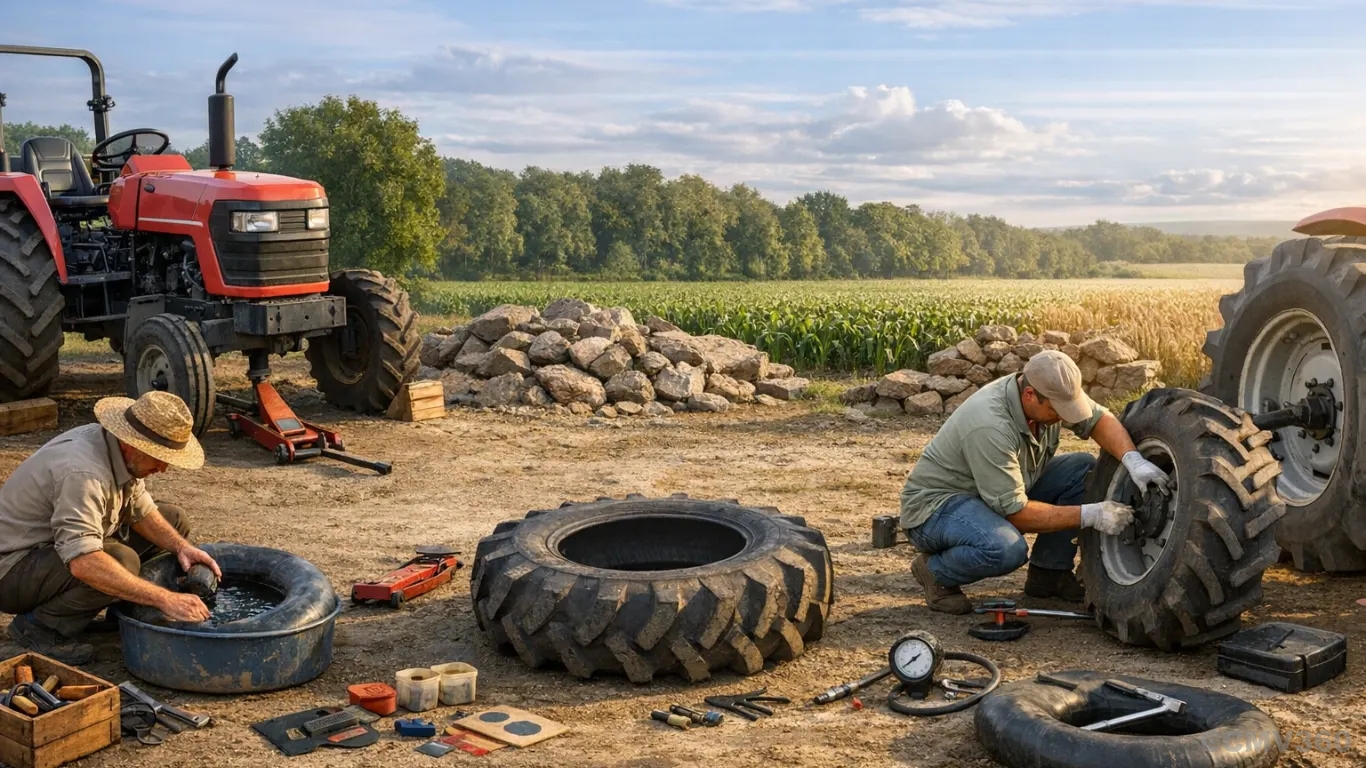
Step 1: Loosen Wheel Bolts
Before lifting the tractor:
Use a lug wrench
Slightly loosen wheel bolts
Do not remove them completely
This is easier when the tyre is still touching the ground.
Step 2: Lift the Tractor
Place the hydraulic jack near the axle and slowly lift the tractor until the tyre is off the ground.
Ensure:
The tractor is stable
The jack is placed on a strong surface
Step 3: Remove the Wheel
Once lifted:
Remove wheel nuts completely
Store them safely
Pull the wheel off the hub
Because tractor tyres are heavy, rolling the wheel is safer than lifting it.
Step 4: Deflate the Tyre
Press the valve pin to release all air from the tyre.
This step is important to remove pressure before opening the tyre.
Step 5: Remove the Tyre from the Rim
Use tyre levers to carefully pry the tyre bead off the rim.
Work slowly around the tyre to avoid damaging the inner tube.
Step 6: Remove the Inner Tube
Pull the tube out gently.
Then inflate it slightly and dip it in water to locate the puncture.
Look for air bubbles, which indicate the leaking spot.
Mark the puncture with chalk.
Step 7: Repair the Puncture
Follow these steps:
Dry the tube completely
Roughen the puncture area with sandpaper
Apply rubber solution
Wait 2–3 minutes until tacky
Press the patch firmly on the hole
Hold pressure for at least 1 minute
Let it set for 5 minutes
Recheck in water to ensure there are no leaks.
Step 8: Reassemble the Tyre
Insert the tube back into the tyre.
Ensure:
Tube is not twisted
Valve aligns with rim hole
Use tyre levers to place the tyre back on the rim.
Step 9: Inflate the Tyre
Inflate gradually while checking that the tube sits properly.
Typical Tractor Tyre Pressure in India
Tyre Position | Recommended PSI |
Rear Tyre | 12 – 16 PSI |
Front Tyre | 20 – 24 PSI |
Always check the tractor manual for exact values.
Step 10: Mount the Wheel Back
Align wheel with hub
Tighten nuts by hand first
Lower tractor slowly
Tighten nuts in criss-cross pattern
This ensures even pressure.
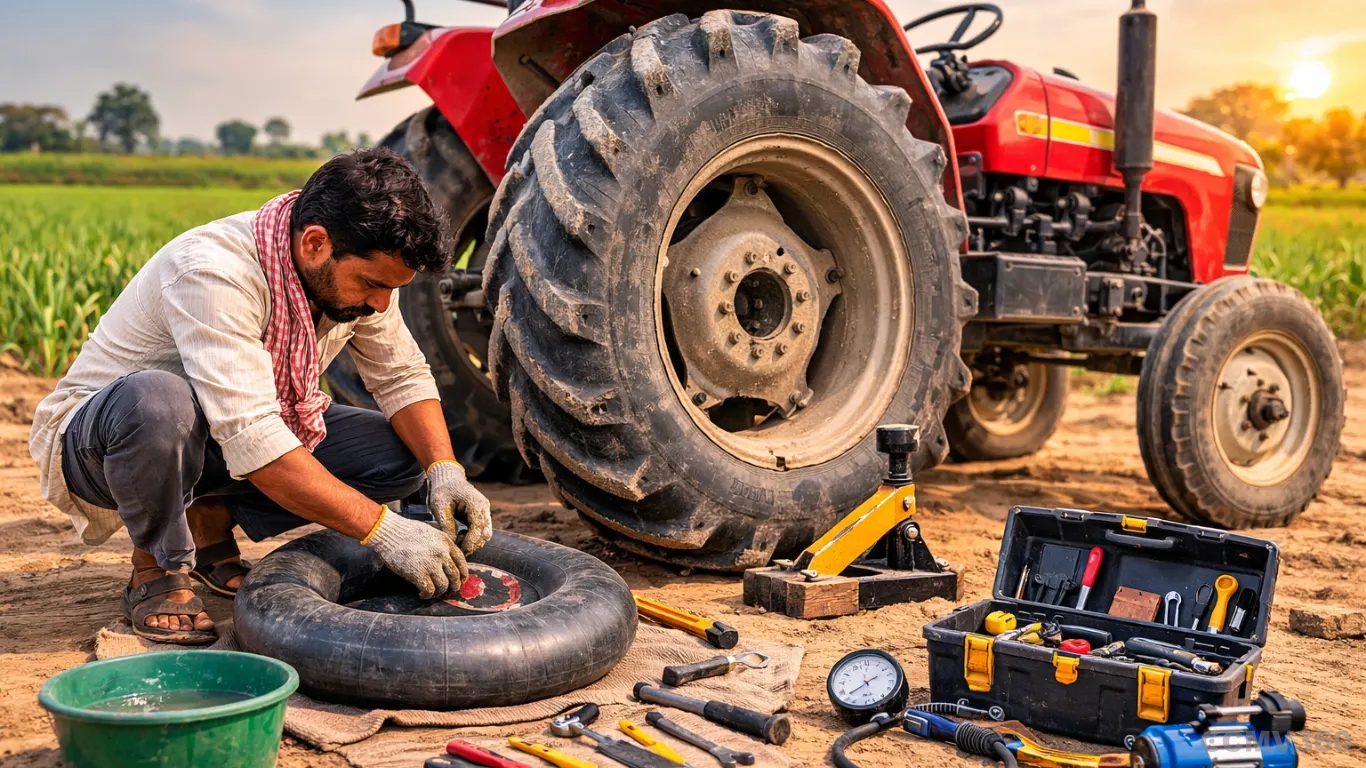
Tube-Type vs Tubeless Tractor Tyres
Different tractors use different tyre types.
Comparison of Tractor Tyre Types
Feature | Tube-Type Tyres | Tubeless Tyres |
Common in | Older tractors | Modern tractors |
Repair method | Patch tube | Plug or patch tyre |
Field repair | Easier | Slightly complex |
Leak detection | Water bubble method | Plug inspection |
Tube-type tyres are common in tractors from brands like Mahindra Tractors and Sonalika Tractors.
Tubeless tyres are becoming more common in modern tractors.
Why Tractor Tyre Repairs Often Go Wrong
Many tyre changes fail because farmers overlook certain risks.
Common Causes of Tyre Repair Failure
Improper lifting support
Over-inflation causing tyre burst
Damaged rim during tyre removal
Incorrect torque on wheel nuts
Ignoring sidewall damage
Professionals avoid these problems by using:
Hydraulic lifts
Inflation cages
Torque wrenches
Cranes for heavy tyres
Common Mistakes Farmers Should Avoid
Avoid these common mistakes when repairing tractor tyres.
Tractor Tyre Repair Mistakes
Working under a tractor supported only by a jack
Not checking inside the tyre for nails
Overloading the tractor after repair
Inflating tyre while standing directly in front
Not tightening nuts in cross pattern
These mistakes can cause tyre failure or accidents.
Safety Tips for Handling Large Tractor Tyres
Tractor tyres are extremely heavy.
Rear tyres can weigh 200–500 kg depending on size.
Safety Tips
Always work with another person
Use lifting equipment when possible
Never place hands under the tyre while mounting
Use proper gloves and safety shoes
Professionals use cranes or hoists to handle large tyres safely.
How Farmers Can Prevent Tractor Tyre Punctures
Prevention is always better than repair.
Here are simple tips to extend tyre life.
Tractor Tyre Maintenance Tips
Check tyres weekly
Inspect for cracks or embedded objects
Remove sharp stones from fields
Avoid driving over rocks at high speed
Maintain proper tyre pressure
Replace tyres older than 5–6 years
Good maintenance can significantly reduce puncture risk.
Basic Tractor Tyre Change and Safety Checklist
Quick Safety Guide
Park on flat ground
Engage handbrake
Chock wheels
Loosen bolts
Lift tractor with jack
Remove wheel
Repair puncture
Reinstall tyre and tighten nuts
Also Read: Will Tractor Prices Rise in 2026? TREM V Norms Explained for Farmers
CMV360 Says
A tractor tyre puncture can delay field work, increase repair costs, and cause unnecessary downtime during important farming seasons.
However, with the right tools, safety precautions, and step-by-step process, farmers can easily repair most tractor tyre punctures themselves.
The key things to remember are:
Safety first
Use proper tools
Follow the correct repair steps
Check tyres regularly
Once farmers learn this process, fixing a puncture becomes much easier the next time it happens.
Knowing how to repair a tractor tyre puncture is not just a mechanical skill; it is a practical farming ability that can save time, money, and effort during busy agricultural operations.
Features & Articles

Tractor Tyre Life Secrets Revealed: Expert Guide to Prevent Early Wear, Improve Performance & Save Costs in India (2026)
Learn tractor tyre care tips, ideal pressure, wear signs, and maintenance methods to increase tyre life and reduce costs for Indian farmers in 2026....
04-May-26 09:34 AM
Read Full News
Tractor Resale Value in India 2026: Top Brands, Calculation Guide, TREM V Impact & Proven Tips to Maximise Price
Learn tractor resale value in India 2026. Discover top brands, TREM-V impact, price calculation, and expert tips to increase resale value and sell your used tractor at be...
29-Apr-26 09:29 AM
Read Full News
Tractor Trolley vs Tractor Trailer in India 2026: Which One Should You Choose for Your Farm?
Compare tractor trolley vs trailer in India 2026. Check price, maintenance, best tractors, and choose the right option for your farm needs easily....
27-Apr-26 09:33 AM
Read Full News
Tractor Won’t Start? Complete Guide to Causes, Fixes, and Prevention for Indian Farmers (2026)
Learn why your tractor won’t start with simple causes, quick fixes, and maintenance tips. A practical guide for farmers to solve battery, fuel, and engine starting proble...
22-Apr-26 12:49 PM
Read Full News
Tractor Loan Without Land Documents in India 2026: A Complete Guide for Tenant Farmers & Smallholders
Learn how to get a tractor loan without land documents in India. Explore NBFC options, interest rates, subsidies, the MUDRA scheme, and easy steps for tenant farmers in 2...
14-Apr-26 07:05 AM
Read Full News
Tractor Cooling System Explained (India 2026): Working, Maintenance, Failures, Best Coolants & Expert Fix Guide
Learn tractor cooling system basics, maintenance tips, coolant types, and failure fixes for Indian tractors in 2026. Improve engine life, performance, and efficiency with...
13-Apr-26 10:26 AM
Read Full NewsAd
Ad







As featured on:





Registered Office Address
Delente Technologies Pvt. Ltd.
806-807, 8th Floor, IRIS Tech Park,
Badshahpur Sohna Rd, Gurugram, Haryana
Pincode - 122018
Join CMV360
Receive pricing updates, buying tips & more!
Follow Us


COMMERCIAL VEHICLE BUYING BECOMES EASY AT CMV360
We bring great transparency on pricing, information and comparison of tractors, trucks, buses and three wheelers.