Haryana Farming in September 2026: Which Crops Are Farmers Growing and Which Tractor Brands Are Most Popular?
 Add CMV360 on Google
September marks Haryana’s Kharif-to-Rabi transition, with paddy, bajra, cotton and guar still active, while tractor demand remains strong, especially in the versatile 40–55 HP segment.

By Sonal Verma
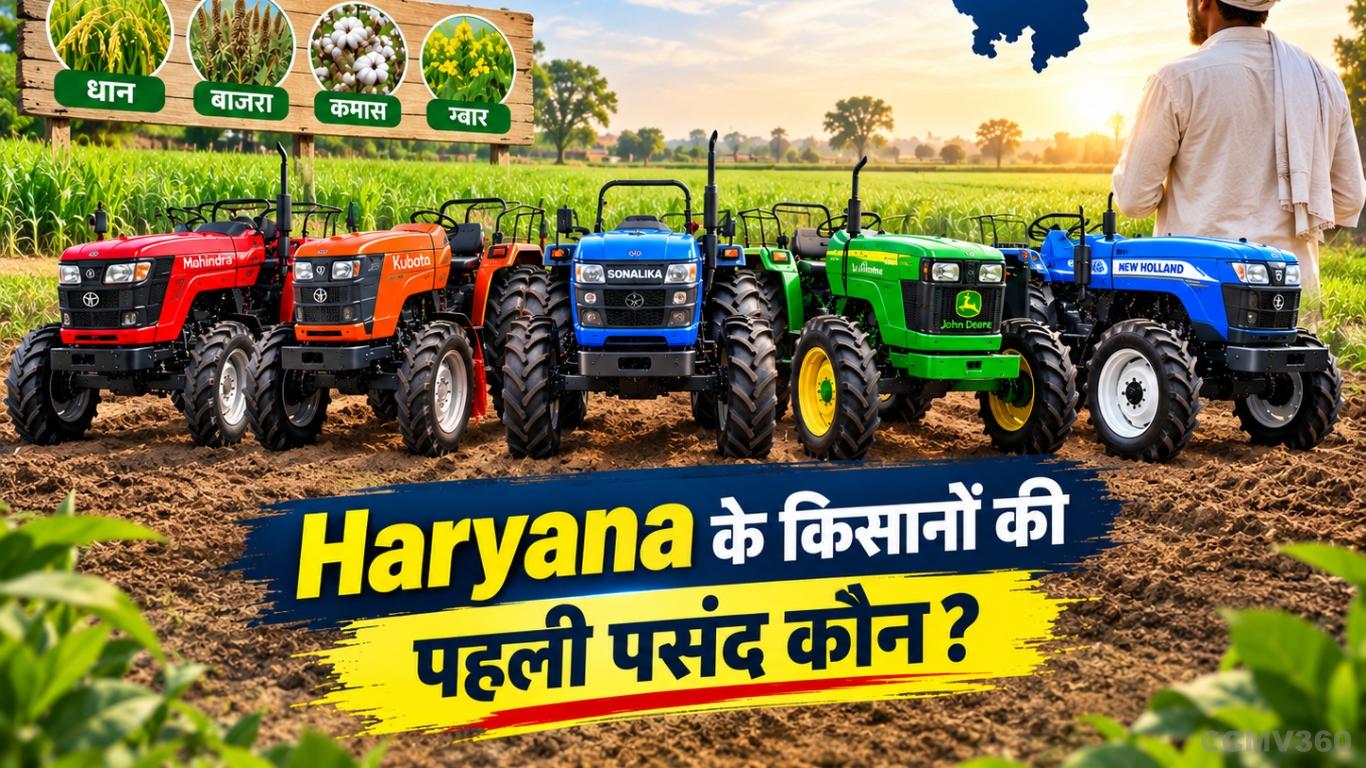
Haryana is one of India's major agricultural states, and tractors play an important role in farming here. From preparing fields and sowing crops to spraying, harvesting, and transporting produce, farmers use tractors for almost every major farming activity.
But what are Haryana farmers growing at this time of the year? And which tractor brands are most popular among farmers in the state?
September is an interesting month for agriculture in Haryana because it marks the transition from the Kharif season to the Rabi season. Farmers are still managing Kharif crops such as paddy, bajra, cotton, and guar, while preparations for the upcoming Rabi season are also beginning.
At the same time, demand for tractors remains strong, especially for models in the 40–55 HP range, which can handle a wide variety of farming and haulage applications.
Which crops are being grown in Haryana in September 2026?
September is mainly a period when Haryana farmers look after standing Kharif crops and prepare their fields for the next season.
Paddy
Paddy is one of the most important crops grown in Haryana, particularly in districts such as Karnal, Kurukshetra, Kaithal, Ambala and Yamunanagar.
By September, paddy is generally in its later growth stages, with harvesting approaching for early varieties. The Haryana Seeds Development Corporation lists paddy as a major Kharif crop, with nursery sowing generally taking place through June and transplanting continuing through the end of July.
This makes September an important month for farmers because the crop is nearing maturity and field operations become critical before harvesting.
Paddy harvesting is also expected to begin around October, while procurement discussions are already active in Haryana in September 2026.
Bajra
Bajra, or pearl millet, is another important Kharif crop in Haryana. It is particularly suitable for areas where farmers need a crop that can perform under relatively dry conditions.
According to the Haryana Seeds Development Corporation, bajra can be sown from the last week of June to the end of July, depending on rainfall and local conditions.
By September, farmers are generally approaching the later part of the crop cycle. Tractors are useful during this period for transportation, field operations, and other farm activities.
Cotton
Cotton is another important crop in parts of Haryana. Farmers generally sow cotton earlier in the year, and the crop continues growing through the monsoon season.
The Haryana Seeds Development Corporation lists cotton sowing as suitable up to around May 15–20, with the crop taking roughly 165–175 days. The last picking can continue until around mid-October.
That means September remains an important month for cotton farmers, as the crop is still standing in the fields and approaching picking operations.
Guar
Guar is also widely grown in Haryana, especially in areas where farmers depend more on crops suited to relatively dry conditions.
The recommended sowing period for guar is around mid-July, and the crop generally takes around 90–95 days to mature.
Therefore, September is an important growth period for guar, with harvesting getting closer depending on the sowing date and weather.
Rabi season preparation also begins
While Kharif crops are still in the fields, Haryana farmers also start looking ahead to the Rabi season.
One of the first crops to enter this transition is toria, which can be sown from the first week of September. Mustard sowing generally starts from September 25 and continues into October, according to the Haryana Seeds Development Corporation.
Wheat, which is one of Haryana's most important Rabi crops, is generally sown later, around the end of October and early November.
This is why September and October are particularly busy months for farmers. Fields may need to be cleared after Kharif crops, prepared for the next crop, and levelled before Rabi sowing.
Top 5 tractor brands popular in Haryana
Tractor preferences in Haryana vary depending on the size of the farm, crop, soil conditions, budget, and the type of work involved.
According to the latest available Haryana tractor registration data for January to September 2026, Mahindra was the leading manufacturer with 12,986 registrations and a 23.67% share. Escorts Kubota and Sonalika followed with 13.79% and 13.03%, respectively.
Based on registrations and the major tractor brands serving Haryana farmers, these are five important names to consider:
Mahindra | 15–75 HP | General farming, haulage, multi-crop work |
Escorts Kubota | 20–75 HP+ | Field work, haulage and commercial farming |
Sonalika | 20–90 HP | Heavy field work and multi-purpose farming |
John Deere | 30–75 HP+ | Farming, haulage and demanding applications |
New Holland | 35–90 HP | Tillage, haulage and heavy farm operations |
HP ranges are indicative of the brands' broader tractor portfolios; individual models differ.
1. Mahindra Tractors
Mahindra is currently the biggest tractor name in Haryana based on 2026 registrations. The brand recorded 12,986 tractor registrations in Haryana between January and September 2026, giving it a 23.67% share.
One reason for its popularity is the wide range of tractors available for different types of farming. Farmers can choose from compact tractors for lighter work to higher-horsepower models for heavy tillage and haulage.
For Haryana farmers growing wheat, paddy, mustard, cotton, and other crops, tractors in the 40–60 HP range can be particularly versatile.
2. Escorts Kubota
Escorts Kubota is another major tractor brand in Haryana. It recorded 7,567 registrations and a 13.79% share during January–September 2026.
The company offers tractors across different power categories, making the brand suitable for both regular farming and heavier applications.
For farmers who want one tractor to handle multiple jobs, models around 40–55 HP can offer a practical balance between power and operating costs.
3. Sonalika
Sonalika is also a strong name among Haryana farmers. The brand recorded 7,146 registrations, accounting for 13.03% of registrations during January–September 2026.
Sonalika offers tractors across a broad horsepower range. Its higher-HP tractors can be useful for farmers who regularly carry out heavy-duty tillage, haulage, and other demanding operations.
For mixed farming, 45–60 HP tractors are an important category because they can be used with several commonly used implements.
4. John Deere
John Deere is another well-known tractor brand among Indian farmers, including those in Haryana. Its tractors are known for their focus on performance, technology, and heavy-duty applications.
The brand offers tractors starting from lower horsepower categories and extending into higher-power models. For Haryana farming, 40–60 HP tractors can be suitable for applications such as cultivation, rotavator work, trailer operations, and other farm activities.
John Deere can be particularly relevant for farmers looking for a tractor that will be used intensively throughout the year.
5. New Holland
New Holland Agriculture is another established tractor brand in Haryana. Its portfolio covers several horsepower categories, with models designed for cultivation, haulage, and other agricultural applications.
Tractors in the 40–60 HP category are useful for farmers who need a versatile machine for both field and transportation work.
New Holland tractors can also be paired with a variety of implements, making them suitable for farmers who grow multiple crops across the year.
Why 40–55 HP tractors make sense for Haryana farmers
One thing that stands out in Haryana's farming environment is the importance of versatile tractors.
A farmer may use the same tractor for field preparation, rotavator operations, sowing, spraying, trailer work, and transportation. This makes the 40–55 HP segment particularly practical for many medium-sized farming operations.
A lower-horsepower tractor can be sufficient for lighter work, while larger farmers carrying out heavy tillage or using bigger implements may prefer tractors above 55 HP.
The right choice ultimately depends on the farm size, implements, soil type, and crops being grown.
What is next for Haryana farmers?
September 2026 is effectively a bridge between two crop seasons. Farmers are still managing Kharif crops such as paddy, bajra, cotton and guar, while the first preparations for Rabi crops are beginning.
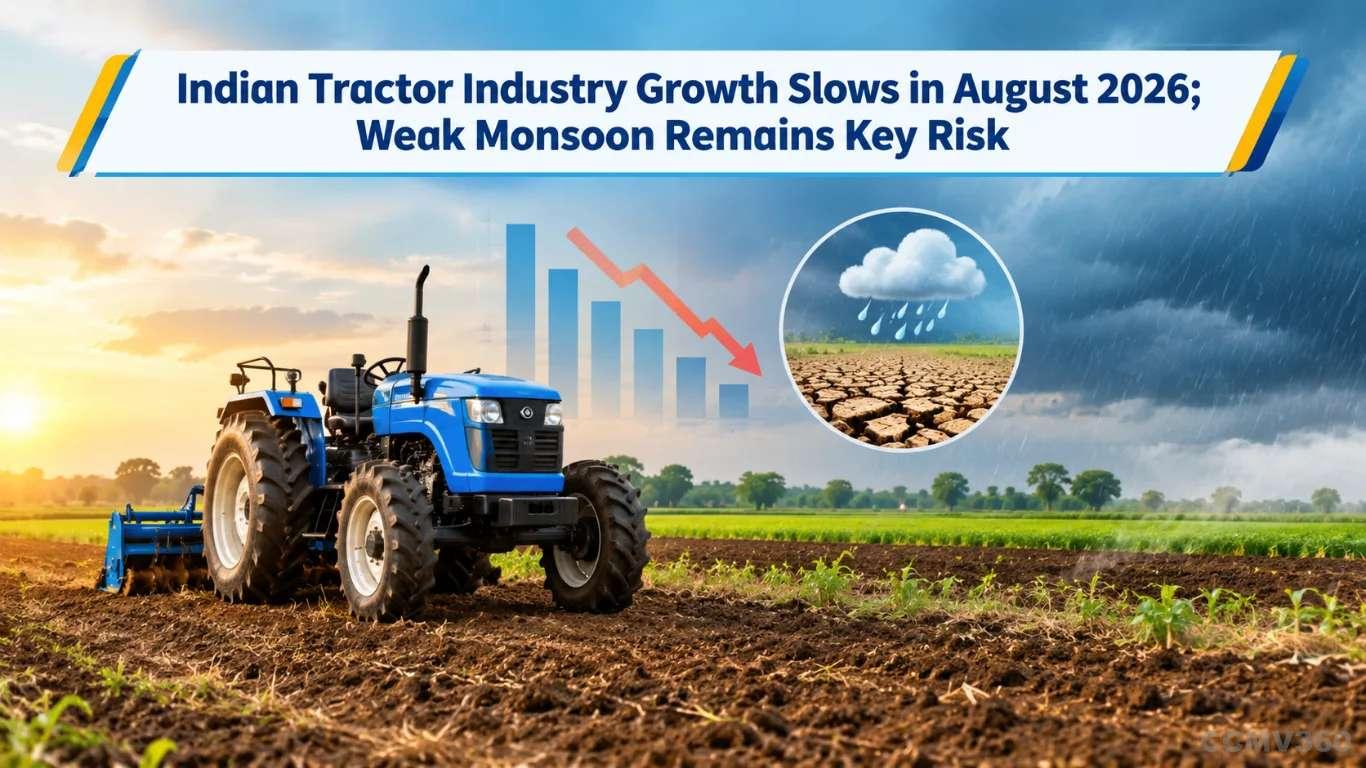
Weather will also play an important role. Below-average rainfall during the monsoon and September can affect both standing Kharif crops and the soil moisture required for Rabi sowing. Recent reports have highlighted concerns about rainfall conditions and their possible impact on the upcoming Rabi season.
For tractor buyers, this seasonal cycle also explains why versatile tractors remain important in Haryana. A machine that can handle both field operations and transportation can provide more value throughout the year.
Also read : Madhya Pradesh MSP Registration 2026-27: Farmers Can Register Free for Paddy, Jowar and Millet Sale
Conclusion
Haryana's farming calendar is entering an important transition period in September 2026. Paddy, bajra, cotton and guar are among the key Kharif crops currently in the fields, while farmers are beginning preparations for Rabi crops such as toria, mustard and, later, wheat.
On the tractor side, Mahindra, Escorts Kubota and Sonalika currently stand out in Haryana's 2026 registration data, while John Deere and New Holland remain important tractor brands for farmers looking for different power and performance options.
For many farmers, the 40–55 HP segment offers a useful balance of power and versatility. However, there is no single tractor that is best for everyone. The right tractor depends on the crops, acreage, implements, and type of farming work a farmer needs to handle.

Hi, I’m Sonal Verma, an automobile content creator and writer with a passion for everything that keeps India m .....