Agricultural Machinery & Farm Equipment: Differences, Types, Uses and Benefits for Farmers
 Add CMV360 on Google
Explore agricultural machinery and farm equipment, their types, uses, benefits, and differences. Learn how tractors, implements, harvesters, sprayers and other machines improve farming efficiency and productivity.

By Robin Kumar Attri

Modern farming is no longer only about labour and traditional tools. From MB ploughs and cultivators to zero-till drills, rotavators, tractors and combine harvesters, farmers now have a wide range of equipment to choose from. The right combination can reduce labour, save time, improve field preparation and help complete critical operations within the crop season.
However, farm implements and agricultural machinery are not the same thing. An implement generally performs a specific job and often depends on a tractor, power tiller, animals or another power source. Agricultural machinery, on the other hand, includes prime movers such as tractors and power tillers, as well as self-propelled machines such as combines and sprayers.
So, what exactly is the difference, and which option is better for your farm? Let’s understand it in simple terms.
What Are Farm Implements?
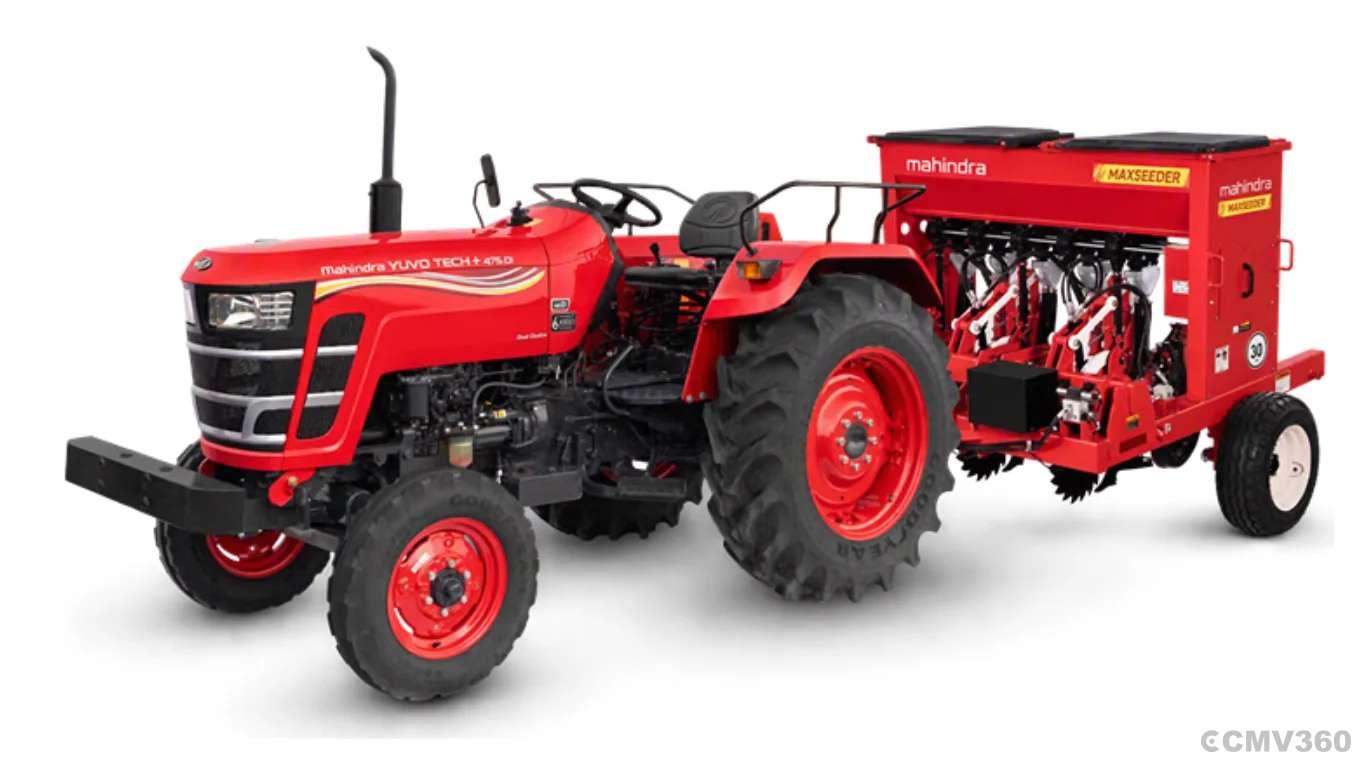
Farm implements are tools or attachments designed to perform specific agricultural operations. Many modern implements are attached to tractors and use their PTO, hydraulic system or pulling power.
They are generally simpler than large self-propelled machines and are available in different sizes and capacities depending on the crop, soil and farm size. Common examples include MB ploughs, disc ploughs, cultivators, harrows, rotavators, seed drills, seed-cum-fertilizer drills, levellers, ridgers, sprayers and tractor trailers.
The biggest advantage is flexibility. A farmer can use one tractor with several implements for different jobs instead of buying a separate machine for every operation.
What Is Agricultural Machinery?
Agricultural machinery refers to power-driven equipment used to perform agricultural operations efficiently. It includes both machines that provide power and machines capable of completing operations independently.
Tractors and power tillers are prime movers, while combine harvesters, self-propelled sprayers, reapers and specialised harvesters can perform specific operations with their own power systems.
Agricultural machinery is particularly useful when farmers need higher productivity, faster operation and greater field capacity. It can be used for ploughing, sowing, spraying, harvesting, threshing, transportation and post-harvest processing.
Farm Implements vs Agricultural Machinery: Key Differences
Factor | Farm Implements | Agricultural Machinery |
Main role | Performs a specific agricultural operation | Provides power or completes mechanised operations |
Power | Tractor, PTO, hydraulics, animals or manual power | Own engine/motor, tractor PTO or hydraulics |
Design | Generally simpler | Usually more complex |
Cost | Usually lower initial investment | Generally higher investment |
Mobility | Often mounted, hitched or pulled | Many machines are self-propelled |
Capacity | Suitable for specific jobs and small to medium farms | Better suited to large-scale and heavy operations |
Examples | Plough, cultivator, seed drill, rotavator | Tractor, power tiller, combine, thresher |
In practical terms, the implement decides what job you can perform, while the machinery largely determines how much work you can complete and how quickly.
Major Types of Farm Implements
Farm implements cover almost every stage of crop production.
1. Tillage Implements
Tillage implements prepare the soil before planting. An MB plough turns the soil and buries crop residue, while a disc plough is useful in harder, stony or trashy soils. A harrow breaks clods and helps prepare a smoother seedbed. A tyne cultivator is useful for secondary tillage and intercultural operations, particularly in crops with wider rows. The rotavator is popular because it can perform several seedbed preparation activities in one pass, including breaking clods, incorporating residue and manure, and controlling weeds. For paddy cultivation, a puddler or paddy harrow churns soil and water to create suitable puddled conditions for transplanting.
2. Sowing and Planting Implements
Seed drills and seed-cum-fertilizer drills help place seeds at a more uniform depth and spacing while reducing seed wastage. A zero-till drill is especially important in rice-wheat systems because it can sow wheat directly after rice harvesting without conventional seedbed preparation. This can save time, fuel and moisture. Planters are available for crops such as maize, potato, sugarcane and turmeric, while specialised transplanters can help with rice and vegetable planting.
3. Weeding and Crop Protection Implements
Weeders and sprayers help reduce labour requirements during crop growth. Rotary paddy weeders are used for rice fields, while knapsack, boom and orchard aero-blast sprayers are used for applying pesticides and fungicides. Proper calibration is important because nozzle condition, spray pressure and application rate directly affect coverage and chemical use.
4. Harvesting and Post-Harvest Implements
Several tractor- and PTO-operated implements are designed for crop-specific harvesting. These include reapers, reaper-binders, groundnut digger-cum-shakers, garlic harvesters, pigeon pea harvesters, corn cob harvesters and fodder harvesters. Specialised equipment such as multi-millet threshers and millet mills can also reduce post-harvest labour.
5. Specialised and Conservation Implements
Modern agriculture also uses equipment such as check basin formers, plastic mulch laying machines, controlled-level puddling systems and pre-emergence herbicide strip applicator-cum-planters. These machines support better water management, conservation farming and efficient crop establishment.
Major Types of Agricultural Machinery
Tractors and Power Tillers
The tractor remains the most versatile agricultural machine because it can pull and operate numerous implements. Both 2WD and 4WD tractors are available for different soil, terrain and traction requirements. A power tiller is particularly useful for small and fragmented holdings, vegetable cultivation and hilly areas. It can operate small rotavators, drills, terracers and weeders.
Self-Propelled Machinery
A combine harvester can harvest, thresh and clean crops in a single operation. This makes it highly valuable when harvesting must be completed quickly. Self-propelled sprayers provide high-speed and relatively uniform spraying over large areas. Specialised forage, fodder and cotton harvesters are designed around particular crop requirements.
Stationary and Semi-Stationary Machinery
Agricultural machinery also includes threshers, milling machines, dryers, water pumps and other farm utilities used for processing, irrigation and post-harvest activities.
Why Farm Implements Matter
Farm implements offer several advantages, particularly when matched with a suitable tractor or power tiller. They generally require a lower investment than buying multiple self-propelled machines and allow one prime mover to handle several operations.
Key benefits include:
Lower investment per operation
Reduced dependence on manual labour
Easier maintenance
Better soil preparation
Greater flexibility across crops
Availability of specialised implements
Why Agricultural Machinery Matters
Agricultural machinery becomes more valuable when speed, capacity and timely operations are the priority. Large farms can benefit significantly from machines that cover more area in less time.
Important advantages include:
Faster sowing and harvesting
Higher field capacity
Reduced operational delays
Better handling of large farms
Improved overall productivity
Choosing the Right Equipment for Different Farms
There is no single machine combination that works for every farmer. Soil type, crop, farm size, terrain, labour availability and budget should all be considered.
Farming situation | Suitable equipment |
Rice-wheat system | 45-60 HP tractor, zero-till drill, rotavator, boom sprayer |
Intensive vegetable farming | 35-50 HP tractor, rotavator, bed former, planter and mulch layer |
Hilly or fragmented land | Power tiller, terracer-cum-leveller, small drill and weeder |
Large-scale cereal farming | Tractor and implements, with combine harvesting where required |
For a medium-to-large rice-wheat farm, a tractor combined with a zero-till drill and suitable spraying equipment can provide a practical package. For intensive vegetable cultivation, a rotavator, bed former, planter and mulch-laying machine may be more useful. In hilly and fragmented fields, a compact power tiller can be easier to operate than a larger tractor.
Maintenance and Buying Tips
Buying the machine is only the first step. Correct maintenance has a direct impact on operating cost and working life. For tractors and power tillers, farmers should regularly check engine oil, coolant, fuel and air filters, hydraulic oil, PTO and gearbox oil, tyre pressure and belt tension, following the manufacturer's recommended service schedule.
Implements need attention too. Worn shares, discs, tynes and seed openers should be replaced, while seed and fertilizer mechanisms need proper calibration. Hitch points and frame bolts should also be inspected before the season. Sprayers require special care because worn nozzles, damaged hoses, pump problems or poor calibration can affect spray coverage and increase chemical consumption.
When comparing equipment, farmers should also consider tractor PTO and hydraulic compatibility, availability of spare and wear parts, service support and compliance with relevant BIS/IS testing requirements.
Standards and Testing in India
India has BIS standards covering many agricultural machines and implements. Relevant standards include those for tractors, power tillers, combines, rotavators, disc ploughs, seed drills, sprayers and reapers.
ICAR's agricultural engineering programmes also document and evaluate equipment suitable for Indian farming conditions. Checking recognised testing and performance information can therefore be useful before purchasing expensive machinery.
Which Is Better: Farm Implements or Agricultural Machinery?
The answer depends on the requirement.
Choose farm implements if:
You need equipment for a specific operation.
You already own a compatible tractor.
Your farm is small or medium-sized.
You want a relatively affordable solution.
You need flexibility across different crops.
Choose agricultural machinery if:
You operate a large farm.
High field capacity is important.
Harvesting must be completed quickly.
You need heavy-duty or specialised operations.
A self-propelled machine can improve productivity.
Ultimately, farm implements and agricultural machinery should not be viewed as competing choices as they both work together. A tractor becomes far more useful when equipped with the right implements, while specialised machinery becomes valuable when a particular operation demands higher speed or capacity.
For Indian farmers, the best approach is to build an equipment combination around the crop, soil, acreage, terrain, available labour and annual operating requirements. The right combination can reduce downtime and operating costs while helping farmers complete critical agricultural operations on time.
Also Read: Greenhouse Farming vs Traditional Farming: Which Is More Profitable for Farmers in India 2026?
CMV360 Says
Farm implements and agricultural machinery both play an important role in modern farming, but their functions are different. Implements offer affordable, task-specific solutions, while agricultural machinery delivers higher power, speed and capacity. The best choice depends on farm size, crop, soil, terrain, labour availability and budget. For most farmers, combining a suitable tractor or power tiller with the right implements can improve productivity, reduce labour and ensure timely farming operations.

Robin Kumar Attri is a content and video professional with 2.7 years of experience in the commercial vehicle d .....