Do You Need an Agricultural License in India? Check Eligibility, Documents & Complete Registration Process
 Add CMV360 on Google
Learn who needs an agricultural license in India, eligibility, required documents, application process, renewal rules, benefits, and licensing requirements for farmers, traders, retailers, exporters, and agri-businesses.

By Robin Kumar Attri

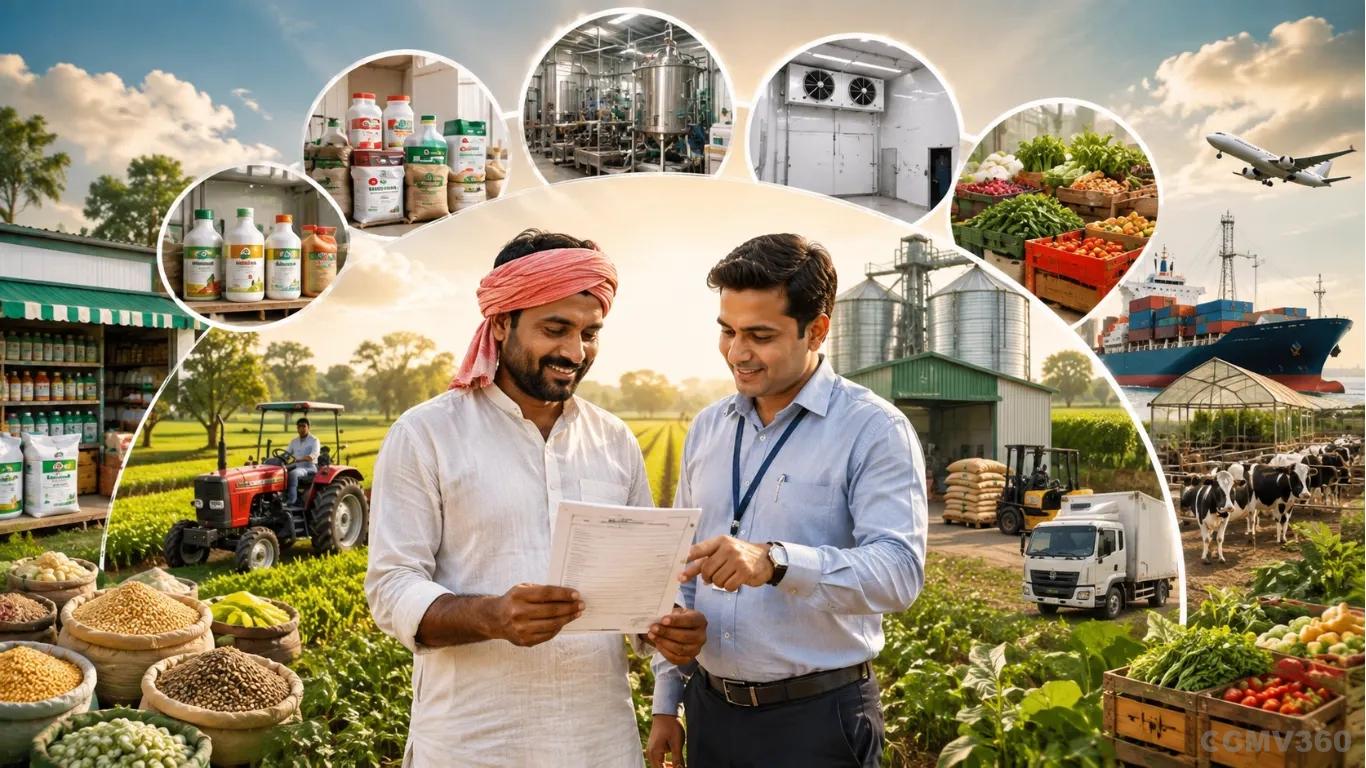
India's agriculture sector is no longer limited to crop cultivation. Today, it has evolved into a massive ecosystem that includes seed companies, fertiliser dealerships, pesticide retailers, agri-input stores, food processing units, warehouses, exporters, cold storage operators, dairy businesses, poultry farms, aquaculture projects, and digital agricultural marketplaces. As this ecosystem continues to expand, government regulations have also become more structured to ensure quality products, fair trade practices, and farmer protection.
This is where an Agricultural License becomes important. While many people assume there is a single agricultural license that applies to every farming activity, the reality is quite different. In India, an agricultural license is an umbrella term that covers several different registrations and approvals depending on the type of agricultural business you plan to start. Whether you want to open a fertiliser dealership, sell certified seeds, start a pesticide business, launch a packaged food brand, establish a warehouse, or export agricultural products, each activity has its own licensing requirements and governing authorities.
At the same time, it is equally important to understand that not every farmer needs an agricultural license. Farmers growing crops on their own land for cultivation generally do not require one. However, once farming expands into commercial trading, processing, distribution, or retailing agricultural inputs, licensing and regulatory compliance become mandatory.
So, who exactly needs an agricultural license in India, who doesn't, what documents are required, and how can you apply? Here's a complete guide just for you.
Also Read: Organic Farming vs Conventional Farming: Which Method Can Earn Indian Farmers More Profit in 2026?
What is an Agricultural License?
An Agricultural License is an official approval issued by the concerned government authority that allows an individual, business, partnership firm, LLP, or company to legally conduct specific agricultural-related commercial activities.
Instead of being one universal license, it consists of multiple licenses depending on the business category.
Some of the most common agricultural licenses include:
Seed Dealer License
Fertiliser License
Insecticide/Pesticide License
Agricultural Produce Trade License
Food Processing Registration
Agricultural Export Registration
Warehousing and Cold Storage Approvals
Each license is governed under different Central Government laws along with state-specific regulations.
Why is an Agricultural License Important?
Agricultural licensing is designed to ensure that farmers receive genuine agricultural products and services while maintaining transparency in the supply chain.
A valid license helps businesses:
Operate legally
Build trust among farmers
Maintain product quality standards
Become eligible for government schemes
Expand business through authorised dealerships
Avoid legal penalties and regulatory action
It also enables authorities to regulate the quality of seeds, fertilisers, pesticides, processed food products, and agricultural trading activities.

Who Needs an Agricultural License in India?
The requirement depends entirely on the type of agricultural activity being undertaken.
1. Seed Dealers
Anyone involved in selling certified or commercial seeds must obtain a Seed License from the respective State Agriculture Department.
This ensures that only approved seed varieties reach farmers and helps prevent the sale of counterfeit or low-quality seeds.
2. Fertiliser Dealers and Retailers
Businesses manufacturing, storing, distributing, wholesaling, or retailing fertilisers require a Fertiliser License under the Fertiliser Control Order (FCO).
The license helps regulate product quality, storage conditions, and distribution standards.
3. Pesticide and Insecticide Dealers
Selling pesticides or insecticides without proper authorisation is prohibited in India.
Dealers must obtain an Insecticide License under the Insecticides Act and comply with prescribed safety, storage, and handling guidelines.
In several states, applicants may also require agricultural or science-related educational qualifications or employ technically qualified personnel.
4. Agricultural Input Shops
Many agri-input stores sell multiple products such as:
Seeds
Fertilisers
Pesticides
Plant growth regulators
Animal feed
Such businesses often require multiple licenses depending on the products they deal with.
5. Agricultural Produce Traders
Individuals or firms trading agricultural commodities in wholesale markets or APMC mandis generally require a trade or market license issued by the Agricultural Produce Market Committee (APMC) or the respective mandi board.
Those participating in electronic platforms like eNAM may also need registration and linkage with existing mandi licenses wherever applicable.
6. Food Processing and Packaging Units
Businesses involved in grading, processing, branding, packing, or manufacturing food products from agricultural produce usually require:
FSSAI Registration
Local Trade License
Shop & Establishment Registration
Industry-specific approvals
Environmental clearances where applicable
Large processing facilities may also require pollution control permissions.
7. Agricultural Warehouses and Cold Storages
Commercial storage facilities dealing with agricultural produce often require registration or approvals under state regulations.
Depending on the project size, additional environmental or infrastructure-related permissions may also be required.
8. Agricultural Exporters
Companies exporting agricultural commodities generally need:
APEDA Registration
Import Export Code (IEC)
DGFT Registration
AGMARK certification where applicable
Product-specific export approvals
These registrations ensure compliance with domestic as well as international quality standards.
9. Large Commercial Farming Operations
Although regular farming generally doesn't require licensing, specialised agricultural businesses such as:
Commercial dairy farms
Poultry farms
Hatcheries
Aquaculture projects
Greenhouses
Controlled environment farming
may require sector-specific registrations from Agriculture, Fisheries, or Animal Husbandry Departments.
Similarly, groundwater extraction, environmental approvals, or land-use conversion permissions may also be necessary depending on the project.
Also Read: Drip Irrigation vs Sprinkler Irrigation: Which Irrigation System Is Better for Indian Farmers?
Who Does NOT Need an Agricultural License?
Many people wrongly believe every farmer must obtain an agricultural license.
In reality, farmers engaged only in cultivation usually do not require one.
Generally, the following categories do not need an agricultural license:
Farmers cultivating crops on their own agricultural land
Individuals growing vegetables or fruits for personal consumption
Livestock owners raising animals for household use
Farmers selling their own produce directly in local markets wherever permitted by state laws
However, once agricultural activities expand into commercial trading, processing, manufacturing, distribution, or dealership operations, separate licenses become necessary.
Agricultural License Eligibility Criteria

Although eligibility varies depending on the license type and state, several common requirements apply across most agricultural licenses.
Eligibility Criteria | Details |
Minimum Age | Generally 18 years or above |
Citizenship | Usually Indian citizen for state-level licenses |
Business Activity | Must be engaged in farming, trading, processing, retailing, exporting or related services |
Business Premises | Commercial shop, office or warehouse meeting prescribed norms |
Legal Registration | Proprietorship, Partnership, LLP or Company registration wherever applicable |
Financial Compliance | PAN, GST and tax compliance depending on business size |
Educational Qualification | Required for certain pesticide or fertiliser licenses in some states |
Infrastructure | Proper storage facilities and safety standards |
State governments may prescribe additional conditions regarding minimum shop size, technical staff, infrastructure, or warehouse capacity.
Documents Required for Agricultural License

While documentation differs across license categories, most applications require similar documents.
Identity Documents
Aadhaar Card
PAN Card
Voter ID or Government-issued ID
Passport-size photographs
Address Proof
Electricity Bill
Rental Agreement
Ration Card
Other valid address proof
Business Documents
GST Registration
Shop & Establishment Registration
Partnership Deed
Company Incorporation Certificate
UDYAM/MSME Registration (where applicable)
Land or Property Documents
Land ownership records
Lease agreement
Shop ownership papers
Warehouse details
Technical Documents
Educational qualification certificates (where required)
Technical staff details
Storage infrastructure information
Additional Approvals
FSSAI Registration
Municipal Trade License
Pollution Control NOC
Environmental Clearance (if applicable)
Applicants must also submit the prescribed application form along with the applicable fee.
How to Apply for an Agricultural License
Although procedures vary slightly across states, the overall application process remains largely similar.
Step 1: Identify the Correct License
Determine which license matches your business activity. Different businesses require different approvals.
Step 2: Collect Required Documents
Gather all identity, business, tax, educational, and infrastructure-related documents before applying.
Step 3: Submit the Application
Applications can usually be submitted:
Online through the State Agriculture Department portal
Offline at the Agriculture Department office
Through the concerned APMC, FSSAI, APEDA, or other regulatory authority
Ensure that all information is accurate to avoid unnecessary delays.
Step 4: Pay the Application Fee
Application fees vary according to:
State
License category
Business scale
Type of activity
Step 5: Inspection and Verification
For businesses dealing in fertilisers, pesticides, warehouses, processing units, or storage facilities, government officials may inspect the premises to verify:
Storage conditions
Safety standards
Technical compliance
Infrastructure
Environmental norms
Step 6: License Approval
After successful verification, the authority issues the agricultural license along with a unique registration number and validity period.
Businesses must comply with all conditions mentioned in the approval, including record-keeping and display requirements.
Validity and Renewal
Most agricultural licenses remain valid for one to five years, depending on the license category and state regulations.
Businesses should apply for renewal before the expiry date to avoid:
Penalties
Suspension
Cancellation of license
Business interruptions
Timely renewal ensures uninterrupted operations and continued legal compliance.
Common Reasons for Agricultural License Rejection
Applications may be rejected for several reasons, including:
Incomplete application forms
Incorrect information
Missing documents
Invalid identity proof
Insufficient storage facilities
Failure to meet educational qualifications
Non-compliance with safety norms
Providing false or misleading information
Carefully reviewing the application before submission significantly improves approval chances.
Benefits of Obtaining an Agricultural License
Having a valid agricultural license offers several long-term advantages for businesses.
Key Benefits
Legal protection against regulatory action
Improved credibility among farmers
Better customer confidence
Access to government tenders and subsidy schemes
Opportunity to become authorised dealers of leading agricultural brands
Easier business expansion
Stronger relationships with manufacturers and distributors
Enhanced reputation among financial institutions
A licensed business is also better positioned to participate in organised agricultural supply chains.
Agricultural License Requirements Around the World

Although agricultural licensing exists globally, the rules differ significantly from one country to another.
Country | License Requirement |
India | Activity-based licensing for seeds, fertilisers, pesticides, processing, exports and trading |
USA | PACA License for produce businesses exceeding specified trading thresholds |
United Kingdom | GLAA License for labour providers in agriculture and food sectors |
Alberta (Canada) | Farm-restricted Class 1 licence for specific agricultural vehicle operations |
For example, in the United States, businesses dealing in more than 2,000 pounds of fresh or frozen fruits and vegetables per day generally require a PACA license, while retailers purchasing over USD 230,000 worth of produce annually must also comply with licensing requirements. This highlights how agricultural licensing varies across jurisdictions based on local laws and business thresholds.
What Should Farmers and Entrepreneurs in Delhi Do?
If you are planning an agriculture-related business in Delhi, the licensing requirements will depend on your specific activity.
Farmers selling produce through mandis should check registration requirements with the local APMC or agricultural marketing authority.
Seed, fertiliser, pesticide, or animal feed retailers should obtain dealer licenses from the Delhi Agriculture Department along with the required municipal trade license.
Food processing or packaging businesses should secure FSSAI registration and comply with industrial and environmental regulations.
Agricultural exporters should register with APEDA, obtain an Import Export Code (IEC), and follow applicable quality certification requirements.
Since licensing rules and fee structures are updated periodically, it is always advisable to consult the latest notifications issued by the Delhi Government, the concerned State Agriculture Department, APMC authorities, and relevant central agencies before starting your business.
CMV360 Says
An agricultural license is a crucial legal requirement for individuals and businesses engaged in the commercial side of India's agriculture sector. While ordinary farming activities generally do not require licensing, businesses involved in trading agricultural produce, selling seeds, fertilisers, pesticides, processing food products, operating warehouses, or exporting agricultural commodities must comply with the applicable regulations.
Understanding the correct license for your business, meeting the prescribed eligibility criteria, maintaining proper documentation, and following the required application process can help ensure smooth operations while avoiding legal complications. As India's agricultural economy continues to modernise with increasing focus on quality, traceability, and organised supply chains, obtaining the right agricultural license is not just about compliance, it is a key step towards building a trusted, sustainable, and successful agri-business.

Robin Kumar Attri is a content and video professional with 2.7 years of experience in the commercial vehicle d .....