Drip Irrigation vs Sprinkler Irrigation: Which Irrigation System Is Better for Indian Farmers?
 Add CMV360 on Google
Compare drip and sprinkler irrigation systems, including water savings, costs, maintenance, ROI, crop suitability, advantages, disadvantages, and expert tips to choose the best irrigation method for your farm.

By Robin Kumar Attri

Water has become one of the most valuable inputs in modern agriculture. With unpredictable rainfall, rising irrigation costs, and increasing pressure on groundwater resources, every drop of water matters. This is why choosing the right irrigation system has become just as important as selecting the right crop or fertilizer.
Among modern irrigation methods, drip irrigation and sprinkler irrigation have emerged as two of the most trusted technologies for improving water-use efficiency and boosting crop productivity. Both systems are widely adopted by farmers across India and are supported under various government subsidy schemes because they help reduce water wastage while improving crop health.
Drip irrigation is known for its precision. It delivers water directly to the plant's root zone, making it one of the most efficient irrigation methods for orchards, vegetables, sugarcane, cotton, and other high-value crops. Sprinkler irrigation, on the other hand, mimics natural rainfall by distributing water uniformly across the field, making it an excellent choice for cereals, pulses, fodder crops, lawns, and large open fields.
Both systems offer significant advantages over traditional flood irrigation, but neither is universally better. The ideal choice depends on several factors, including crop type, soil condition, water availability, field size, terrain, maintenance requirements, and long-term operating costs.
So, which irrigation system offers better water savings, lower operating costs, and higher returns on investment? Let's compare drip irrigation and sprinkler irrigation in detail to help you make the right decision for your farm.
What Is Drip Irrigation?
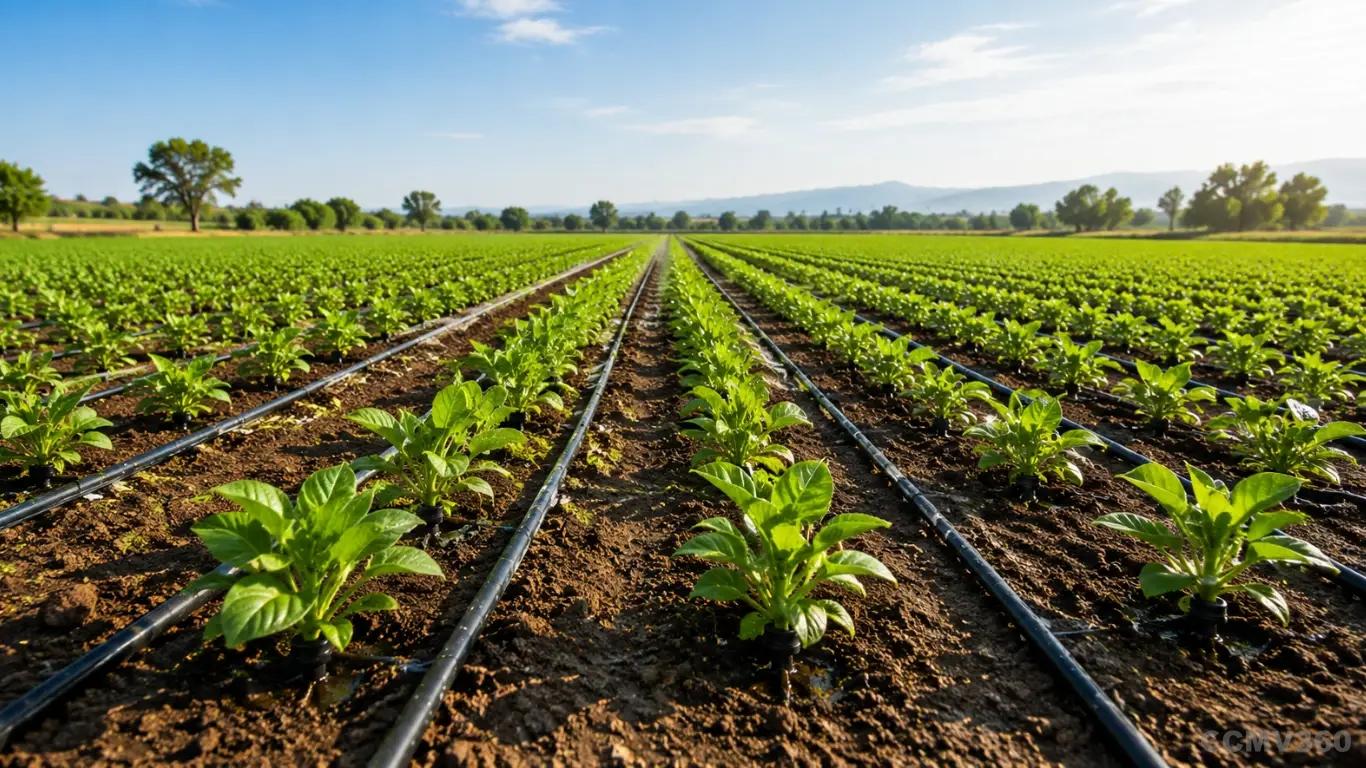
Drip irrigation is a precision irrigation system that supplies water slowly and directly to the root zone of plants through a network of pipes, laterals, tubes, and emitters. Instead of wetting the entire field, it delivers water exactly where the plant needs it.
Because only the root area receives water, evaporation, runoff, and unnecessary soil wetting are significantly reduced. This makes drip irrigation one of the most water-efficient irrigation methods available today.
It is widely used for:
Orchards
Vegetable cultivation
Sugarcane
Cotton
Plantation crops
Horticultural crops
Fields with irregular shapes or uneven terrain
Another major advantage is its compatibility with fertigation, where fertilizers are applied through the irrigation system itself, improving nutrient uptake while reducing fertilizer losses.
What Is Sprinkler Irrigation?
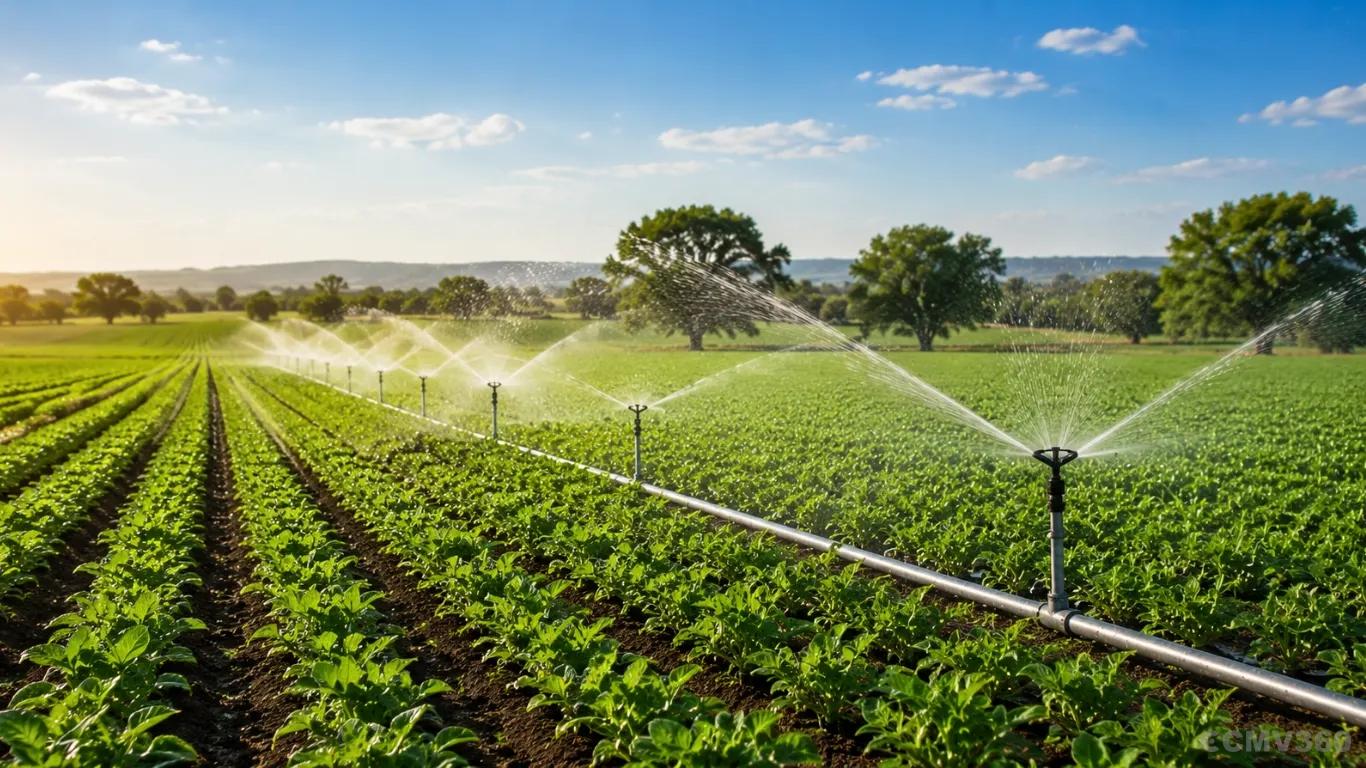
Sprinkler irrigation distributes water through pressurized pipes and sprinkler heads that spray water over crops similar to natural rainfall.
Unlike drip irrigation, sprinklers wet the entire field surface, making them suitable for crops that require broad water coverage.
Sprinkler irrigation performs particularly well in:
Wheat
Maize
Pulses
Fodder crops
Lawns
Gardens
Large open agricultural fields
Many sprinkler systems can also be used to apply soluble fertilizers and crop protection chemicals through irrigation water, improving operational efficiency.
Drip Irrigation vs Sprinkler Irrigation: Comparison
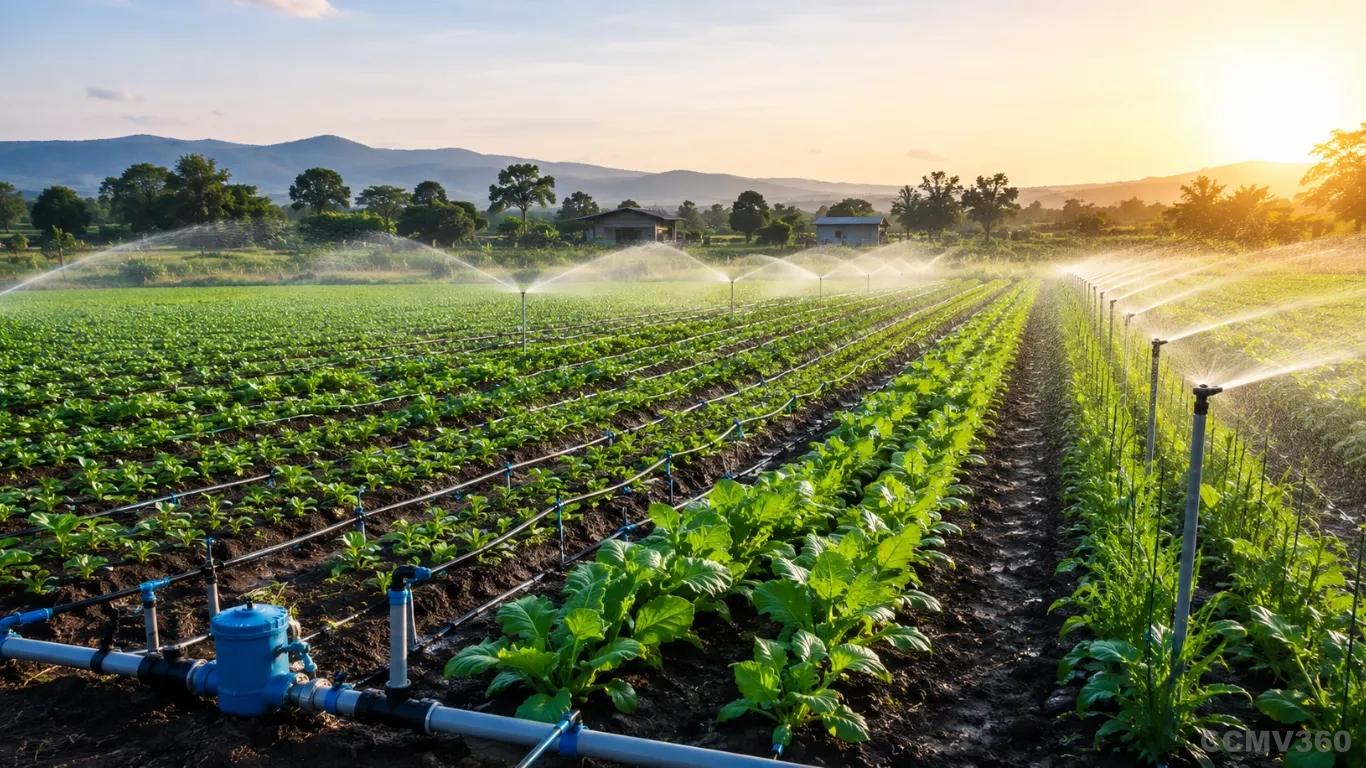
Feature | Drip Irrigation | Sprinkler Irrigation |
Water Delivery | Directly to plant roots | Overhead spray like rainfall |
Water Efficiency | Very high | Moderate |
Evaporation Loss | Very low | Moderate to high |
Runoff | Minimal | Higher in some conditions |
Weed Growth | Lower | Higher due to surface wetting |
Disease Risk | Lower as leaves remain dry | Higher because foliage becomes wet |
Best Crops | Fruits, vegetables, orchards, sugarcane, cotton | Wheat, maize, fodder, lawns, pulses |
Field Suitability | Irregular fields, orchards, slopes | Large open fields |
Soil Suitability | Suitable for most soils | Performs best where infiltration is good |
Initial Investment | Generally higher | Moderate to high |
Operating Pressure | Lower | Higher |
Energy Requirement | Usually lower | Generally higher |
Fertigation | Highly efficient | Possible |
Maintenance | Requires filtration and flushing | Requires nozzle cleaning and pressure monitoring |
Advantages of Drip Irrigation
One of the biggest strengths of drip irrigation is its ability to maximize every drop of water.
Since water reaches only the plant roots, losses from evaporation and runoff remain extremely low. This not only conserves water but also improves crop growth by maintaining consistent soil moisture around the root zone.
Some of its major benefits include:
Saves considerably more water than conventional irrigation methods.
Reduces weed growth because only the root area is irrigated.
Minimizes soil erosion.
Improves fertilizer efficiency through fertigation.
Supports better crop quality and yield.
Suitable for uneven land and irregular field layouts.
Offers better control when using saline water.
Reduces labour requirements in many farming operations.
Lower pumping pressure often results in lower energy consumption.
Advantages of Sprinkler Irrigation
Sprinkler irrigation remains one of the most versatile irrigation systems for Indian agriculture.
Its biggest advantage is the ability to irrigate large fields uniformly without requiring extensive field leveling.
Major advantages include:
Covers large areas efficiently.
Suitable for uneven or sloping land.
Can irrigate crops uniformly.
Easy to relocate in many installations.
Suitable for dense field crops.
Can apply fertilizers and chemicals through irrigation water.
Practical where overhead watering is beneficial.
For farmers cultivating cereals and fodder crops over large areas, sprinkler systems often provide an effective balance between irrigation efficiency and field coverage.
Limitations of Drip Irrigation
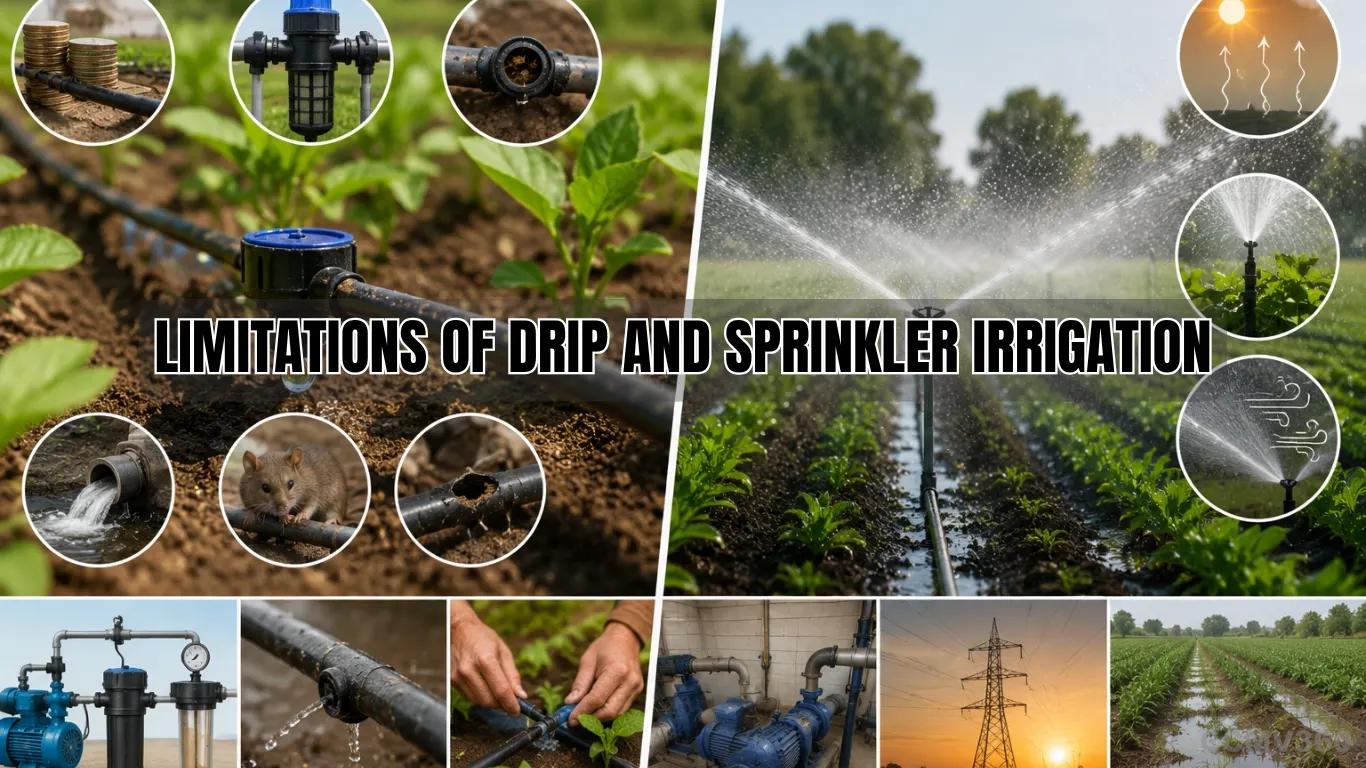
Although drip irrigation offers excellent efficiency, it requires careful planning and regular maintenance.
Some limitations include:
Higher initial installation cost.
Requires clean water and effective filtration.
Emitters can clog due to sand, algae, minerals, or fertilizer residues.
Regular flushing of pipelines is necessary.
Damage from rodents or insects may require repairs.
Certain crops or management practices may still require overhead irrigation.
However, with proper maintenance and filtration, drip irrigation systems remain highly reliable for long-term use.
Limitations of Sprinkler Irrigation
Sprinkler irrigation is efficient for broad field coverage, but it generally loses more water compared to drip systems.
Common drawbacks include:
Greater water loss due to evaporation.
Wind drift can reduce irrigation uniformity.
Wet foliage increases disease risk in some crops.
Requires higher pumping pressure.
Higher electricity or fuel consumption.
Incorrect nozzle spacing can lead to uneven irrigation or runoff.
What Determines Drip Irrigation Maintenance?
Drip irrigation requires more attention than sprinkler systems because water passes through small emitters that can clog if not managed properly.
Several factors influence maintenance requirements.
Water Quality: Water containing sand, silt, algae, or dissolved minerals increases the risk of clogged emitters.
Filtration System: Good filters are essential. Regular filter cleaning greatly reduces maintenance issues.
Pressure Stability: Consistent operating pressure ensures even water distribution and protects system components.
Flushing Schedule: Periodic flushing removes accumulated sediments from pipelines and laterals.
Fertigation Practices: Poor fertilizer management can leave salt deposits inside emitters.
Physical Damage: Rodents, insects, machinery, and accidental damage can affect pipes and emitters.
Soil Type and Installation: Subsurface drip systems require additional monitoring depending on soil conditions.
Although maintenance is more detailed, regular inspection and proper filtration significantly improve system reliability.
How Much Water Can Drip Irrigation Save?
Water savings can be estimated using a simple calculation.
Water Saved
Water saved = Water used by sprinklers − Water used by drip irrigation
Savings Percentage
Savings (%) = (Water used by sprinklers − Water used by drip irrigation) ÷ Water used by sprinklers × 100
Example
Suppose:
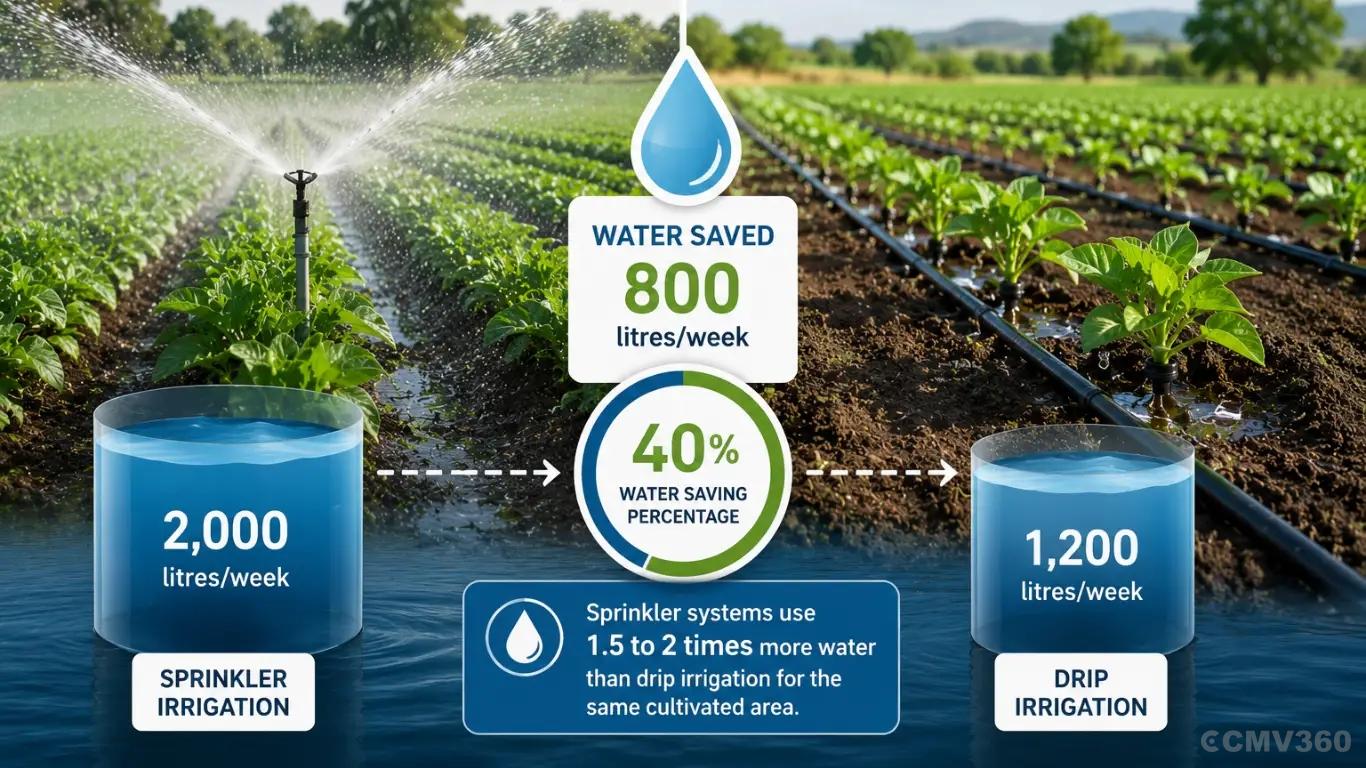
Sprinkler system uses 2,000 litres per week
Drip irrigation uses 1,200 litres per week
Then:
Water saved = 800 litres
Water saving percentage = 40%
Many agricultural studies also indicate that sprinkler systems may use approximately 1.5 to 2 times more water than drip irrigation for the same cultivated area because drip irrigation minimizes evaporation, runoff, and overspray.
Initial Investment vs Long-Term Return on Investment (ROI)
Cost is often one of the biggest deciding factors when choosing an irrigation system.
Drip irrigation generally requires greater upfront investment due to:
Pipes
Tubing
Emitters
Filters
Pressure regulators
Detailed system design
Sprinkler irrigation typically involves:
Pumps
Main pipelines
Sprinkler heads
Pressurized distribution equipment
Although both systems require investment, the long-term economics can differ considerably.
Why Drip Irrigation Often Delivers Better ROI
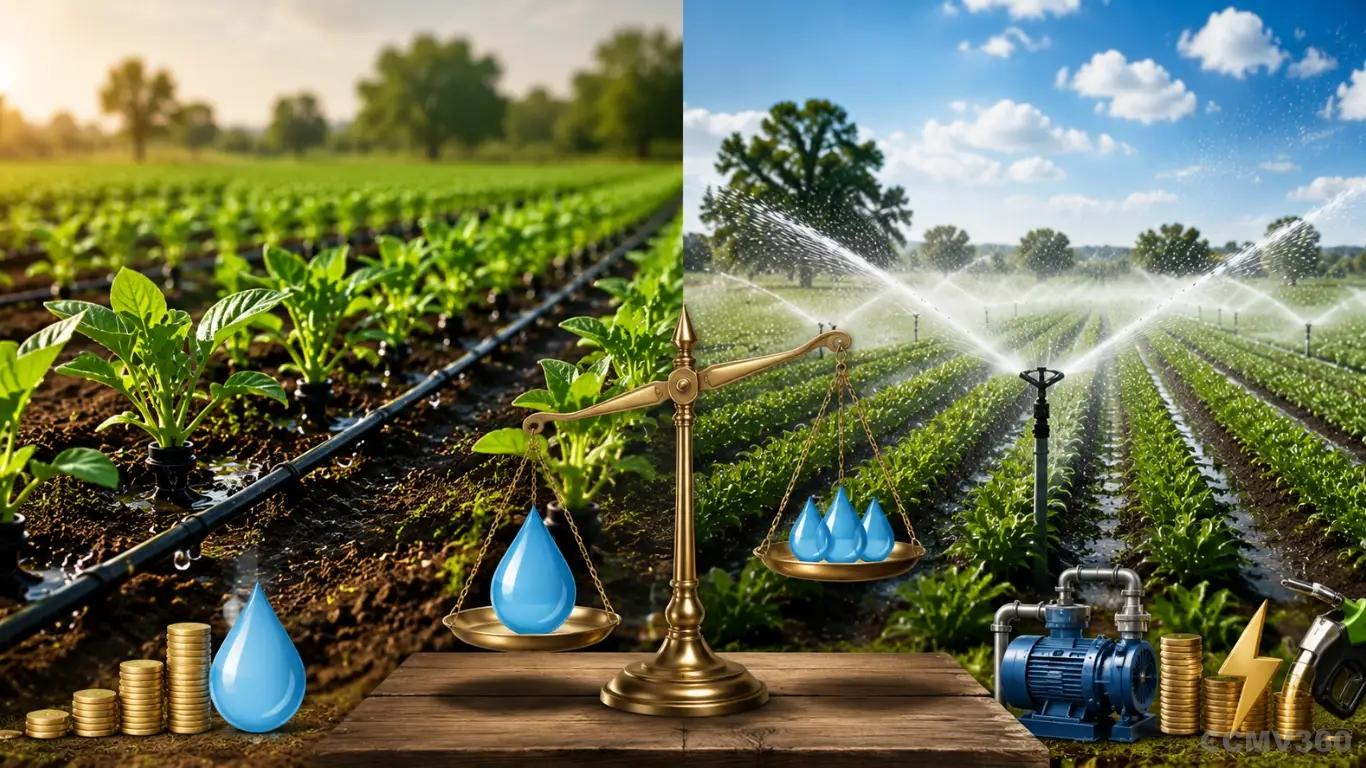
For farms where water is scarce or crops have high market value, drip irrigation often provides stronger long-term financial returns.
Its advantages include:
Lower water consumption.
Reduced electricity or diesel usage due to lower operating pressure.
Lower labour requirements.
Better fertilizer utilization through fertigation.
Reduced weed control costs.
Improved crop yield and quality.
When Sprinkler Irrigation Can Be More Cost-Effective
Sprinkler irrigation remains a practical choice when:
Large open fields need uniform coverage.
Crops benefit from overhead watering.
Water costs are relatively low.
Broad-acre farming is the priority.
Simple Formula for Comparing ROI
Farmers can estimate irrigation investment returns using the following formula:
ROI = (Annual Benefit − Annual Operating Cost) ÷ Initial Investment × 100
When calculating ROI, consider:
Water cost savings
Electricity or fuel savings
Labour savings
Yield improvement
Maintenance costs
Repair expenses
Looking beyond installation costs provides a much clearer picture of long-term profitability.
Factors to Consider Before Choosing an Irrigation System
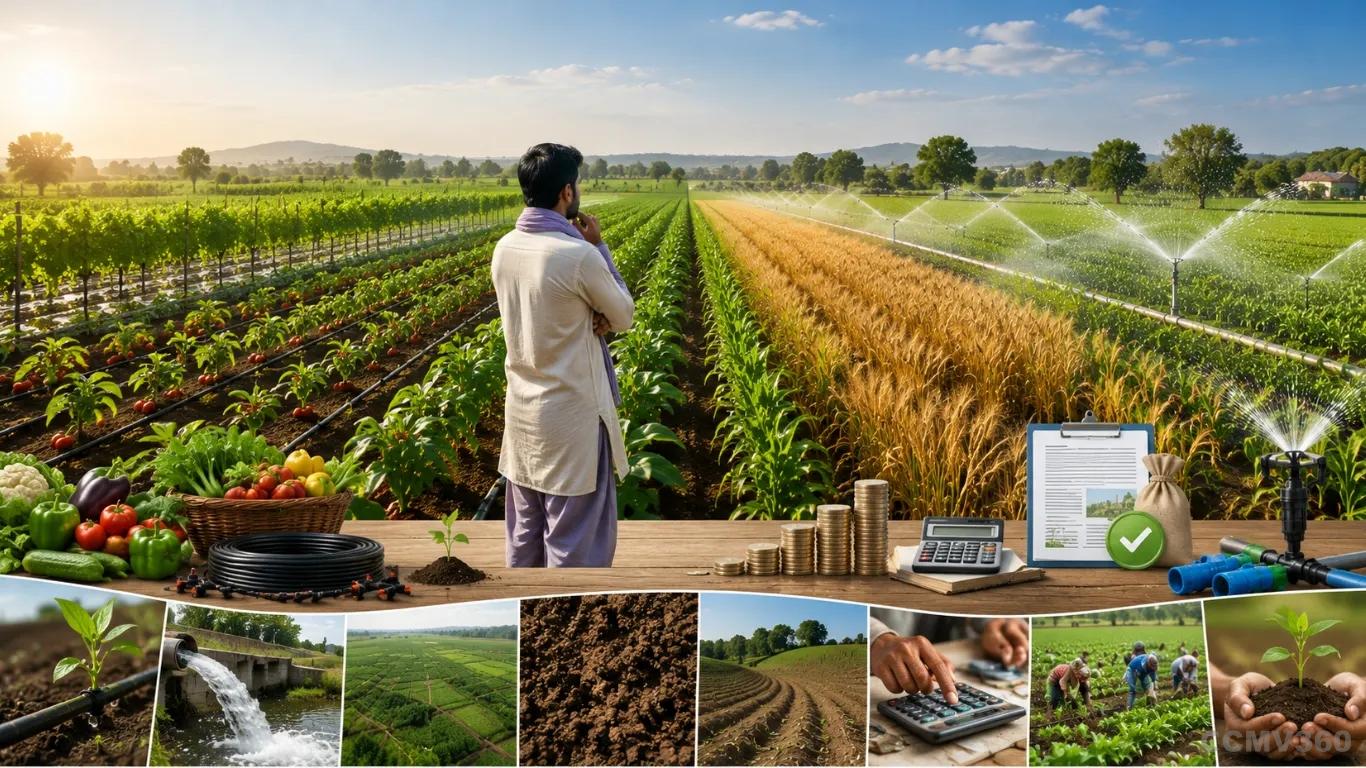
Before investing, every farmer should carefully evaluate:
Crop type and water requirement.
Availability of irrigation water.
Farm size.
Soil characteristics.
Field shape and terrain.
Initial budget.
Expected operating costs.
Labour availability.
Government subsidy schemes available in the state.
Selecting the right irrigation system based on these factors improves productivity while ensuring better returns over the years.
Which Irrigation System Is Better?
There is no single answer because both systems serve different farming needs.
Choose Drip Irrigation If:
Water availability is limited.
You grow fruits, vegetables, flowers, sugarcane, cotton, or plantation crops.
Maximum water efficiency is your priority.
You want precise fertilizer application through fertigation.
Long-term savings on water and fertilizer are important.
Choose Sprinkler Irrigation If:
You cultivate wheat, maize, pulses, fodder crops, or lawns.
You need to irrigate large open fields.
Overhead watering benefits your crop.
Your farm has uneven terrain.
Wide field coverage matters more than maximum water efficiency.
Also Read: Organic Farming vs Conventional Farming: Which Method Can Earn Indian Farmers More Profit in 2026?
CMV360 Says
Drip irrigation and sprinkler irrigation have both transformed modern farming by replacing inefficient flood irrigation with smarter water management practices. However, the right choice depends entirely on your farming objectives rather than simply comparing one technology against the other.
If your priority is saving water, improving fertilizer efficiency, reducing weed growth, and achieving higher returns from high-value crops, drip irrigation is generally the better investment despite its higher installation cost. On the other hand, sprinkler irrigation offers excellent coverage for large fields, cereals, fodder crops, and situations where overhead watering is beneficial, making it a practical option for many farmers.
Before making an investment, carefully assess your crop type, water availability, soil conditions, farm size, operating costs, and long-term profitability. Choosing the right irrigation system is not just about installing equipment, it is about maximizing every litre of water, improving crop productivity, and ensuring sustainable farming for years to come.

Robin Kumar Attri is a content and video professional with 2.7 years of experience in the commercial vehicle d .....