Electric Rickshaw vs Battery Rickshaw: Which One Saves More Money and Earns More Daily in India 2026?
 Add CMV360 on Google
Compare electric and battery rickshaws in India by range, battery life, charging, running cost, subsidy, maintenance and daily commercial use to choose the right three-wheeler.

By Robin Kumar Attri

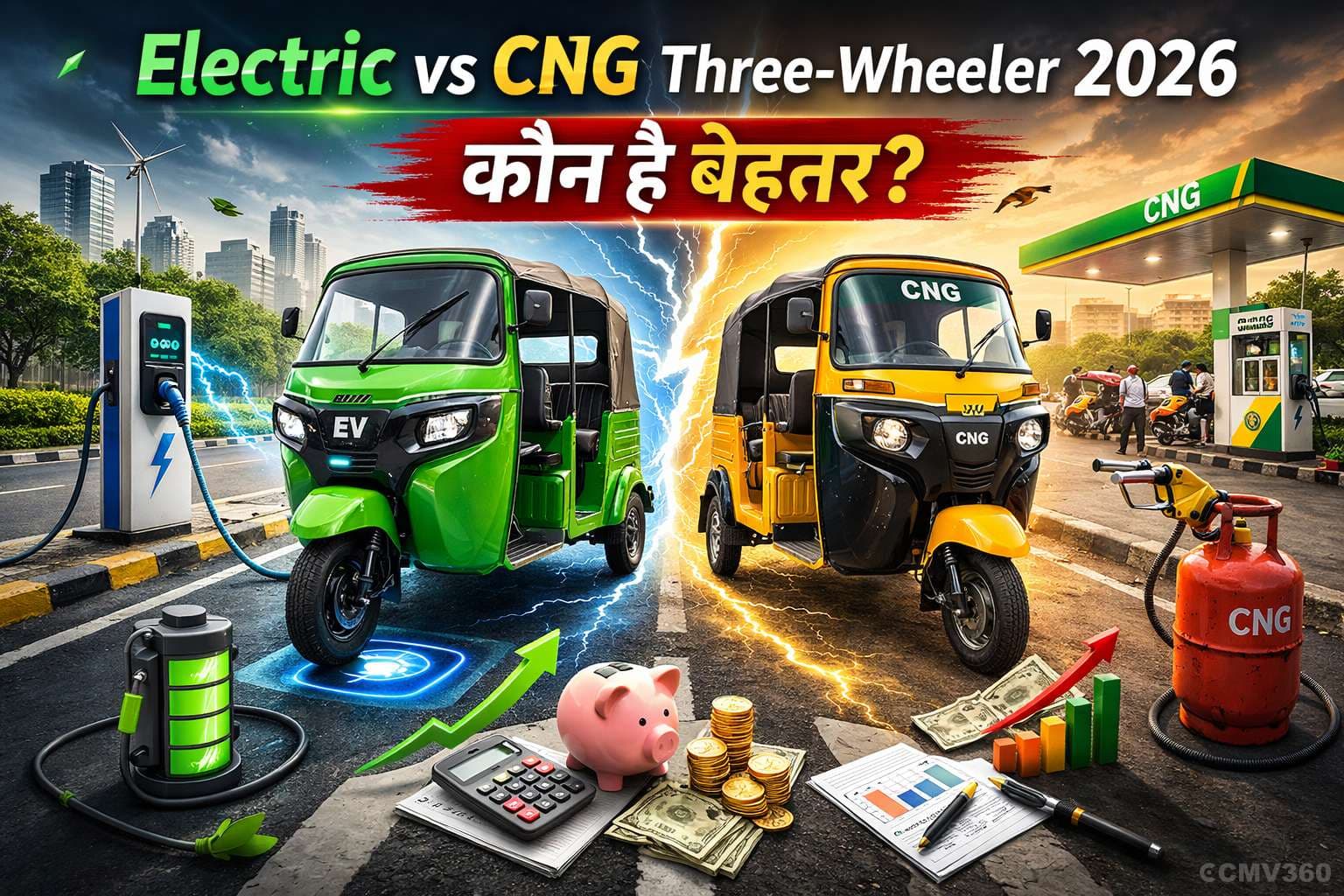
Choosing an electric three-wheeler in India is no longer just about finding the lowest purchase price. For a driver, every kilometre affects earnings, and factors such as battery life, range, charging time, maintenance, downtime and resale value can make a major difference over the years. This is why the debate around electric rickshaw vs battery rickshaw deserves a closer look.
In common Indian usage, the terms are often used interchangeably. However, buyers frequently use “battery rickshaw” for conventional low-speed models, especially those with lead-acid batteries, while “electric rickshaw” can also include newer lithium-ion models and more advanced L5 electric auto-rickshaws. The real difference, therefore, is not the name on the vehicle but its battery technology, performance, vehicle category, range and after-sales support.
A traditional lead-acid e-rickshaw offers a major advantage: lower initial investment. On the other hand, modern electric three-wheelers bring benefits such as longer range, lower battery-related maintenance, better productivity and reduced downtime. Models such as the Montra Electric Super Auto also show how far the segment has progressed, with a 10.6 kWh battery, 10 kW peak power, 60 Nm peak torque and a claimed typical driving range of 160±5 km. So, when daily earnings depend on keeping the vehicle on the road, which option actually delivers better value?
Also Read: Loaded Electric Three-Wheelers on Steep Roads: Can They Really Climb Hills or Is It Just a Myth?
Electric Rickshaw vs Battery Rickshaw: Quick Comparison
Factor | Traditional Lead-Acid E-Rickshaw | Modern Lithium-Ion E-Rickshaw | L5 Electric Auto |
Initial cost | Lower | Higher | Generally highest |
Battery | Lead-acid | Lithium-ion/LFP | Advanced battery pack |
Daily range | Best for shorter routes | Better for regular use | Suitable for demanding operations |
Battery weight | High | Lower | Depends on model |
Charging | Generally slower | More flexible/faster on some models | Model dependent |
Maintenance | Higher battery upkeep | Generally lower | Lower drivetrain maintenance |
Best use | Budget and short routes | Daily commercial use | Longer and heavier-duty work |
The exact specifications vary by model, so buyers should compare the actual vehicle rather than relying only on the category name.
What Is a Battery Rickshaw?
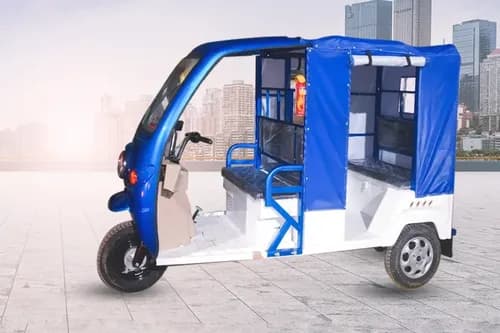
A battery rickshaw is simply an electric three-wheeler powered by a rechargeable battery and electric motor. In the Indian market, the term is commonly associated with conventional e-rickshaws using lead-acid batteries. Their lower upfront cost has made them popular for last-mile passenger transport, local markets, railway stations, villages and short urban trips.
A basic e-rickshaw is designed primarily for low-speed operations. Under the Central Motor Vehicles Rules, an e-rickshaw is intended for last-mile passenger connectivity, with a maximum of four passengers excluding the driver, up to 40 kg of luggage, motor net power not exceeding 2,000 W and a maximum speed of 25 km/h.
The biggest limitation is the battery itself. Lead-acid packs are heavy, generally require more maintenance and can need replacement more frequently under intensive use. This may be acceptable for a driver covering limited kilometres, but it becomes more important when the vehicle is used all day.
What Makes a Modern Electric Rickshaw Different?
Modern electric rickshaws use more advanced drivetrains and can be equipped with lithium-ion or LFP battery technology. These batteries are lighter, generally offer better usable energy efficiency and can have a longer service life when supported by good battery management and proper charging practices.
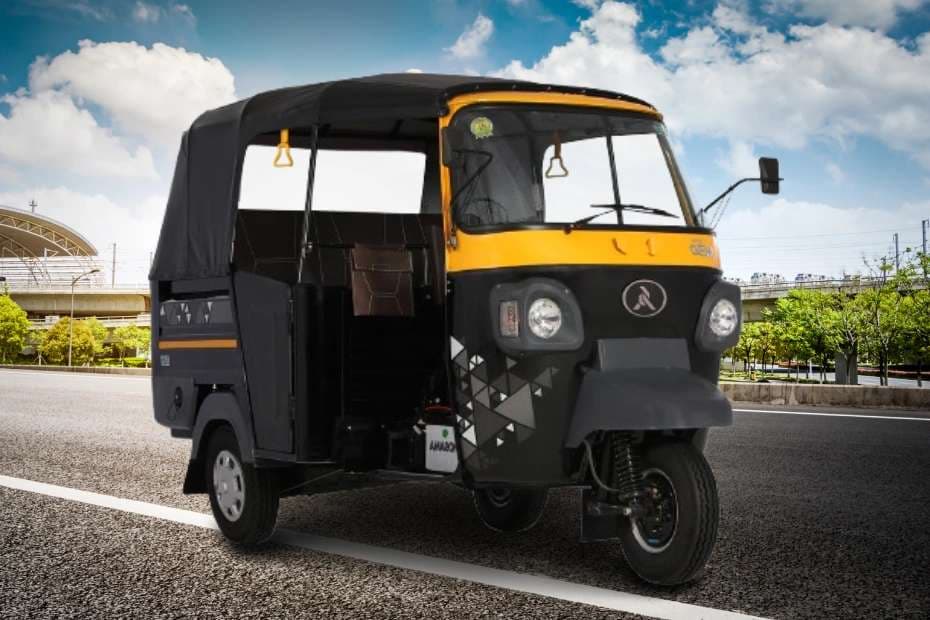
The Montra Electric Super Auto is an example of a higher-performance electric three-wheeler aimed at commercial operations. It comes with a 10.6 kWh battery, 10 kW peak power and 60 Nm peak torque. The vehicle offers a typical driving range of 160±5 km, while its certified range is listed at 239 km. Its standard off-board charger can fully charge the battery in around 4 hours, and Montra Electric claims a running cost of approximately 53 paise per km, although actual costs depend on electricity prices, load, roads and driving conditions.
This makes advanced electric autos more suitable for drivers who need longer working hours and greater route flexibility.
Lead-Acid vs Lithium-Ion: The Most Important Comparison
The battery is one of the largest ownership expenses in an electric three-wheeler. Lead-acid technology costs less initially, but its high weight and shorter replacement cycle can increase long-term expenses.
CEEW's analysis of e-rickshaw operations found that lead-acid batteries can require replacement after around 300-350 charging cycles, or approximately nine months under the operating conditions studied. This is one reason a lithium-ion electric auto can sometimes deliver lower ownership costs despite a higher purchase price.
Lithium-ion batteries are more expensive initially, but they generally offer:
Lower weight
Better range consistency
Less routine maintenance
Longer expected service life
Reduced replacement frequency
However, battery life depends heavily on usage, charging habits, temperature, load and maintenance. The smarter question for a commercial buyer is not simply “Which battery is cheaper?” but “Which battery gives me the lowest cost and least downtime over my ownership period?”
Which One Offers Better Range for Daily Use?
For short local routes, a conventional lead-acid e-rickshaw can be practical. Many such vehicles operate around 60-90 km a day under typical conditions.
Lithium-ion e-rickshaws can generally support approximately 80-130 km daily, depending on the model. Higher-performance electric autos can handle roughly 100-160 km of daily operation. CEEW has also noted that e-rickshaws commonly operate around 70-90 km per day, while electric autorickshaws may cover around 100-160 km.
Real-world range can fall with full passenger loads, steep roads, poor surfaces, frequent acceleration, low tyre pressure, summer heat and battery ageing. That is why practical range matters more than simply comparing the highest advertised figure.
Running Cost and the Hidden Cost of Battery Replacement
Electricity is generally cheaper per kilometre than petrol, diesel or CNG, with indicative electric three-wheeler energy costs often falling around 50 paise to ₹1 per km, depending on operating conditions.
For example, if a vehicle consumes 10 kWh from the grid, electricity costs ₹8 per unit and the real range is 100 km, the electricity cost works out to:
₹80 ÷ 100 km = ₹0.80 per km
But charging cost alone does not tell the full story. The total ownership calculation should include:
Purchase Price + Financing + Electricity + Maintenance + Battery Replacement + Insurance/Permits - Resale Value
Battery depreciation can be especially important. Consider this example for your reference and easier understanding of the concept:
Daily distance: 100 km
Operating days: 26 per month
Monthly distance: 2,600 km
Electricity cost: ₹0.80/km = ₹2,080/month
Battery reserve: ₹1.20/km = ₹3,120/month
Here, the future battery replacement cost is higher than the monthly electricity cost. This clearly shows why a cheaper vehicle may not always be the cheapest vehicle to own.
Which Type Is Best for Different Buyers?
Choose a conventional lead-acid e-rickshaw if: your budget is limited, your daily route is short and flat, daily usage is moderate and you have reliable battery servicing nearby.
Choose a lithium-ion e-rickshaw if: you operate daily, cover longer distances, want lower downtime, need better efficiency and have access to an authorised service network with a clear battery warranty.
Choose an L5 electric autorickshaw if: you need more power, range, comfort, stronger suspension and braking, or regularly operate on demanding roads, gradients and longer routes.
L5 electric autos should not be compared with basic e-rickshaws only by purchase price. Their higher productivity and stronger overall performance can justify the additional investment for intensive commercial operations.
PM E-DRIVE Subsidy: What Buyers Should Know
The PM E-DRIVE scheme currently provides support for eligible registered e-rickshaws and e-carts. As of August 2026, the incentive is ₹2,500 per kWh, capped at ₹12,500 per vehicle, subject to a further limit of 15% of the vehicle's ex-factory price. Eligible support is currently scheduled until 31 March 2028, subject to available funds and category targets.
Period | Incentive Rate | Maximum Incentive |
FY 2024-25 | ₹5,000/kWh | ₹25,000 |
FY 2025-26 to FY 2027-28 | ₹2,500/kWh | ₹12,500 |
The actual subsidy is the lowest of the battery-based calculation, ₹12,500 or 15% of the ex-factory price.
For example, a 4.8 kWh battery qualifies for a calculation of ₹12,000 at ₹2,500 per kWh. If the vehicle meets all other eligibility requirements, the applicable incentive would therefore be ₹12,000.
The L5 electric three-wheeler category is different. Its PM E-DRIVE incentive closed on 26 December 2025 after the category target was reached. Buyers should therefore confirm the exact vehicle category before assuming that any electric three-wheeler qualifies.
Before booking, always ask the dealer for the OEM eligibility, exact model, battery capacity, ex-factory price before subsidy, incentive amount, vehicle category and written confirmation that the subsidy is already reflected in the invoice.
Safety, Service and Compliance Matter as Much as Price
A strong local service network can be more valuable than a small saving on purchase price. Check the availability of trained technicians, spare parts, chargers, controllers and battery support before making a decision.
Buyers should also confirm type approval, registration eligibility, insurance, approved seating capacity, effective brakes, proper lighting, reliable wiring, battery protection and local commercial requirements. State and city rules can differ, particularly regarding permits, routes, parking and operating zones.
For lead-acid batteries, correct water maintenance, ventilation and charging discipline are important. Lithium-ion vehicles should use the approved charger and a properly engineered battery management system. Never charge a damaged, swollen, wet or unusually hot battery.
Also Read: A comparative analysis of Tata Motors and Ashok Leyland commercial vehicles
CMV360 Says
For buyers looking for the lowest initial investment and short-distance operation, a traditional lead-acid battery rickshaw can still be a sensible choice. It works particularly well where routes are short, charging can be done overnight and the operator understands the recurring battery maintenance and replacement costs.
However, for most full-time commercial drivers, a modern lithium-ion electric rickshaw is generally the stronger long-term option. Better efficiency, lower battery-related maintenance, longer service life and reduced downtime can improve daily productivity. For demanding, high-mileage work, an L5 electric auto can offer even better power, range, comfort and durability.
Ultimately, the best choice is not the vehicle with the lowest showroom price. It is the one that delivers the right balance of purchase cost, battery life, range, charging time, maintenance, subsidy eligibility, service support and daily earning potential. For a driver whose vehicle is their livelihood, choosing the right electric three-wheeler can make a bigger difference to profits than simply choosing the cheapest one.

Robin Kumar Attri is a content and video professional with 2.7 years of experience in the commercial vehicle d .....