A comparative analysis of Tata Motors and Ashok Leyland commercial vehicles
 Add CMV360 on Google
Compare Tata Motors and Ashok Leyland commercial vehicles in 2026, including trucks, buses, mini trucks, EVs, features, strengths, applications, market position, and the best choice for buyers.

By Robin Kumar Attri

Tata Motors vs Ashok Leyland is one of the most important comparisons for truck, bus and commercial vehicle buyers in India. From compact mini trucks handling last-mile deliveries to heavy-duty tractor-trailers, mining tippers and electric buses, both brands have played a major role in shaping India's commercial vehicle industry.
Tata Motors is known for its wide product range, strong nationwide service network and growing electric vehicle portfolio. Ashok Leyland, meanwhile, has built a strong reputation in heavy trucks, tippers, haulage and buses, while expanding rapidly in LCV and electric mobility.
But which is the better commercial vehicle brand in 2026? The answer depends on the vehicle's application, payload, route, running costs and service requirements. Here is a simplified and detailed comparison of Tata Motors and Ashok Leyland across trucks, buses, mini trucks and electric commercial vehicles.
Tata Motors vs Ashok Leyland: Company Overview
Tata Motors, part of the Tata Group and headquartered in Mumbai, was founded in 1945 and remains India's largest commercial vehicle manufacturer. Its biggest USP is its extensive portfolio, covering mini trucks, pickups, ILCVs, heavy trucks, tippers, buses and electric commercial vehicles.
Ashok Leyland, part of the Hinduja Group and headquartered in Chennai, was founded in 1948. It is India's second-largest commercial vehicle manufacturer and has a particularly strong presence in the M&HCV, haulage, tipper and bus segments.
Parameter | Tata Motors | Ashok Leyland |
Parent Group | Tata Group | Hinduja Group |
Headquarters | Mumbai | Chennai |
Founded | 1945 | 1948 |
Market Position | India's largest CV manufacturer | India's second-largest CV manufacturer |
FY26 CV Sales | 4,28,329 units, up 14% YoY | Record FY26 volumes |
Approx. FY26 Retail Share | Around 34-37% | Around 18% |
Core USP | Widest portfolio and service reach | Strong M&HCV, tipper and bus expertise |
EV Focus | Tata Trucks.ev, Ace EV, Starbus EV | Switch Mobility |
Following the October 2025 demerger, Tata Motors commercial vehicle business operates separately from Tata Motors Passenger Vehicles. In this comparison, Tata Motors refers specifically to the standalone commercial vehicle business.
Tata Motors vs Ashok Leyland Mini Trucks and LCVs
The small commercial vehicle segment is crucial for e-commerce, FMCG distribution, agriculture, local businesses and last-mile logistics.
Tata Motors Mini Truck Range
Tata Motors offers one of India's widest small cargo vehicle portfolios, led by the iconic Tata Ace. Its active range includes the Ace Gold, Ace Gold+, Ace Gold Diesel, Ace EV and Ace EV 1000.
The company also offers the Tata Intra V10, V20, V30, V30 Gold, V50 Gold, V70 and V40 Bi-Fuel, covering different payload and cargo requirements. For tougher applications, Tata offers the Yodha 1700 and Yodha Pro.
The Tata Ace remains one of the most recognised names in India's mini-truck market, while the Intra and Yodha ranges give customers more options as payload requirements increase. The Ace EV 1000 also strengthens Tata's presence in electric last-mile cargo mobility.
Ashok Leyland Small Commercial Vehicle Range
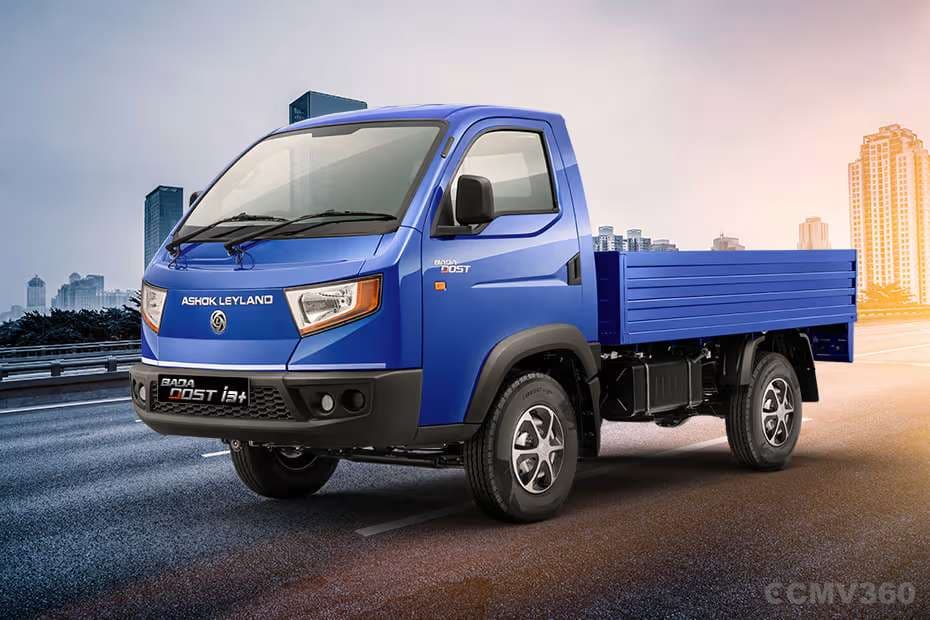
Ashok Leyland competes with the Dost, Dost+, Dost+ XL and Dost LiTE, along with the larger Bada Dost and Bada Dost i5.
A major addition is the Ashok Leyland Saathi, introduced in January 2026. Its key USP is low-NOx technology designed to eliminate the need for AdBlue/DEF dosing, potentially improving ownership convenience and operating economics.
Verdict: Tata Motors has an advantage in brand reach and service availability, while Ashok Leyland's Dost family offers a strong alternative with a comfortable cabin experience and competitive operating costs.
Tata vs Ashok Leyland ILCV Trucks
In the roughly 4-19-tonne category, both brands compete for regional cargo, FMCG, e-commerce and construction transport.
Tata Motors offers the Ultra range, including models such as the T.6, T.7, T.9, T.14, T.16 and T.19. Its new Tata Azura series, covering approximately 7-19 tonnes, uses a fresh 3.6-litre diesel engine and focuses on regional logistics, comfort and operating efficiency.
Tata is also expanding electric trucking with the Ultra EV 7-tonne, 9-tonne and 12-tonne models.
Ashok Leyland's offerings include the Ecomet series, Partner Super, Partner 6 Tyre and BOSS ICV range. These trucks are widely used for cargo distribution, FMCG movement and selected tipper applications.
Verdict: This is one of the closest contests. Tata's new Azura directly challenges Ashok Leyland's established Ecomet and Partner range. Buyers should compare payload, fuel efficiency, cabin comfort, local service support and total cost of ownership.
Tata Motors vs Ashok Leyland Heavy Trucks and Tippers
The M&HCV segment is where Tata Motors and Ashok Leyland showcase their strongest engineering capabilities.
Tata Signa and Prima
Tata Motors heavy truck portfolio is led by the Signa and Prima ranges. Key models include the Signa 5532.S, Signa 4825TK, Signa 2823.T, Signa 2821.T and Signa 1923.K.
The Prima is Tata's premium heavy-duty platform, while the Signa range covers multiple haulage and tipper applications.
Tata also has a strong safety USP in 2026, with M&HCV models updated to meet ECE R29 03 international crash-safety standards across multiple segments.
In electric heavy trucks, Tata offers the Prima E.55S, featuring 470 kW output and a 453 kWh battery, along with the Prima E.28K electric tipper for demanding applications.
Ashok Leyland AVTR, HIPPO and Taurus
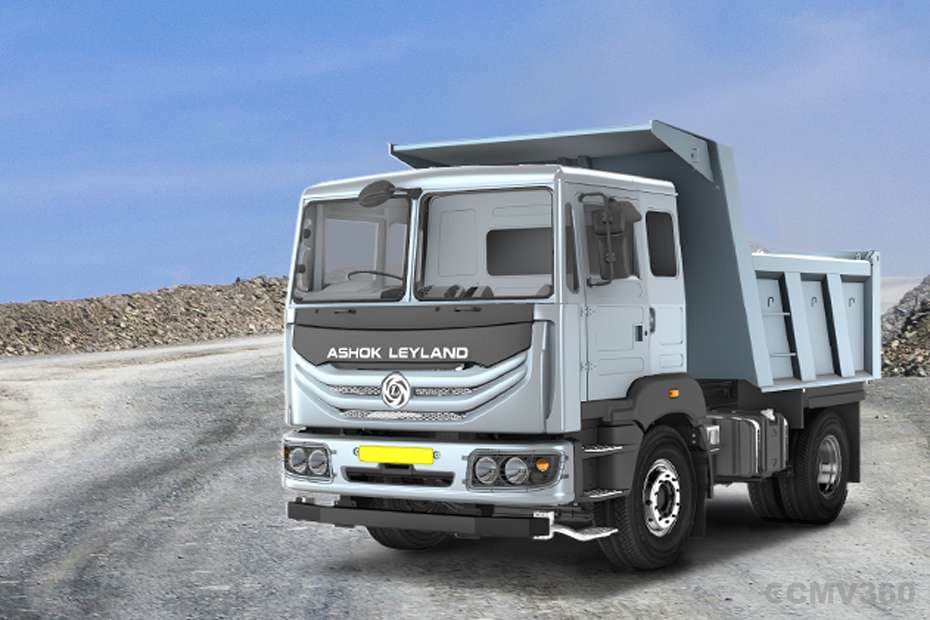
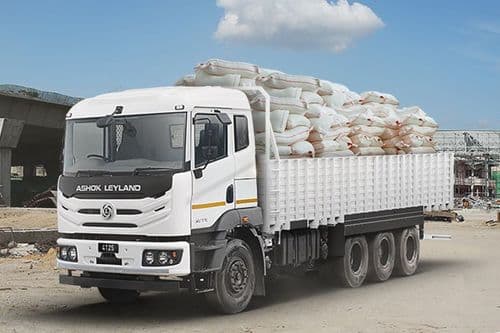
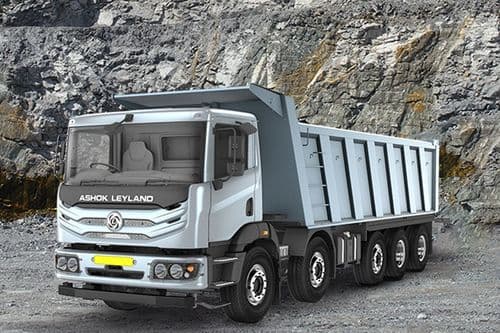
Ashok Leyland's flagship heavy truck family is the modular AVTR platform, with variants such as the AVTR 2820-6x4, 3525-8x4, 4525H DTLA, 4925 10x2 MAV and 3532-8x4.
One of its major highlights is India's first factory-fitted Made-in-India air suspension on selected variants, with a potential payload advantage of up to 4 tonnes.
The company also revived the HIPPO and Taurus nameplates in 2026. These heavy-duty trucks target mining, construction and infrastructure and use A-Series 6-cylinder, 8-litre engines producing up to 360 hp and 1,600 Nm of torque.
Verdict: Tata Signa and Prima have an advantage for long-haul operations, especially for buyers prioritising cabin refinement, safety and fleet technology. Ashok Leyland's AVTR, HIPPO and Taurus are highly attractive for mining, quarry and construction applications where payload, torque and uptime are critical.
Electric and Alternative-Fuel Commercial Vehicles
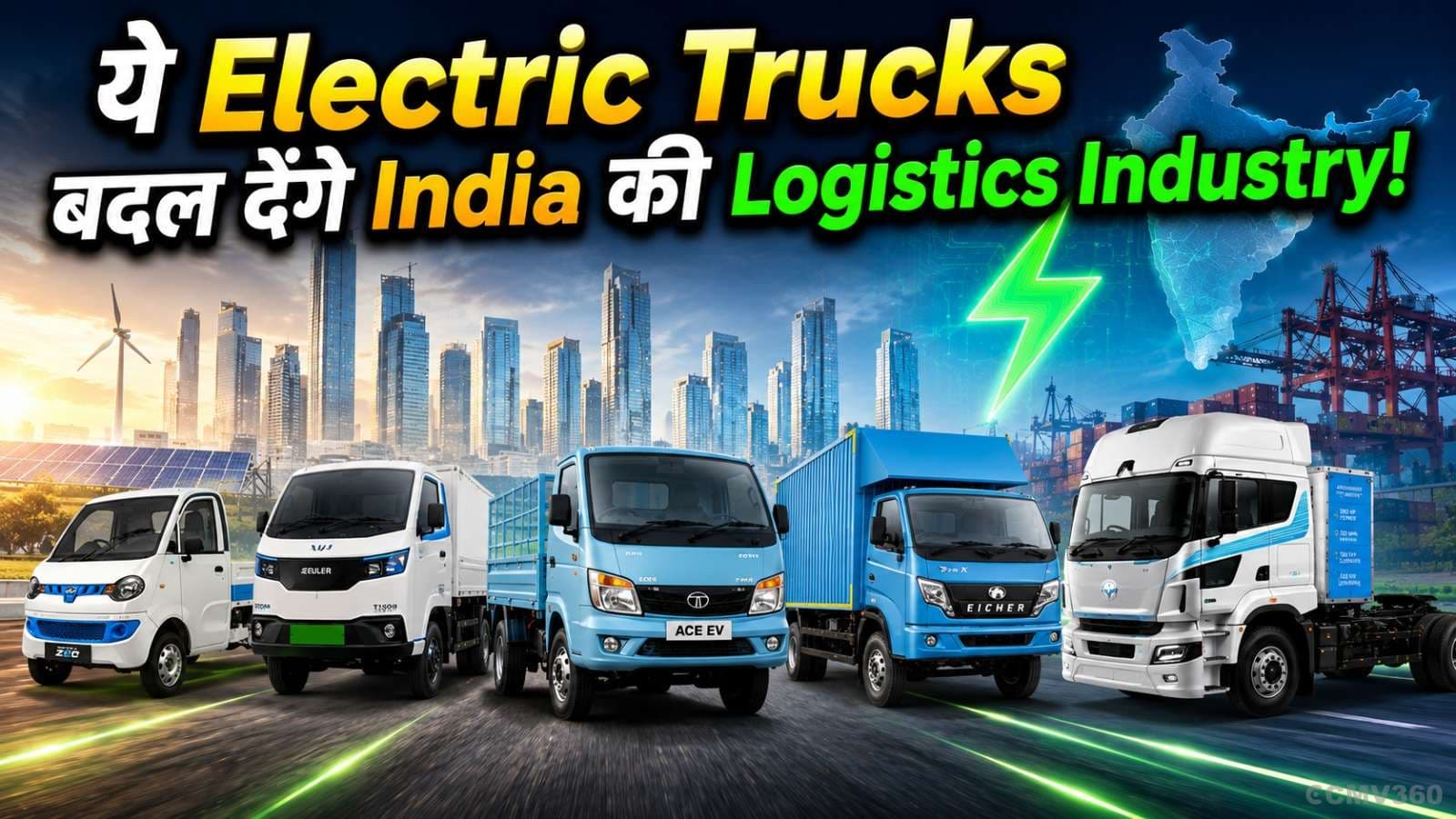
Tata Motors is expanding its electric truck portfolio through Tata Trucks.ev and its I-MOEV architecture, covering applications from approximately 7 tonnes to 55 tonnes. The range is designed for urban logistics, construction, ports and closed-loop operations.
Ashok Leyland is developing electric mobility through Switch Mobility, including e-LCVs and electric buses. Its e-LCV business reported 56% year-on-year growth in Q4 FY26. The company is also working with CNG, LNG and hydrogen-related technologies.
Tata currently has a broader visible electric truck portfolio, while Ashok Leyland is strengthening its position through Switch Mobility and alternative-fuel development.
Tata Motors vs Ashok Leyland Bus Range
Both companies are among India's leading bus manufacturers.
Tata Motors Buses
Tata's bus range includes the Starbus, Starbus Prime, Starbus City, Starbus Ultra, Starbus Ultra Prime, Cityride, Cityride Skool, Starbus EV, Ultra Skool 9/9 EV and Magna Coach.
The company also offers the Tata Winger, Winger Plus and Magic Express for smaller passenger transport requirements.
Tata's biggest bus USP is flexibility, with more than 150 listed configurations across body types, seating arrangements and fuel options. This makes it a strong choice for school buses, staff transport, city operations and large tenders.
Ashok Leyland Buses
Ashok Leyland's bus products include the Viking, Viking City Bus, Cheetah, Lynx Max, Lynx Strong, Circuit electric bus series and 12M chassis range.
The Viking remains one of India's most proven bus platforms and has been in continuous production since 1976. It continues to have a strong presence in state transport and stage-carrier operations.
The JanBus is not included because it is no longer an active listed production model.
Verdict: Tata Motors offers greater variety and configuration flexibility, making it strong for school and staff transport. Ashok Leyland has a major advantage in traditional state transport and stage-carrier operations, supported by the long-standing Viking platform.
Tata Motors vs Ashok Leyland: Quick Comparison
Application | Better Fit | Why |
Last-mile delivery | Tata Ace EV / Dost / Saathi | Strong products from both brands |
Long-haul transport | Tata Signa / Prima | Comfort, safety and fleet support |
Mining and quarry | Ashok Leyland AVTR / HIPPO / Taurus | Strong payload and torque focus |
Construction | Ashok Leyland | Heavy-duty application-focused range |
School and staff buses | Tata Starbus / Starbus Ultra | Wide range of configurations |
State transport buses | Ashok Leyland Viking / Cheetah | Proven stage-carrier reputation |
Electric buses | Tata Starbus EV / Circuit | Compare TCO and charging support |
Service and resale reach | Tata Motors | Wider nationwide network |
Entry-level value | Ashok Leyland | Competitive value positioning |
What About Three-Wheelers?
Neither Tata Motors nor Ashok Leyland is a major player in India's mainstream auto-rickshaw and cargo three-wheeler market. Buyers looking specifically for three-wheelers should compare specialist manufacturers such as Bajaj, Piaggio, Mahindra, Atul Auto and TVS.
However, for buyers wanting a compact four-wheeled alternative with better stability and payload potential, the Tata Ace/Intra and Ashok Leyland Dost/Saathi are directly relevant options.
Also Read: Tata Motors Salutes India’s Truck Drivers as ‘Desh Ke Super Saarthi’ on 80th Independence Day
CMV360 Says
There is no single winner in the Tata Motors vs Ashok Leyland commercial vehicle comparison. Tata Motors is the stronger choice for buyers looking for the widest product range, extensive service reach, strong resale value, advanced safety positioning and a growing electric truck portfolio.
Ashok Leyland stands out for its heavy-duty engineering, strong haulage and tipper range, AVTR platform, mining-focused trucks and proven bus expertise. Products such as the Taurus, HIPPO and Viking continue to strengthen its identity in demanding commercial applications.
The best approach is to compare the exact models for your business rather than choosing a brand alone. A Tata Ace should be compared with a Dost or Saathi, while a Tata Signa or Prima should be evaluated against the relevant Ashok Leyland AVTR, HIPPO or Taurus based on payload, route, fuel efficiency, uptime and total cost of ownership.
In 2026, Tata Motors and Ashok Leyland remain two of the biggest pillars of India's commercial vehicle industry. Tata leads through portfolio breadth and network strength, while Ashok Leyland remains highly competitive through application-focused engineering and heavy-duty expertise. The right choice ultimately depends on which vehicle delivers better profitability for your specific operation.

Robin Kumar Attri is a content and video professional with 2.7 years of experience in the commercial vehicle d .....