Do This Before First Rainfall and Your Farm Soil Could Stay Fertile for 3 Crop Seasons
 Add CMV360 on Google
ICAR advises farmers to deep plough fields before monsoon to improve soil fertility, control pests naturally, save water, and increase Kharif crop yield and profits.

By Robin Kumar Attri

As the scorching summer heat continues across India and farmers prepare for the upcoming Kharif season, agricultural experts are advising growers to focus on one of the most powerful yet often ignored farming practices - deep ploughing before the first monsoon rains. According to experts from the Indian Council of Agricultural Research, timely deep ploughing can dramatically improve soil fertility, reduce pest attacks, increase water retention, and help farmers achieve better crop yields with lower input costs.
Today’s farming is no longer just about sowing seeds and waiting for rain. Modern agriculture demands scientific soil management, efficient moisture conservation, and sustainable nutrient usage. With rising fertilizer prices, increasing pest pressure, and unpredictable weather patterns, farmers are now looking for practical and low-cost solutions that can improve productivity naturally. This is where pre-monsoon deep tillage becomes a game-changing farming technique.
Interestingly, many progressive farmers using advanced tractors from brands like Mahindra & Mahindra, Sonalika, John Deere, New Holland, and Massey Ferguson are now adopting implements such as MB Ploughs, Subsoilers, and Chisel Ploughs to improve soil health before monsoon sowing. These implements are proving highly effective in breaking compact soil layers and preparing fields for strong root development.
But why are agricultural scientists repeatedly emphasizing deep ploughing before the arrival of monsoon rains? Can one farming operation really improve soil structure, reduce weeds, lower irrigation requirements, and boost crop productivity together? Let us understand this complete scientific farming strategy in detail.
Also Read: India’s Soil Crisis: How Modern Farming Is Destroying Fertile Land Built Over Thousands of Years
Why Deep Ploughing Before Monsoon is Becoming Essential for Indian Farmers
Agricultural scientists explain that continuous shallow tillage and excessive use of high-speed implements like rotavators and rotary tillers gradually create a compact, hard layer inside the soil. This compact layer, commonly known as “hardpan,” generally forms at a depth of around 6 to 8 inches below the surface.
This hardpan acts like a barrier inside the field. It restricts root penetration, reduces soil aeration, blocks proper water movement, and limits nutrient absorption by crops. Over time, the soil starts losing its natural structure and productivity.
In many farming regions of India, especially areas with heavy or clay-rich soils, farmers often complain about weak root growth, poor water absorption, standing water during rains, and declining crop performance despite applying fertilizers regularly. Experts believe that soil compaction is one of the major hidden reasons behind these problems.
Deep ploughing directly targets this issue.
By breaking the compact lower layer, deep tillage opens up the soil profile, allowing roots to grow deeper and absorb nutrients more efficiently. This not only improves crop strength but also increases the soil’s ability to store rainwater naturally.
Best Time to Do Deep Ploughing Before Monsoon
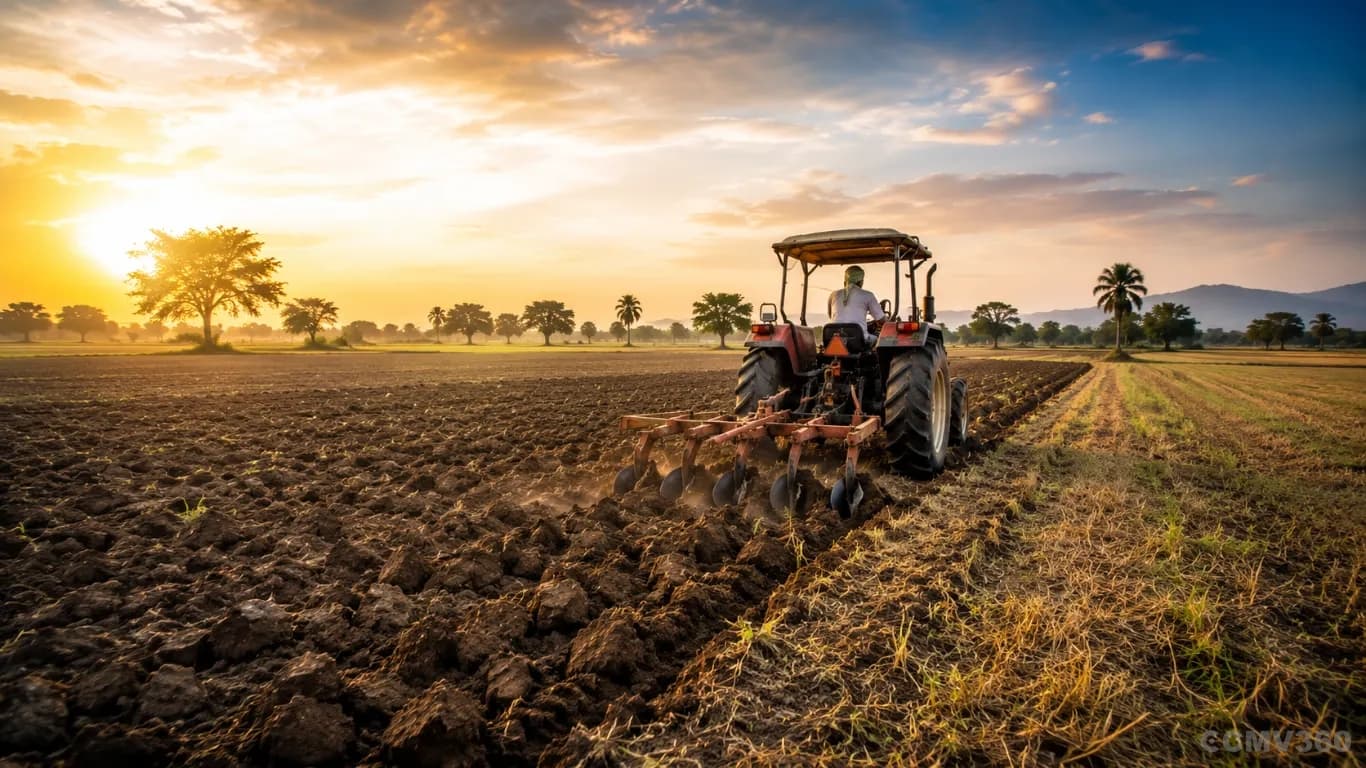
According to agricultural experts, the ideal time for deep ploughing is around 10 to 20 days before the arrival of the first monsoon rains. In most Indian states, this period generally falls between the last week of May and the first week of June.
This timing is considered highly important because the soil remains relatively dry and open during this period. The heat from intense summer sunlight also plays a major role in destroying harmful insects, fungi, and disease-causing organisms present beneath the soil surface.
However, experts also caution farmers against ploughing in extremely dry or waterlogged conditions. Fields should ideally have light to moderate moisture levels during deep tillage. This helps reduce tractor load, lowers fuel consumption, and improves implement performance.
Agricultural Implements Recommended for Deep Tillage
Farmers are advised to use specialized implements designed for deep soil penetration. The most commonly recommended implements include:
Agricultural Implement | Main Purpose | Suitable Soil Type |
MB Plough | Soil inversion and hardpan breaking | Medium to heavy soils |
Subsoiler | Deep soil loosening without inversion | Compact and hard soils |
Chisel Plough | Breaking deep compact layers | Clayey and hardpan soils |
Rotavator (after deep tillage) | Mixing green manure and residue | Secondary soil preparation |
These implements are widely compatible with tractors across multiple horsepower categories. Farmers using tractors from brands like Swaraj, Eicher, Farmtrac, and Powertrac are increasingly using these attachments for scientific field preparation.
Ideal Soil Depth for Deep Ploughing
Experts recommend different tillage depths depending on soil type:
Soil Type | Recommended Ploughing Depth |
Light Soil | 12 to 15 inches |
Heavy or Clayey Soil | 15 to 18 inches |
This depth helps break the compact layer effectively and improves soil aeration significantly.
Major Benefits of Deep Ploughing Before Rainfall
Deep ploughing is often described by agricultural scientists as the “first masterstroke” before monsoon farming. The benefits extend far beyond simple soil turning.
Natural Pest and Disease Control
One of the biggest advantages of pre-monsoon deep tillage is natural pest management.
When farmers turn the soil deeply under strong summer sunlight, the eggs and larvae of harmful insects hidden inside the soil come to the surface. Exposure to high temperatures and sunlight destroys many pests naturally.
Similarly, harmful fungi, bacteria, and disease-causing organisms are also reduced considerably.
This helps farmers reduce the future burden of soil-borne diseases without depending entirely on chemical pesticides.
Effective Weed Management
Weeds are one of the biggest enemies of crop productivity. Deep ploughing helps uproot weeds completely and exposes their roots to intense sunlight, causing them to dry naturally.
This reduces weed pressure in the next crop cycle and lowers herbicide dependency.
Better Root Development
Healthy roots are the foundation of strong crops.
When the compact soil layer breaks, plant roots gain freedom to spread deeper into the soil profile. Deeper roots help crops absorb water and nutrients more efficiently.
This improves crop strength, disease resistance, and stress tolerance during dry spells.
Improved Water Absorption and Moisture Retention
Studies conducted by agricultural experts suggest that deep ploughing improves rainwater infiltration significantly.
Instead of flowing away from the surface, rainwater penetrates deeper into loosened soil. This helps recharge soil moisture and reduces irrigation requirements by nearly 20 to 25 percent in many conditions.
In water-stressed regions, this benefit becomes extremely valuable.
Particularly Beneficial for Hard Soil Regions
Experts believe that deep tillage delivers exceptional results in states and regions where soils are naturally hard and compact.
Some major regions where this method proves highly beneficial include:
Rajasthan
Madhya Pradesh
Maharashtra
Vidarbha region
Semi-arid farming belts
Farmers in these areas often face moisture stress and soil compaction problems, making deep tillage highly effective for improving productivity.
How Organic Manure Improves Soil After Deep Ploughing
Deep ploughing alone is beneficial, but combining it with organic matter application creates even stronger results.
Agricultural scientists strongly recommend adding well-decomposed cow dung manure (FYM) or vermicompost immediately after deep tillage.
This step acts as a natural soil booster.
When organic manure mixes into loosened soil before rainfall, it improves:
Soil structure
Moisture retention
Beneficial microbial activity
Nutrient availability
Root-zone health
The organic matter also supports beneficial fungi like mycorrhizae and helpful soil bacteria, which play a major role in nutrient uptake and root development.
In simple words, organic manure turns the field into a living and fertile ecosystem before sowing begins.
Green Manure Crops: The Natural Nitrogen Factory for Fields
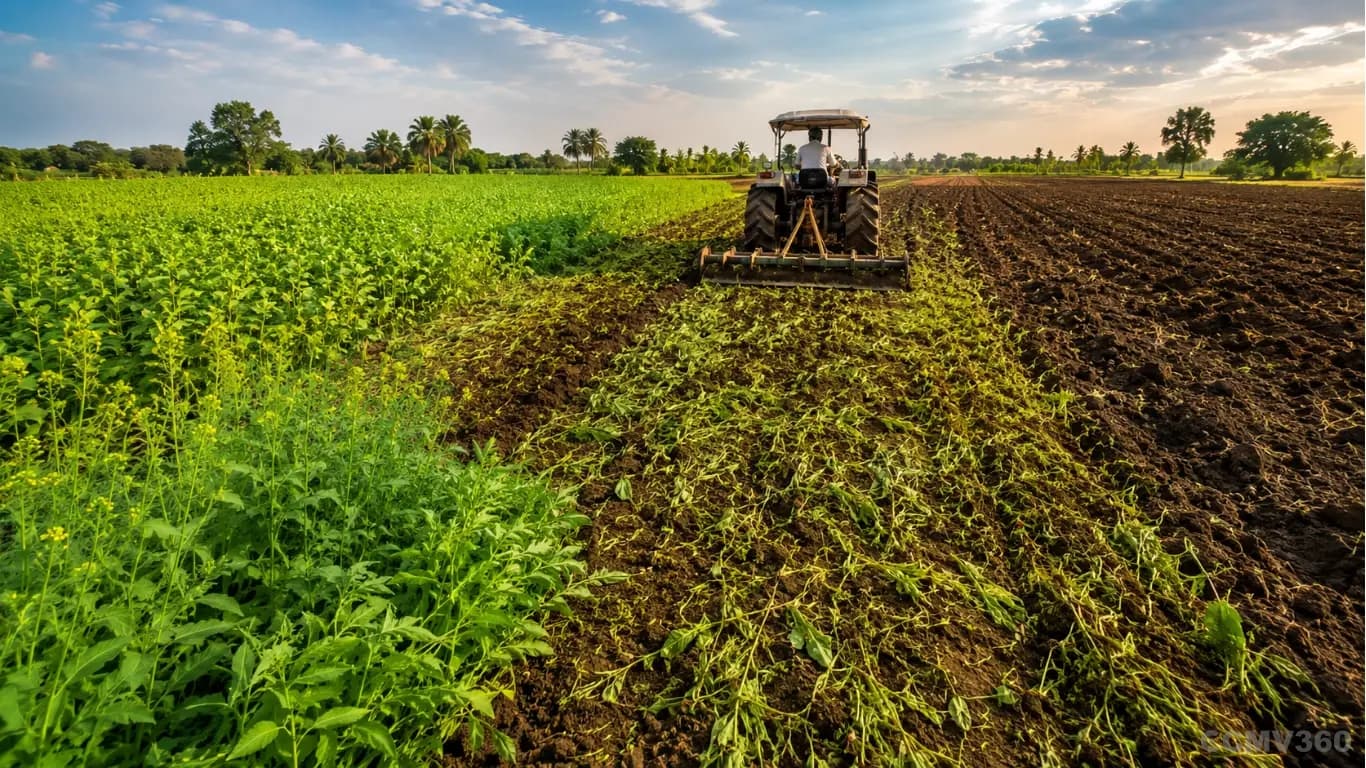
Another highly effective scientific farming practice recommended before the monsoon is green manuring.
Farmers who have some additional time before Kharif sowing can cultivate fast-growing crops such as:
Green Manure Crop | Main Benefit |
Dhaincha | Nitrogen fixation |
Sunn Hemp | Organic carbon improvement |
Cluster Bean | Soil fertility enhancement |
These crops act as natural nitrogen boosters.
When these crops reach around 40 to 45 days of age - just before flowering - they should be mixed back into the soil using a rotavator or tillage implement.
As rainwater enters the soil, these green crops decompose naturally and enrich the field with organic carbon and nitrogen.
According to experts, this practice can reduce urea requirements by nearly 30 to 40 percent for the next crop cycle.
This not only cuts fertilizer expenses but also improves long-term soil health.
Why Bund Management is Equally Important Before Monsoon
Many farmers focus only on sowing preparation and ignore bund strengthening before rainfall. However, agricultural experts consider bund management extremely important for soil and water conservation.
Heavy monsoon showers often wash away topsoil - the most fertile part of the field. Along with soil, expensive fertilizers and nutrients are also lost through runoff.
To prevent this, farmers are advised to create strong bunds around fields before monsoon arrival.
Benefits of Strong Bunding
Proper bund management offers several long-term benefits:
Prevents soil erosion
Conserves fertile topsoil
Reduces fertilizer runoff
Helps retain rainwater inside fields
Improves groundwater recharge
Maintains soil moisture for longer periods
In rainfed farming areas, bunding acts as a simple yet highly effective moisture conservation technique.
How Tractor Technology is Supporting Scientific Farming
Modern tractor technology is also playing an important role in making deep tillage easier and more efficient.
Today’s tractors come with higher torque engines, better hydraulic lifting capacities, and advanced transmission systems that help operate heavy tillage implements smoothly.
Popular tractor models from companies like Kubota, Escorts Kubota, TAFE, and ACE Tractors are increasingly being used for deep ploughing operations across India.
Farmers are now understanding that proper field preparation before monsoon can often deliver better returns than excessive fertilizer application later.
Simple Pre-Monsoon Farming Checklist for Better Yield
Here is a quick farming checklist recommended by agricultural experts before monsoon arrival:
Farming Activity | Recommended Timing |
Deep Ploughing | 10-20 days before monsoon |
Apply FYM/Vermicompost | Immediately after tillage |
Sow Green Manure Crops | Before monsoon |
Green Manure Incorporation | 40-45 days after sowing |
Strengthen Field Bunds | Before heavy rainfall |
Which Crops Benefit Most from Deep Ploughing?
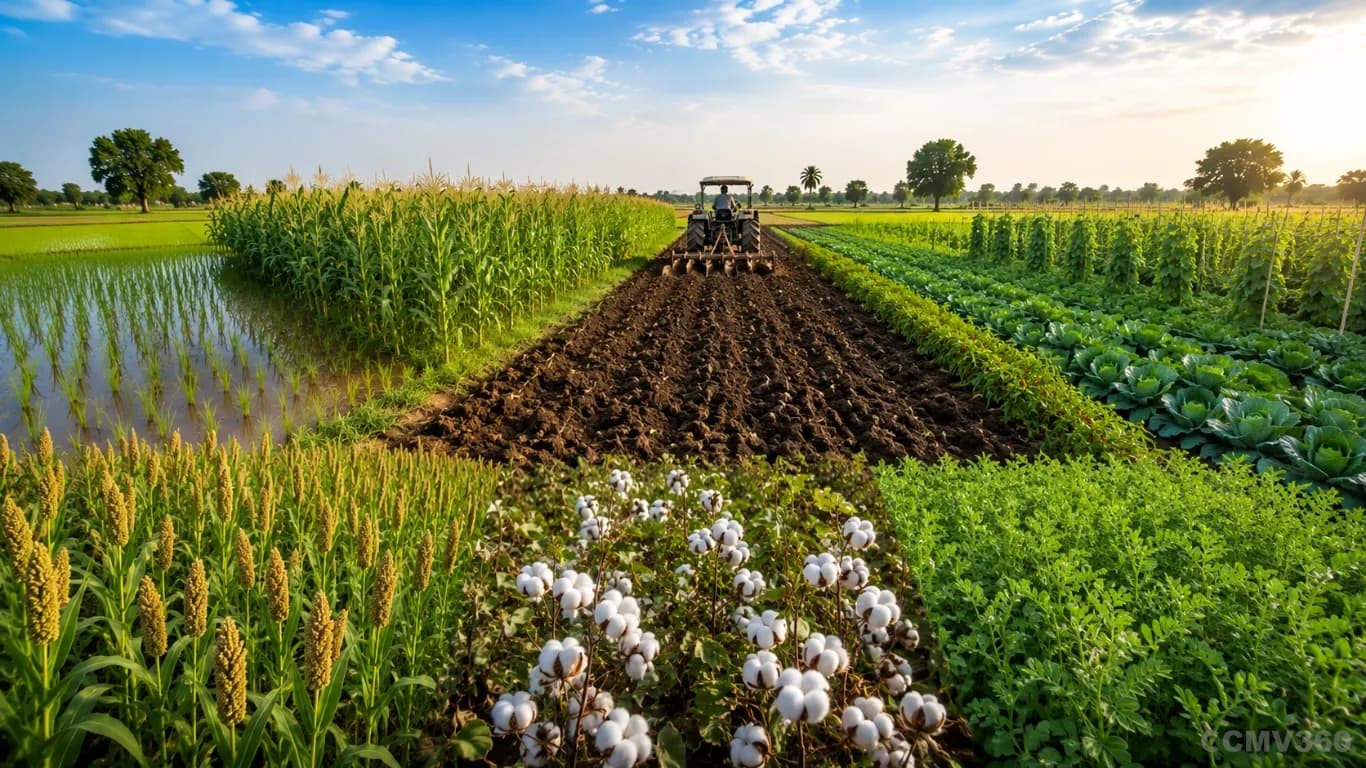
Experts say that multiple Kharif crops respond positively to scientific soil preparation before monsoon.
These include:
Rice
Maize
Millet
Cotton
Pulses
Vegetables
Better root growth, improved moisture retention, and enhanced nutrient availability contribute directly to improved crop quality and higher yields.
The Bigger Picture: Lower Farming Costs and Higher Profitability
The biggest advantage of pre-monsoon soil management is long-term profitability.
With a relatively small investment in deep tillage, organic manure, and bund management, farmers can improve soil fertility for the next two to three crop cycles.
This reduces dependency on excessive irrigation, fertilizers, pesticides, and herbicides.
At a time when input costs are rising continuously, such scientific and natural farming methods can help farmers improve profitability sustainably.
CMV360 Says
Deep ploughing before the first monsoon rain is not just a traditional farming activity - it is a scientifically proven soil management strategy that can transform crop productivity. By breaking the hardpan layer, improving water infiltration, controlling pests naturally, and increasing root development, farmers can prepare their fields for stronger and healthier crops.
When combined with organic manure, green manuring, and proper bund management, this approach becomes even more powerful. Farmers growing crops like rice, maize, millet, cotton, and vegetables can achieve better yields, improved crop quality, and lower farming costs for multiple seasons ahead.
As experts from the Indian Council of Agricultural Research suggest, timely action before monsoon arrival can create the foundation for a highly productive Kharif season. For Indian farmers aiming for sustainable profits and healthier soil, deep ploughing may well be the smartest pre-monsoon investment this year.

Robin Kumar Attri is a content and video professional with 2.7 years of experience in the commercial vehicle d .....