Tractors
Trucks
- Find by Budget
- Find by Type

English
 New Delhi
Compare bio-pesticides and chemical pesticides in India 2026. Learn costs, benefits, regulations, crop usage, market trends, and which option offers better long-term farming profitability.

By Robin Kumar Attri

India’s agriculture sector is going through one of its biggest transformations in recent years. From precision farming and AI-based crop monitoring to organic cultivation and export-focused production, farmers are now looking beyond just higher yields. Today, the focus is also on soil health, pesticide residues, export quality, long-term profitability, and sustainable farming practices.
At the center of this change stands a major debate: Bio-pesticides vs Chemical Pesticides.
For decades, chemical pesticides have remained the backbone of Indian agriculture because of their fast action and strong pest control capabilities. They helped farmers protect crops during severe infestations and played a major role in increasing agricultural productivity. However, rising concerns over soil degradation, harmful residues, pest resistance, environmental damage, and export rejections have forced the industry to rethink its approach.
This is where bio-pesticides are rapidly gaining attention. Derived from natural sources such as bacteria, fungi, plants, viruses, and minerals, bio-pesticides are being promoted as a cleaner, safer, and more sustainable solution for modern farming. With the Indian government banning several hazardous chemicals and promoting Integrated Pest Management (IPM), bio-pesticides are slowly moving from niche organic farming into mainstream agriculture.
In 2026, India’s pesticide market is witnessing a major shift. While chemical pesticides still dominate nearly 90% of the market, bio-pesticides are growing at over 10% CAGR due to increasing awareness, stricter regulations, rising organic demand, and export opportunities to markets like Europe and the US.
Major agricultural brands, agri-input companies, and research institutions are now investing heavily in biological crop protection technologies. Companies such as T Stanes, Bharat Biocon, IPL Biologicals, and several global agrochemical giants are expanding their bio-solutions portfolio to meet future demand.
But the biggest question for Indian farmers remains:
Which option is truly more effective and profitable, bio-pesticides or chemical pesticides?
The answer is not as simple as choosing one over the other. Both have strengths, weaknesses, and ideal use cases depending on crop type, pest pressure, cost, farm size, and long-term goals. Understanding these differences is now more important than ever for Indian farmers.
Also Read: India’s Farm Dilemma: The Hidden Cost of Hazardous Pesticides and the Urgent Need for Safer Farming
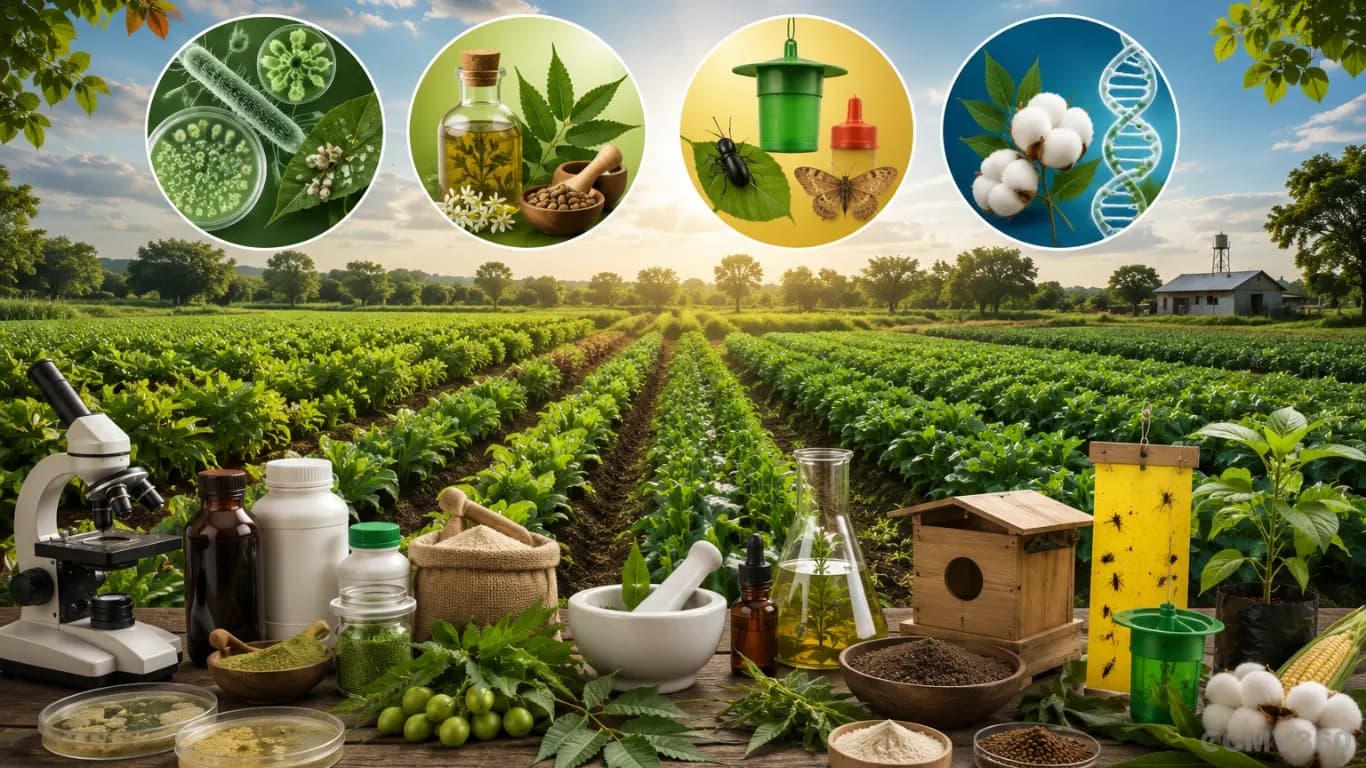
Bio-pesticides are pest control products made from natural organisms or naturally occurring substances. These include beneficial bacteria, fungi, viruses, plant extracts, and minerals that target harmful pests while minimizing environmental damage.
Unlike chemical pesticides that broadly kill pests, bio-pesticides are generally target-specific and safer for beneficial insects, pollinators, and soil organisms.
1. Microbial Bio-Pesticides: These are based on microorganisms that naturally attack pests or diseases.
Common examples include:
Bio-Pesticide | Target |
Bacillus thuringiensis (Bt) | Caterpillars and bollworms |
Trichoderma spp. | Soil-borne fungal diseases |
Pseudomonas fluorescens | Bacterial and fungal diseases |
Beauveria bassiana | Insects like whiteflies and borers |
Metarhizium anisopliae | Termites and sucking pests |
NPV Viruses | Helicoverpa and Spodoptera pests |
2. Botanical Bio-Pesticides: These are plant-derived pest control solutions.
Popular examples include:
Neem oil
Azadirachtin
NSKE (Neem Seed Kernel Extract)
Pyrethrins
Neem-based products alone are effective against more than 200 insect species.
3. Biochemical Bio-Pesticides: These products interfere with pest behavior rather than directly killing them.
Examples include:
Pheromone traps
Growth regulators
Attractants and repellents
4. Plant-Incorporated Protectants (PIPs): These involve genetically modified plants producing pest-resistant proteins, such as Bt cotton.
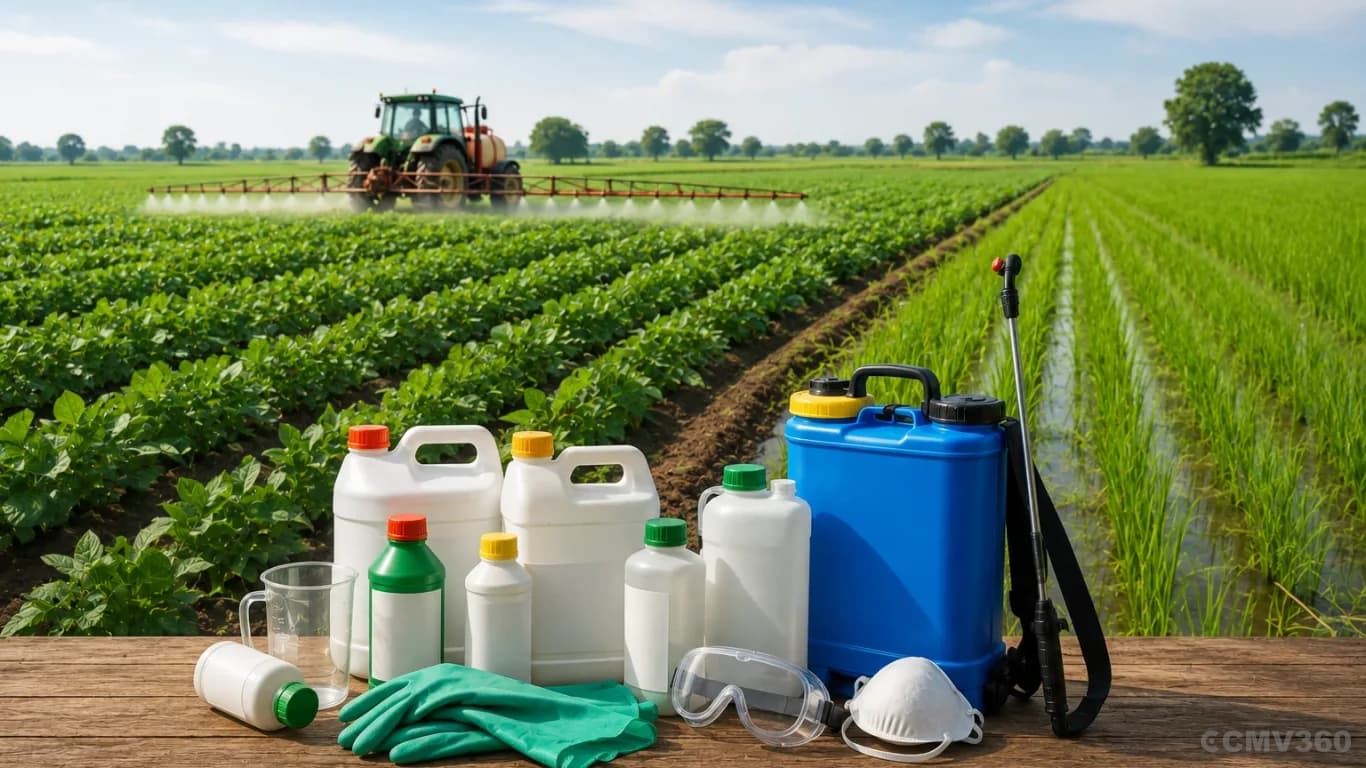
Chemical pesticides are synthetic compounds designed to quickly kill pests, weeds, fungi, rodents, and insects. They remain the most widely used crop protection products in India because of their rapid action and strong effectiveness during severe outbreaks.
India uses more than 60,000 tonnes of chemical pesticides annually across major crops.
Category | Common Examples | Main Use |
Insecticides | Chlorpyrifos, Cypermethrin | Control insects |
Herbicides | Glyphosate, Butachlor | Weed control |
Fungicides | Mancozeb, Carbendazim | Disease control |
Rodenticides | Zinc phosphide | Rodent control |
Herbicides currently dominate the market because of heavy usage in rice and wheat farming.
Understanding the practical differences between the two options is critical for farmers.
Aspect | Bio-Pesticides | Chemical Pesticides |
Source | Natural organisms/plants | Synthetic chemicals |
Action Speed | Slower | Fast |
Pest Control | Target-specific | Broad-spectrum |
Residue Levels | Very low | Higher |
Environmental Impact | Eco-friendly | Can harm soil/water |
Resistance Development | Lower | Higher |
Export Suitability | Excellent | Limited by residue norms |
Shelf Life | Shorter | Longer |
Impact on Beneficial Insects | Minimal | Often harmful |
Long-Term Soil Health | Better | May degrade soil |
India’s bio-pesticide market was valued between USD 242-287 million in 2025 and is expected to cross USD 381 million by 2030.
1. Government Restrictions on Hazardous Chemicals
India has already banned or phased out many harmful chemicals including:
DDT
Endosulfan
Several Persistent Organic Pollutants (POPs)
Restrictions on antibiotic usage in agriculture are also pushing farmers toward biological solutions.
2. Rising Export Demand
Countries in Europe and North America have strict Maximum Residue Limits (MRLs). Excess chemical residues can lead to export rejection.
Bio-pesticides help farmers:
Maintain low residue levels
Improve export acceptance
Increase produce quality
3. Organic Farming Expansion
India’s organic farming sector continues to grow rapidly. States such as Maharashtra, Uttar Pradesh, Rajasthan, and Tamil Nadu are leading the adoption.
4. Government Subsidies
Under the National Project on Organic Farming:
25% capital subsidy is available
Assistance up to Rs. 40 lakh can be provided for production units
Also Read: LED Smart Farming Revolution: How Farmers Control Flower Blooming Time Using Light Technology
Both bio-pesticides and chemical pesticides are regulated under the Insecticides Act, 1968.
The Central Insecticides Board & Registration Committee (CIB&RC) oversees:
Registration
Manufacturing approvals
Import permissions
Sale licenses
Safety standards
Registration Requirements
Before any pesticide can be sold in India, companies must provide:
Bio-efficacy data
Toxicity studies
Shelf-life validation
Environmental safety details
Residue analysis
Bio-pesticides are also classified as “insecticides” under Section 3 of the Act.
By 2026:
More than 970 bio-products are registered
Around 300 chemical technical grades are approved
Penalties for Violations
Using or selling banned or unregistered pesticides can lead to:
2-3 years imprisonment
Fines ranging from Rs. 2,000 to Rs. 50 lakh
Bio-pesticides are mostly used in high-value crops where quality and export potential matter greatly.
Crop | Common Bio-Pesticides Used |
Cotton | Bt, Neem |
Vegetables | Trichoderma, NPV |
Fruits | Azadirachtin |
Grapes | NSKE |
Cardamom | Beauveria |
Chilies | Trichoderma |
Cotton remains one of the biggest adopters due to bollworm management.
Vegetables and fruits are also rapidly shifting toward bio-solutions because of residue concerns.
Chemical pesticides dominate staple crop farming.
Crop | Common Chemical Use |
Rice | Herbicides |
Wheat | Weed control chemicals |
Sugarcane | Insecticides |
Pulses | Fungicides |
Soybean | Broad-spectrum chemicals |
Large-scale farming often relies on chemicals because:
Pest outbreaks spread quickly
Labor costs are high
Fast action is necessary
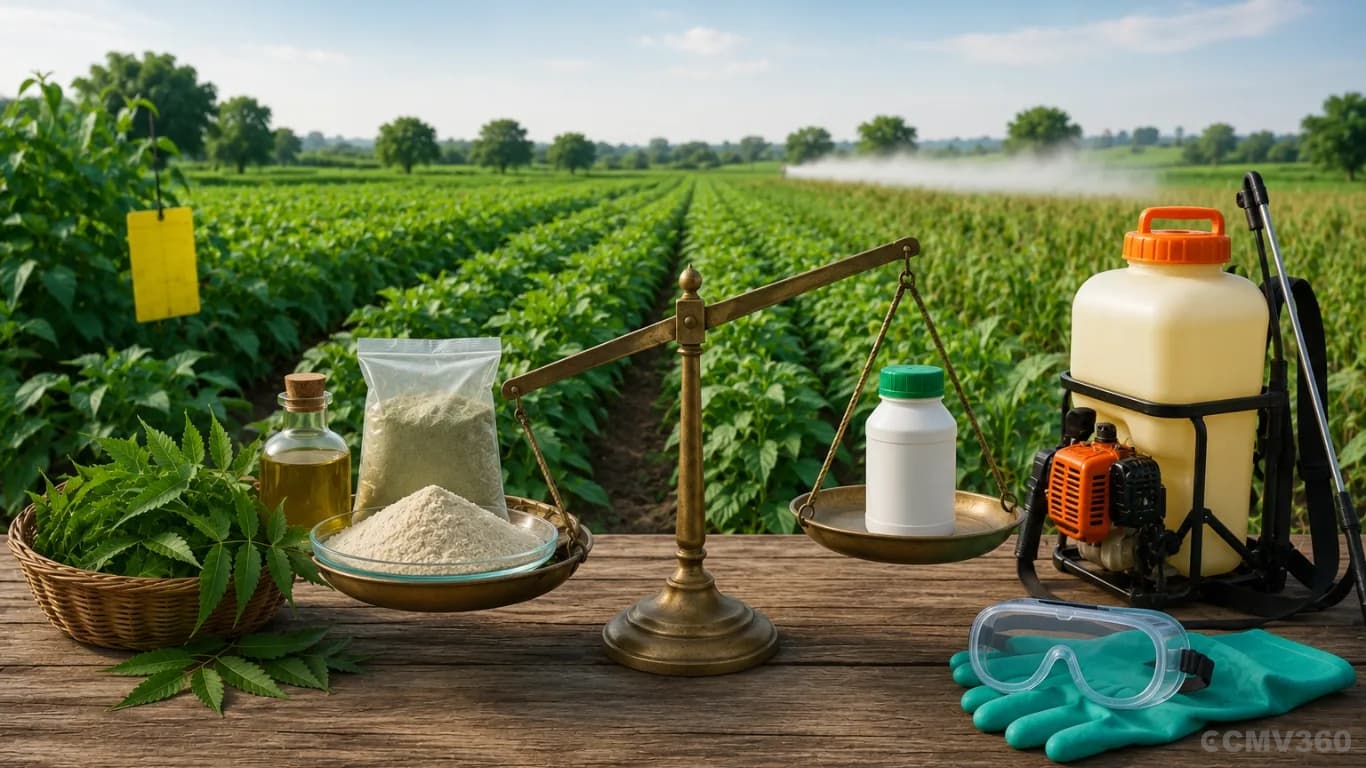
Cost remains one of the biggest deciding factors for farmers.
Product | Approximate Cost |
Neem oil | Rs. 300-800/litre |
Bt formulations | Rs. 1,500-2,000/ha |
Product Type | Approximate Cost |
Carbaryl spray | Rs. 320-780/acre |
At first glance, chemical pesticides appear cheaper and more economical. However, long-term economics tell a different story.
Faster pest knockdown
Lower immediate crop loss
Lower upfront cost
But over time, problems emerge:
Pest resistance
Multiple spray requirements
Higher residue levels
Export rejection risks
Soil degradation
Better long-term soil health
Reduced resistance development
Better export opportunities
Lower residue risks
Improved sustainability
Studies in cotton farming show:
Bio-pesticides delivered a BCR (Benefit Cost Ratio) of 13.7
Chemicals showed BCR around 3.6 in some cases
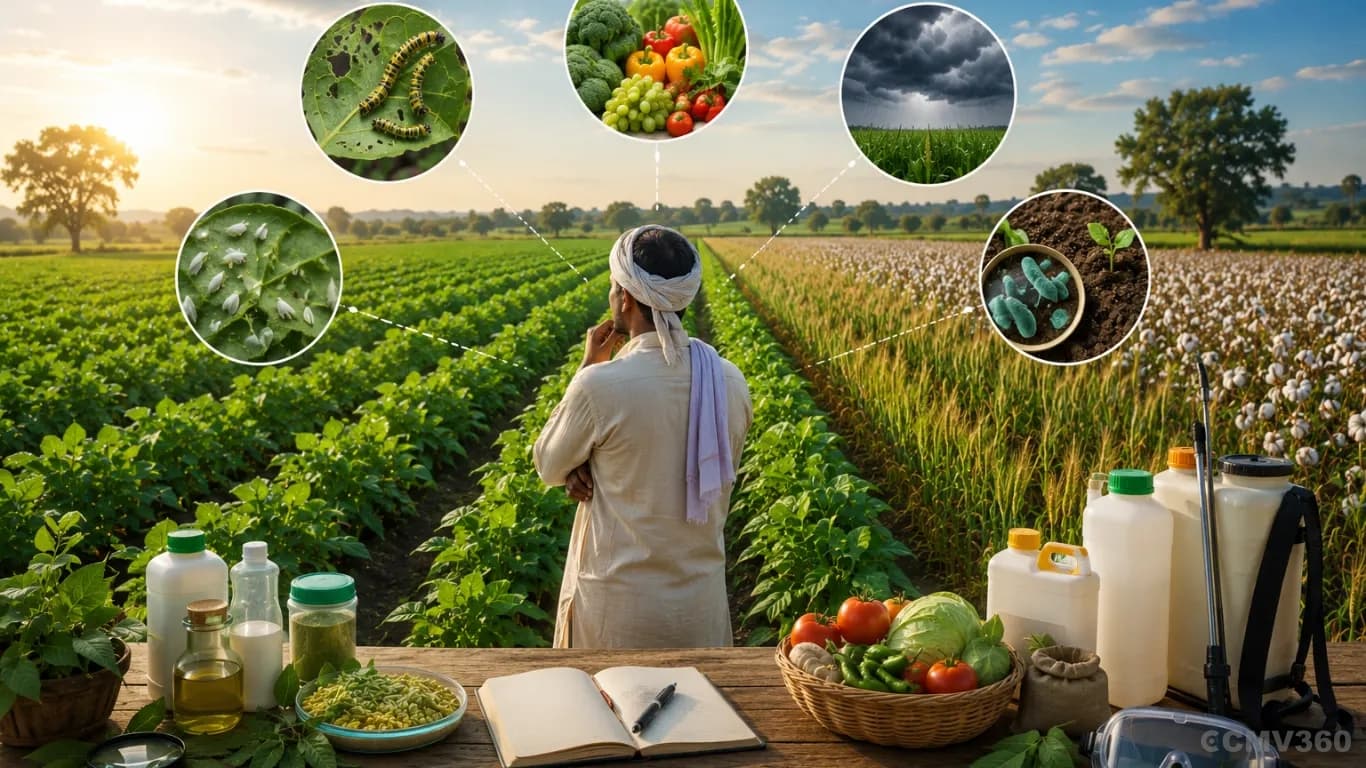
Farmers today are not selecting products based only on price.
They evaluate several factors:
Pest Pressure
Severe outbreak = chemicals preferred
Early-stage infestation = bio-pesticides preferred
Crop Type
Export crops prefer bio-solutions
Staple crops often rely on chemicals
Residue-free produce gets better prices.
Bio-pesticides may work more slowly during unfavorable weather.
Repeated chemical usage often leads to resistant pest populations.
Advantages | Explanation |
Low residue risk | Safer produce |
Better soil health | Supports sustainability |
Eco-friendly | Minimal pollution |
Safer for beneficial insects | Protects pollinators |
Lower resistance risk | Better long-term effectiveness |
Challenges | Impact |
Slower action | Not ideal for severe outbreaks |
Short shelf life | Storage concerns |
Higher upfront cost | Budget issue for small farmers |
Requires awareness | Proper usage knowledge is needed |
Advantages | Explanation |
Fast action | Immediate control |
Easy availability | Widely accessible |
Lower initial cost | Budget-friendly |
Effective during outbreaks | Strong performance |
Disadvantages | Impact |
Residue risk | Export problems |
Soil degradation | Long-term fertility loss |
Pest resistance | Reduced effectiveness |
Harm to beneficial insects | Ecological imbalance |
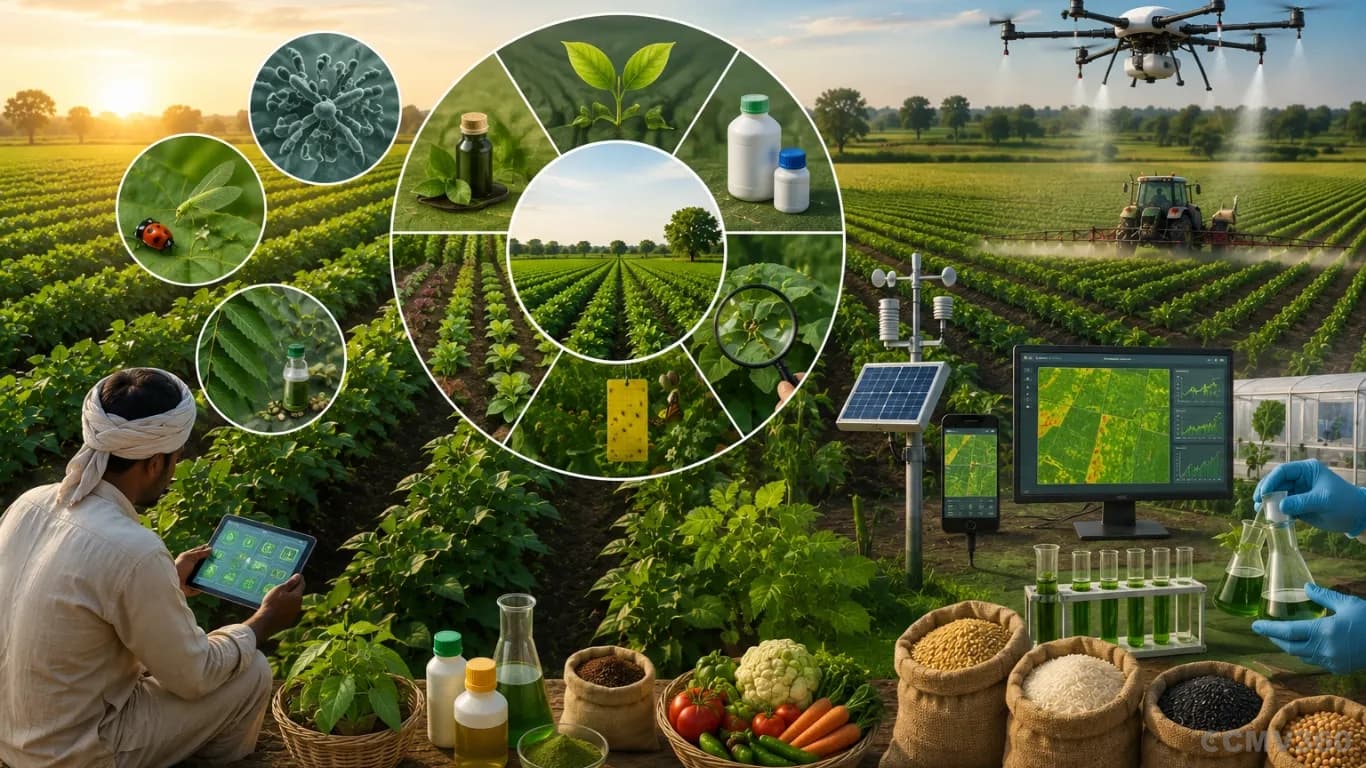
Experts now believe the future is not about choosing one option over another.
Instead, the focus is shifting toward Integrated Pest Management (IPM).
IPM combines:
Bio-pesticides
Limited chemical use
Crop rotation
Pest monitoring
Resistant crop varieties
This balanced system helps:
Reduce pesticide dependency
Lower production costs
Improve sustainability
Increase export potential
India’s agriculture sector is expected to see massive growth in biological crop protection technologies over the next decade.
Future developments may include:
Nano bio-pesticides
AI-based pest detection
Drone spraying
Precision agriculture integration
Climate-smart pest management
Experts believe bio-pesticides could eventually capture nearly 50% market share by 2050 if adoption continues at the current pace.
The answer depends entirely on farming goals, crop type, and pest conditions.
Chemical pesticides remain essential for rapid control during severe infestations and large-scale farming operations. They continue to dominate Indian agriculture because of affordability and immediate effectiveness.
However, bio-pesticides are becoming increasingly important for sustainable farming, export-quality production, soil protection, and long-term profitability. Rising regulations, residue concerns, and environmental awareness are accelerating this transition.
For most Indian farmers in 2026, the smartest approach is not choosing one over the other; it is using both strategically through Integrated Pest Management. Farmers who balance quick pest control with sustainability are likely to achieve better yields, healthier soil, improved market prices, and stronger long-term farm profitability.

About the author
Robin Kumar Attri is a content and video professional with 2.7 years of experience in the commercial vehicle domain. At CMV360, he creates news articles and videos covering trucks, tractors, buses, three-wheelers, and infrastructure machines.






 Add CMV360 on Google