Which Tractor is Right for Farming – Electric or Diesel? Know Which One Has More Power and Which One Costs Less
 Add CMV360 on Google
Explore the detailed comparison between electric and diesel tractors. Learn about their power, cost, advantages, and which one is best suited for your farming needs in India.

By Robin Kumar Attri

Tractors are the backbone of modern agriculture. From ploughing fields to transporting harvests, tractors simplify every farming task. For Indian farmers, a tractor is not just a vehicle or a machine; it’s a daily companion that boosts productivity and saves time.
Today, farmers can choose between diesel tractors and electric tractors, both offering distinct benefits. But the big question still remains, which tractor is better for farming? To answer this, let’s explore both types in detail, compare their strengths, costs, and performance, and understand which one truly suits your farming needs.
Also Read: How to Service a Tractor at Home: Top 5 Easy Tips for Farmers
Diesel Tractors – The Traditional Powerhouses of Indian Farms
Diesel tractors have ruled Indian farmlands for decades. Known for their strength, durability, and reliability, they remain the first choice of farmers across the country.
Whether it’s hard soil, heavy load pulling, or continuous fieldwork, diesel tractors can handle it all. Their engines generate high torque, making them suitable for deep ploughing, harvesting, or hauling trolleys on uneven terrain.
Why Are Diesel Tractors the First Choice of Farmers?
Diesel tractors are a familiar sight in every Indian village. They are trusted because of their proven performance and wide service network. Farmers prefer diesel engines for their rugged build, fuel efficiency, and ability to work in extreme conditions, from scorching summers to muddy monsoon fields.
They can run all day without needing frequent refuelling and can easily handle multiple implements like rotavators, cultivators, seed drills, and trolleys.
Key Advantages of Diesel Tractors
1. Powerful Engine: Diesel tractors come with high-torque engines that deliver strong pulling power. This makes them ideal for heavy-duty agricultural operations like deep tilling, land preparation, and hauling.
2. Easy Fuel Availability: Diesel fuel is available in every rural area, ensuring that farmers never face downtime due to fuel shortage.
3. Long Working Range: Once the fuel tank is full, a diesel tractor can operate continuously for hours, making it perfect for large farms and long working hours.
4. Strong Service Network: Almost every town and village has service centres and local mechanics familiar with diesel engines. Spare parts are easily available and affordable.
5. Proven Reliability: Over decades, diesel tractors have earned the trust of farmers. Their sturdy design ensures durability and long service life, even under rough use.
Drawbacks of Diesel Tractors
While diesel tractors are reliable, they come with a few limitations:
Rising Fuel Prices: Diesel prices are increasing, putting pressure on farmers’ budgets.
Environmental Pollution: Exhaust emissions contribute to air pollution.
Higher Maintenance: Diesel engines require frequent servicing, oil changes, and filter replacements.
Noise and Vibration: They are louder compared to electric tractors, affecting comfort during long hours.
Also Read: Top 5 Mileage-Friendly Tractors in India 2025: Best Choices for Saving Diesel
Electric Tractors – The New Age Revolution in Farming
The world is moving toward clean energy, and Indian agriculture is no exception. Electric tractors represent the future of sustainable farming, offering zero emissions, low running costs, and smart technology.
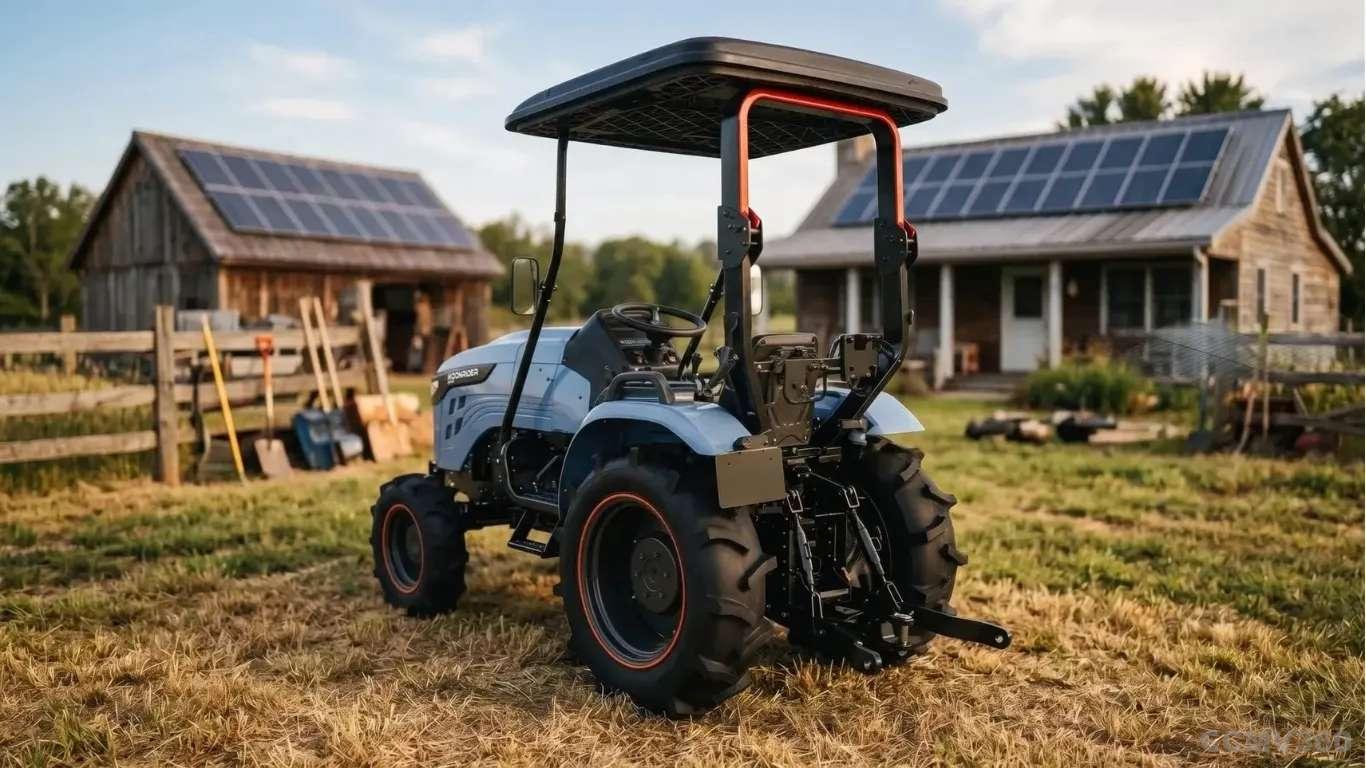
Companies like Sonalika, Escorts, Monarch, and Auto NXT have already launched their electric tractor models in India. These tractors operate on rechargeable batteries instead of fuel, making them eco-friendly and cost-effective.
Why Are Electric Tractors Gaining Popularity?
Electric tractors are attracting modern farmers who want to save fuel costs and reduce their carbon footprint. The younger generation of farmers, in particular, appreciates their silent operation, smart features, and low maintenance.
They are best suited for small and medium farms, greenhouses, and farms near towns with easy access to electricity.
Key Advantages of Electric Tractors
1. Low Operating Cost: Electric tractors can run for long hours on a single charge. Electricity costs are much lower than diesel, significantly reducing operational expenses.
2. Zero Pollution: Electric tractors produce no smoke and no noise, making them environmentally friendly and suitable for indoor or eco-sensitive farming.
3. Less Maintenance: Since there are fewer moving parts in an electric motor, servicing is simple and less frequent. No oil changes or complex engine maintenance are required.
4. Smart Technology: Modern electric tractors are equipped with features like IoT connectivity, GPS tracking, mobile app control, and performance monitoring systems, giving farmers real-time insights.
5. Government Incentives: To promote green energy, the government offers subsidies and incentives on electric vehicles, which include electric tractors.
Drawbacks of Electric Tractors
Electric tractors, while promising, still face some practical challenges:
Charging Infrastructure: Rural areas lack sufficient charging stations, making it difficult for farmers to charge quickly.
Battery Limitations: Batteries may drain faster during heavy work or continuous use.
Higher Initial Cost: Electric tractors are currently more expensive than diesel models due to advanced technology.
Charging Time: It takes a few hours to fully charge the tractor, compared to the quick refuelling of diesel.
Diesel vs Electric Tractors: A Detailed Comparison
Feature | Diesel Tractor | Electric Tractor |
Power & Torque | High power for heavy-duty work | Moderate power, best for light to medium work |
Fuel / Energy Source | Diesel fuel | Rechargeable battery |
Operating Cost | Higher due to fuel expenses | Very low, electricity is cheaper |
Maintenance Cost | High (engine service, oil, filters) | Low (fewer moving parts) |
Environmental Impact | Emits smoke and noise | Zero emissions, silent |
Range & Working Hours | Long can work continuously | Limited by battery capacity |
Technology & Features | Conventional | Advanced (IoT, GPS, smart controls) |
Initial Price | Moderate | Slightly higher |
Availability | Widely available | Still expanding |
Government Support | Limited subsidies | Incentives for green energy tractors |
Popular Diesel Tractor Models in India
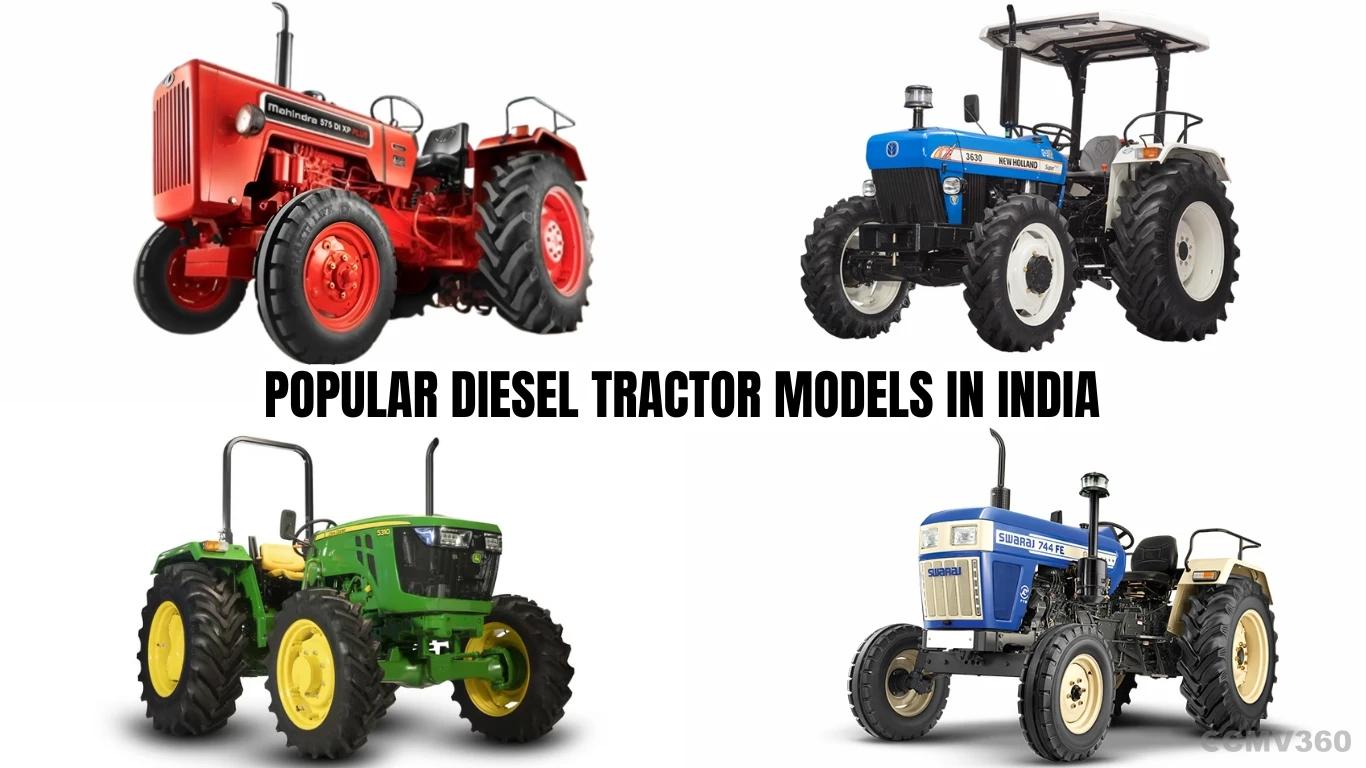
Here are some of the best-selling diesel tractors that continue to dominate Indian farms:
Mahindra 575 DI XP Plus: Known for its powerful engine and high performance, it is suitable for all kinds of farming operations.
Swaraj 744 FE: Reliable, efficient, and ideal for medium to heavy-duty farming tasks.
Sonalika Tiger DI 60 4WD: A robust model offering excellent pulling power and modern features.
John Deere 5310: Premium quality, high torque, and great comfort for farmers with large tracts of land.
New Holland 3630 TX Plus+: Strong engine and fuel-efficient design suitable for long working hours.
Popular Electric Tractor Models in India
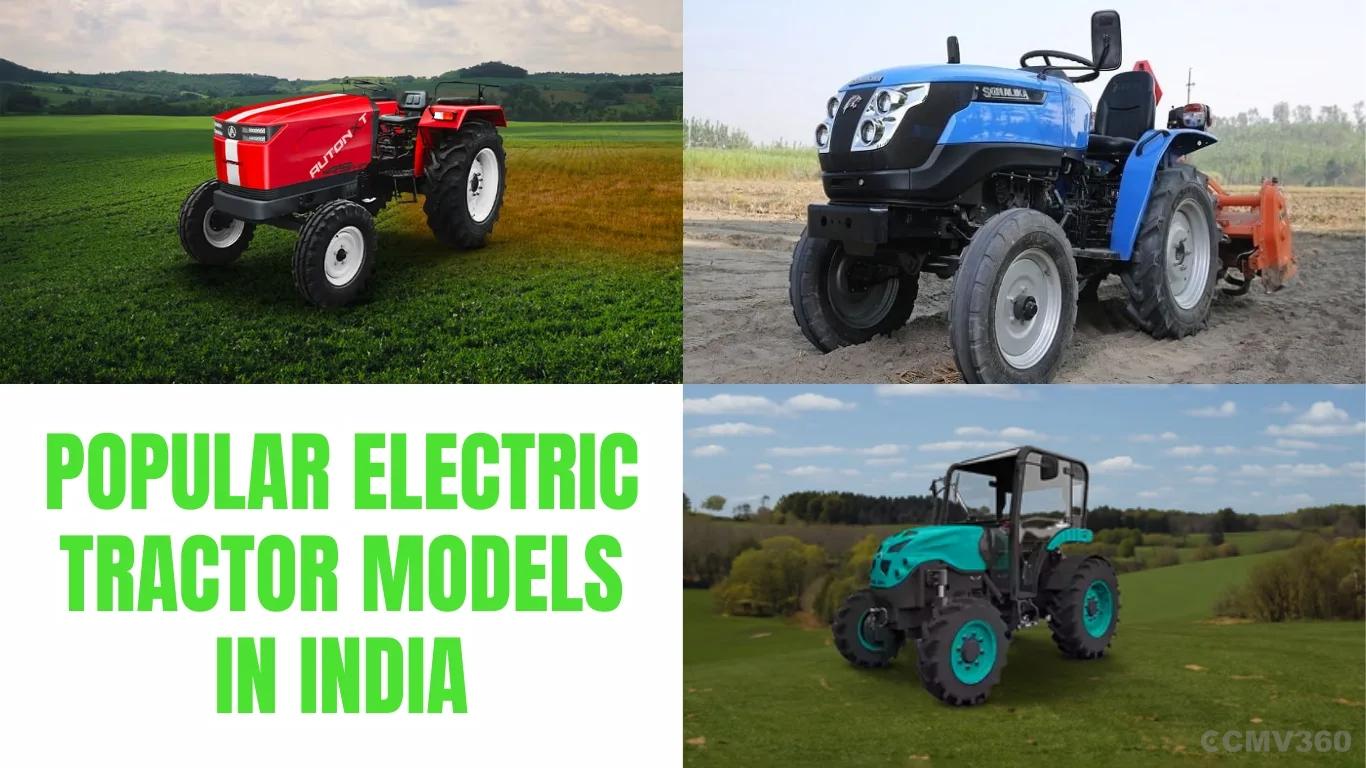
Electric tractors are still new but gaining traction fast. Below are some popular and upcoming models:
Sonalika Tiger Electric: India’s first field-ready electric tractor, capable of working up to 8 hours on a single charge.
AutoNXT X45H2: Smart tractor with connected features, great for light to medium farming tasks.
Escorts Digitrac E Series: Offers advanced technology with zero emissions and efficient battery life.
Monarch MK-V (Coming Soon): A fully autonomous electric tractor designed with AI-based control and precision farming tools.
HAV Tractors:Focused on affordability and designed for small farmers looking for green alternatives.
Cost Comparison: Diesel vs Electric
Let’s take a practical look at how much each type costs in the long run.
Initial Cost:
Diesel Tractor: ₹5 – 12 lakh (depending on model and HP)
Electric Tractor: ₹8 – 15 lakh (due to battery and technology)
Running Cost (per hour):
Diesel Tractor: ₹250 – ₹300 (diesel + maintenance)
Electric Tractor: ₹50 – ₹70 (electricity + minimal maintenance)
Maintenance Cost (annual):
Diesel Tractor: ₹15,000 – ₹25,000
Electric Tractor: ₹5,000 – ₹10,000
Over 5 years, electric tractors can save up to ₹3–4 lakh in operating and maintenance costs, depending on usage.
Also Read: Modern Tractors and Precision Farming: Transforming Agriculture for Sustainability
Suitability: Which Tractor Should You Choose?
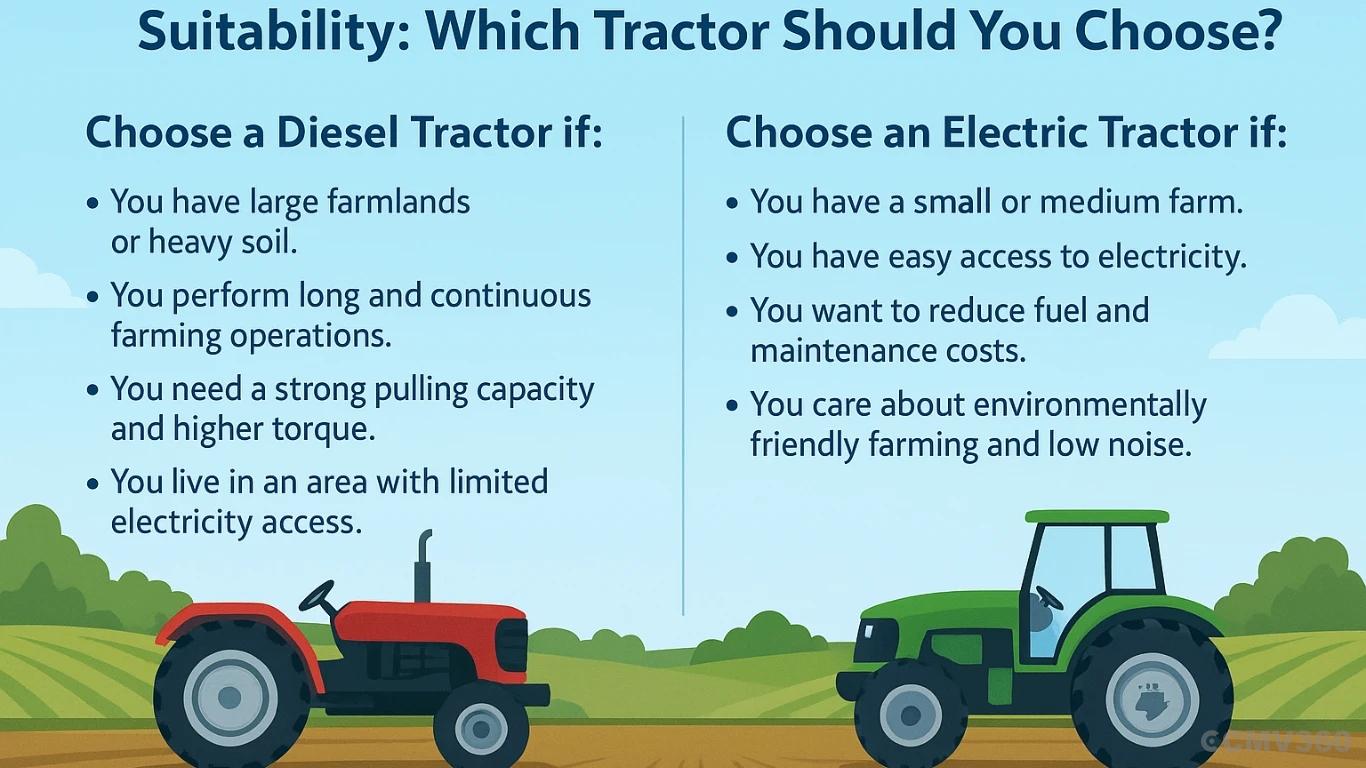
Choose a Diesel Tractor if:
You have large farmlands or heavy soil.
You perform long and continuous farming operations.
You need a strong pulling capacity and higher torque.
You live in an area with limited electricity access.
Choose an Electric Tractor if:
You have a small or medium farm.
You have easy access to electricity.
You want to reduce fuel and maintenance costs.
You care about environmentally friendly farming and low noise.
The Role of Electric Tractors in India’s Green Farming Mission
The Indian government’s Agri-Energy Mission aims to reduce dependence on fossil fuels and promote renewable energy in agriculture. Electric tractors align perfectly with this vision.
Schemes and subsidies are being designed to make EV adoption easier for farmers. As battery prices drop and charging stations increase, electric tractors are expected to become more affordable and practical in the next few years.
Major manufacturers like Sonalika and Escorts are investing heavily in R&D to make electric tractors more powerful and efficient. In the coming years, we might see electric tractors outperform diesel ones in both cost and performance.
Challenges Ahead for Electric Tractors
Despite their promise, electric tractors must overcome certain hurdles before widespread adoption:
Battery Life and Charging Speed: Need for faster charging and longer-lasting batteries.
Rural Charging Infrastructure: Expansion of rural charging stations is essential.
Awareness and Training: Farmers must understand how to operate and maintain electric models.
Affordability: Price reduction through local production and subsidies will drive adoption.
With ongoing technological progress, these challenges are expected to reduce significantly in the near future.
The Future of Farming – Blending Diesel and Electric Power
The future of Indian farming might not be about choosing between diesel and electric but balancing both technologies. Hybrid tractors and solar-assisted charging systems could emerge as a middle path, combining power with sustainability.
Brands like Mahindra and Sonalika are already exploring hybrid tractor concepts that deliver diesel-like performance with reduced fuel use and emissions.
CMV360 Says
Both diesel and electric tractors play an important role in shaping the future of Indian agriculture. Each comes with unique strengths designed to meet different farming needs.
Diesel tractors continue to dominate when it comes to power, endurance, and heavy-duty performance. They are the preferred choice for farmers managing large landholdings or intensive fieldwork where consistent power and long operating hours are essential.
On the other hand, electric tractors are emerging as the smarter, eco-friendly alternative, offering low running costs, zero emissions, and advanced technology features. They are best suited for small to medium farms, especially where electricity is easily available.
In the end, your choice depends on your farming scale, land type, and cost priorities. If you value strength and long working hours, diesel is still the way to go. But if you want savings, sustainability, and innovation, electric tractors are the future-ready investment.
As India steadily moves toward green energy and sustainable farming, electric tractors will not just be an option; they will become a key driver of modern, cleaner, and more efficient agriculture for generations to come.

Robin Kumar Attri is a content and video professional with 2.7 years of experience in the commercial vehicle d .....