Tractors
Trucks
- Find by Budget
- Find by Type

English
 New Delhi
“Learn about the Pradhan Mantri Krishi Sinchayee Yojana – Per Drop More Crop, focusing on micro irrigation, water efficiency, farmer benefits, subsidy details, eligibility, and application process for sustainable agriculture.”
By CMV360 Editorial Staff

Water is one of the most crucial inputs in agriculture—and in a country like India, where millions of farmers depend on monsoon rains, efficient irrigation is essential for sustainable farming. To address this critical need, the Government of India launched the Pradhan Mantri Krishi Sinchayee Yojana (PMKSY) on 1st July 2015.
Among its four components, “Per Drop More Crop” stands out as a transformative initiative focused on micro irrigation, ensuring that every drop of water delivered to the field contributes to higher crop yield and better farm income.
This component has played a key role in reducing water wastage, conserving resources, and promoting modern farming techniques across India.
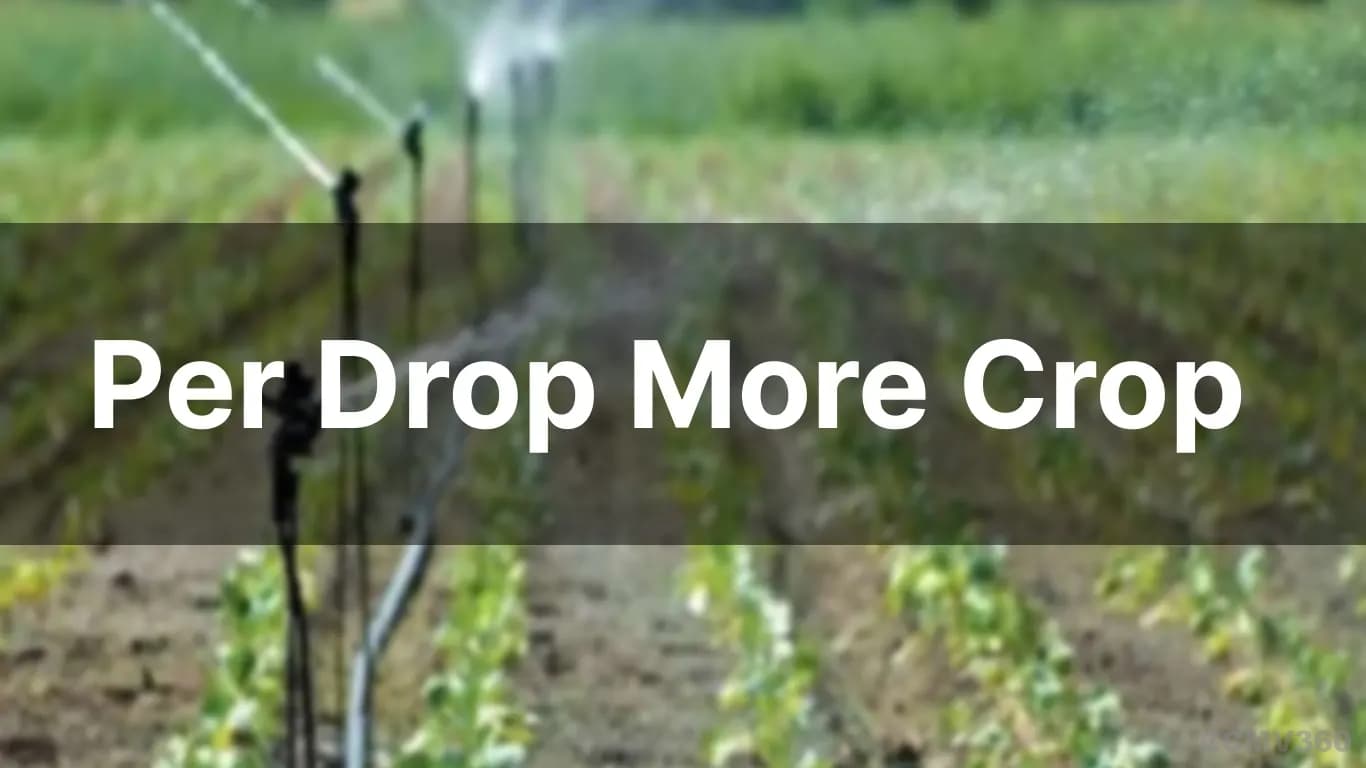
The Per Drop More Crop initiative is designed to promote precision irrigation—which means delivering the right amount of water directly to the plant root zones through drip and sprinkler systems.
Unlike traditional flood irrigation where 40–50% of water is wasted, micro-irrigation saves huge amounts of water while improving crop health, reducing weed growth, and lowering labour requirements.
The scheme also supports water storage structures, water lifting devices, and other micro-level water conservation systems to ensure farmers have enough water resources even during dry spells.
The scheme focuses on long-term agricultural sustainability. Its objectives can be understood in detail:
1. To Expand the Area Under Micro Irrigation
India has vast agricultural land but limited water availability. By promoting drip and sprinkler systems, the scheme aims to expand micro-irrigation coverage to millions of farmers—helping them use water efficiently.
2.To Enhance Water Use Efficiency
Water scarcity is a growing concern. Micro irrigation ensures optimal water distribution, reducing wastage and improving water productivity.
3.To Improve Crop Productivity & Farmers Income
Precision irrigation means plants receive the right amount of water at the right time. This leads to:
All of these contribute to increased farmer income.
4. To Promote Irrigation in Water-Intensive Crops
Crops like sugarcane, banana, vegetables, and cotton consume large amounts of water. The scheme promotes micro irrigation in these crops to reduce water consumption and increase efficiency.
5.To Strengthen Fertigation Practices
Fertigation allows farmers to apply fertilizers through the irrigation system itself. It improves:
6.To Focus on Water-Stressed Regions
It gives special priority to regions facing:
This ensures enough water access and reduces regional disparities.
7.To Integrate Irrigation Projects with Micro Irrigation
Many farmers use tube wells or river-lift systems. Integrating these with micro-irrigation helps reduce energy use and ensures uniform water supply.
8. To Promote Convergence of Schemes
The scheme encourages combining state and central programmes to effectively use existing water sources, including solar-powered irrigation systems.
9.To Build Capacity & Provide Training
Through training, workshops, and demonstrations, farmers learn how to use micro-irrigation systems effectively and maintain them properly.
10.To Create Rural Employment
Installation and maintenance of irrigation systems generate job opportunities for rural youth—both skilled and unskilled.
Holistic Water Management Approach
It addresses water issues at multiple levels:
This ensures long-term sustainability.
It encourages farmers to adopt these systems to improve long-term productivity.
The State Agriculture Department is generally the nodal authority responsible for implementing Per Drop More Crop.
However, states have the flexibility to choose a suitable department based on their administrative structure and expertise.
This ensures effective planning, monitoring, and delivery of benefits.
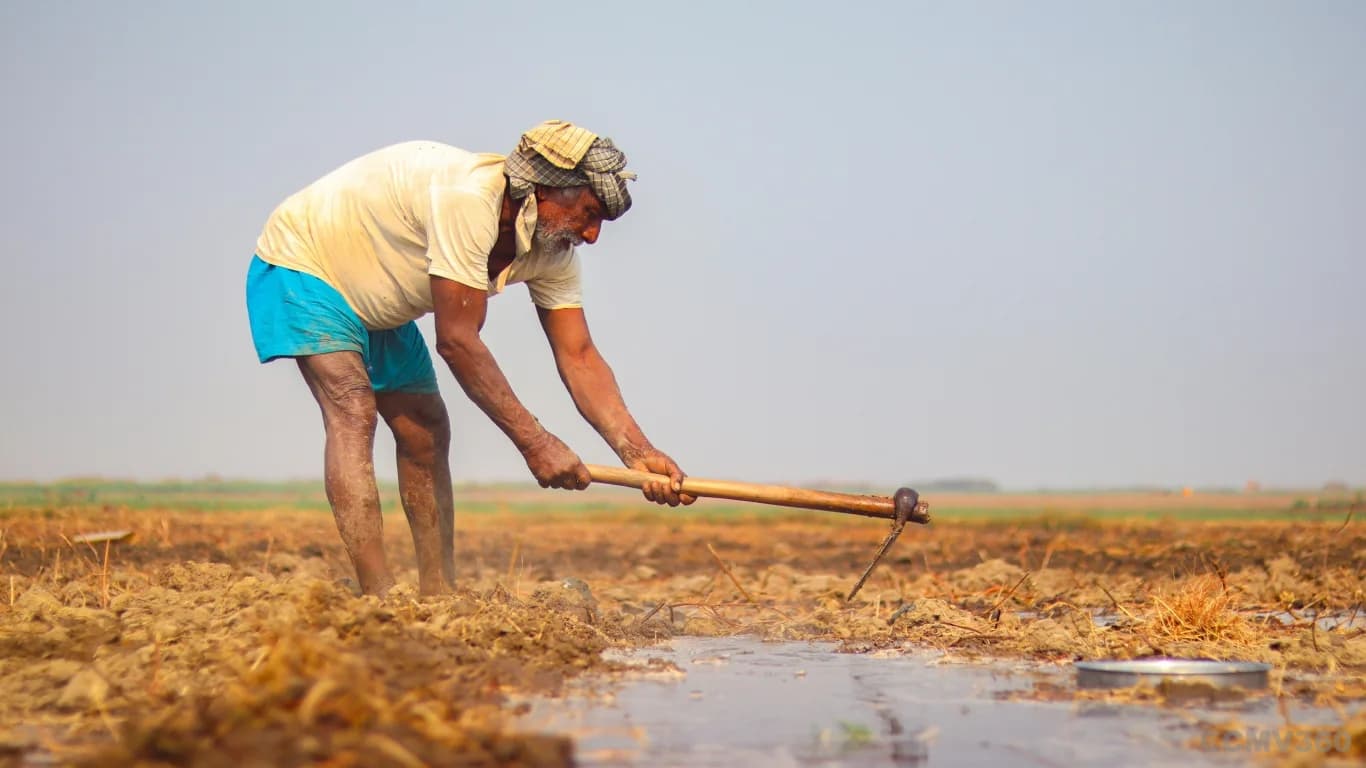
The Per Drop More Crop scheme provides comprehensive support to farmers:
1. Subsidy for Micro Irrigation Systems
Farmers receive financial assistance for:
2. Subsidy Structure
3. Direct Benefit Transfer (DBT)
The subsidy amount is directly deposited into farmers' bank accounts for transparency and quick processing.
4. Support for Water Harvesting
Farmers can build:
This helps secure water even during low rainfall.
5. Freedom to Choose Installation Method
Farmers may:
This flexibility ensures convenience and affordability.
6. Improved Water & Crop Management
Micro irrigation helps maintain soil moisture, reduces crop stress, enhances nutrient uptake, and leads to better quality produce.
To avail benefits under the scheme:
Step 1: Contact Your Local Agriculture Office
Farmers can approach:
Step 2: Collect the Application Form
Get the official form for PMKSY (Per Drop More Crop) from the concerned office.
Step 3: Fill the Form
Enter all required details, attach a photograph, and self-attest the necessary documents.
Step 4: Submit the Application
Submit the completed form to the designated authority.
Step 5: Receive Acknowledgment
Collect the receipt/acknowledgment as proof of submission.
The Pradhan Mantri Krishi Sinchayee Yojana – Per Drop More Crop is a landmark initiative that empowers farmers to use water efficiently, adopt modern irrigation techniques, and enhance productivity. Through micro irrigation, water harvesting, and financial support, the scheme ensures that every drop of water contributes to sustainable agricultural ways and better livelihoods for millions of farmers.
1. What is the main focus of PMKSY (Per Drop More Crop)?.
Enhancing water use efficiency through micro irrigation and supporting micro-level water conservation.
2.When was the scheme launched?
1st July 2015.
3. Is it a centrally sponsored scheme?
Yes.
4. What are its major components?
AIBP, Har Khet Ko Pani, Watershed Development, and Per Drop More Crop.
5. What is the subsidy structure?
55% for small/marginal farmers and 45% for others.
6. Who is eligible?
All farmers in States and Union Territories.
7. How much land area is covered?
Up to 5 hectares per farmer.
8. How is the subsidy given?
Through Direct Benefit Transfer (DBT).
9. Is Aadhaar mandatory?
Yes.
10. How can a farmer apply?
By contacting the nearest Agriculture Office or calling 1800-180-1551.
About the author
CMV360 Editorial Team has published articles to cmv360 website







 Add CMV360 on Google