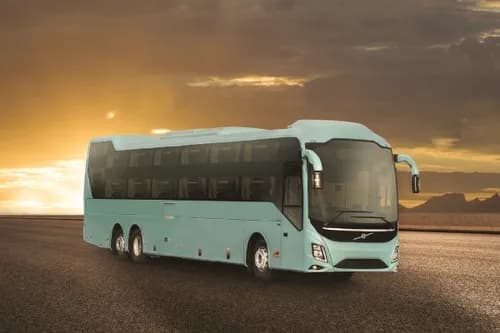
Volvo Buses Uses Connected Technology to Improve Fuel Efficiency and Cut Operating Costs
 Add CMV360 on Google
Volvo Buses combines I-See Map, I-Coaching and Idless technologies to reduce fuel consumption, minimise idling, improve driver behaviour and help operators lower fleet operating costs.

By Robin Kumar Attri

Key Highlights
Volvo Buses combines connected technology and vehicle data to improve fuel efficiency.
I-See Map can deliver up to 3% fuel savings.
Idling accounts for around 7% of annual fuel consumption.
I-Coaching can reduce fuel consumption by up to 5%.
Volvo Connect helps fleet managers monitor performance and identify fuel wastage.
Volvo Buses is using connected vehicle technology, predictive cruise control and driver coaching systems to help bus and coach operators reduce fuel consumption, lower operating costs and improve vehicle efficiency. The company's approach combines intelligent vehicle systems with real-time driving feedback and connected data to identify fuel wastage during daily operations.
Fuel is one of the biggest operating expenses for bus and coach operators. Unnecessary idling, frequent braking, driving behaviour and changing road conditions can further increase fuel consumption. To address these challenges, Volvo Buses is focusing on technologies that help fleet operators monitor vehicle performance and make better operational decisions.
The company's fuel-efficiency solutions include I-See Map predictive cruise control, Idless and I-Coaching, supported by its connected vehicle platform, Volvo Connect. Together, these technologies focus on improving fuel efficiency while also reducing vehicle wear, maintenance expenses and emissions.
Stefan Berggren, Senior Vice President Digital Services & Solutions at Volvo Buses, said the company's efforts go beyond developing fuel-efficient vehicles. Its focus is also on providing customers with the technology and information needed to improve efficiency throughout daily vehicle operations.
Volvo I-See Map Uses GPS Data to Reduce Fuel Consumption
Volvo Buses' I-See is a predictive cruise control technology designed to help vehicles use fuel more efficiently by anticipating upcoming road conditions. The I-See Map version combines GPS positioning with cloud-based topographical map data to identify road gradients and automatically adjust acceleration, gear selection and braking when cruise control is activated.
Instead of responding only to the road conditions immediately ahead, the system uses available information to prepare the vehicle for upcoming slopes and changes in terrain.
Its key functions include:
Building vehicle momentum before approaching an uphill gradient.
Avoiding unnecessary gear downshifts while climbing.
Controlling vehicle speed when approaching hill crests.
Allowing the vehicle to free-roll before downhill sections.
Applying downhill braking when required.
According to Volvo Buses, I-See Map can deliver fuel savings of up to 3% under optimal conditions. The benefits are particularly noticeable on routes with frequent gradients and where drivers regularly use cruise control.
Idling Accounts for Around 7% of Annual Fuel Consumption
Unnecessary engine idling is another major area where bus operators can save fuel. Volvo Buses Idless service data shows that approximately 30% of engine-on time is spent idling.
The company estimates that idling accounts for around 7% of total annual fuel consumption, equivalent to approximately 2,000 litres.
To help operators control this fuel wastage, Volvo Buses offers its Idless service through the Volvo Connect platform. The service collects and processes vehicle data to identify when and where excessive idling takes place. It also helps fleet managers identify vehicles with the highest idling times and associated fuel consumption.
Using this information, operators can identify unusual idling patterns, understand the reasons behind unnecessary engine running and take corrective action. Reducing idling can also deliver additional benefits, including lower engine wear, reduced maintenance expenses, fewer exhaust emissions and less vehicle noise.
Volvo I-Coaching Helps Drivers Improve Fuel Efficiency
Apart from vehicle technology and idling management, driver behaviour also plays an important role in fuel consumption. Volvo Buses addresses this through its I-Coaching system, which provides real-time feedback to drivers while they are operating the vehicle. Fleet managers can also access driver performance reports through Volvo Connect for further assessment and improvement.
The system encourages drivers to adopt better driving practices, including anticipating road conditions, maintaining smoother driving patterns and avoiding unnecessary braking. According to Volvo Buses, I-Coaching can help reduce fuel consumption by up to 5%. It can also reduce vehicle wear and tear, support lower maintenance costs and improve passenger comfort through smoother driving.
Volvo Connect Brings Connected Data Together for Fleet Management
Volvo Buses combines its fuel-efficiency technologies to address different causes of fuel consumption during daily operations. While I-See Map uses GPS and topographical information to anticipate road conditions, I-Coaching focuses on improving driver behaviour. Meanwhile, Idless helps operators identify and reduce fuel wastage caused by unnecessary engine idling.
Volvo Connect brings this information together, allowing fleet managers to monitor vehicle performance, understand fuel consumption patterns and identify areas that require improvement. This approach makes fuel efficiency an ongoing operational process rather than something that depends only on vehicle design or engine technology. By combining connected data, intelligent vehicle systems and driver support, Volvo Buses aims to help operators improve fleet productivity while reducing fuel expenses and environmental impact.
Also Read: BharatBenz Opens New 3S Facility in Tamil Nadu with KUN Trucking
CMV360 Says
Volvo Buses is taking a connected approach to fuel efficiency by combining predictive cruise control, driver coaching and idling management. Its I-See Map, I-Coaching and Idless technologies target different sources of fuel wastage, while Volvo Connect helps operators monitor performance. With potential fuel savings of up to 3% through I-See Map and 5% through I-Coaching, these solutions can help bus operators improve efficiency, reduce expenses and support more sustainable transportation.

Robin Kumar Attri is a content and video professional with 2.7 years of experience in the commercial vehicle d .....