From Trucks to Military Vehicles: India’s Auto Giants Eye Mega Defense Orders
 Add CMV360 on Google
Tata, Ashok Leyland, Bharat Forge and BEML are targeting major defense programmes, strengthening India’s domestic military manufacturing ecosystem and unlocking long-term growth opportunities.

By Robin Kumar Attri

Key Highlights
Tata, Ashok Leyland, Bharat Forge and BEML are expanding deeper into India’s defense mobility sector.
Ashok Leyland is positioned to benefit from the ₹30,000 crore QRSAM programme.
Tata is involved in the ₹1.5 lakh crore FRCV programme for 1,770 combat vehicles.
BEML’s Defense & Aerospace revenue share reached 35% in FY26.
Defense orders offer long-term visibility despite higher working-capital requirements.
India’s push for self-reliance in defense manufacturing is creating major opportunities for the country’s leading automotive and heavy engineering companies. According to a research report by Ashika Institutional Equities, companies including Tata, Ashok Leyland, Bharat Forge and BEML are increasingly moving beyond component supply to become key defense contractors and systems integrators.
The shift comes as military vehicles and land systems become more technology-driven, with software, sensors, electronics and advanced electrical architectures playing a larger role alongside traditional engineering.
Tata, Ashok Leyland and Bharat Forge Expand Defense Presence
India’s major commercial vehicle and engineering companies are positioning themselves to benefit from large upcoming defense programmes.
Ashok Leyland is using its heavy-duty truck platforms to develop and supply specialized mobile missile launch vehicles. The company is expected to benefit from the upcoming ₹30,000 crore Quick Reaction Surface-to-Air Missile (QRSAM) programme.
Bharat Forge, meanwhile, is leveraging its expertise in heavy forgings and advanced engineering to supply high-mobility launch platforms. The company is also participating in the Advanced Medium Combat Aircraft (AMCA) prototype programme.
Tata Group has an even broader presence across India's defense ecosystem. It is a key industrial beneficiary of the proposed ₹1.5 lakh crore Future Ready Combat Vehicle (FRCV) programme, which involves the procurement of 1,770 next-generation combat vehicles.
Tata is also involved in the ₹1.2 lakh crore, ₹1.5 lakh crore Multi-Role Fighter Aircraft (MRFA) programme and manufactures specialized launching systems for strategic missile platforms.
BEML Shifts Focus From Mining to Defense and Aerospace
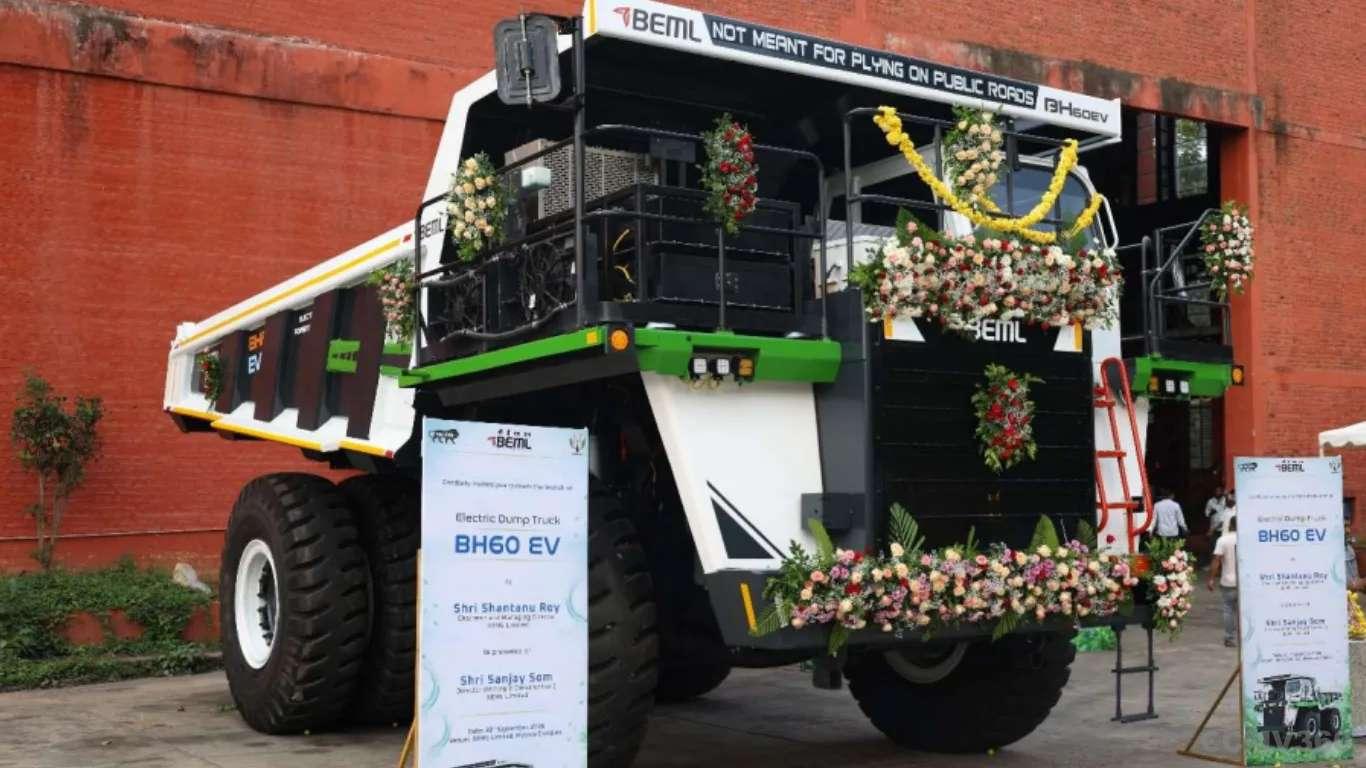
State-owned BEML, formerly known as Bharat Earth Movers Ltd, represents one of the strongest examples of this transformation.
Historically, BEML relied heavily on mining and construction equipment, businesses that are sensitive to economic cycles. However, the company is now steadily increasing its focus on defense and aerospace.
According to the Ashika report, the mining segment’s share of BEML’s revenue declined to 41% in FY26, while its Defense & Aerospace division increased to 35%.
BEML manufactures heavy 12x12 high-mobility vehicles (HMVs) and specialized transporter platforms used for systems such as Pinaka and BrahMos. Its defense business is projected to generate around ₹1,500 crore to ₹2,000 crore over the medium term.
The company has also entered the aerospace segment through a partnership with Hindustan Aeronautics Ltd (HAL) to manufacture 48 fuselages for the ₹62,700 crore Prachand Light Combat Helicopter (LCH) programme.
Defense Orders Offer Long-Term Growth
While defense manufacturing offers strong demand visibility, it also comes with operational challenges. Ashika Institutional Equities notes that defense vehicle manufacturers typically face higher working-capital requirements than conventional automotive companies.
Unlike commercial vehicle manufacturing, which often relies on just-in-time inventory systems, defense production requires companies to maintain specialized inventories. Payments from government programmes can also follow extended, milestone-based schedules.
However, large and long-duration defense contracts can provide companies with multi-year order visibility and reduce their dependence on cyclical commercial vehicle demand.
Also Read: Omega Seiki Mobility Raises Rs 50 Crore to Expand EV Capacity and Retail Network
CMV360 Says
India’s defense indigenisation drive is creating a new growth opportunity for its automotive and heavy engineering industry. With Tata, Ashok Leyland, Bharat Forge and BEML expanding into advanced military platforms, defense mobility could become an increasingly important and resilient business segment for these companies.

Robin Kumar Attri is a content and video professional with 2.7 years of experience in the commercial vehicle d .....