Tata CNG & Electric Trucks - Models, Range & Payload
 Add CMV360 on Google
Explore Tata CNG and electric trucks, including models, range, payload, prices, mileage and key features to help choose the right commercial vehicle for your business.

By Robin Kumar Attri

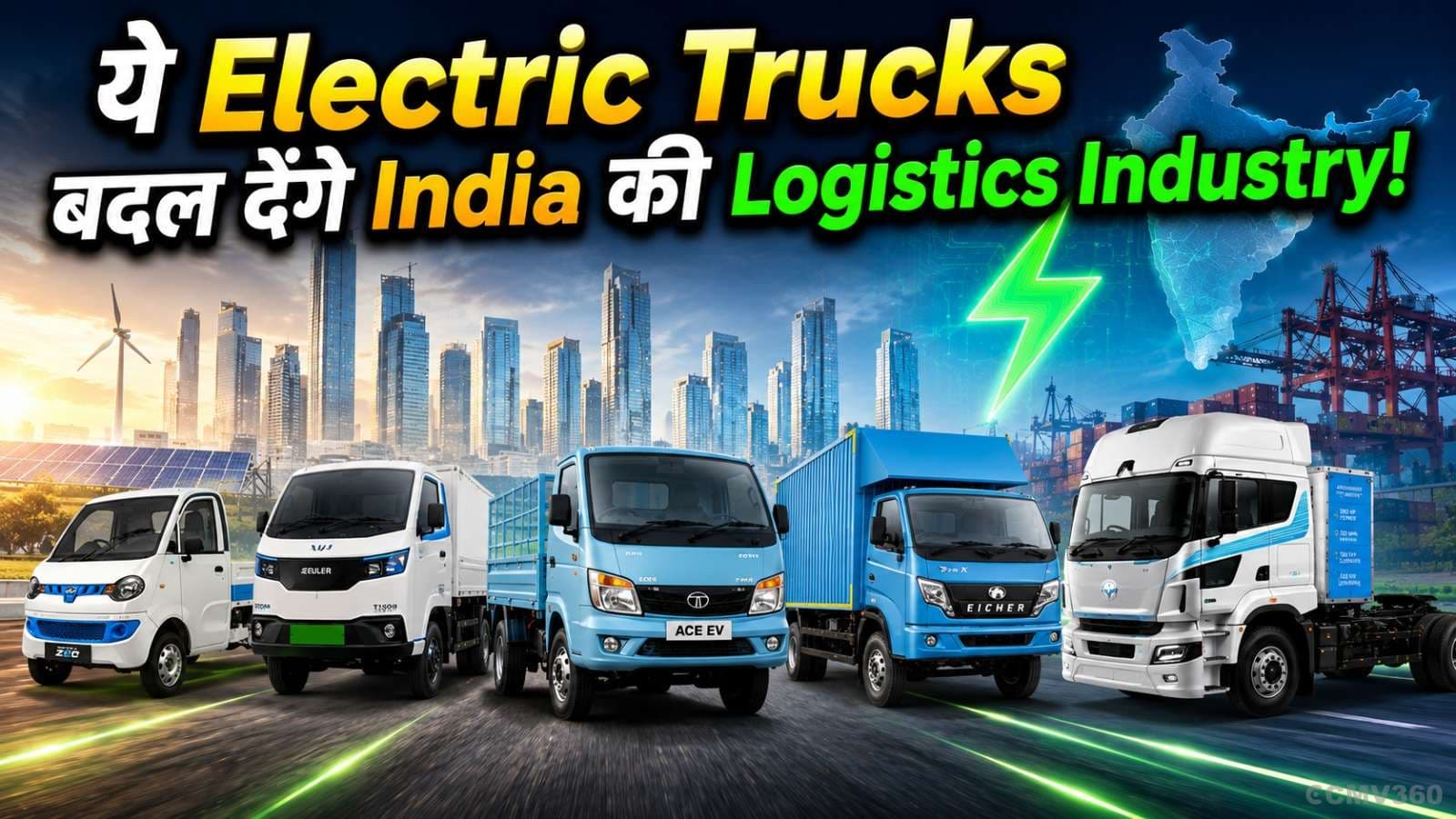
India’s commercial vehicle market is rapidly moving beyond diesel, with CNG and electric trucks emerging as practical alternatives for businesses looking to reduce operating costs and meet changing emission requirements. CNG trucks offer a strong balance of lower fuel expenses, longer driving range and quick refuelling, making them suitable for city, regional and highway operations. Electric trucks, meanwhile, stand out for their low running costs, zero tailpipe emissions, quieter operation and suitability for predictable routes. With government support for electric mobility and growing charging infrastructure, both technologies are becoming increasingly relevant for fleet owners, transporters and last-mile operators. But choosing between CNG and electric is not simply about fuel type, it depends on payload, daily running, route length, charging or refuelling access and total cost of ownership.
Also Read: Top 10 Best-Selling Trucks in India 2026
Why CNG and Electric Trucks Are Gaining Popularity
The shift towards CNG and electric commercial vehicles is not happening for just one reason. Several factors are influencing buying decisions.
For CNG trucks, the biggest attraction is operating cost. Depending on the route, load and fuel price, CNG vehicles can cost considerably less to operate per kilometre than comparable diesel trucks. They also retain the familiar refuelling experience that many commercial vehicle operators are already comfortable with.
Electric trucks take the running-cost advantage further. Their operating cost can be as low as around ₹1-₹2 per kilometre in suitable applications. They also have fewer mechanical components than conventional internal-combustion vehicles, while regenerative braking can help recover energy during city operations.
Government support is another factor. Electric commercial vehicles can benefit from incentives under schemes such as PM E-DRIVE, subject to applicable eligibility and prevailing rules. For high-utilisation fleets, the lower running cost can help offset the higher initial purchase price, with the potential for the investment to become increasingly attractive over an 18-30 month period depending on usage.
Tata CNG Trucks in India 2026
Tata Motors has developed its CNG portfolio across multiple payload categories. This gives operators the flexibility to choose a vehicle according to the load, route and business application rather than simply choosing CNG because it is cheaper than diesel.
Tata Ace Gold CNG
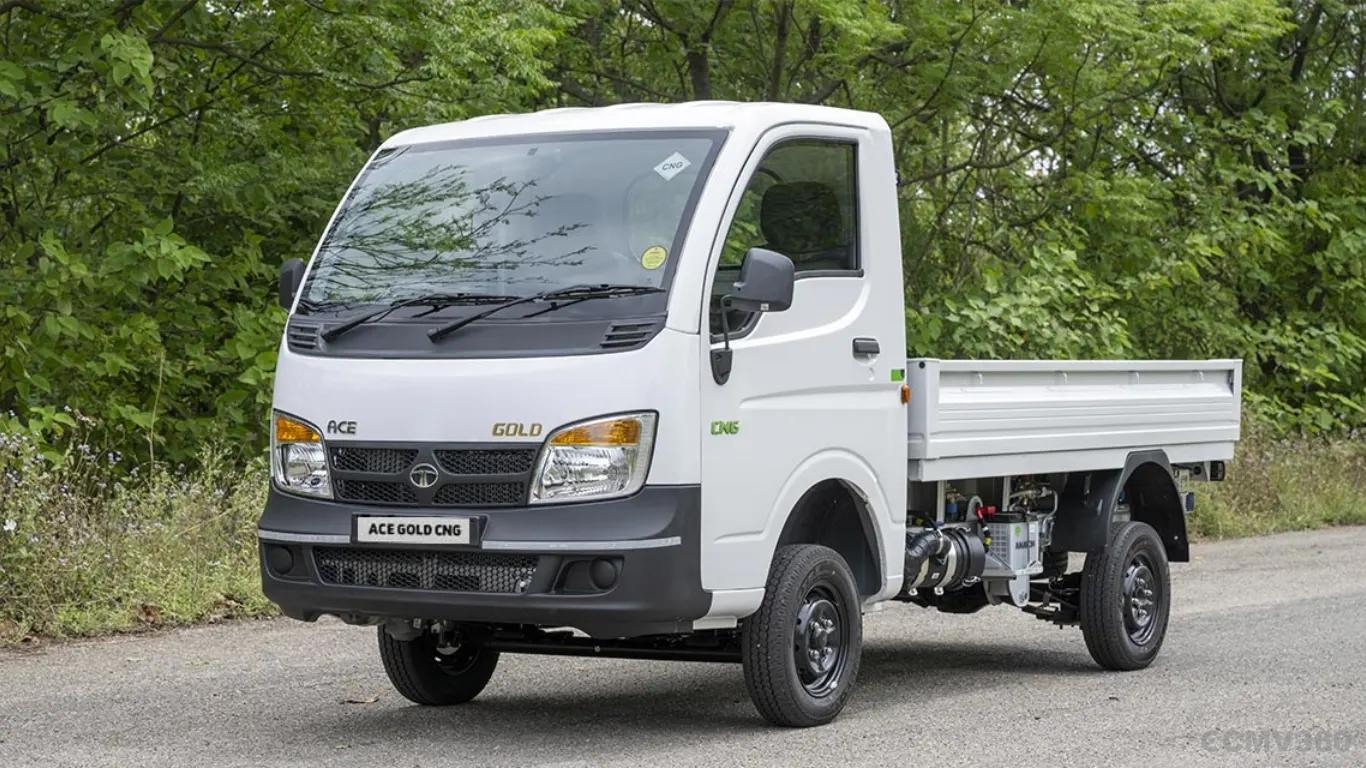
The Tata Ace Gold CNG continues the Ace's familiar role as a compact last-mile workhorse. With an approximate ex-showroom starting price of ₹6.41 lakh, it uses a 2-cylinder CNG engine producing around 26 HP.
Its GVW is approximately 1,630 kg, translating to a payload of roughly 660 kg depending on the configuration. The mini truck uses a cargo-deck body and can deliver around 21.4 km/kg under the stated conditions.
Its compact dimensions and tight turning radius make it particularly suitable for crowded markets and narrow city streets. Kirana deliveries, FMCG distribution, courier operations, e-commerce and small municipal jobs are among its natural applications.
Tata Ace Pro Bi-Fuel
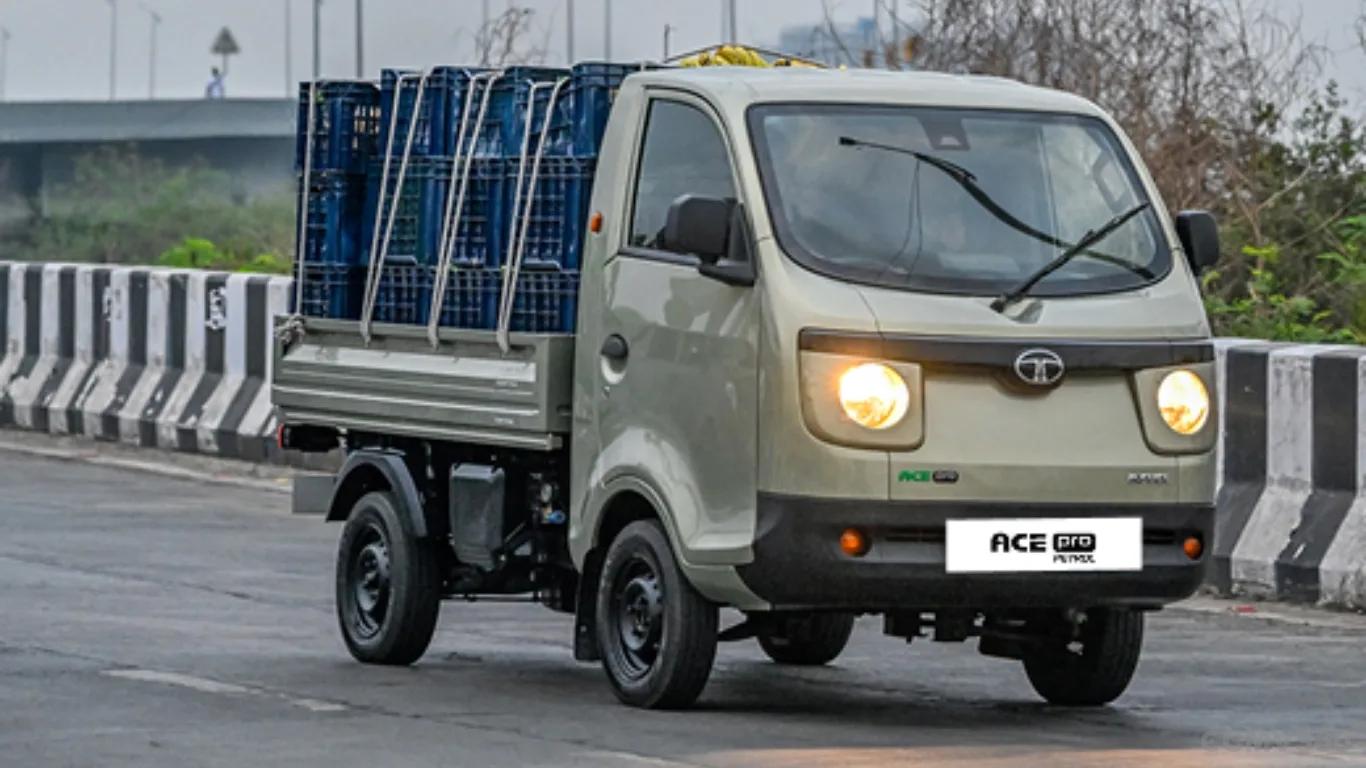
The Ace Pro Bi-Fuel adds flexibility by combining CNG and petrol capability. It offers a 750-kg payload and comes with a 6.5-ft cargo deck.
One of its biggest highlights is the claimed mileage of around 21 km/kg, making fuel efficiency a major selling point for operators covering high daily kilometres.
The vehicle also gets features such as AIS-096-compliant safety equipment, a modern instrument cluster and Fleet Edge telematics, which can help businesses monitor vehicle and operating performance.
Tata Intra V20/V30 Bi-Fuel
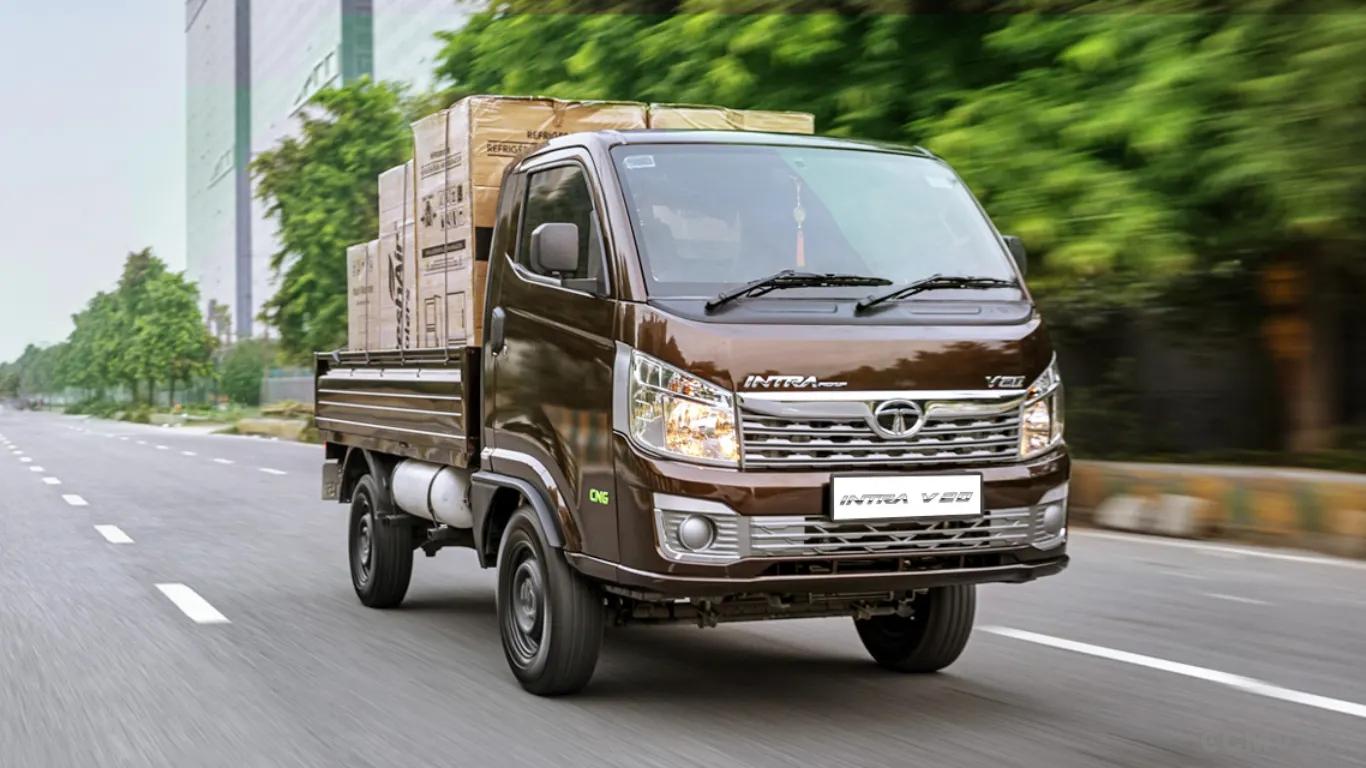
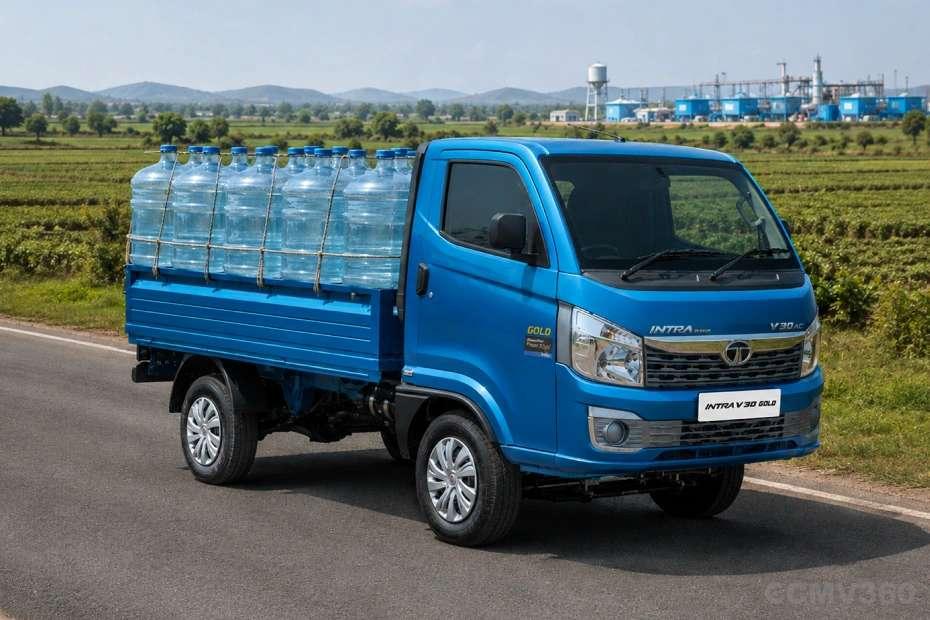
Moving into the pickup category, the Tata Intra V20 Bi-Fuel / Tata Intra V30 Bi-Fuel brings CNG efficiency to small-business transportation. These pickups can be configured with open decks or closed load bodies, making them useful for a broad range of applications.
They are particularly suited to transporting agricultural produce, building materials, hardware, cement bags and other goods across rural and semi-urban areas.
Features such as electric power-assisted steering, a gear-shift advisor and an eco-switch add to their practicality and help drivers extract better efficiency from the vehicle.
Tata Yodha CNG
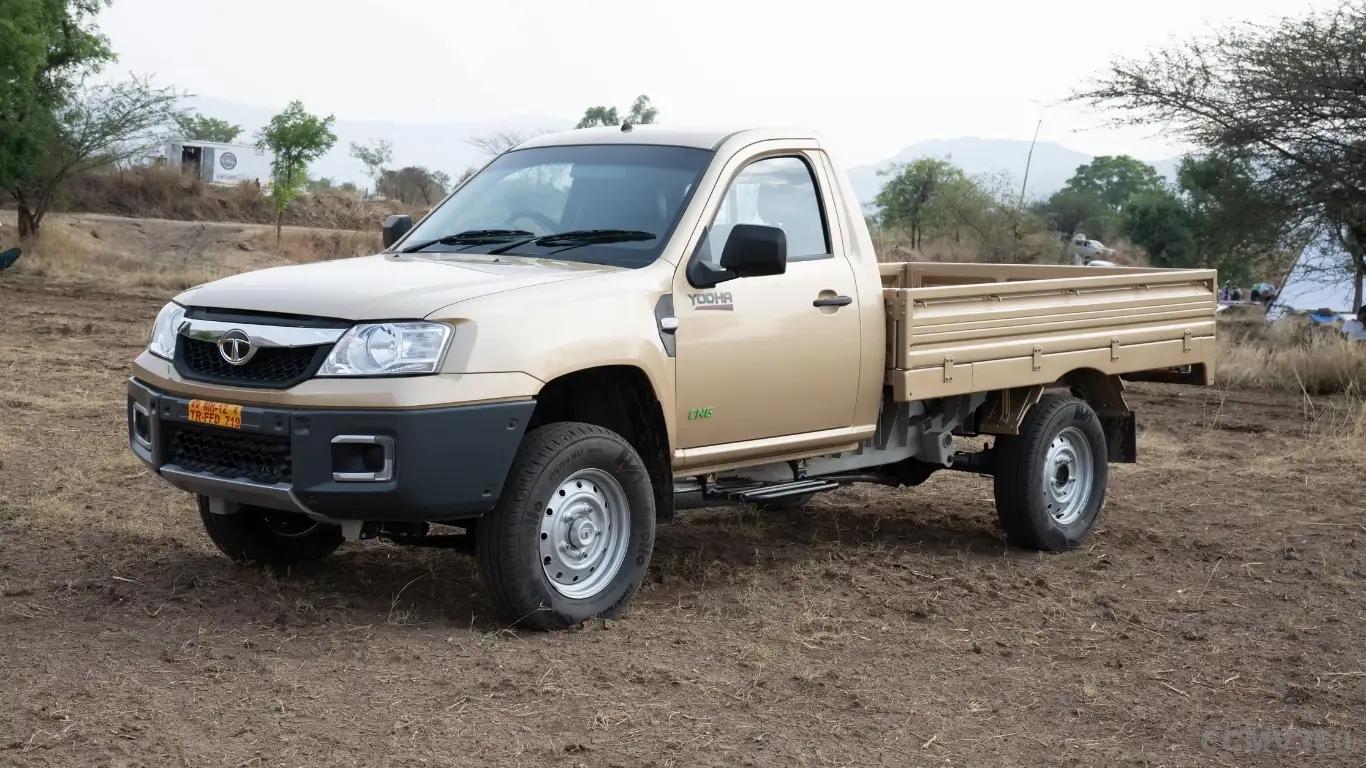
For buyers looking for a more rugged pickup, the Tata Yodha CNG is positioned around durability and lower fuel expenses. With an approximate starting price of ₹10.21 lakh ex-showroom, it is aimed at applications including construction material transportation, rural goods movement and small-fleet operations.
Its reinforced chassis and driver-focused cabin make it better suited to demanding rural and semi-urban routes where road conditions may not always be ideal.
Tata LPT CNG Range
For businesses that require more cargo capacity, Tata's LPT CNG range expands the choice considerably.
Model | Approx. Ex-Showroom Price |
₹15.49 - 16.42 Lakh | |
₹17.84 - 18.53 Lakh | |
₹19.55 - 21.94 Lakh | |
₹25.12 - 26.83 Lakh |
These trucks can be used for FMCG distribution, dairy and beverage transportation, wholesale movement and intra-state cargo operations. Their chassis can accommodate different body configurations, including cargo bodies, containers, tankers and box bodies.
The day-cab layout and improved cabin insulation are aimed at making regular commercial operations more comfortable while reducing engine noise inside the cabin.
Tata Electric Trucks in India 2026
Tata Motors electric portfolio addresses a different set of requirements. Instead of simply replacing diesel engines with electric motors, the range is designed around applications where predictable routes, charging access and high vehicle utilisation can unlock substantial operating-cost savings.
Tata Ace EV
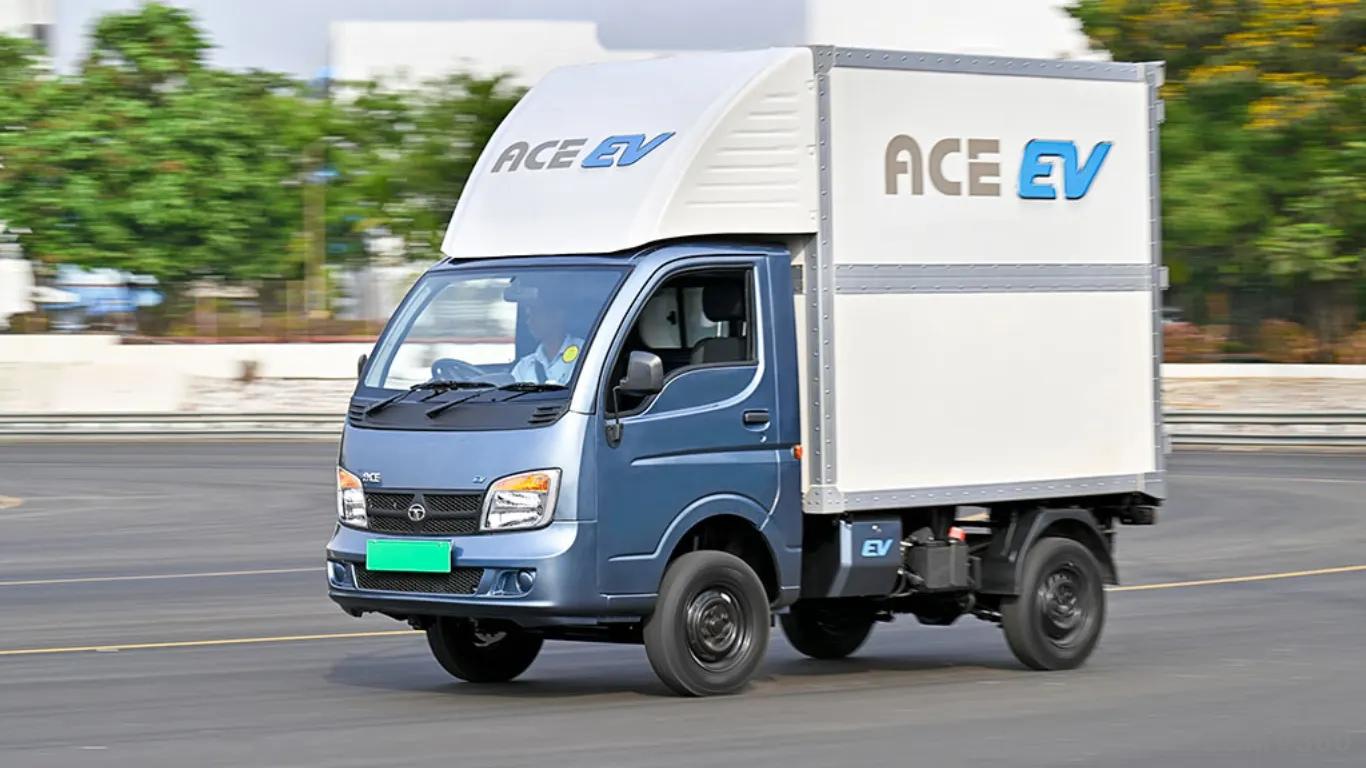
The Tata Ace EV is one of the most recognised electric mini trucks in India's commercial vehicle market. It starts at approximately ₹10.53 lakh ex-showroom and uses a 21.3-kWh LFP battery producing about 36 HP.
The truck has a 600-kg payload capacity and an ARAI-certified range of approximately 154 km per charge, with a top speed of 60 km/h.
It is particularly suitable for e-commerce, courier, FMCG and parcel delivery businesses operating predictable city routes.
Its equipment includes a digital instrument cluster, Fleet Edge telematics, tyre-pressure monitoring, rear-view camera and smartphone connectivity.
Tata Ace EV 1000
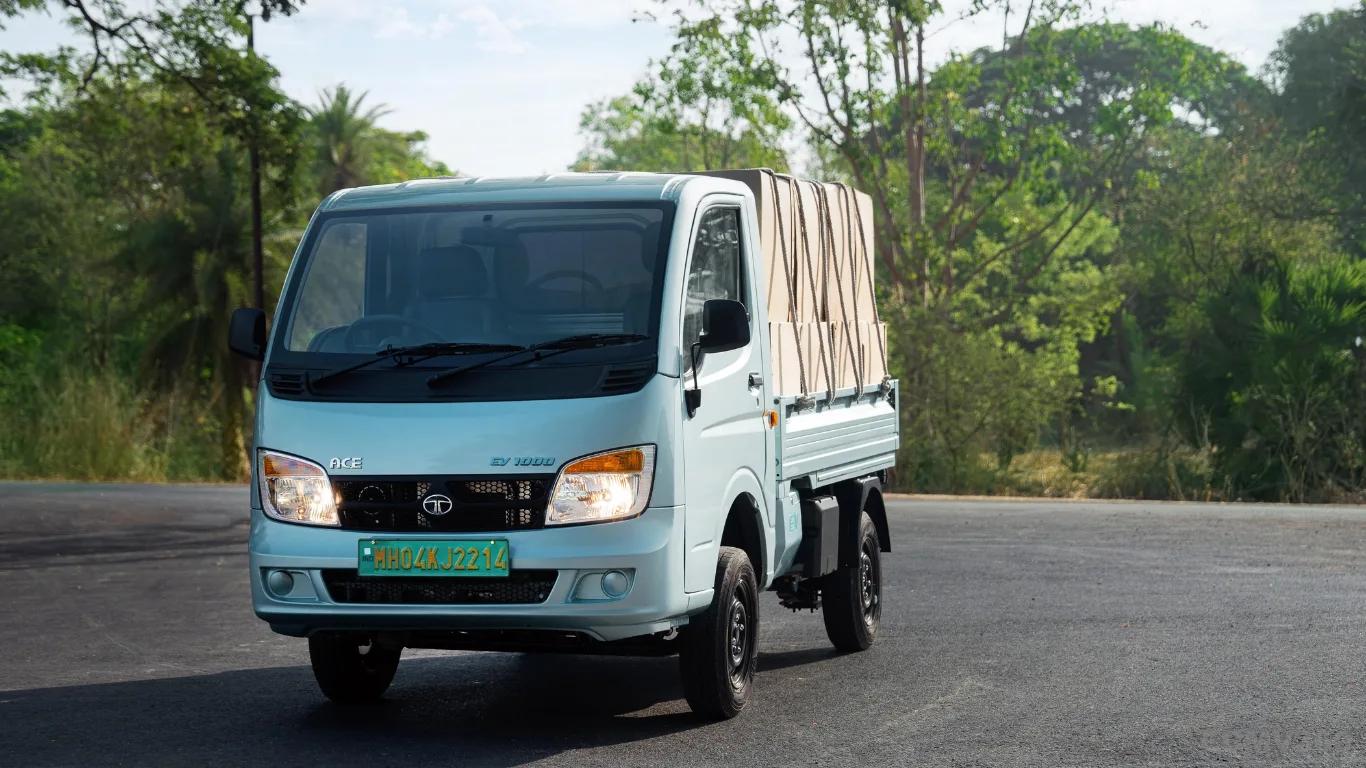
For customers who need greater payload capacity, the Ace EV 1000 raises payload capability to 1,000 kg, with a GVW of 2,120 kg.
It uses the same 21.3-kWh battery and offers around 161 km of ARAI-certified range. The ex-showroom price is approximately ₹11.40 lakh-₹11.50 lakh.
A notable advantage for fleet buyers is its 7-year/1.75-lakh-km battery warranty. Clutchless driving, a single-speed gearbox and regenerative braking further simplify city operations.
It is well suited to heavier urban deliveries such as white goods, hardware and industrial parcels.
Tata Ace Pro EV
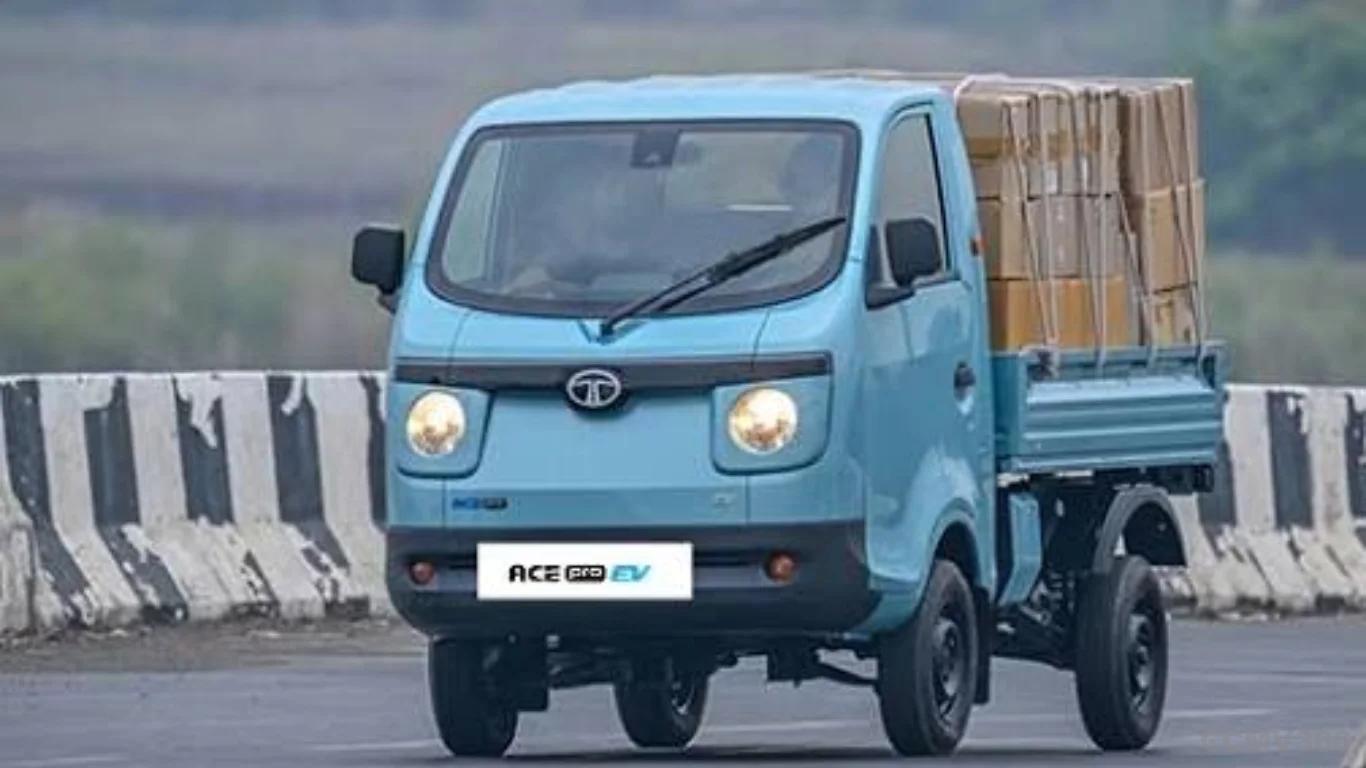
The Ace Pro EV sits in the compact electric cargo category with a 750-kg payload. It uses a 14.4-kWh LFP battery paired with a PMSM motor and offers around 155 km of range.
With a top speed of 50 km/h, it is designed primarily for city applications rather than high-speed highway travel.
Its suspension setup, including McPherson struts at the front and an independent semi-trailing-arm rear arrangement, is intended to provide a smoother ride. Running costs can be as low as around ₹1.25 per km, depending on operating conditions.
Tata Ultra E.9
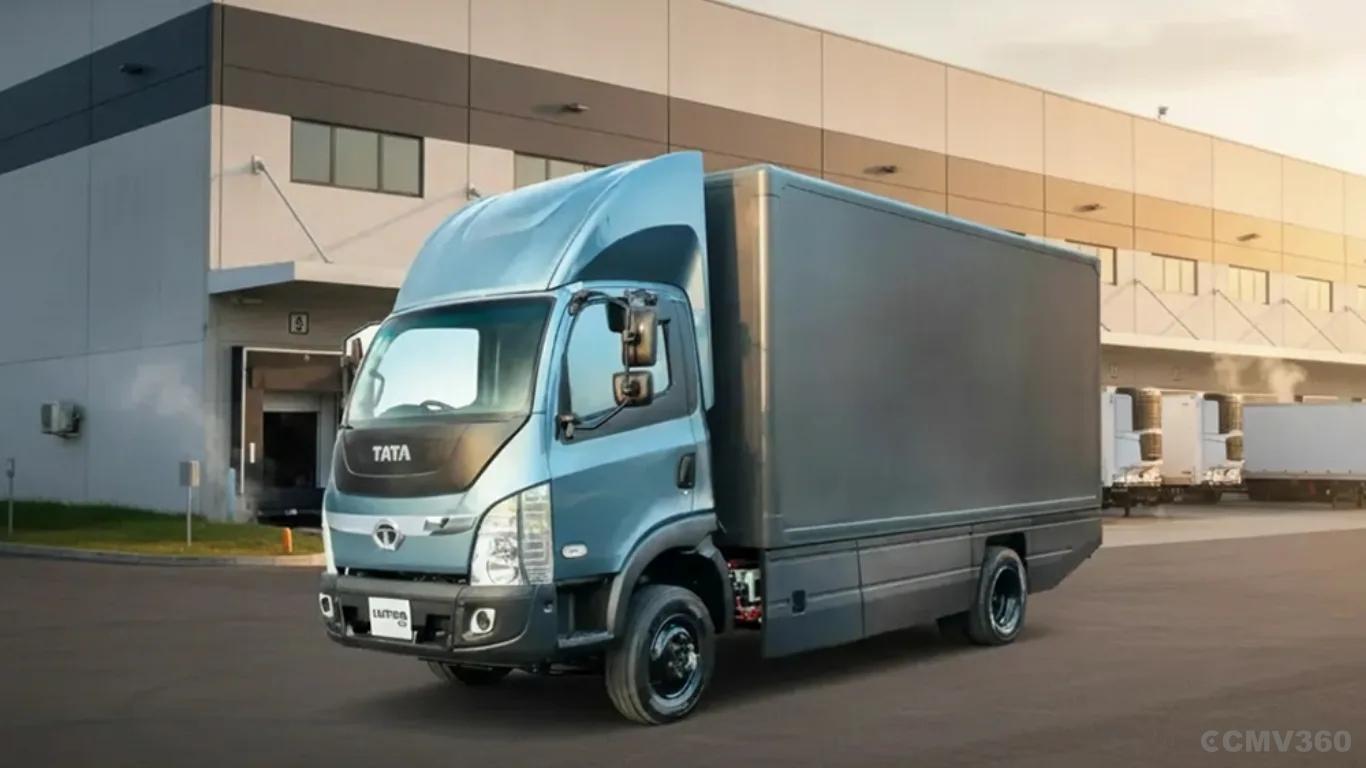
The Ultra E.9 is positioned higher in the electric cargo truck hierarchy. It carries a 9,300-kg GVW, a 4,050-kg payload and offers approximately 120-150 km of range.
Its 250-kW motor and 23% gradeability make it suitable for urban distribution operations. The box-body configuration and automatic transmission are particularly relevant for fleets operating in stop-and-go city traffic.
Its approximate ex-showroom price is ₹15.10 lakh-₹17.45 lakh.
Tata Ultra E.12
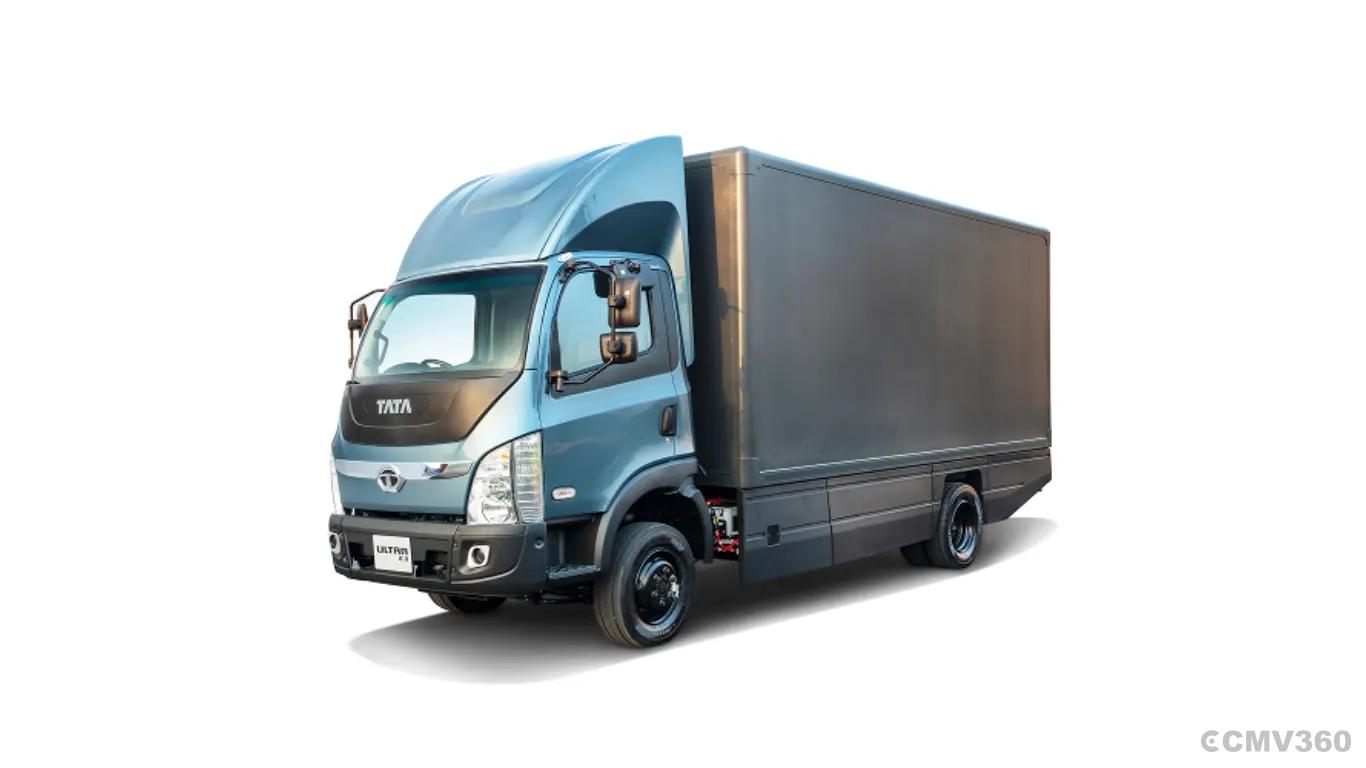
The Ultra E.12 is currently the heaviest electric truck in the listed Tata range. It is available with 96-kWh to 147-kWh LFP battery options, while its electric motor produces 240 kW and 950 Nm.
With a 11,990-kg GVW and payload capacity of approximately 6,400 kg, it is designed for heavier urban and regional distribution.
Depending on the battery configuration and operating conditions, its range can extend from around 150 km to as much as 180 km per charge.
Tata CNG vs Electric Trucks: Mileage and Range Comparison
Model | Power Type | Mileage/Range |
Ace Gold CNG | CNG | ~21.4 km/kg |
Ace Pro Bi-Fuel | CNG | ~21 km/kg |
Ace EV | Electric | 154 km/charge |
Ace EV 1000 | Electric | ~161 km/charge |
Ace Pro EV | Electric | ~155 km/charge |
Ultra T.7 Electric | Electric | 100-150 km/charge |
Ultra E.9 | Electric | 120-150 km/charge |
Ultra E.12 | Electric | 150-180 km/charge |
It is important to remember that CNG mileage and EV range are not directly comparable figures. Actual results can change significantly with payload, traffic, driving style, road gradients, weather and route conditions.
CNG or Electric: Which Tata Truck Should You Buy?
The right choice ultimately depends on how the vehicle will be used.
CNG makes more sense when:
The truck regularly covers long or intercity routes.
CNG refuelling stations are conveniently available.
The business needs quick refuelling.
A lower initial purchase price is important.
The vehicle operates across unpredictable routes.
Electric makes more sense when:
The vehicle follows fixed city or regional routes.
Daily running is predictable.
Depot, workplace or home charging is available.
Reducing per-kilometre operating cost is the priority.
Zero tailpipe emissions are important for the business.
An increasingly practical strategy is to use both technologies. A fleet can deploy electric trucks for fixed city and last-mile routes, while CNG trucks handle longer regional or highway operations. This mixed-fleet approach can balance running costs, range requirements and operational flexibility.
Also Read: Best 10 Mileage Trucks in India 2026
CMV360 Says
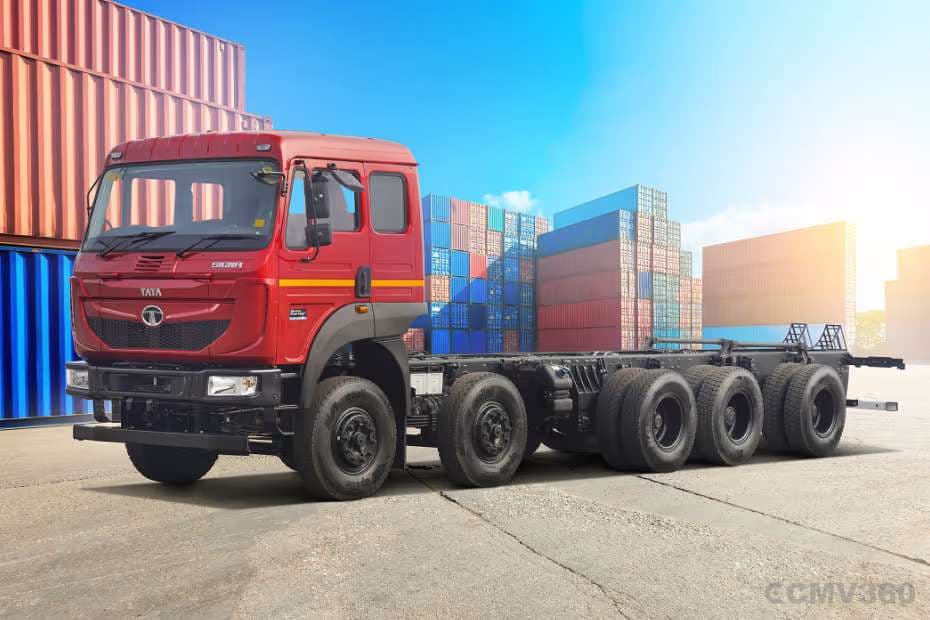
Tata Motors' 2026 CNG and electric truck portfolio shows how quickly India's commercial vehicle market is changing. From the compact Ace Gold CNG and Ace EV to the Intra Bi-Fuel, Yodha CNG, LPT CNG range, Signa 2818.T CNG and Ultra electric trucks, the company now covers a remarkably wide range of commercial applications.
For small businesses, the decision may come down to daily kilometres and payload. For larger fleets, route predictability, charging infrastructure, fuel availability and total cost of ownership become equally important. There is no universal winner between CNG and electric power.
The smarter choice is the truck that matches the route, payload, utilisation pattern and infrastructure of your business. Prices, subsidies, range figures and variant availability can change by state and dealership, so buyers should verify the latest ex-showroom and on-road price, applicable incentives and specifications before making a purchase.

Robin Kumar Attri is a content and video professional with 2.7 years of experience in the commercial vehicle d .....