Electric Truck vs Diesel Truck in India (2026): Which One Delivers Better Value, Lower Costs, and a Smarter Future for Fleet Owners?
 Add CMV360 on Google
Compare electric and diesel trucks in India 2026. Explore costs, TCO, emissions, range, maintenance, top models, and fleet savings to choose the right commercial vehicle.

By Robin Kumar Attri

India's commercial vehicle industry is standing at one of the most important turning points in its history. For decades, diesel trucks have been the undisputed backbone of the country's logistics ecosystem, carrying everything from agricultural produce and FMCG goods to construction materials and industrial cargo across cities, highways, and remote regions.
However, the landscape is changing rapidly. Rising diesel prices, stricter emission regulations, growing sustainability goals, and strong government support for electric mobility are encouraging fleet owners to look beyond conventional powertrains. At the same time, leading manufacturers such as Tata Motors, Mahindra, Eicher, and Ashok Leyland are investing heavily in electric commercial vehicle technology, bringing a new generation of trucks to Indian roads.
Electric trucks are attracting attention because of their significantly lower running costs, reduced maintenance requirements, quieter operation, and zero tailpipe emissions. Diesel trucks, meanwhile, continue to offer unmatched range, extensive refuelling infrastructure, proven reliability, and strong suitability for long-haul transportation.
This has created one of the most important questions facing transporters, fleet operators, logistics companies, and business owners today:
Should you invest in an electric truck or continue with diesel in 2026?
The answer depends on far more than just the purchase price. Running costs, maintenance expenses, range requirements, charging infrastructure, emissions, government incentives, and total cost of ownership (TCO) all play a crucial role in determining which option delivers the best value.
In this detailed comparison, we break down every important factor to help fleet owners understand where electric trucks are winning today, where diesel trucks continue to dominate, and which technology is likely to shape the future of Indian logistics.
The Evolution of Commercial Transportation in India 2026
The Indian logistics sector is expanding at an unprecedented pace. Rapid growth in e-commerce, manufacturing, infrastructure development, retail distribution, and agricultural supply chains has increased demand for efficient freight transportation solutions.
For years, diesel-powered trucks have been the preferred choice because they offered everything transporters needed: high range, strong torque, quick refuelling, and easy serviceability. Their nationwide acceptance helped create an ecosystem of fuel stations, workshops, mechanics, and spare parts suppliers that support millions of vehicles across the country.
But as fuel prices continue to fluctuate and operating costs rise, fleet operators are increasingly focusing on a different metric: profitability per kilometre.
This shift in thinking has accelerated interest in electric trucks, particularly in urban logistics, last-mile delivery, and short-haul cargo operations where predictable daily routes make EV adoption practical.
The result is a commercial vehicle market where diesel remains dominant, but electric trucks are emerging as a serious alternative rather than an experimental technology.
Electric Trucks in India 2026: The New Generation of Cargo Mobility
The electric truck segment has evolved significantly over the last few years. What began with a handful of pilot projects has now become a growing category supported by multiple manufacturers, charging infrastructure providers, and government initiatives.
Unlike earlier perceptions, electric trucks are no longer limited to small cargo applications. Today's market includes everything from mini trucks and pickups to intermediate commercial vehicles and heavy-duty electric cargo carriers.
Why Electric Trucks Are Gaining Popularity
Electric trucks offer several compelling advantages:
Extremely low running costs
Reduced maintenance requirements
Zero tailpipe emissions
Quieter operation
Lower downtime
Government incentives and subsidies
Improved total cost of ownership over time
These benefits are particularly attractive for fleet operators running fixed daily routes where vehicles return to a central depot for overnight charging.
Leading Electric Trucks Available in India 2026
Tata Motors
Among all manufacturers, Tata Motors has built one of the strongest electric commercial vehicle portfolios in India.
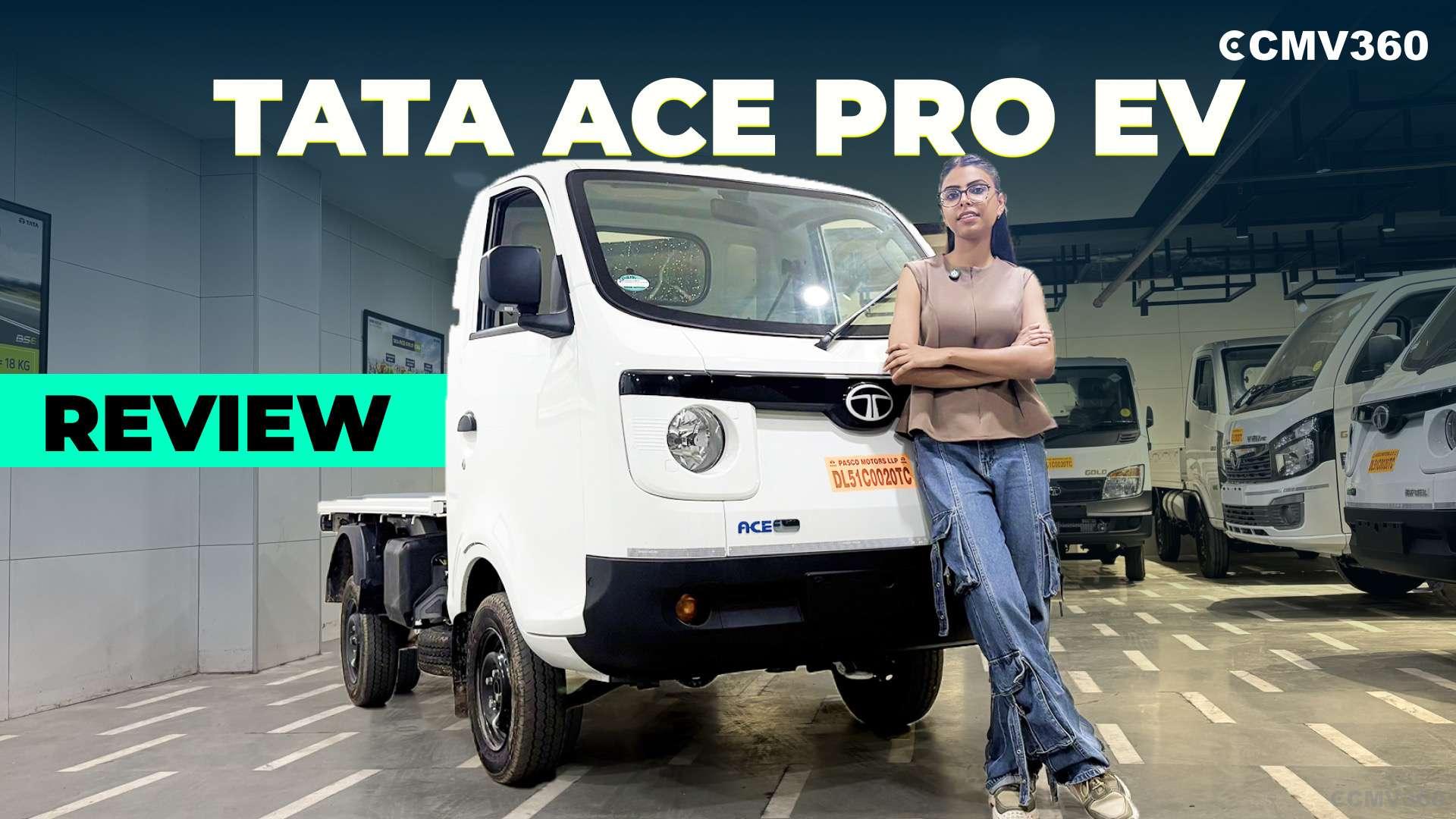
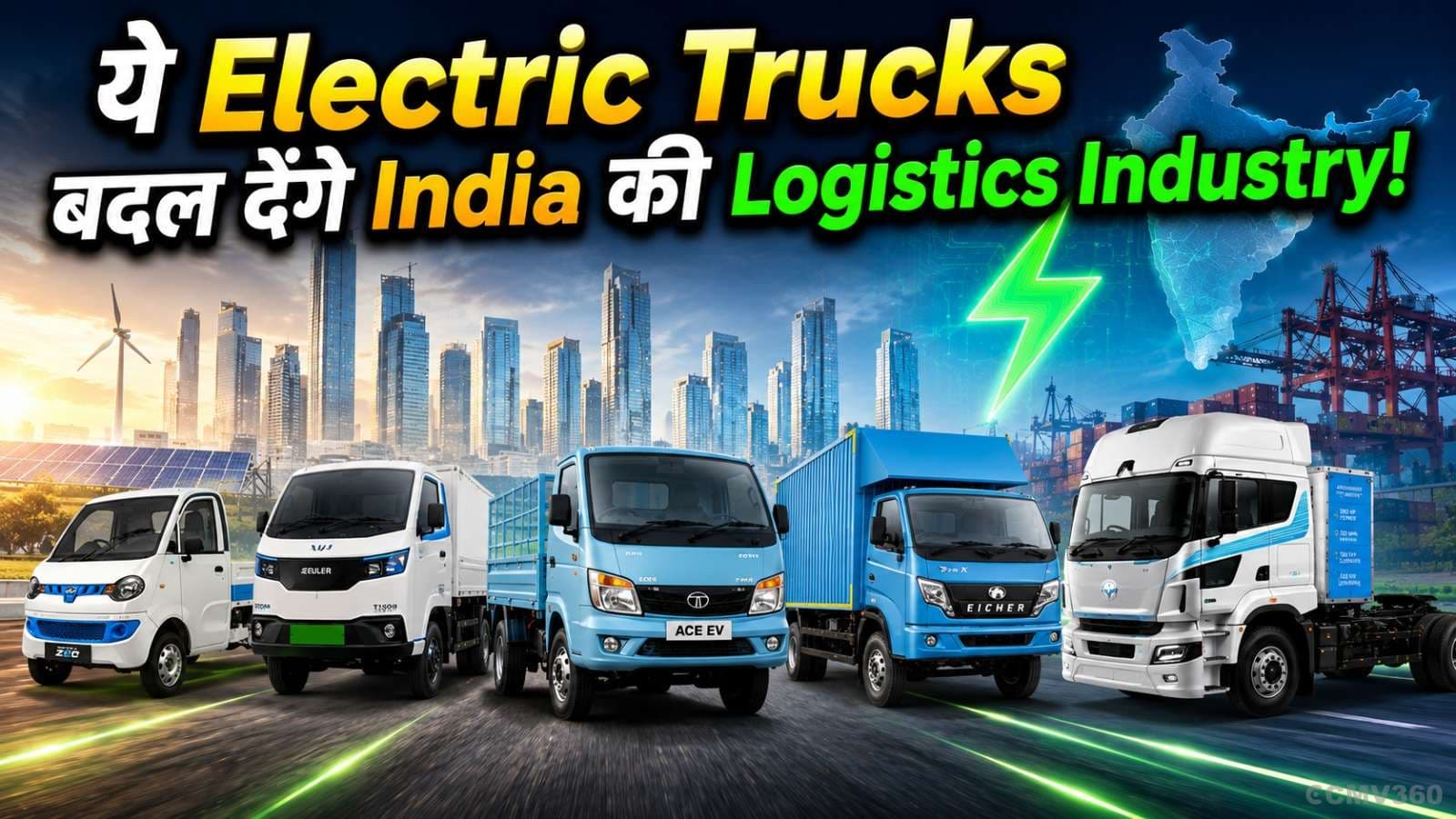
The Tata Ace EV has emerged as India's most popular electric mini truck, offering businesses a practical solution for urban cargo transportation. Starting from approximately ₹10.53 lakh, it delivers an ARAI-certified range of 154 km and an estimated running cost of around ₹1 per kilometre.
Building on this success, the Tata Ace EV 1000 offers enhanced capability, while the Tata Intra EV Pickup addresses demand for open-body electric cargo vehicles suitable for various business applications.
For operators requiring larger payload capacities, the Tata Ultra E.9 represents Tata's move into heavier electric cargo transportation.
Mahindra
Mahindra has focused on making electric cargo mobility more accessible through the Mahindra ZEO.
Priced between ₹7.88 lakh and ₹8.37 lakh, the ZEO is among the most affordable electric trucks available in India. The model is supported by a 7-year or 1.5 lakh kilometre battery warranty, backed by a wide sales and service network comprising more than 300 dealerships and over 850 customer touchpoints nationwide.
Eicher's Entry into Electric Cargo
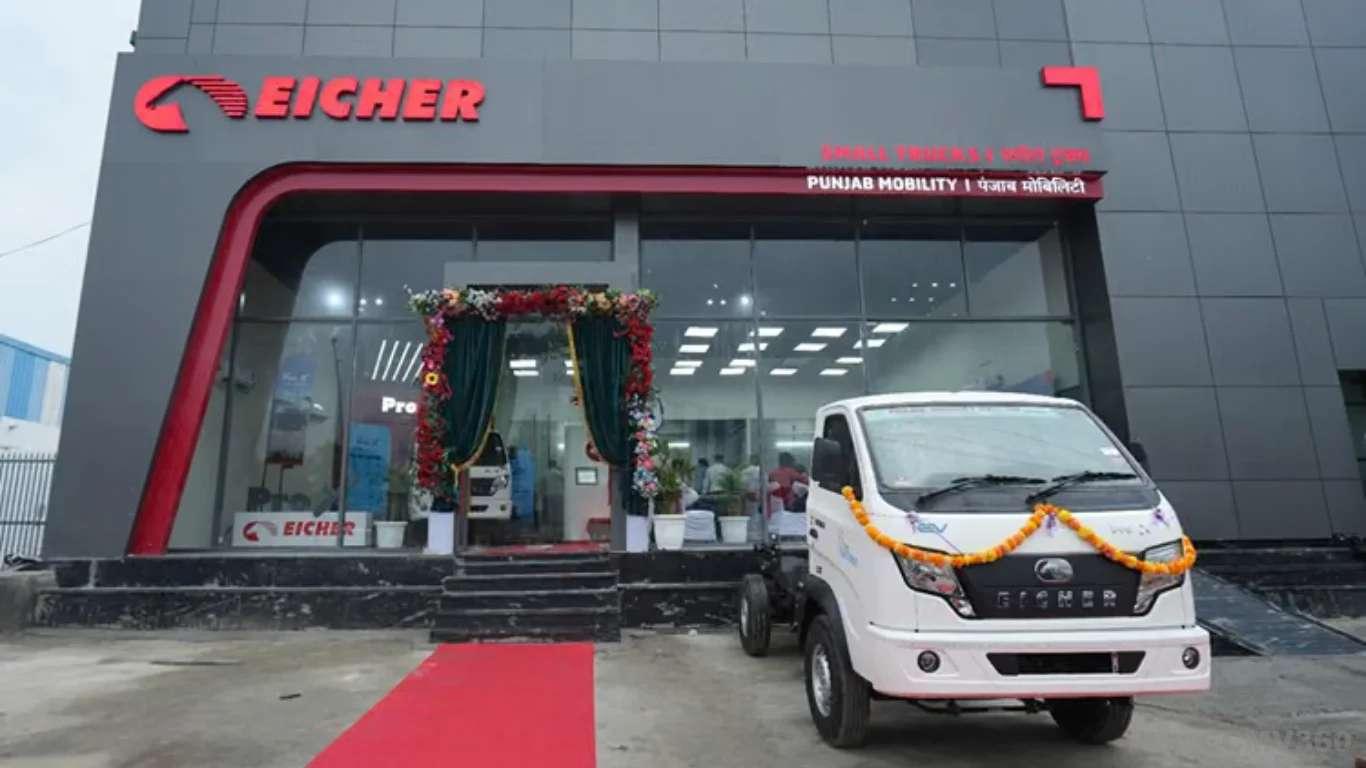
Eicher has entered the segment with the Eicher Pro 2055 EV, targeting operators who require higher payload capacities than typical mini trucks.
Positioned around ₹27 lakh, the model offers a pathway for fleet operators looking to transition medium-duty operations toward electrification.
Also Read: Top 10 Eicher Trucks in India 2026: Price, Specs, Mileage & Best Models for Every Business
Ashok Leyland and Switch Mobility
The Hinduja Group-backed Switch Mobility brand has introduced the Switch IeV3 and Switch IeV4, targeting urban cargo movement and last-mile delivery applications.
Ashok Leyland has simultaneously expanded its own electric lineup through products such as:
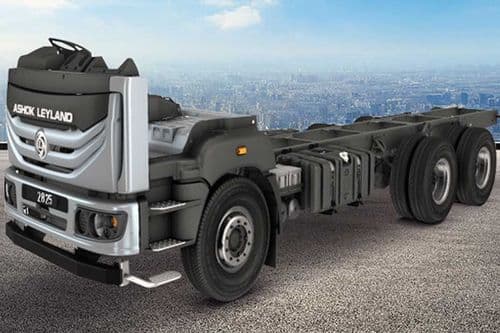
The AVTR 55T EV represents one of India's most ambitious heavy-duty electric truck projects, priced at approximately ₹1.25 crore.
Diesel Trucks Continue to Power India's Economy
Despite the growing excitement around electrification, diesel trucks continue to dominate India's commercial vehicle landscape.
Industry estimates suggest that more than 85% of commercial freight movement in India still depends on diesel-powered vehicles.
The reasons are straightforward:
Proven technology
Long driving range
Massive refuelling network
Higher payload capability
Familiarity among drivers
Established service ecosystem
For long-distance transportation, diesel remains the default choice for most operators.
Major Diesel Truck Manufacturers and Popular Models
Tata Motors
Tata Motors continues to maintain one of India's broadest truck portfolios.
Its lineup includes:
These vehicles serve applications ranging from urban cargo transport to heavy interstate freight movement.
Ashok Leyland
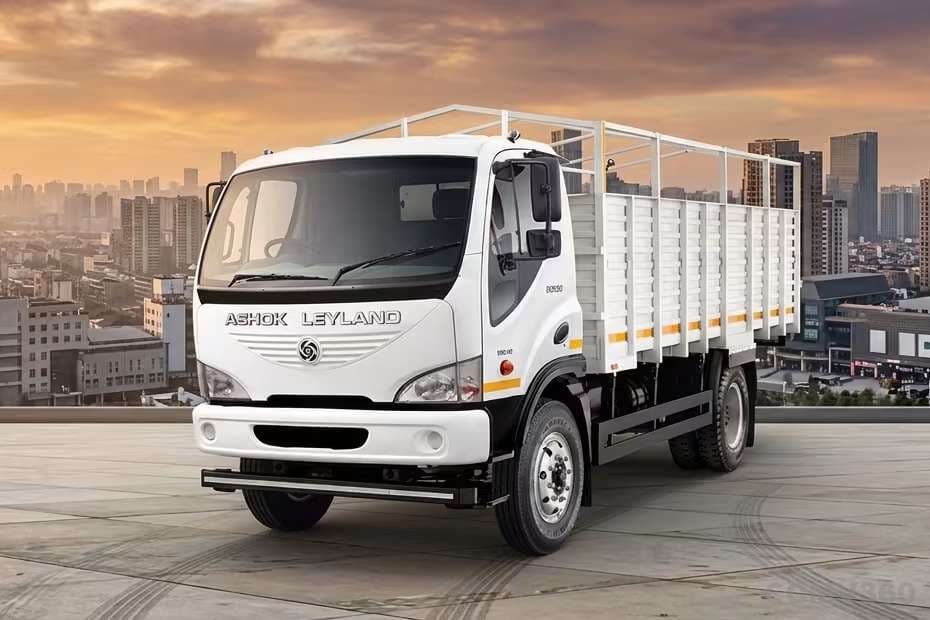
Ashok Leyland offers one of the country's most extensive truck portfolios.
Popular models include:
These trucks cater to sectors including logistics, mining, construction, and long-haul transportation.
Also Read: Top 10 Ashok Leyland Trucks in India 2026 - Best Models for Every Business
Eicher
Eicher's diesel range includes:
The brand has earned a reputation for fuel efficiency and reliability.
Mahindra and BharatBenz
Mahindra's Furio series continues to attract buyers in the sub-25-tonne category, while BharatBenz remains a preferred choice for premium trucking applications through models such as:
These trucks are particularly appreciated for driver comfort, uptime, and strong after-sales support.
Electric Truck vs Diesel Truck: Key Models Comparison
Category | Electric Truck | Price | Diesel Alternative | Price |
Mini Truck | Mahindra ZEO | ₹7.88-8.37 Lakh | Tata Ace Gold Diesel | ₹4.75-5.50 Lakh |
SCV Cargo | Tata Ace EV | ₹10.53-11.43 Lakh | Tata Ace Gold CNG | ₹5.20-5.80 Lakh |
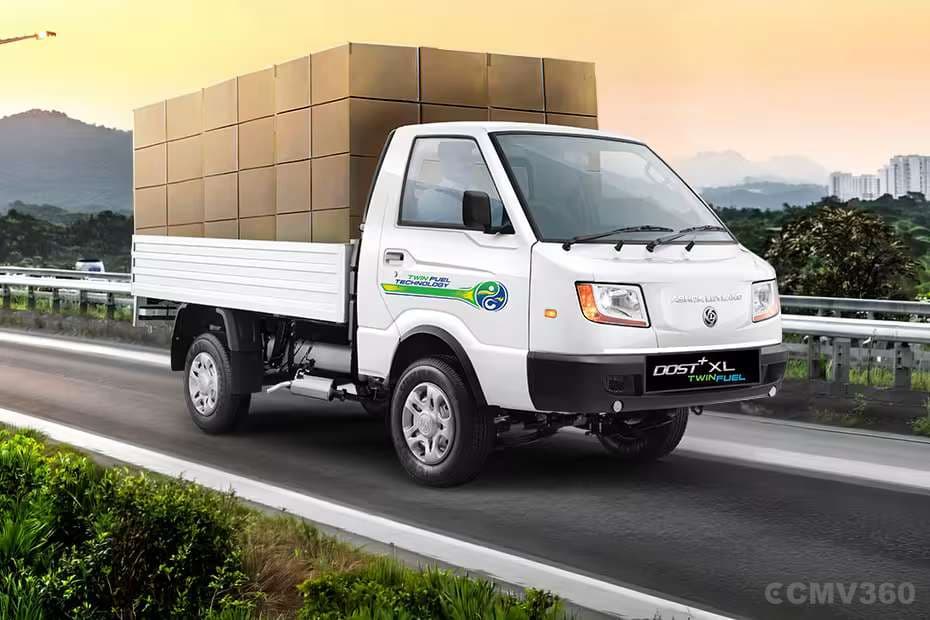
LCV Pickup | Tata Intra EV Pickup | ₹11.95 Lakh | Ashok Leyland Dost+ | ₹7.50-9.50 Lakh |
ICV Cargo | Eicher Pro 2055 EV | ₹27-30 Lakh | Eicher Pro 2095XP | ₹17-22 Lakh |
Heavy Duty | Ashok Leyland AVTR 55T EV | ₹1.25 Crore | Ashok Leyland AVTR 3532 | ₹65.50 Lakh |
Running Costs: The Biggest Advantage of Electric Trucks
When fleet owners compare vehicles, no factor influences profitability more directly than daily operating costs.
This is where electric trucks deliver their strongest argument.
In 2026, diesel prices across India generally range between ₹80 and ₹90 per litre, while commercial electricity tariffs typically remain between ₹6 and ₹10 per kWh.
A diesel mini truck operating under load conditions generally incurs fuel expenses of around ₹4-5 per kilometre.
An electric equivalent often operates at approximately ₹1-2 per kilometre.
Running Cost Comparison
Cost Factor | Electric Truck | Diesel Truck |
Energy Cost | ₹1-2/km | ₹4-5/km |
Annual Fuel Cost (80 km/day) | ₹29,000-58,000 | ₹1.16-1.46 lakh |
Maintenance Cost | 40-60% Lower | Standard |
Annual Savings Potential | ₹50,000-1 lakh | - |
For businesses operating multiple vehicles, these savings multiply significantly over time.
A fleet of ten electric trucks can potentially save several lakh rupees annually compared to diesel alternatives.
Total Cost of Ownership (TCO)
One of the most common concerns among buyers is the higher upfront cost of electric trucks.
At first glance, the price difference appears substantial.
A Mahindra ZEO costs considerably more than a diesel Tata Ace Gold, while an Eicher Pro 2055 EV carries a notable premium over its diesel counterpart.
However, the purchase price tells only part of the story.
Total Cost of Ownership (TCO) includes:
Vehicle purchase cost
Fuel or electricity expenses
Maintenance costs
Repairs
Insurance
Operational downtime
When these factors are considered over a three-to-five-year ownership cycle, electric trucks begin to close the gap rapidly.
The combination of lower energy costs, reduced maintenance expenditure, and government incentives significantly improves the financial equation.
For operators with predictable routes and high daily utilisation, the break-even point often arrives within three to five years.
After that, the savings continue to accumulate.
Maintenance Costs: The Hidden Benefit Fleet Owners Often Overlook
Maintenance is one of the most underestimated advantages of electric trucks.
A conventional diesel engine contains thousands of moving components requiring periodic servicing.
Regular maintenance includes:
Engine oil changes
Fuel filter replacements
Air filter changes
Coolant servicing
Exhaust system maintenance
Emission system repairs
Modern BS6 Phase 2 trucks have become even more complex because of stricter emission requirements.
Electric trucks eliminate many of these requirements entirely.
Their drivetrains contain significantly fewer moving parts and do not require:
Engine oil
Fuel filters
Complex exhaust treatment systems
Regenerative braking further reduces wear on braking components.
The result is lower maintenance expenditure, reduced workshop visits, and improved vehicle uptime.
Emissions and Sustainability
Environmental performance is becoming increasingly important for logistics companies.
Large corporations, e-commerce companies, and multinational businesses are actively seeking greener supply chains.
Diesel trucks continue to emit:
Carbon dioxide (CO₂)
Nitrogen oxides (NOx)
Particulate matter (PM)
Electric trucks produce zero tailpipe emissions.
While electricity generation still involves conventional energy sources, electric vehicles generally offer lower greenhouse gas emissions compared to diesel alternatives.
As renewable energy adoption increases across India, the environmental advantage of electric trucks is expected to become even stronger.
Range and Payload: Diesel's Biggest Strength
Despite their advantages, electric trucks still face limitations.
Most electric cargo vehicles available in India currently offer a practical operating range of approximately 150 to 162 kilometres per charge.
For urban logistics, this is usually sufficient.
Applications include:
Last-mile delivery
E-commerce logistics
FMCG distribution
Municipal operations
Intra-city transportation
However, long-haul freight operations often require 600 to 1,000 kilometres of daily travel.
In these scenarios, diesel trucks remain unmatched.
Additionally, battery packs add weight, which can reduce payload capacity compared to equivalent diesel vehicles.
Although regulatory changes may help offset this challenge in the future, diesel currently retains a clear advantage for long-distance freight transportation.
Charging vs Refuelling: The Infrastructure Debate
Infrastructure remains one of the most important differentiators between the two technologies.
Diesel Infrastructure
More than 80,000 fuel stations nationwide
Refuelling time under 15 minutes
Available across cities, highways, and rural areas
Electric Infrastructure
Approximately 12,000-15,000 charging points
Growing fast-charging network
Charging time ranges from 45 minutes to 6 hours
For depot-based fleet operations, charging is often straightforward because vehicles can recharge overnight.
For long-haul trucking, however, charging infrastructure continues to be a challenge.
Government investments in EV freight corridors and charging networks are expected to improve this situation significantly over the coming years.
Government Support Accelerating EV Adoption
Government policy has become one of the strongest drivers behind electric truck adoption.
Key initiatives include:
PM E-DRIVE Scheme
FAME II Incentives
Reduced GST of 5% on EVs
State-level road tax exemptions
Registration fee benefits
Incentives for commercial fleet electrification
These measures reduce the overall acquisition cost and improve the financial viability of electric trucks.
For many operators, government support has transformed EV adoption from a future consideration into a present-day business decision.
Electric Truck or Diesel Truck: Which Should You Choose in 2026?
After analysing costs, infrastructure, maintenance requirements, emissions, and operational capabilities, one conclusion becomes increasingly clear.
There is no universal winner.
The right choice depends entirely on the nature of your business.
Choose an Electric Truck If:
Daily operations are under 150 km
Routes are fixed and predictable
Vehicles return to a depot every day
Fuel savings are a priority
Sustainability goals matter
Long-term TCO is more important than upfront price
Ideal options include the Tata Ace EV, Mahindra ZEO, Tata Intra EV Pickup, Eicher Pro 2055 EV, and Switch IeV series.
Choose a Diesel Truck If:
Long-haul freight is your primary business
Routes exceed 300-500 km regularly
Remote-area operations are common
Fast refuelling is essential
Payload requirements are extremely high
Popular choices remain Tata Prima, Tata LPT, Ashok Leyland AVTR, BharatBenz heavy-duty trucks, Eicher Pro models, and Mahindra Furio trucks.
Also Read: Battery Swapping vs Fast Charging: Which Technology Will Drive India’s Electric Truck Revolution?
CMV360 Says
The electric-versus-diesel debate is no longer about technology readiness. Electric trucks have already proven that they can deliver meaningful savings, lower maintenance costs, and improved operational efficiency in urban and short-haul applications.
For fleet owners operating city logistics, e-commerce deliveries, FMCG distribution, and fixed daily routes, electric trucks are increasingly becoming the smarter financial choice in 2026. Their lower running costs and improving TCO make them difficult to ignore.
At the same time, diesel trucks remain indispensable for India's long-haul freight sector. Their superior range, mature infrastructure, and payload capability continue to make them the preferred option for interstate transportation and heavy-duty logistics.
The reality is that India's trucking future will not be purely electric or purely diesel. Instead, it will be a carefully balanced mix of both technologies, each serving the applications where it performs best. Fleet owners who understand this transition early, evaluate total ownership costs rather than purchase price alone, and align vehicle choices with operational requirements will be best positioned to succeed in the next era of Indian logistics.

Robin Kumar Attri is a content and video professional with 2.7 years of experience in the commercial vehicle d .....