JCB India Takes on Farm Logistics with Agrimax, Bridging the Gap Between Tractors and Backhoes
 Add CMV360 on Google
JCB Agrimax targets India’s 20,000-unit farm logistics market with factory-built loading equipment, while JCB expands compact excavators and clean-energy technologies.

By Robin Kumar Attri

Key Highlights
JCB targets an 18,000-20,000-unit farm-handling market.
Agrimax currently runs at around 100 units per month.
Factory-built design replaces uncertified tractor-loader retrofits.
Agrimax offers 4-metre dump height and multiple attachments.
JCB is expanding mini excavators from 1.8 to 5.5 tonnes.
JCB India is expanding beyond conventional construction equipment with its Agrimax multi-utility machine, targeting a growing farm-gate material-handling market that has traditionally depended on tractor-based loader retrofits and locally fabricated “jugaad” solutions. The company estimates that the addressable Indian market for machines in this performance category is around 18,000-20,000 units annually.
The move places Agrimax in a distinct space between agricultural tractors and conventional backhoe loaders, offering farmers, contractors and rural businesses a factory-built machine designed specifically for loading, handling and transportation-related applications.
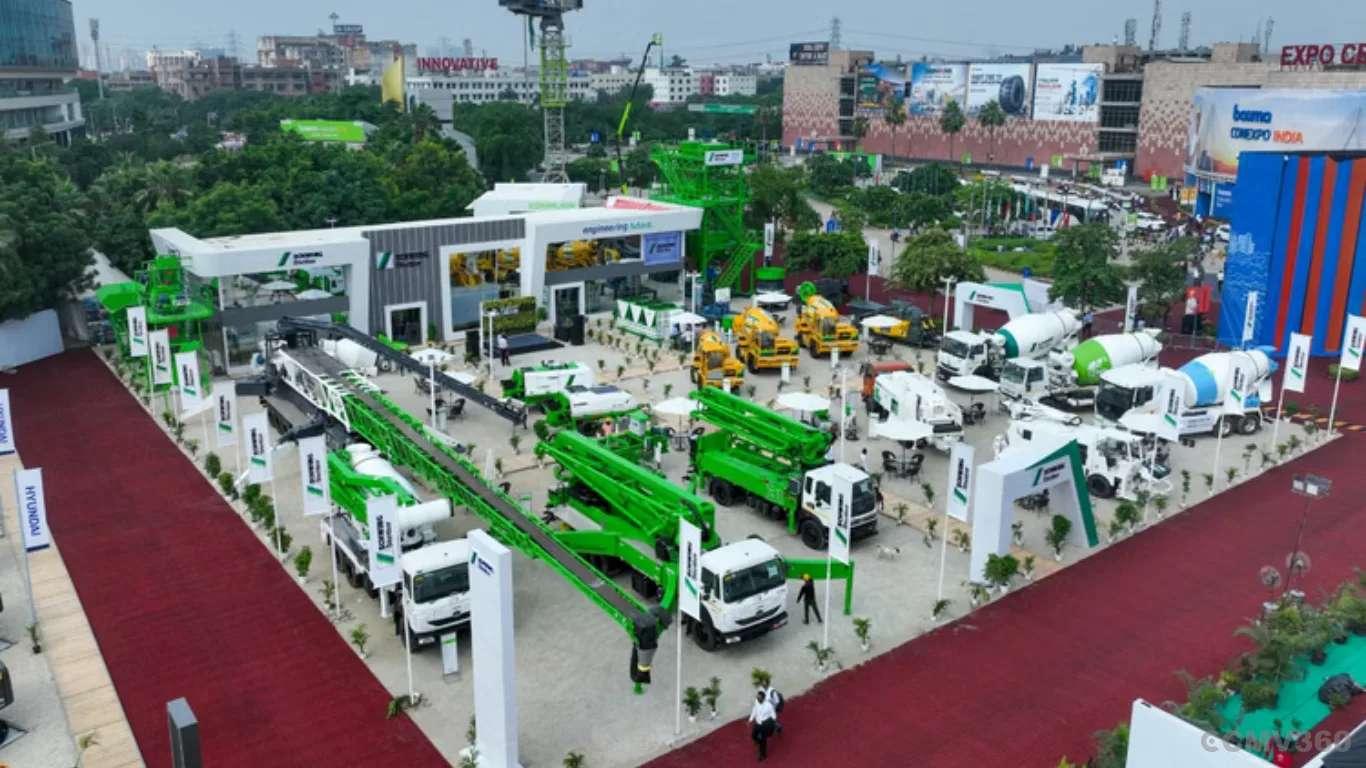
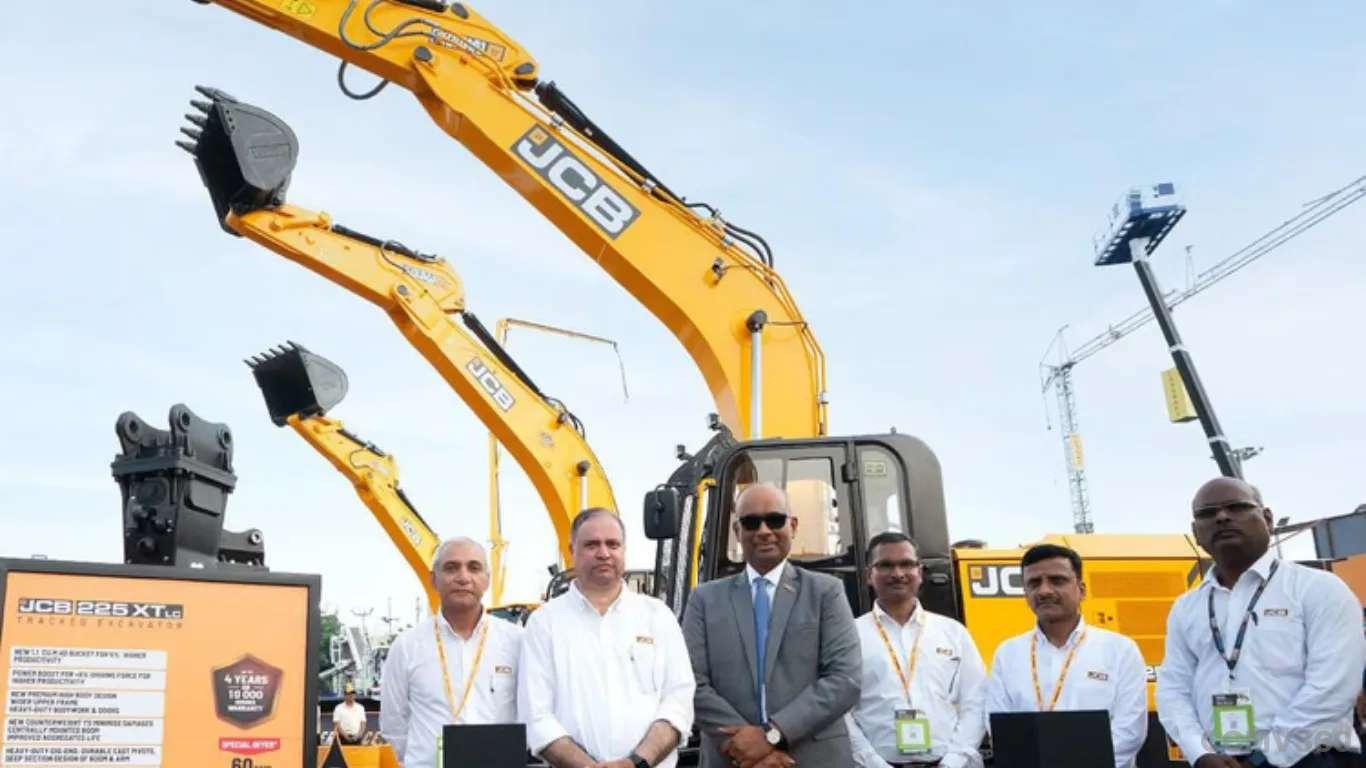
Speaking at bauma CONEXPO INDIA 2026, JCB India Managing Director and CEO Deepak Shetty discussed the opportunity, operating benefits and engineering behind this emerging equipment category.
JCB Agrimax Sales and Market Opportunity
JCB estimates that India currently has an annual addressable market of approximately 18,000-20,000 agricultural material-handling machines in the Agrimax performance class.
The Agrimax was introduced relatively recently in August and has already established an initial sales run rate of around 100 units per month. This translates to approximately 1,200 machines annually at the current pace.
JCB has also started exporting Agrimax machines to neighbouring SAARC countries, while evaluating opportunities to deploy the machine in other agricultural markets with similar operating requirements.
Why JCB Wants to Replace Tractor ‘Jugaad’ Loaders
A major opportunity for purpose-built loaders comes from the widespread use of modified agricultural tractors for material handling. In many rural applications, tractor owners add third-party loader arms and locally fabricated counterweights to standard tractors. These modifications are commonly welded onto tractor chassis that were originally engineered primarily for draft-tilling applications rather than repeated vertical lifting.
According to Shetty, such setups can create structural and operational limitations because the loader system, counterweight and tractor are not originally engineered as one integrated machine. The Agrimax takes a different approach. Its loader arm, heavy-duty front axle and cast counterweights are factory integrated into the machine's structural design.
4-Metre Dump Height and Multiple Attachments
One of the key advantages of the Agrimax is its four-metre dump height. This enables operators to load materials directly into high-sided commercial transport trucks used for applications such as sugarcane, grain and other bulk agricultural commodities.
The machine is designed as a multi-utility carrier and can work with different attachments, including:
Bale handlers
High-capacity shovels
Agricultural clamps
This allows one machine to handle different farm and material-handling requirements rather than relying on multiple specialised machines.
Financing, Insurance and 4-Year Warranty
The factory-built nature of the Agrimax also addresses an important challenge associated with modified tractors.
Uncertified tractor-loader retrofits can face difficulties with formal financing and insurance coverage. In contrast, the Agrimax qualifies for complete vehicle financing and comprehensive insurance coverage.
JCB is also offering a four-year or 6,000-hour factory warranty with each machine. In addition, customers receive a six-year subscription to JCB LiveLink, the company's IoT-based telematics platform.
This combination gives rural entrepreneurs access to financing, insurance, warranty protection and connected-machine monitoring within a formal equipment package.
Lower Clutch Wear and Less Operator Fatigue
The shift from tractor retrofits to dedicated loaders is not only about structural design. It can also affect operating costs and driver fatigue.
When tractors are used for repeated loading operations, operators frequently have to engage and disengage the clutch during continuous forward-reverse shuttle cycles. This can accelerate clutch wear and make long working shifts more tiring.
Shetty compared the transition to a purpose-built machine with moving from a manual to an automatic transmission. According to him, operators who become accustomed to dedicated machines often find it difficult to return to conventional tractor-loader setups.
JCB Agrimax Competitors and Price Range
The emerging hybrid loader and entry-level backhoe segment is becoming increasingly competitive. The Bull Agri from Bull Machines is one of the direct competitors to Agrimax. Other equipment considered in this broader category includes ACE AX124 and AX130, Escorts Kubota Digmax, Mahindra Construction Equipment EarthMaster and machines from CASE Construction Equipment.
Prices in the entry-level backhoe and hybrid-loader segment generally range from around ₹24 lakh to ₹36 lakh, depending on factors such as engine horsepower, 2WD or 4WD configuration and factory-fitted attachments.
Premium machines can cost ₹46 lakh or more.
These machines are also finding applications beyond agriculture, including rural road projects, water infrastructure work such as the Jal Jeevan Mission and commercial orchards.
JCB India Strengthens Dealer and Manufacturing Network
JCB India showcased 10 new products at bauma CONEXPO INDIA 2026, underlining its broader expansion across construction, agriculture and compact equipment.
The company currently has more than 65 dealers and over 700 outlets across India and employs nearly 8,000 people.
JCB also operates as a global engineering and manufacturing hub from India. Its Indian operations include six major manufacturing facilities and a design centre in Pune with more than 770 engineers.
The company says its machines are engineered in India for global markets and manufactured on unified assembly lines. This means equipment produced for Indian customers follows the same manufacturing approach used for export markets including Japan and the United States.
JCB Expands Compact Excavator Portfolio
Alongside the agricultural push, JCB is expanding its presence in compact construction equipment for increasingly congested urban environments. The company has introduced a nine-model mini excavator range, covering operating weights from 1.8 tonnes to 5.5 tonnes.
At the entry level is a new 1.8-tonne mini excavator designed for areas where conventional construction equipment cannot easily operate.
980 mm Track Width and Zero Tail Swing
The compact excavator features zero-tail-swing engineering, allowing its upper structure to rotate within the width of its tracks without extending beyond the machine's footprint.
Its track width is just 980 mm, while a hydraulically retractable chassis further improves access.
This allows the machine to enter:
Narrow access gates
Tight urban lanes
Confined construction sites
Indoor demolition areas
JCB sees such compact equipment becoming increasingly important as Indian cities undergo redevelopment and infrastructure upgrades.
Shetty cited projects such as the Dharavi redevelopment in Mumbai as examples of high-density urban environments where zero-tail-swing equipment can offer practical advantages.
The strategy also follows an established European equipment trend, where compact excavators are widely used for urban construction, utilities and redevelopment work.
JCB’s Electric and Hydrogen Equipment Strategy
JCB's agricultural and construction equipment expansion also fits into its wider clean-energy strategy. Shetty noted that nearly 70% of construction equipment operates in rural and interior areas, where charging infrastructure for battery-electric machines remains limited. Because of this, JCB is pursuing different powertrain technologies for different operating environments.
Compact machines working in urban areas, including the new zero-tail-swing mini excavators and the all-electric A60E articulated boom, can move toward battery-electric power. For heavy-duty equipment requiring high torque and operating in locations where charging infrastructure is difficult to establish, JCB is developing hydrogen internal combustion engine technology.
Following an investment of around ₹1,000 crore, JCB's hydrogen engine technology has achieved commercial certification across 11 European Union nations. For remote agricultural and industrial applications such as mining, JCB sees the possibility of producing hydrogen close to the operating site through local electrolysers. This approach could support equipment fleets without depending entirely on conventional charging infrastructure, similar to pilot initiatives such as NTPC's hydrogen electrolyser deployment in Leh Ladakh.
Also Read: Volvo CE to Launch Localized Medium Wheel Loaders in India in 2027
CMV360 Says
JCB Agrimax marks JCB India's push into a formal farm material-handling category traditionally dominated by tractor modifications and local fabrication. With factory-integrated components, financing, insurance, warranty and telematics, the machine targets professional farm logistics and rural businesses. At the same time, JCB is expanding compact equipment for urban redevelopment while pursuing battery-electric and hydrogen technologies suited to different operating environments.

Robin Kumar Attri is a content and video professional with 2.7 years of experience in the commercial vehicle d .....