Eicher Targets ₹5,000 Crore Parts Revenue With AI-Powered Truck Diagnostics
 Add CMV360 on Google
Eicher is using AI-powered diagnostics, predictive maintenance and automated spare parts distribution to reduce truck downtime, improve fleet efficiency and expand its aftermarket business across India.

By Robin Kumar Attri

Key Highlights
Eicher targets ₹5,000 crore in spare parts revenue within four to five years.
Service One uses generative AI to simplify truck fault diagnosis.
My Eicher supports 200,000 customers and connects 460,000 vehicles.
Automated warehouses and PURTI improve parts availability and replenishment.
Fleet analytics have delivered 2-3% fuel savings and 3-4% higher availability across 25 large fleets.
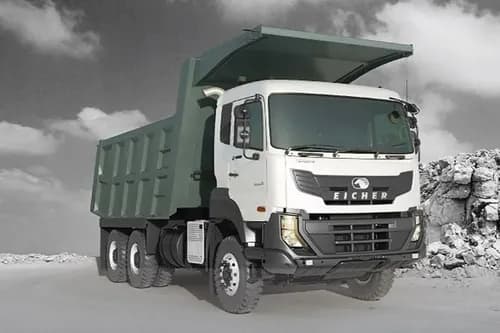
Eicher Trucks & Buses is strengthening its after-sales business with artificial intelligence (AI), connected vehicle technology and automated spare parts distribution. Through VE Commercial Vehicles (VECV), the joint venture between Volvo Group and Eicher Motors, the company aims to increase its spare parts revenue from ₹1,995 crore to ₹5,000 crore over the next four to five years.
The strategy focuses on reducing truck downtime, simplifying vehicle diagnostics and improving spare parts availability. By combining AI-powered troubleshooting, predictive maintenance, automated warehouses and fleet analytics, Eicher aims to make advanced service technology accessible to India's fragmented commercial vehicle market, particularly small fleet operators.
Also Read: Eicher Trucks & Buses Launches Uptime NXT Services With AI Technology
Eicher Uses Generative AI to Simplify Truck Diagnostics
At VECV's Pithampur facility in Madhya Pradesh, truck technicians are using Service One, a generative AI-powered diagnostic platform designed to simplify fault identification and repairs.
Traditionally, mechanics have relied on technical manuals, catalogues and trial-and-error methods to diagnose problems across different generations of commercial vehicles. The task has become more complicated with the coexistence of BS3, BS4 and BS6 diesel trucks, CNG and LNG vehicles, and battery-electric models.
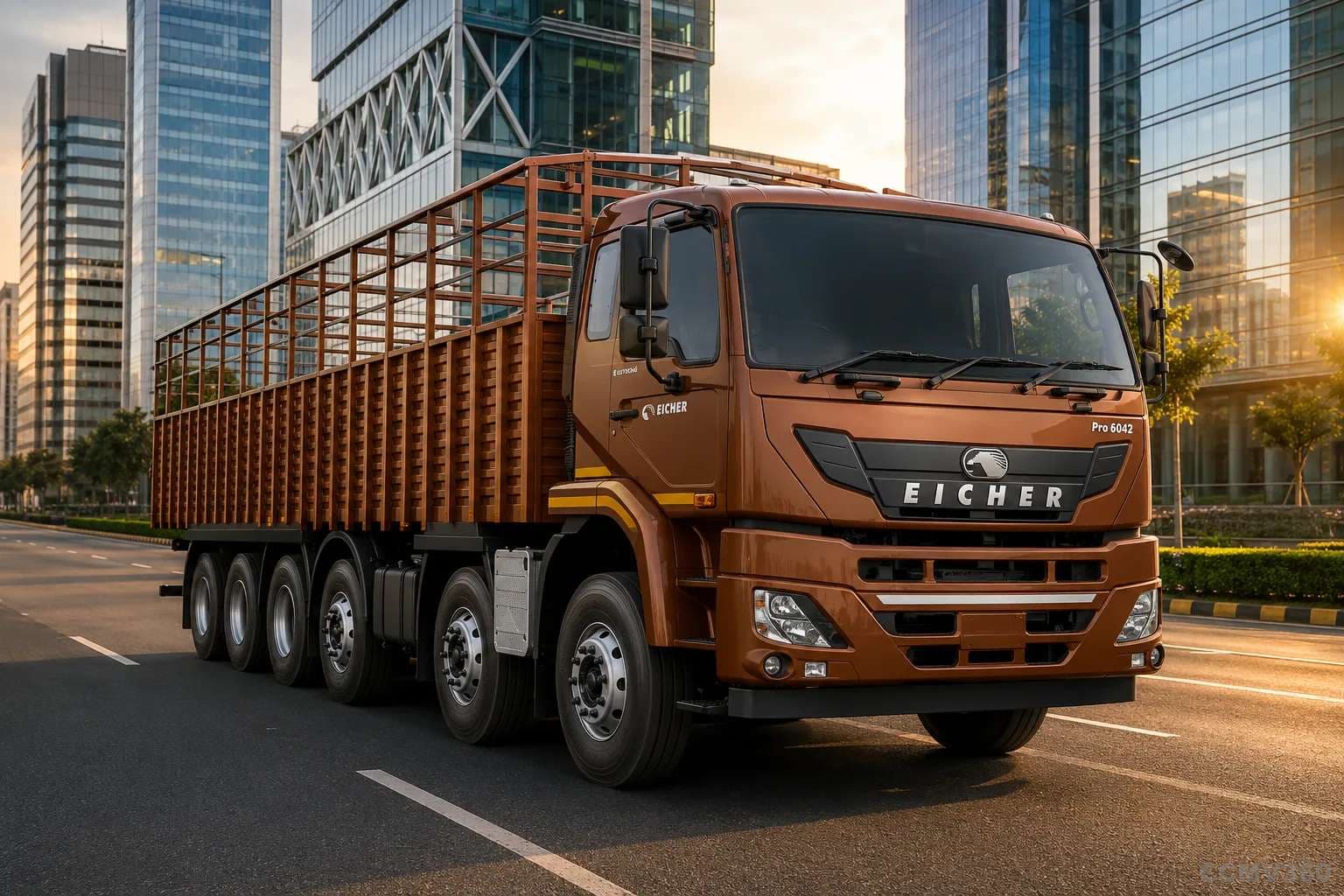
Service One allows technicians to enter complaints in everyday language, including regional expressions commonly used by Indian truck drivers. For example, the system understands "sola chakka moving slowly" as a reference to a 16-wheel, 48-tonne truck, such as Eicher's Pro 6048, and directs the technician towards a low-pickup diagnostic procedure. Similarly, the word "patta" is interpreted as the suspension leaf spring assembly.
Instead of following lengthy troubleshooting procedures, the platform uses a five-year probability model built from millions of repair records to identify the most likely cause of a fault and recommend step-by-step corrective action.
It also combines vehicle telemetry and maintenance history to generate a chassis-specific inspection checklist. VECV services approximately 140,000 vehicles monthly, providing a substantial operational base for its connected service systems.
Sumit Dewan, Senior Vice President of Customer Service and Network Strategy at VECV, explained that managing BS3, BS4, BS6, CNG and EV technologies alongside approximately 1.4 lakh component variations is difficult for any individual technician. Service One brings this information directly to the workshop floor, helping technicians complete repairs correctly the first time.
VECV Chief Commercial Officer S.S. Gill added that AI and large language models make it easier to integrate multiple information systems, reducing the time technicians spend searching for the right manuals and catalogues.
Why Eicher Is Targeting Small Truck Fleet Operators
India's trucking industry offers a significant opportunity for technology-enabled maintenance services. According to NITI Aayog's freight report, approximately 75% of India's trucking fleet is operated by small fleet operators (SFOs) owning one to five trucks, while around 10% own more than 20 vehicles.
Historically, advanced uptime services have found greater acceptance among medium and large fleets, while smaller operators and independent roadside mechanics have often remained outside these technology-driven service networks.
Eicher aims to bridge this gap by making diagnostics easier to access, even for technicians with limited exposure to complex vehicle systems. The company's Uptime 2.0 initiative, now operating under the Eicher Uptime NXT Services identity, is designed to bring more customers into its connected service ecosystem.
The opportunity is closely linked to India's logistics efficiency goals. Under the National Logistics Policy, India aims to reduce logistics costs from approximately 14% of GDP towards the global benchmark of 8%, with a target of bringing costs below 10% by 2030. IMPRI has highlighted an estimated $180 billion gap associated with this ambition.
A 2025 Vasudha Foundation survey found that Indian trucks travel an average of 344 kilometres daily, with 78% covering fewer than 414 kilometres per day, partly because of stoppages. Reducing unplanned downtime could therefore help operators improve vehicle utilisation and profitability.
Eicher's Connected Vehicle Network and Uptime Centre
VECV established its Pithampur Uptime Centre in 2019 after benchmarking Volvo Group facilities in Gothenburg and Greensboro.
Over five years, the operation expanded to 260,000 live connected vehicles and helped prevent 11,000 breakdowns through predictive AI. The company's broader connected ecosystem now supports approximately 200,000 customers through the My Eicher app and connects around 460,000 vehicles.
At Pithampur, Eicher Trucks & Buses has also introduced its AI-enabled Uptime Centre 2.0 as part of the Uptime NXT service offering.
VECV Managing Director and CEO B. Srinivas said the company is combining connected technology, predictive insights, responsive service networks and aftermarket support to anticipate customer requirements, minimise disruptions and provide greater operational predictability.
The market outlook also supports investment in these services. IMARC Group estimates India's commercial vehicle market at $55.91 billion in 2026, with projections reaching $84.12 billion by 2034 at a compound annual growth rate (CAGR) of 5.03%.
Meanwhile, GMI Research estimates the Indian automotive aftermarket will grow from $12.2 billion in 2025 to $22.6 billion by 2033, representing an 8% CAGR.
Commercial vehicle telematics is expanding rapidly as well. MarketsandMarkets projected India's CV telematics market to rise from $251.6 million in 2023 to $662.8 million by 2028, at a 21.4% CAGR, compared with 14.3% globally. IMARC Group separately valued India's commercial telematics market at $1,973 million in 2025 and projects it to reach $7,144.95 million by 2034, at a 15.37% CAGR.
How Eicher's Rivals Are Expanding Uptime Services
Eicher faces growing competition from commercial vehicle manufacturers and independent fleet technology providers.
Tata Motors operates Fleet Edge, which supports approximately 700,000 vehicles, with 280,000 active users and two billion user events. The platform has also crossed one million vehicles and accumulated 12 petabytes of data. Its Lite and Prime plans offer capabilities ranging from vehicle tracking to fault-code diagnostics.
Ashok Leyland's Ennore Uptime Solution Centre integrates i-Alert telematics with 52,000 service touchpoints, connecting its aftermarket, vehicle engineering and field quality teams.
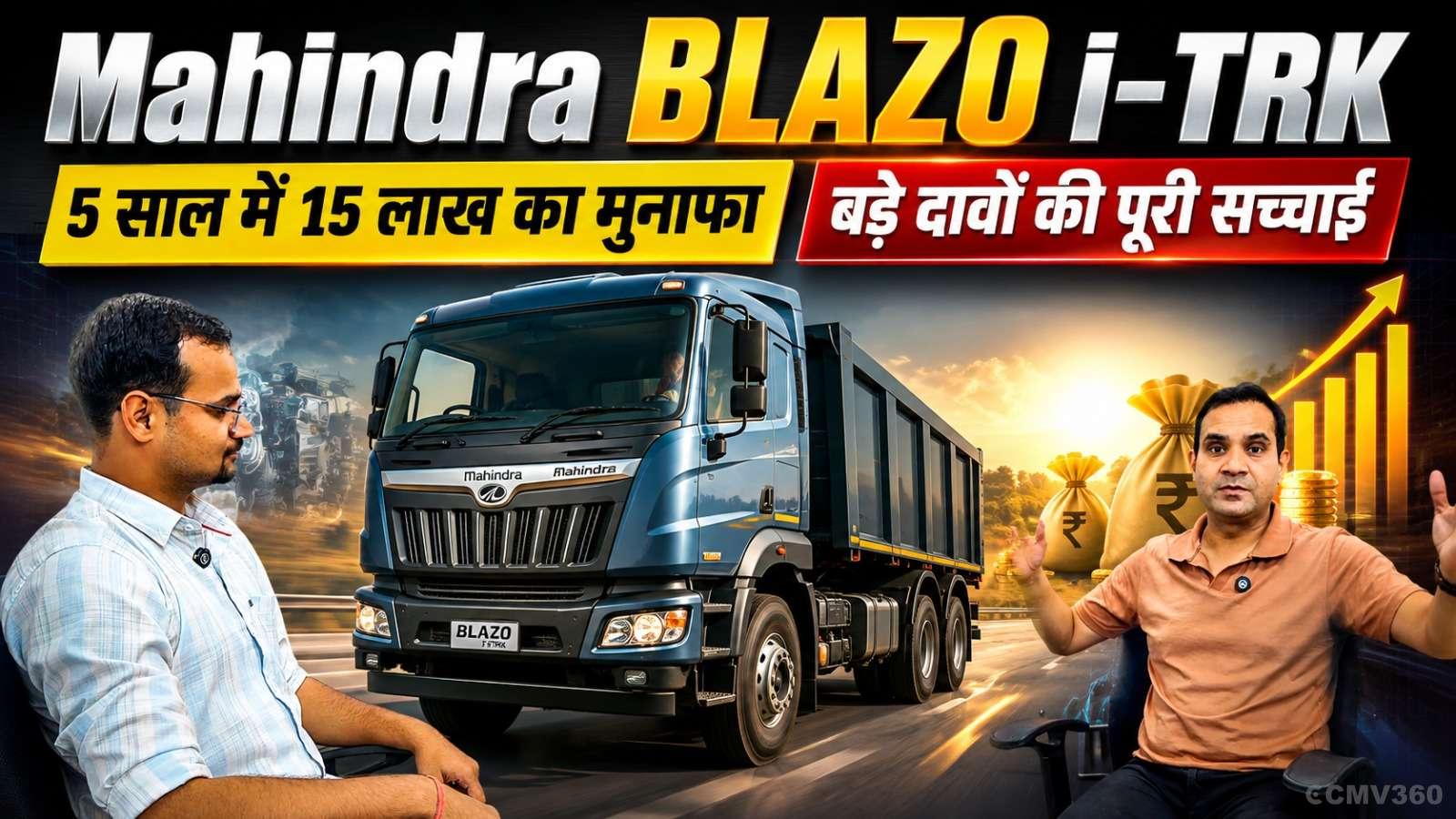
BharatBenz combines its Truckonnect telematics platform with Dealer Uptime Centres. Mahindra, meanwhile, offers iMAXX 2.0 and a 48-hour uptime guarantee on BLAZO i-TRK trucks, with a payout of ₹10,000 per day if the guarantee is not met under the applicable terms.
Independent companies such as Fleetx, Motive, Samsara, FleetOnGo and Intangles also use engine parameters, GPS tracking and diagnostic trouble codes (DTCs) to help fleets reduce total cost of ownership (TCO).
Automated Warehouse Supports Eicher's Spare Parts Growth
Alongside digital diagnostics, VECV is automating its spare parts supply chain to ensure repairs are not delayed by parts shortages.
Located near the Pithampur Uptime Control Tower, the company's Vehicle Parts Distribution Centre (VPDC) anchors a 56,000-square-metre distribution network comprising nine Regional Distribution Centres (RDCs) and satellite hubs.
The facility has moved from conventional manual picking to a goods-to-person system built around an Automated Storage and Retrieval System (ASRS). Three cranes, each 32 metres tall, operate across 6,300 pallet locations.
Sensors measure pallet dimensions and weight before the Warehouse Management System (WMS) and Warehouse Execution System (WES) direct automated storage. The system then brings pallets to workstations, where indicator lights identify the required parts and quantities.
Scanners display part images, thermal printers produce legal maximum retail price (MRP) labels, and conveyor systems weigh cartons while they are moving before labelling them.
Inventory replenishment is managed through PURTI, an algorithm developed with Vector Consulting Group. It monitors consumption across 70,000 stock-keeping units (SKUs) every month to support inventory planning and availability.
For urgent breakdown requirements, VECV has achieved a 79% pan-India benchmark for delivering escalated parts orders within 24 hours, using air freight when necessary.
The company's spare parts division closed the previous fiscal year with revenue of ₹1,995 crore and is targeting ₹5,000 crore within four to five years. Non-vehicle revenue, including parts, lubricants, labour, maintenance contracts and subscriptions, contributes 18% of total revenue and is growing by 20-25% annually.
Fleet Analytics Help Improve Fuel Efficiency and Vehicle Availability
VECV is also working directly with large customers through customer control towers located within fleet offices.
Analysts compare vehicle telemetry with route history, payload information and driver logs to identify performance gaps between trucks operating under similar conditions.
Across 25 large fleets, this approach has delivered fuel efficiency improvements of 2-3% and increased vehicle availability by 3-4%.
Gill explained that if one truck consistently delivers lower profitability than others operating on the same route, the control tower's role is to identify the underlying reasons and help improve the performance of the entire fleet.
He also highlighted the difference between vehicle manufacturers and third-party telematics providers. While tracking platforms can identify warning signs and report vehicle faults, VECV aims to connect those alerts directly with diagnostics, workshop technicians, service networks and parts distribution.
This integrated approach is intended to help customers move from simply identifying a problem to resolving it and preventing similar failures in the future.
Also Read: Volvo Buses India Wins Biggest-Ever Order for 200 Volvo 9600 Coaches from MSRTC
CMV360 Says
Eicher's AI-powered diagnostics, predictive maintenance and automated parts distribution represent a broader shift towards technology-led commercial vehicle servicing in India. Its ₹5,000 crore spare parts revenue target highlights the growing importance of aftermarket services. However, long-term success will depend on delivering measurable savings and reliable support, particularly for small fleet operators with one to five trucks who may hesitate to pay for connected services after their vehicle warranties expire.

Robin Kumar Attri is a content and video professional with 2.7 years of experience in the commercial vehicle d .....