Ashok Leyland To Start In-House EV Battery Pack Production By FY28
 Add CMV360 on Google
Ashok Leyland will begin EV battery pack production by FY28 to strengthen electric mobility, localisation and commercial EV manufacturing in India.

By Ved Yadav

Key Highlights
Battery pack production to begin by Q1/Q2 FY28.
Facility being developed with CALB near Chennai.
Switch Mobility became profitable in FY26.
Electric bus sales grew 238% in FY26.
Ashok Leyland expanding EV and hydrogen vehicle portfolio.
Commercial vehicle manufacturer Ashok Leyland has announced plans to begin production at its electric vehicle (EV) battery pack manufacturing facility by the first half of FY28. The move is part of the company’s larger strategy to strengthen its electric mobility business and increase localisation in EV manufacturing.
The battery pack plant is being developed in partnership with Chinese battery manufacturer CALB and is currently progressing as per schedule.
Battery Pack Plant Expected To Start By Q1/Q2 FY28
Speaking during a media interaction on Thursday, Ashok Leyland Managing Director Shenu Agarwal said the company expects the facility to start production by the first or second quarter of the next financial year.
“It is progressing as per schedule… We are hoping that we should reach a start of production in this battery-pack manufacturing plant somewhere around quarter one or quarter two of the next fiscal,” Agarwal said.
The facility is being set up at Pillaipakkam near Chennai. It is expected to support Ashok Leyland’s expanding electric commercial vehicle operations, especially electric buses and electric light commercial vehicles.
Strong Growth In Electric Vehicle Business
Ashok Leyland has been steadily expanding its EV presence through its subsidiary Switch Mobility. The company said Switch Mobility India became profitable in FY26, marking a major milestone for its electric mobility business.
The company also reported strong growth across its EV portfolio during FY26.
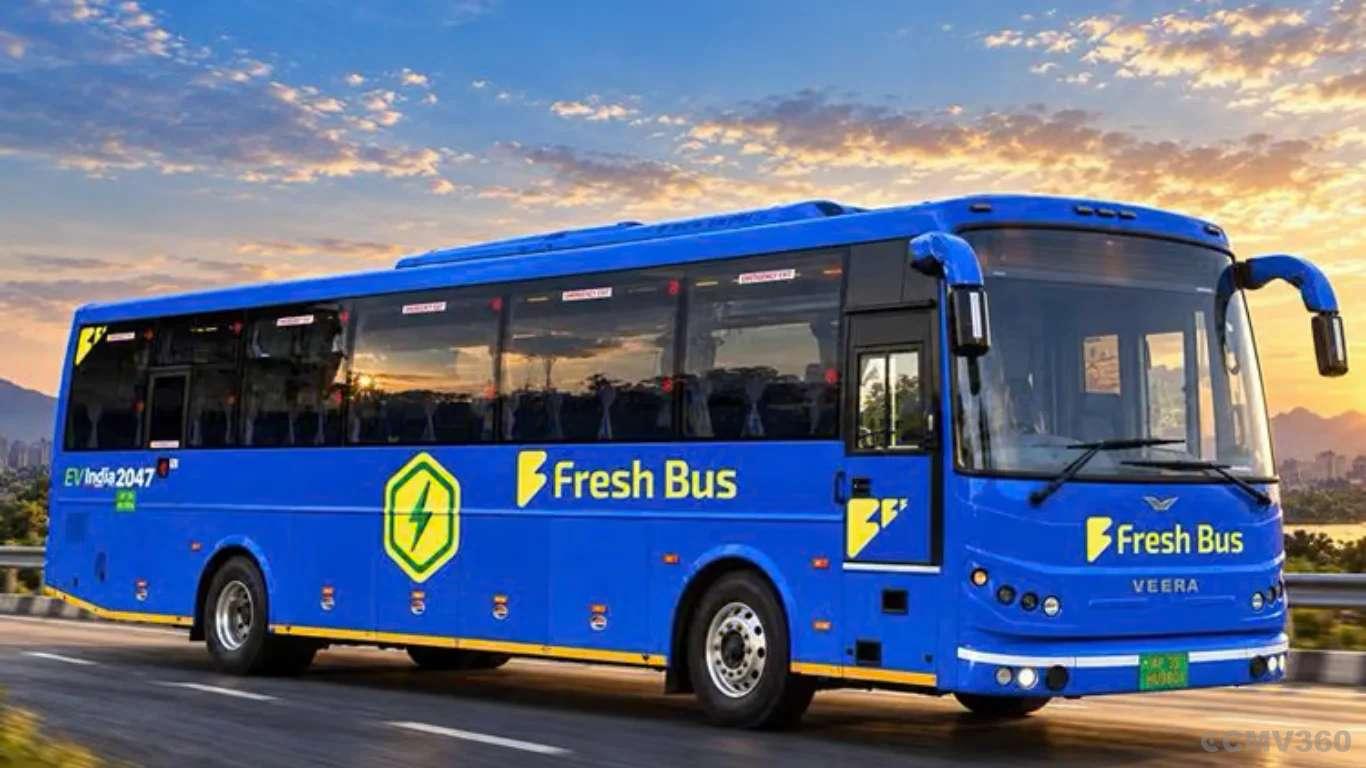
Electric bus sales increased by 238%, with 1,530 e-buses sold during the year. Meanwhile, electric light commercial vehicle sales grew by 56% to nearly 1,600 units.
Demand For Electric Commercial Vehicles Rising
Ashok Leyland Chairman Dheeraj Hinduja said the demand for electric commercial vehicles in India continues to remain strong, especially in the electric bus segment.
“The market has continued to do very well,” Hinduja said. “Close to 15,000 vehicles have come up for tender in the last few months. So the growth in buses is definitely moving very strongly.”
He added that demand is also increasing in the electric light commercial vehicle segment and even in higher-tonnage vehicles.
“We are also seeing a good movement in the light CV segment. But quite interestingly, even at the higher tonnage, at the 55 tonne vehicle for various applications, private customers are going for electric vehicles,” Hinduja said.
EV Affordability Improving In India
According to the company, the overall cost advantages of electric vehicles are making them more attractive for buyers in India.
“With the recent price hike, the affordability of electric and overall total cost of ownership is looking very attractive,” Hinduja said.
He also noted that India is moving faster towards alternate fuel and electric mobility adoption compared to many global markets.
“So India, as far as the push to alternate fuels and electric, seems to be moving very well compared to the rest of the global countries,” he added.
Focus On Localisation And Alternate Fuel Technologies
Battery pack localisation is becoming increasingly important for commercial vehicle manufacturers as it helps reduce costs, improve supply chain control and qualify for government localisation-linked incentives.
Ashok Leyland has been actively investing in electric and alternate fuel technologies. Recently, the company inaugurated a new electric bus manufacturing plant in Lucknow.
The company also continues to invest in hydrogen-powered commercial vehicles alongside its growing electric mobility portfolio.
Also Read: UP Speeds Up EV Mobility And Expressway Projects Ahead Of Jewar Airport Launch
CMV360 Says
Ashok Leyland’s plan to start in-house EV battery pack production by FY28 highlights its strong focus on electric mobility and localisation. With rising demand for electric buses and commercial vehicles in India, the company is expanding its EV manufacturing capabilities through Switch Mobility. The upcoming Chennai facility, along with investments in electric and hydrogen technologies, is expected to strengthen Ashok Leyland’s position in the growing commercial EV market and improve supply chain efficiency.

Hi! I'm Ved. At CMV360, I bring you the latest updates on tractors, agriculture, infra, and commercial vehicle .....