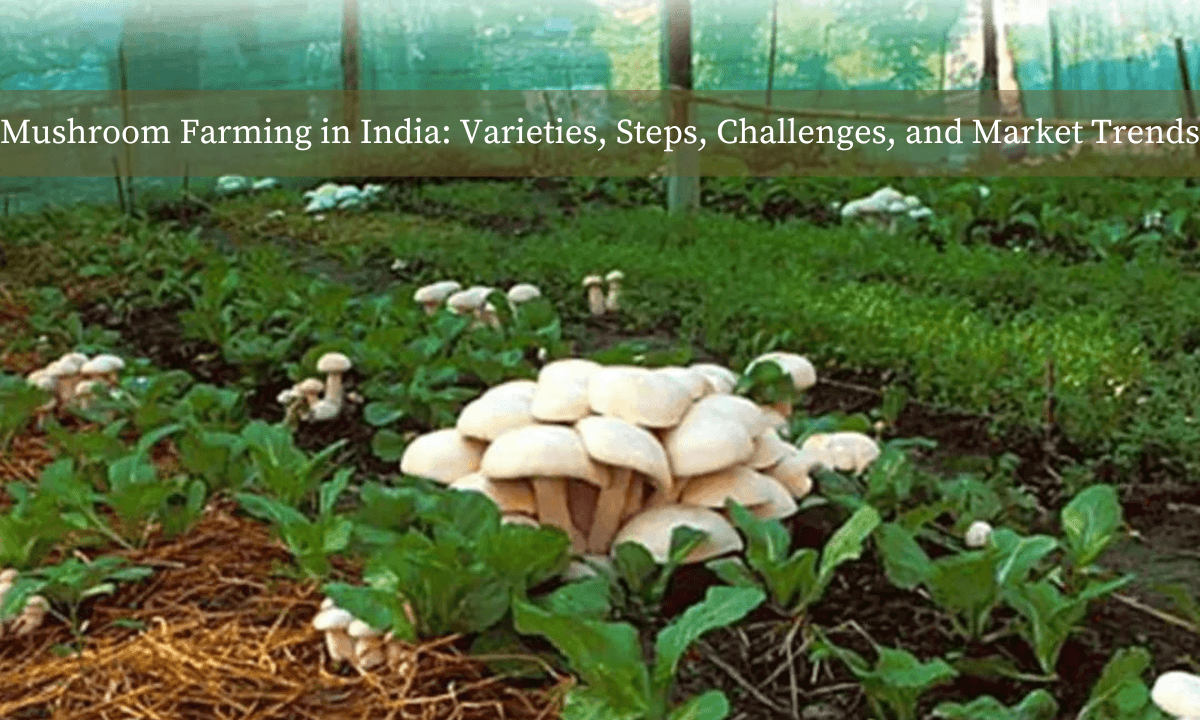
Mushroom farming is one of the most profitable and eco-friendly agribusinesses that can be started with low investment and space. Mushroom cultivation is becoming increasingly popular in India as a viable source of both income and nutrition. According to a report by the IMARC Group, the mushroom market in India is expected to experience a CAGR of approximately 12.5% between 2021 and 2026. In this article, we will delve into the farming steps, challenges, and market trends associated with mushroom farming in India. We will also look at some of the popular mushroom varieties and techniques used by Indian farmers.
Popular Mushroom Varieties and Techniques in India
There are various mushroom varieties and techniques used in India, depending on the climate, soil, and market conditions. Some of the popular mushroom varieties and techniques are:
- Button mushroom: Button mushroom is the most common and widely cultivated mushroom in India. It is also known as Agaricus bisporus and belongs to the Basidiomycetes family. It has a white or brown cap and a short stem and grows in temperatures ranging from 15 to 25 degrees Celsius. It is cultivated indoors, in specially designed rooms or sheds, using synthetic or natural compost as substrate. It has a high demand and price in the market and is used in various cuisines and dishes.
- Oyster mushroom: This mushroom is the second most popular mushroom in India. It is also known as Pleurotus ostreatus and belongs to the Basidiomycetes family. It has a fan-shaped or oyster-shaped cap and a short or absent stem and grows between 20 to 30 degrees Celsius. It is cultivated indoors or outdoors, using straw, sawdust, or cotton waste as substrate. It has a low cost and high yield and is rich in protein and fibre. It is used in soups, salads, and stir-fries.
- Shiitake mushroom: Shiitake mushroom is an exotic and medicinal mushroom in India. It is also known as Lentinula edodes and belongs to the Basidiomycetes family. It has a brown or black cap and a long stem and grows in temperatures ranging from 10 to 25 degrees Celsius. It is cultivated indoors or outdoors, using logs or blocks of wood as substrate. It has a high medicinal value and a distinct flavour and is used in traditional and modern medicine. It is also used in sauces, noodles, and curries.
Mushroom Farming Steps-
- Step 1: Choose a mushroom variety to grow. Depending on your climate, space, and market, you can choose from various mushroom varieties, such as button, oyster, shiitake, or paddy straw. Each variety has different requirements and characteristics, so you should do some research before deciding.
- Step 2: Prepare a growing medium (substrate). The substrate is a material on which mushrooms grow. It can be made from organic waste, such as straw, sawdust, or compost. The substrate should be moist, sterile, and nutritious for the mushrooms. You can prepare the substrate by chopping, soaking, pasteurizing, and mixing it with supplements, such as bran, gypsum, or urea.
- Step 3: Inoculate the substrate with spawn. Spawn is the seed material used to grow mushrooms. It can be in the form of grains, plugs, or sawdust, inoculated with a mature mushroom colony or spores. You can inoculate the substrate by spreading the spawn evenly over the surface or mixing it thoroughly with the substrate.
- Step 4: Incubate the inoculated substrate. The incubation stage is when the spawn grows and colonizes the substrate. You need to keep the inoculated substrate in a warm, dark, and humid environment, such as a plastic bag, a tray, or a container. You also need to monitor and maintain the ideal temperature, humidity, and ventilation for the mushroom variety you are growing.
- Step 5: Initiate the fruiting stage. The fruiting stage is when the mushrooms start to form and develop. You need to trigger the fruiting stage by changing the environmental conditions, such as lowering the temperature, increasing the light, and exposing the substrate to fresh air. You also need to cover the substrate with a layer of moist soil, peat, or vermiculite, called casing, to provide moisture and support for the mushrooms.
- Step 6: Harvest and store your mushrooms. The harvesting stage is when you pick the mature mushrooms from the substrate. You need to harvest the mushrooms carefully by twisting and pulling them gently or cutting them with a knife. You also need to store the mushrooms properly by refrigerating or drying them to preserve their quality and shelf life.
Challenges of Mushroom Farming in India
Despite the potential and benefits of mushroom farming, Indian farmers face some challenges in this industry. Some of the major challenges are:
- Lack of awareness and training: Many farmers are unaware of the technical aspects and best practices of mushroom cultivation. They also lack proper training and guidance on how to start and manage a mushroom farm. This leads to low productivity, quality, and profitability.
- Unavailability of quality spawn and substrate: Spawn is the seed material used to grow mushrooms, and substrate is the medium on which mushrooms grow. Both of these are essential for successful mushroom farming. However, many farmers face difficulties in obtaining quality spawn and substrate from reliable sources. They also have to deal with issues such as contamination, spoilage, and inconsistency.
- High competition and low price: The mushroom market in India is competitive, with many offering similar products at low prices. This makes it difficult for small and marginal farmers to survive and thrive in the industry. They also have to cope with the fluctuations in demand and supply, which affect their income and stability.
- Lack of infrastructure and marketing: Mushroom farming requires adequate infrastructure and facilities, such as temperature and humidity control, ventilation, storage, and transportation. However, many farmers lack access to these resources, which hamper their efficiency and quality. They also face challenges in marketing and selling their products, as they have to compete with established brands and intermediaries.
Market Trends of Mushroom Farming in India
The mushroom industry in India is witnessing some emerging trends that are shaping its future and growth. Some of the key trends are:
- Organic farming and certification: The demand for organically grown mushrooms is increasing as consumers are becoming more conscious of the quality of their food. This type of farming involves natural and chemical-free methods and inputs, such as organic spawn, substrate, and pest control. Organic certification is a process of verifying and validating the organic standards and practices of mushroom farming. It helps in enhancing the credibility and value of the products in the market.
- Online platforms and e-commerce: The mushroom industry is also benefiting from the advent of online platforms and e-commerce, which provide new avenues and opportunities for marketing and selling mushrooms. Online platforms help in creating awareness and educating consumers about the advantages and uses of mushrooms. E-commerce, such as online marketplaces, delivery services, and aggregators, helps connect farmers and consumers directly and reduces the role of mediators and intermediaries. They also help in providing convenience, accessibility, and affordability to the customers.
- Innovation and technology: The mushroom industry is also adopting and embracing innovation and technology, which help in improving the efficiency, quality, and productivity of mushroom farming. Some of the innovations and technologies used in the industry are:
- Biotechnology: This involves the use of biological processes and organisms, such as fungi, bacteria, and enzymes, to promote the growth and yield of mushrooms. It also helps in developing new and improved varieties of mushrooms, such as hybrid, transgenic, and medicinal mushrooms.
- Automation and mechanization: Automation and mechanization involve the use of machines and equipment, such as sensors, controllers, and conveyors, to automate and mechanize the various stages and operations of mushroom farming, such as composting, spawning, harvesting, and packaging. They help reduce the labour and time required and increase the accuracy and consistency of the processes.
- Artificial intelligence: Artificial intelligence and data analytics refer to the utilization of software and algorithms for the analysis and interpretation of data and information produced from mushroom farming. This data can include crucial factors such as temperature, humidity, yield, and quality, which can be examined to improve the overall efficiency and quality of mushroom farming. They help optimize and enhance the decision-making and management of mushroom farming, such as crop planning, pest control, and marketing.




 New Delhi


 Add CMV360 on Google