Tractors
Trucks
- Find by Budget
- Find by Type

English
 New Delhi
India’s soil is degrading rapidly due to chemical farming, erosion, and climate stress. Learn causes, impacts, and solutions for restoring soil health sustainably.

By Robin Kumar Attri

Every harvest begins with soil. Every grain of wheat, every bowl of rice, every fruit, vegetable, and pulse that reaches Indian homes depends on the thin layer of living earth beneath our feet. Yet, the same soil that built civilizations, fed generations, and sustained India’s agricultural strength is now under severe stress.
For centuries, Indian farming traditions treated soil as a living system. From crop rotation in the Indo-Gangetic plains to terrace farming in the Northeast and organic residue recycling in villages, the relationship between farmers and soil was built on balance. But over the last few decades, rapid industrial agriculture, excessive chemical fertilizer use, monocropping, residue burning, over-tillage, urban expansion, and climate pressure have changed that balance dramatically.
Today, India stands at a critical turning point.
Large parts of the country are witnessing declining soil fertility, falling organic carbon, nutrient imbalance, erosion, microbial decline, and reduced water-holding capacity. Farmers are spending more on fertilizers and pesticides, yet in many regions, productivity is stagnating or even falling. The warning signs are no longer hidden beneath the surface; they are visible in farm incomes, groundwater stress, crop vulnerability, and rising production costs.
At the same time, a new movement is emerging across Indian agriculture. Scientists, progressive farmers, policymakers, and traditional farming communities are increasingly focusing on soil regeneration, microbial health, organic carbon restoration, cover crops, balanced fertilization, and regenerative farming practices.
This is no longer just an environmental discussion.
It is about food security. Farmer livelihoods. Water resilience. Climate survival. Human health. And the future of Indian agriculture itself.
So the biggest question before India in 2026 is no longer whether soil degradation is happening.
The real question is:
Can India rebuild its living soil before the damage becomes irreversible?
Soil is often mistaken for ordinary dirt, but scientifically, it is one of the most complex living ecosystems on Earth. Healthy soil contains minerals, water, organic matter, fungi, bacteria, earthworms, insects, roots, and millions of microorganisms working together in balance.
A single handful of healthy soil may contain billions of microbes. These microscopic organisms are responsible for:
Nutrient cycling
Nitrogen fixation
Organic matter decomposition
Water retention
Disease suppression
Carbon storage
Root development
Soil aggregation
Without this biological activity, soil becomes lifeless and dependent entirely on external chemical inputs.
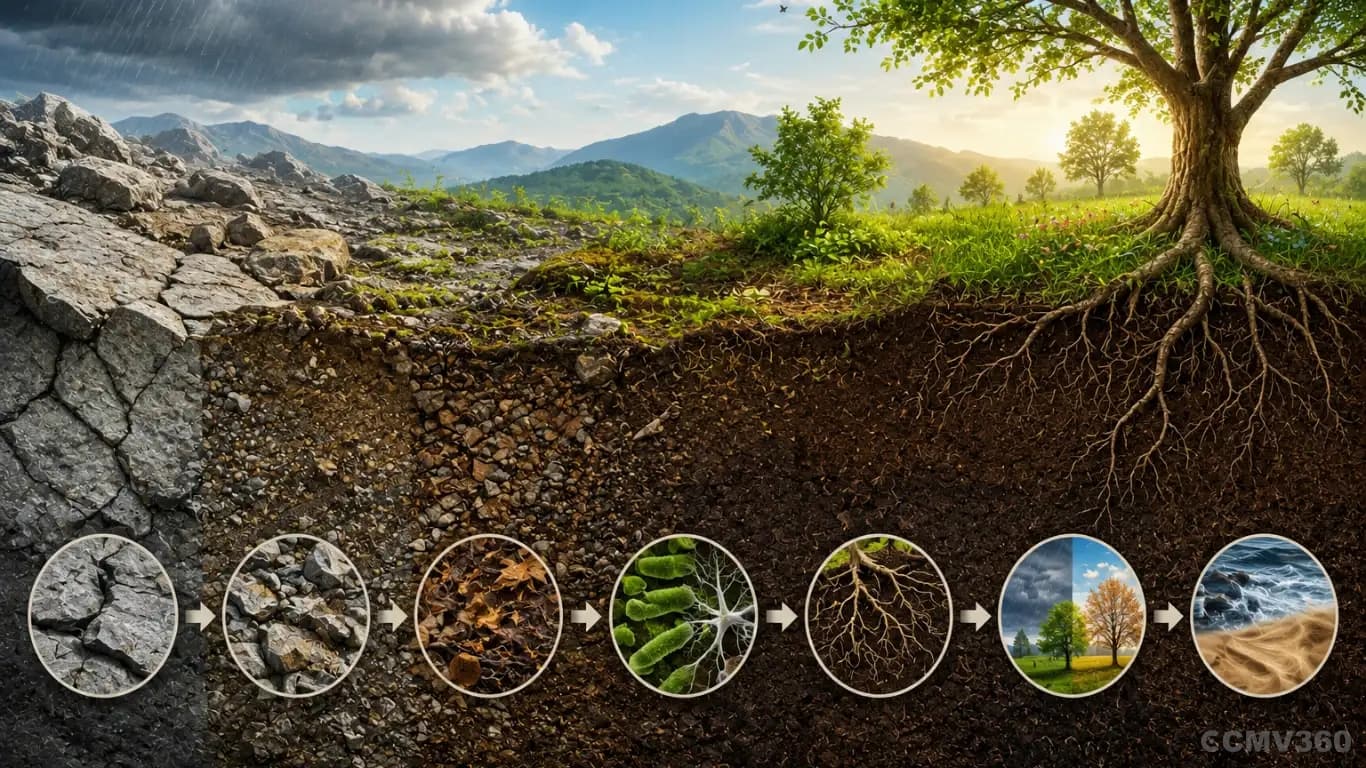
Soil formation is an extremely slow natural process involving:
Soil Formation Factors | Role |
Rock weathering | Breaks minerals into particles |
Organic matter decomposition | Adds nutrients and humus |
Microbial activity | Builds biological fertility |
Plant roots | Improve structure and nutrient cycling |
Climate cycles | Influence erosion and nutrient movement |
Water and wind | Shape soil layers gradually |
Under favourable conditions, forming just 1 centimetre of fertile topsoil may take 200-400 years. Building deep, productive agricultural soil can take thousands of years.
That is why topsoil is considered almost non-renewable on human timescales.
India is among the world’s largest agricultural economies, but it is also among the countries facing severe soil degradation.
Key Soil Degradation Data in India
Indicator | Current Situation |
Degraded land area | 115-147 million hectares |
Share of degraded land | Nearly 30-33% of India |
Average soil loss | Around 15-20 tonnes/hectare/year |
Organic carbon decline | From 1% to nearly 0.3% in many regions |
Nitrogen-deficient soils | 55% |
Phosphorus-deficient soils | 42% |
Organic carbon-deficient soils | 44% |
Annual economic loss from erosion | Over ₹50,000 crore |
These numbers reveal a deeper issue: Indian soils are losing their biological resilience much faster than they are being rebuilt.
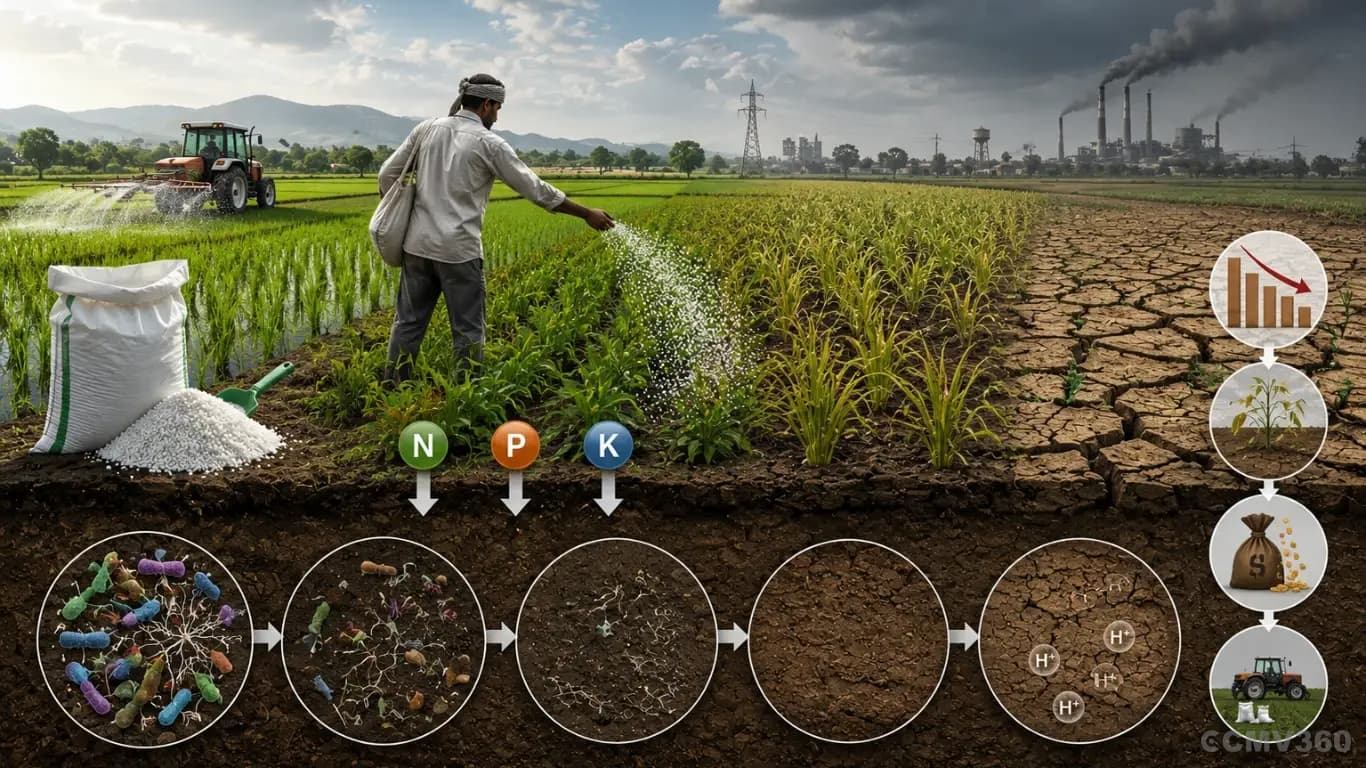
Chemical fertilizers helped increase yields during the Green Revolution, but excessive and imbalanced usage has created long-term soil problems.
India’s fertilizer consumption pattern is heavily nitrogen-focused.
Current NPK Imbalance
Nutrient Ratio | Recommended | Current Approximate Ratio |
Nitrogen : Phosphorus : Potassium | 4:2:1 | 7.7:3.1:1 |
This imbalance affects microbial diversity, soil chemistry, and micronutrient availability.
Heavy nitrogen use without organic matter addition can:
Reduce beneficial microbial populations
Lower soil organic carbon
Acidify soils
Disrupt fungal-bacterial balance
Reduce nutrient-use efficiency
Increase dependency on external inputs
The issue is not fertilizer use itself, but overdependence without biological replenishment.
Soil microbes act like the digestive system of the earth.
They help convert nutrients into plant-available forms, improve root health, and maintain soil structure.
When microbial life declines:
Soil becomes compacted
Water infiltration reduces
Nutrient cycling weakens
Disease resistance falls
Crops require more fertilizers
Healthy soil biology directly influences long-term farm productivity.
Cover crops are increasingly being promoted in regenerative agriculture because they support microbial recovery.
Benefit | Impact on Soil |
Living roots year-round | Feed beneficial microbes |
Organic residue addition | Improves carbon levels |
Reduced erosion | Protects topsoil |
Moisture conservation | Supports microbial activity |
Weed suppression | Reduces chemical dependency |
Carbon sequestration | Improves long-term fertility |
In Indian conditions, cover crops are especially important because many fields remain bare between crop cycles.
Soil Organic Carbon acts as the backbone of soil resilience.
It helps:
Store nutrients
Retain moisture
Support microbes
Improve aggregation
Buffer fertilizer stress
Improve drought tolerance
Low-carbon soils become chemically dependent and biologically weak.
When SOC falls:
Micronutrient deficiency increases
Soil structure collapses
Water-holding capacity declines
Microbial diversity weakens
Fertilizer efficiency drops
This explains why some Indian farms now require higher fertilizer doses just to maintain earlier production levels.
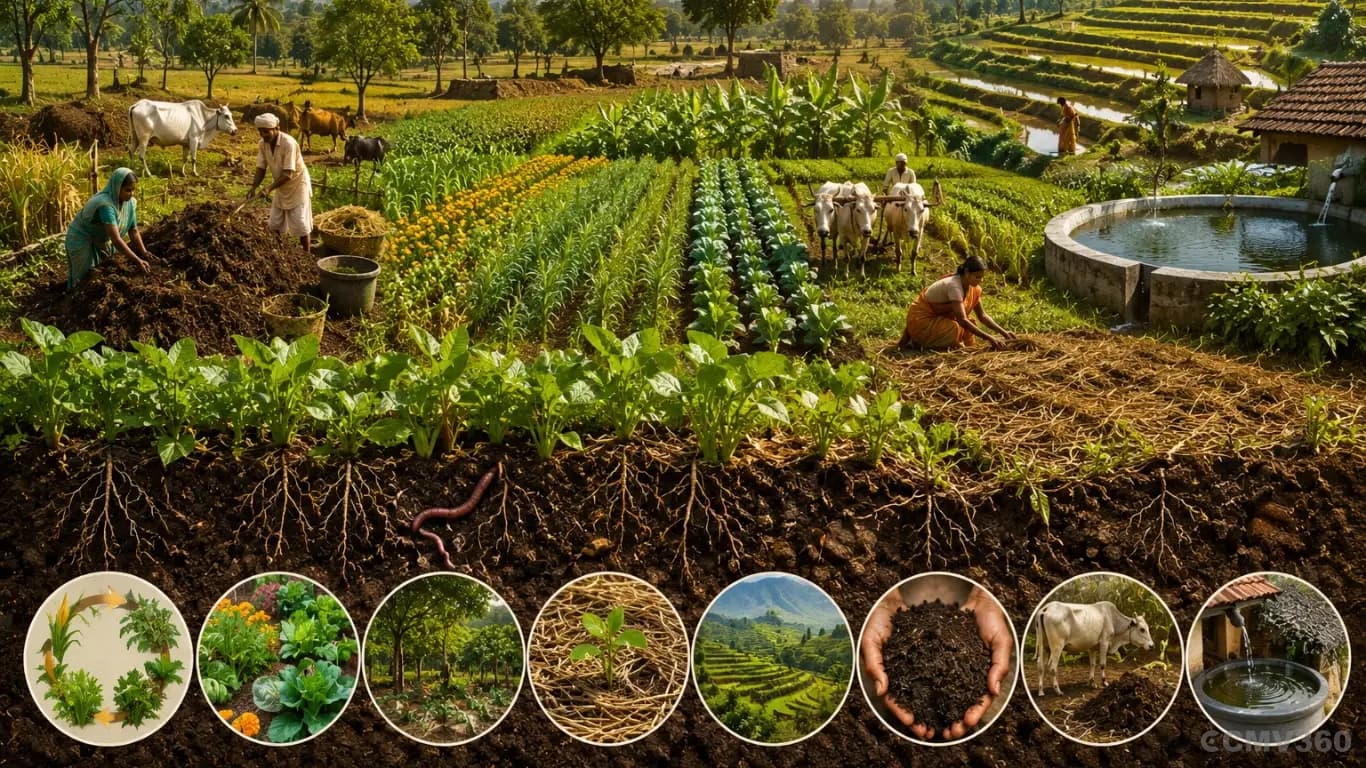
Long before modern fertilizers existed, Indian farming systems maintained soil fertility using ecological balance.
Many traditional systems were naturally regenerative.
Traditional Practices That Conserved Soil
Traditional Method | Soil Benefit |
Crop rotation | Maintains nutrient balance |
Mixed cropping | Improves biodiversity |
Agroforestry | Adds organic matter |
Mulching | Conserves moisture |
Terrace farming | Reduces erosion |
Composting | Feeds microbes |
Cattle-based manure systems | Improves soil carbon |
Rainwater harvesting | Reduces runoff |
These systems worked with nature instead of forcing short-term productivity.
Crop rotation improves soil biological diversity significantly.
How Rotation Helps
Different roots feed different microbes
Legumes improve nitrogen balance
Residue diversity supports fungi
Disease cycles break naturally
Soil structure improves
Monocropping systems, especially intensive cereal cultivation, often reduce microbial diversity over time.
Rotations involving pulses, oilseeds, legumes, and cover crops generally support healthier fungal-to-bacterial ratios.
Modern soil science increasingly focuses not only on nutrients, but on biological and physical health indicators too.
Key Soil Health Indicators
Metric | Why It Matters |
Soil Organic Carbon | Indicates biological health |
pH | Affects nutrient availability |
Electrical conductivity | Measures salinity |
Microbial biomass carbon | Shows microbial activity |
Aggregate stability | Indicates soil structure |
Bulk density | Measures compaction |
Water infiltration | Shows moisture movement |
Zinc/Iron availability | Reflects micronutrient balance |
Experts argue that future Indian soil monitoring systems must include biological indicators, not just NPK values.
Also Read: India’s Farm Dilemma: The Hidden Cost of Hazardous Pesticides and the Urgent Need for Safer Farming
Climate change is accelerating soil damage through:
Extreme rainfall
Flooding
Droughts
Heat stress
Wind erosion
Reduced vegetation cover
Degraded soils absorb less water, increasing flash floods and reducing groundwater recharge.
Healthy soils are therefore critical not just for farming, but also for climate resilience.
Despite the crisis, many Indian states are showing that soil recovery is possible.
Farmers using compost, bio-inputs, and regenerative practices reported:
Better soil texture
Improved water retention
Higher microbial activity
Nearly doubled yields in some cases
Significant income growth
The state’s natural farming initiative promoted:
Reduced chemical inputs
Jeevamrut and bio-solutions
Mulching
Soil biology restoration
Many farmers reported reduced input costs and improved resilience during drought years.
Traditional systems like:
Apatani farming
Zabo systems
Terrace farming
Fallow management
has preserved soil structure and biodiversity for generations.
These systems remain valuable models for sustainable farming.
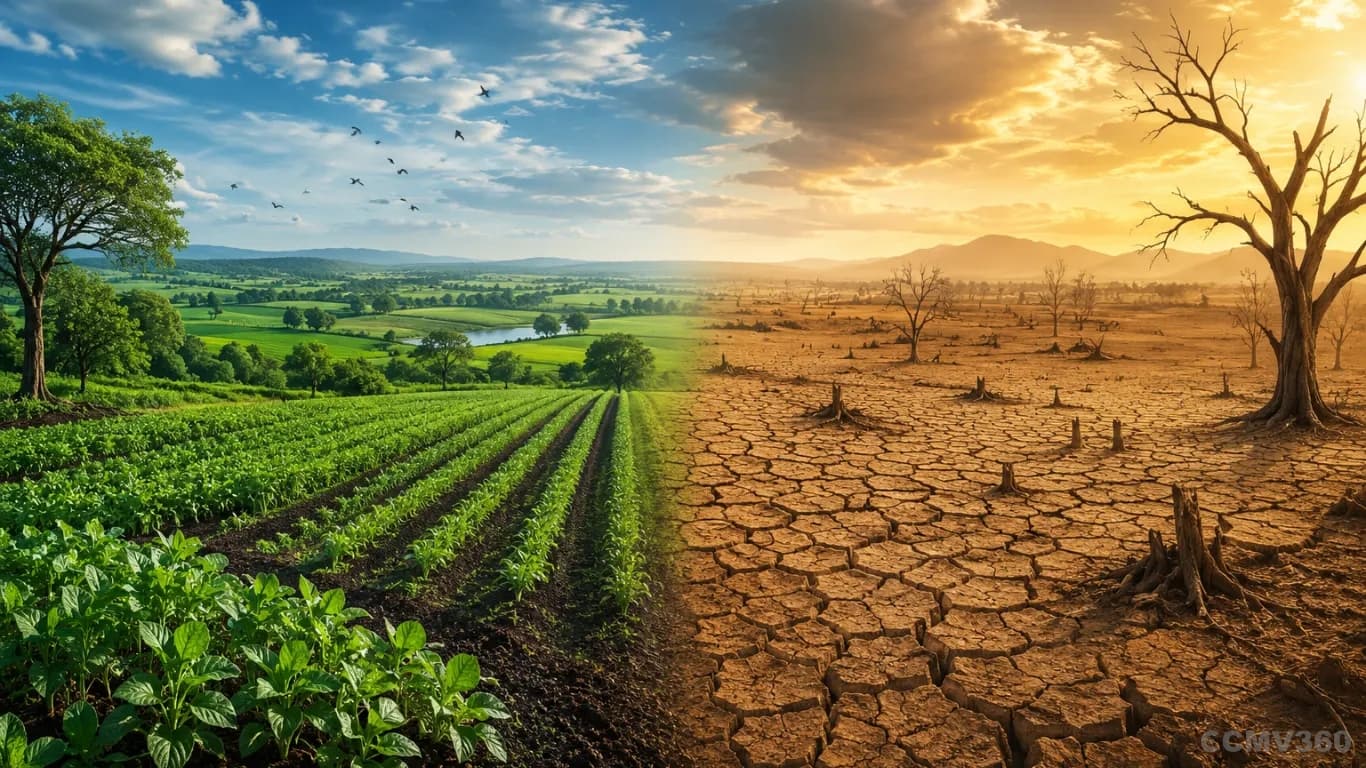
Soil degradation is not only an environmental issue, but it is also an economic crisis.
Direct Impacts on Farmers
Problem | Result |
Declining fertility | Higher fertilizer costs |
Erosion | Reduced productivity |
Water stress | Higher irrigation costs |
Micronutrient loss | Lower crop quality |
Compaction | Poor root growth |
Pest vulnerability | Increased pesticide use |
Many farmers now spend more to harvest less.
India has launched several initiatives to improve soil health.
Major Soil-Related Programs
Scheme | Focus Area |
Soil Health Card Scheme | Soil testing |
Paramparagat Krishi Vikas Yojana (PKVY) | Organic farming |
National Mission for Sustainable Agriculture | Climate-resilient agriculture |
Natural Farming Programs | Reduced chemical dependency |
Watershed Development Projects | Erosion control |
However, experts argue that implementation and farmer-level adoption remain uneven.
The most practical solutions are often the simplest.
Easy Soil Regeneration Practices
1. Residue Retention: Instead of burning crop residue, farmers can leave it on the field to feed soil organisms.
2. Compost and Green Manure: Organic matter rebuilds microbial life and improves structure.
3. Cover Crops: Protect soil between crop cycles.
4. Reduced Tillage: Less disturbance protects fungi and aggregation.
5. Crop Rotation: Diversified crops reduce nutrient imbalance.
6. Soil Testing: Balanced fertilizer use prevents long-term damage.
7. Agroforestry: Trees improve carbon storage and reduce erosion.
Healthy soil influences:
Food production
Water security
Farmer income
Climate resilience
Nutrition quality
Biodiversity
Carbon storage
Without living soil, agricultural sustainability becomes impossible.
India’s agricultural future cannot depend entirely on increasing chemical inputs.
The next phase of farming must focus on:
Soil biology
Organic carbon restoration
Balanced nutrition
Microbial recovery
Climate resilience
Water conservation
Farmer-centred sustainability
The goal is not to completely eliminate fertilizers, but to use them intelligently alongside biological restoration practices.
Soil built India’s agricultural civilization over thousands of years. It fed kingdoms, villages, and generations long before modern farming existed. But today, the same soil is under pressure from chemical imbalance, erosion, carbon loss, urban expansion, and climate stress.
The crisis is serious, but it is not irreversible.
Across India, farmers, scientists, traditional communities, and regenerative agriculture movements are proving that soil can heal when treated as a living ecosystem rather than just a production medium. Cover crops, crop rotation, organic matter restoration, microbial recovery, and balanced nutrient management are showing real results in productivity, resilience, and farmer income.
The lesson is becoming clear: the future of Indian agriculture will not be decided only by seeds, machinery, or fertilizers. It will be decided by the health of the soil beneath them.
What took nature a thousand years to build should not be lost in a single generation.

About the author
Robin Kumar Attri is a content and video professional with 2.7 years of experience in the commercial vehicle domain. At CMV360, he creates news articles and videos covering trucks, tractors, buses, three-wheelers, and infrastructure machines.







 Add CMV360 on Google