Tractors
Trucks
- Find by Budget
- Find by Type
Buses
- Find by Budget
- Find by Type

English
 New Delhi
Learn 5 easy tractor servicing tips at home to save money, improve engine performance, and extend tractor life. Simple steps for oil, filters, radiator, greasing, battery, and tyres.

By Robin Kumar Attri

Tractors are the backbone of farming in India and across the world. For farmers, tractors are not just machines; they are reliable partners in everyday agricultural work. From ploughing fields to carrying loads, tractors do the heavy lifting and help in increasing farm productivity.
But just like any other machine, tractors also need proper care and servicing. Unfortunately, many farmers ignore servicing because it often feels expensive or service centers are quite far away. Over time, this neglect leads to poor tractor performance, low mileage, and even sudden breakdowns in the middle of work.
The good news is that many aspects of tractor servicing can be done at home. By following some simple steps, farmers can keep their tractors in good condition without spending too much money or waiting for a mechanic. Regular maintenance at home not only improves the life of the tractor but also ensures smooth engine performance, better mileage, and fewer breakdowns during farming operations.
In this guide, we will explain the top 5 easy tractor servicing tips that farmers can do at home. Each tip is explained in detail with simple steps so that even beginners can follow them easily.
Also Read: Monsoon Tractor Maintenance Guide: Keep Your Tractor Safe and Productive in Rainy Season
Before learning the steps, let us understand why tractor servicing is necessary:
Saves money: Regular home servicing reduces the need for frequent visits to service centers.
Better engine life: Fresh oil, clean filters, and a proper cooling system ensure the engine runs smoothly for years.
Improved performance: A well-serviced tractor gives better power, pulling capacity, and mileage.
Fewer breakdowns: Servicing reduces the chances of sudden failures during important farm work.
Time-saving: Farmers do not have to wait for a mechanic, especially in remote villages where service centers are far away.

Now, let us move to the 5 simple steps that every farmer can follow at home.
The engine is the heart of the tractor, and engine oil is its lifeline. Just like blood keeps our body healthy, oil keeps the tractor engine healthy.
How Often to Change Engine Oil?
Change the engine oil after every 250–300 hours of tractor use.
Regular oil change reduces friction inside the engine and helps it run smoothly.
Steps to Change Engine Oil at Home:
Start the tractor and keep it running for 5–10 minutes. This makes the oil slightly warm and helps it drain out completely.
Open the oil drain plug and let all the old oil come out.
Remove the oil filter and clean it properly. If it is too dirty or damaged, replace it with a new filter.
Pour in fresh engine oil recommended by the tractor company. Always check the tractor’s manual to know the right oil type and quantity.
Why is This Important?
Clean oil reduces wear and tear of engine parts.
Mileage improves because the engine runs more efficiently.
The risk of engine seizure or overheating reduces.
A tractor often works in dusty fields and on uneven roads. This makes the air filter and fuel filter dirty quickly. If not cleaned regularly, they block airflow and fuel supply, which reduces engine efficiency.
Air Filter Cleaning Steps:
Remove the air filter carefully during servicing.
Clean it with compressed air or a hand pump.
If the filter looks torn or extremely dirty, replace it with a new one.
Fuel Filter Care:
Clean or replace the fuel filter after every 250–300 hours of tractor use.
A clogged fuel filter reduces fuel flow, which affects combustion and power.
Benefits of Clean Filters:
Ensures proper airflow to the engine.
Keeps fuel free from dust and dirt.
Improves engine pickup and reduces black smoke.
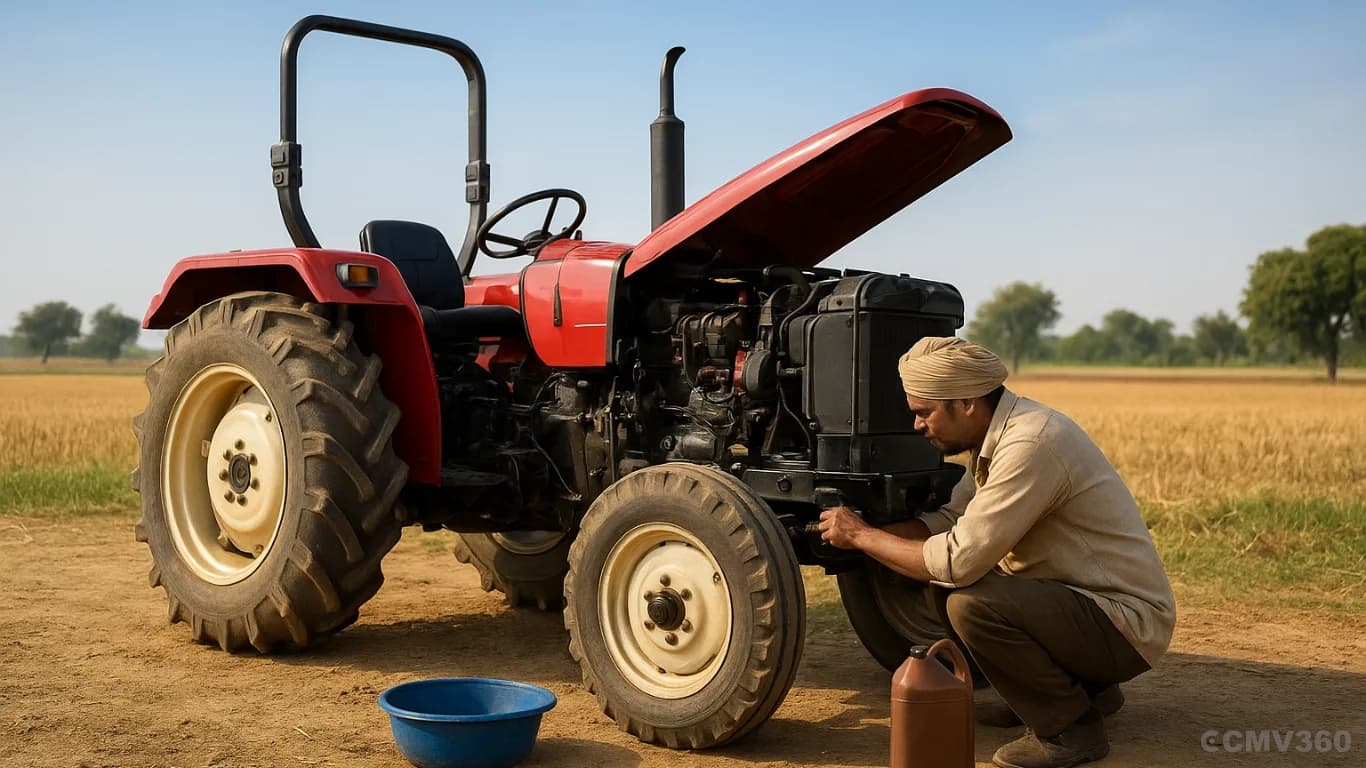
A tractor engine works for long hours under heavy load, which makes it hot quickly. That is why the cooling system and radiator play an important role in keeping the temperature under control.
Steps to Maintain the Radiator and Cooling System:
Clean the radiator with a brush to remove dust, straw, or mud stuck in the fins.
Open the radiator cap and check the coolant level. If it is low, top it up with clean water or company-specified coolant.
Inspect the radiator and coolant pipes for leaks once every week.
Check the fan belt. If it feels loose, tighten it properly.
Why is this important?
Prevents overheating of the tractor engine.
Maintains smooth performance during long farming operations.
Avoids costly engine repairs caused by overheating.
Also Read: Top 6 Maintenance Tips to Boost Your Tractor’s Performance in Summer
Tractors have many moving parts, like the front axle, steering joints, clutch links, and brake pedals. Regular greasing ensures that these parts move freely without extra friction.
Greasing Tips:
Do greasing every 50 hours if you use the tractor daily.
Focus on the front axle, steering joints, brake pedal, and clutch linkages.
Use the correct grease recommended for tractors.
Battery Maintenance Steps:
Open the battery box and check the water level. If it is low, add only distilled water.
Clean the battery terminals with a wire brush to remove rust.
Apply a thin layer of grease on the terminals to avoid rusting and ensure proper current flow.
Benefits of Greasing and Battery Care:
Steering and brake parts last longer.
The tractor starts easily because the battery remains strong.
Reduces sudden failures during work in the field.
Along with the engine and filters, farmers should not forget the small but important parts of a tractor.
Electrical System:
Check all tractor lights, indicators, and wiring.
Look for cuts, loose wires, or damaged insulation.
Fixing them on time avoids short circuits or failures at night.
Nuts and Bolts:
Regularly tighten all the nuts and bolts of the tractor.
During farm operations, vibrations often make them loose.
Check the tyre pressure regularly.
Repair cuts, cracks, or leaks quickly to avoid accidents.
Proper tyre pressure also saves fuel and improves tractor pulling power.
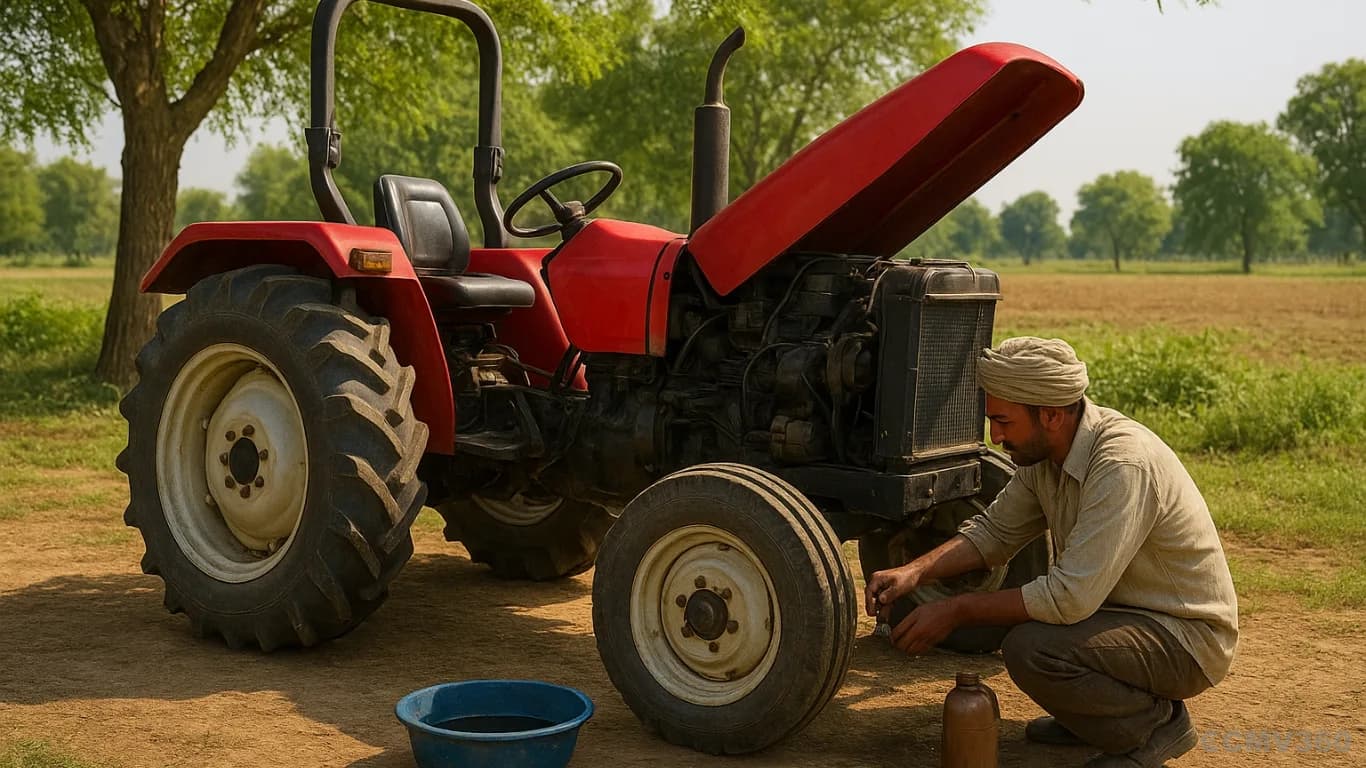
By following these 5 simple steps, every farmer can keep their tractor fit and ready for farming. Servicing at home saves money, reduces breakdown risks, and increases engine life. Most importantly, farmers can maintain their tractors without depending too much on service centers, especially in remote villages.
Benefits of Home Tractor Servicing:
Saves service cost.
Increases productivity.
Improves tractor mileage and power.
Reduces downtime during important farming seasons.
Also Read: Hidden Cost of Buying a Tractor in India Every Buyer Must Know About
Tractors are vital for farmers, and their care should never be ignored. Proper servicing at home ensures better engine life, fuel efficiency, and reduced maintenance costs. By regularly checking engine oil, filters, radiator, greasing, battery, and tyres, farmers can avoid sudden breakdowns and ensure smooth farming operations.
Every farmer should learn these basic tractor maintenance skills. It is not difficult, and once you practice it, servicing at home becomes an easy habit. With these small efforts, your tractor will remain a reliable partner in farming for many years.


 Add CMV360 on Google