ZF Revolutionizes Commercial Vehicles with Smart Software Integration
 Add CMV360 on Google
ZF leverages advanced software to enhance commercial vehicle performance, integrating intelligent systems for improved safety, efficiency, and cost-effectiveness.

By Robin Kumar Attri
Key Highlights
- ZF integrates advanced software with chassis technologies for smarter commercial vehicles.
- Braking and e-Drive Synergy optimize energy recuperation.
- The software replaces bulky brake resistors, saving weight and space.
- Enhances vehicle safety, and efficiency, and reduces total cost of ownership.
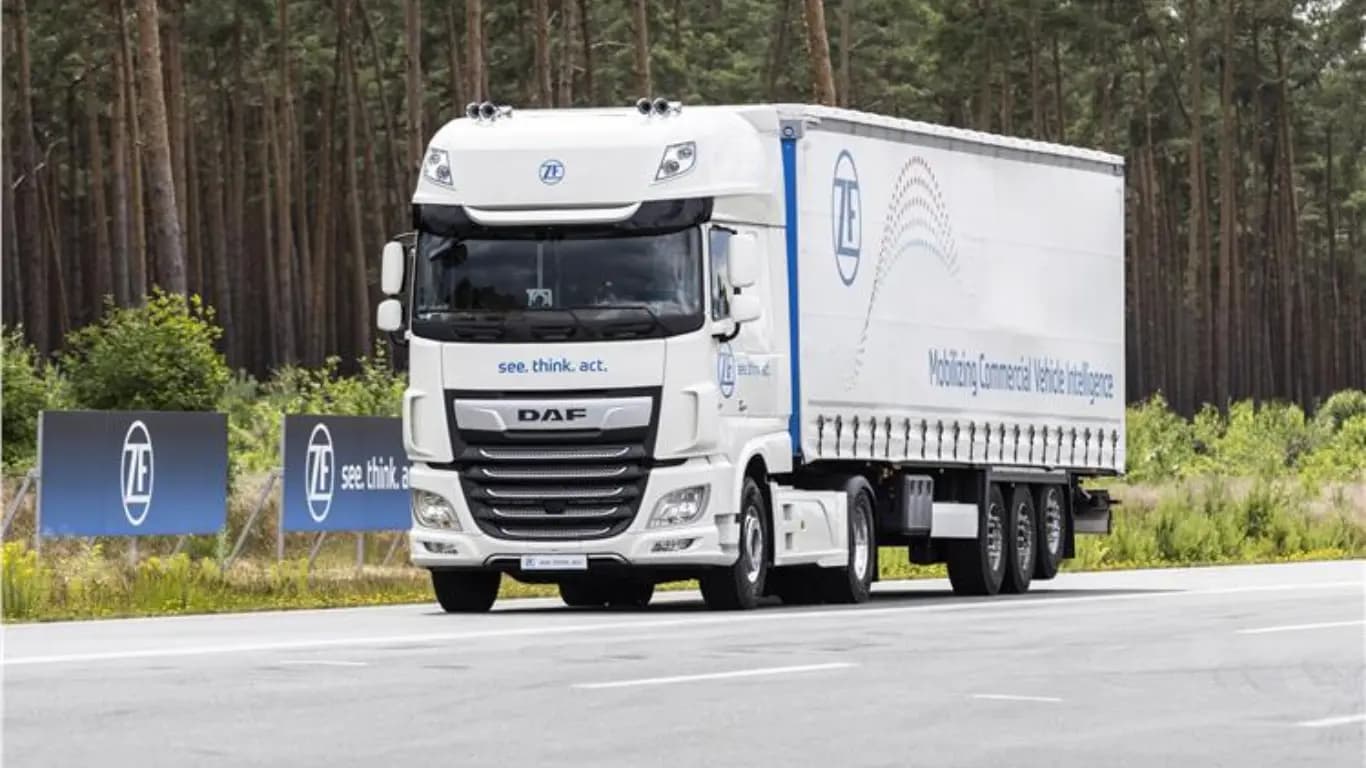
ZF, a leading global technology company, is leveraging advanced software to develop smarter and more connected commercial vehicles (CVs). By integrating cutting-edge software solutions with its innovative chassis technologies, ZF aims to enhance vehicle performance, improve safety, and provide a smoother driving experience. This approach aligns with the ongoing shift in automotive technology towards greater digital integration, positioning ZF at the forefront of the industry.
Boosting Efficiency with Software Expertise
ZF’s expertise in software development, honed across various vehicle segments, enables the company to create intelligent systems quickly and cost-effectively. These systems are designed to lower the total cost of ownership (TCO) for commercial vehicles, making them more efficient and reliable.
Braking and e-Drive Synergy Program
One of ZF’s key innovations is the Braking and e-Drive Synergy Program, which harmonizes the electric driveline and braking functions. This system optimizes energy recuperation during braking, allowing the vehicle to recharge its onboard batteries, thereby extending its range. The integration of ZF’s next-generation e-drives, including the AxTrax 2 dual and CeTrax 2 dual, with the mBSP XBS advanced braking system, maximizes energy efficiency while ensuring full stability control.
The program also introduces a ‘one-pedal-drive’ functionality, enhancing driving comfort, especially in low-speed maneuvers such as yard operations or urban driving. Additionally, the system improves launch capabilities by optimizing traction control, reducing tyre wear, and enhancing vehicle performance on slippery surfaces.
Innovation in Brake Resistors
ZF has also developed a groundbreaking software solution that replaces traditional hardware brake resistors in battery electric vehicles. This new software function intelligently manages the energy content of the battery during certain charging situations. By utilizing location data, the system can predict when the vehicle is likely to descend steep gradients, ensuring that the battery saves capacity for energy harvesting during the descent.
This innovative approach eliminates the need for bulky, heavy, and costly brake resistors, resulting in a weight reduction of approximately 150kg. The software solution not only maximizes energy efficiency but also increases available space within the chassis, demonstrating how intelligent server-cloud-based functions can enhance efficiency and sustainability.
CMV360 Says
ZF’s integration of software into commercial vehicle technologies marks a significant advancement in the automotive industry. By focusing on safety, efficiency, and cost-effectiveness, ZF is paving the way for smarter, more connected, and highly efficient commercial vehicles that meet the demands of modern transportation.

Robin Kumar Attri is a content and video professional with 2.7 years of experience in the commercial vehicle d .....