SUN Mobility Introduces Modular Battery Swapping Technology for Heavy Electric Vehicles
 Add CMV360 on Google
The company's battery swapping technology can be used in a variety of vehicles, including light, medium, and heavy commercial vehicles, trailers, mining vehicles, buses, and more.

By Priya Singh
Key Highlights:
- SUN Mobility launched modular battery swapping for heavy EVs, aiming for commercialization next year.
- The company is raising funds to boost research and production.
- The technology cuts bus costs by 40% and fleet operational costs by 20%.
- A joint venture with Indian Oil brings a $78M investment for EV infrastructure.
- Over 13,000 inquiries received at Prawaas 4.0; robotic swapping to roll out soon.
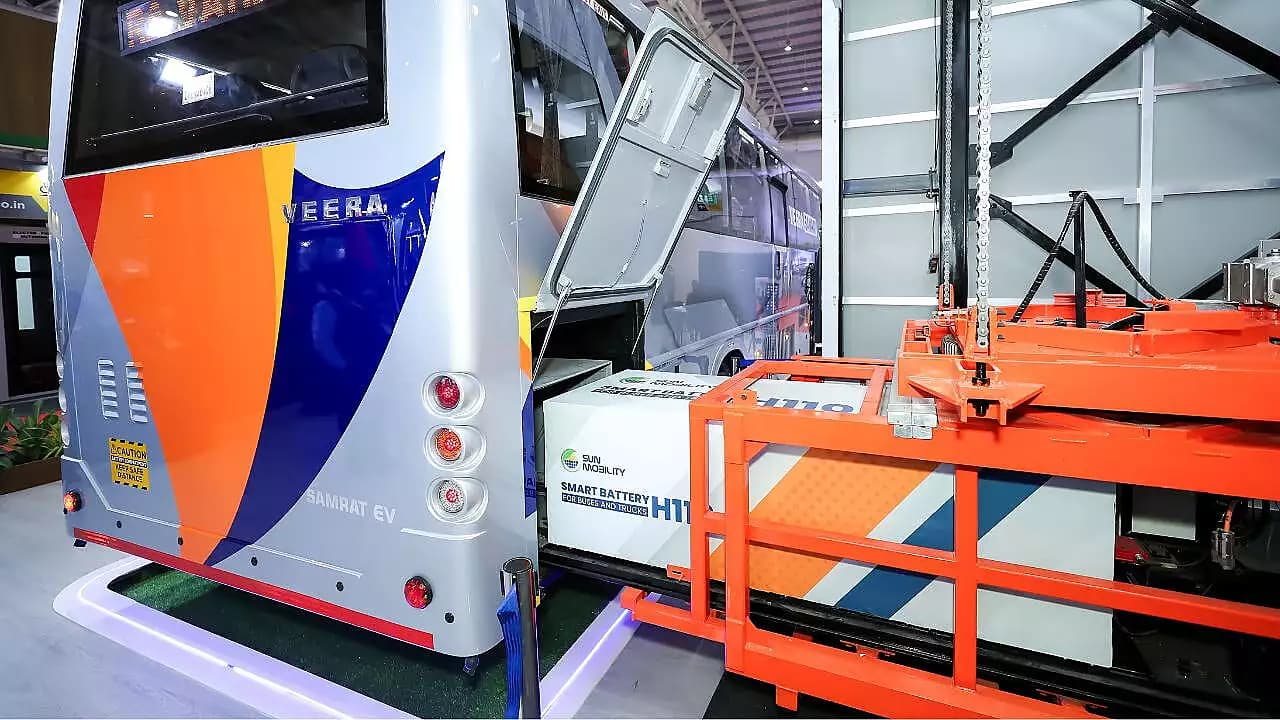
SUN Mobility, a Bengaluru-based company, has introduced its modular battery swapping technology for heavy electric vehicles (HEVs) at Prawaas 4.0.
The event, organized by the Bus and Car Operators Confederation of India, showcased the company's new technology aimed at reducing costs and boosting the adoption of electric vehicles in the commercial sector. SUN Mobility plans to commercialize its products next year.
Fundraising and R&D Expansion
SUN Mobility plans to raise funds for its new HEV business in order to speed R&D and product manufacturing. Chetan Maini, co-founder and chairman of SUN Mobility, stated that the company is considering seeking additional financing for its Indian operations.
However, the amount has not been announced by the chairman because the procedure has yet to begin.
Battery Swapping Technology
The company's battery swapping technology can be used in a variety of vehicles, including light, medium, and heavy commercial vehicles, trailers, mining vehicles, buses, and more.
The technology goal is to overcome the obstacles faced by fleet owners in electric mobility, such as cost of ownership, runtime, and energy consumption, according to SUN Mobility's chairman.
According to Maini, battery swapping can reduce the upfront cost of electric buses by 40%, making them more affordable for fleet operators. Ashok Agarwal, the CEO of SUN Mobility’s HEV division, added that operational costs could be reduced by 20% for fleet owners.
Partnership with Indian Oil Corporation
Recently, the company stated that Indian Oil Corporation has invested USD 78 million, resulting in a 50:50 joint venture. This investment will allow SUN Mobility to leverage IOC's network and outlets to cater to EVs.
Plans for Commercialisation
The company aims to start commercializing its new technology by the first quarter of FY26. Initially, it plans to roll out 8-10 use cases, and later expand its deployment on a larger scale.
In the next 18 to 24 months, the company plans to implement various use cases involving robotic swapping ranging from three to 55 tonnes. The robotic station can swap batteries in three minutes.
The implementation will begin with a close loop system, which is where the corporation will store its assets and infrastructure for the consumer. "An operator wishes to operate buses between, say, Bangalore and Chennai. So we must deploy the infrastructure for them," explained CEO-HEV SUN Mobility.
Growing Interest and Future Expansion
According to Agarwal, the company received a positive reaction within three days of demonstrating its innovative technology at Prawaas 4.0. "We have received more than 13,000 inquiries from the private market," said the CEO. However, he did not reveal any possible corporate details for the new business partnership.
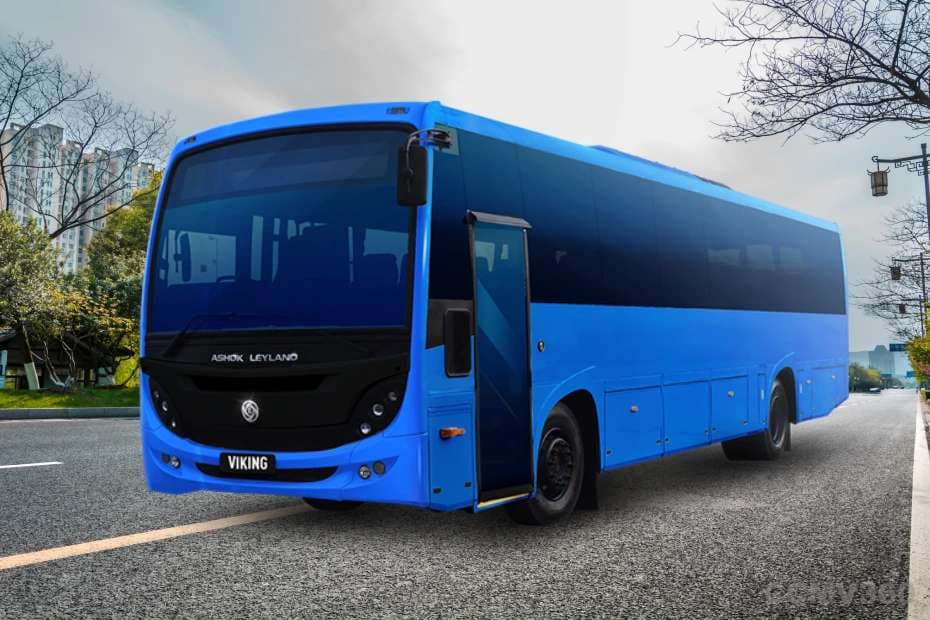
During Prawaas 4.0, the company showed 10.5-meter battery-swappable buses for intercity routes in collaboration with Veera Vahana (a bus manufacturer). Veera Vahana will use the same technology in all of its automobiles.
Maini noted that the company currently does 1.8 billion swaps per month across its 630 stations and hopes to quadruple that figure within the next eight months.
Also Read: SUN Mobility Launches Retrofit Kits for Tata ACE Vehicles
CMV360 Says
SUN Mobility's battery-swapping technology offers a practical solution to overcome cost and energy challenges for heavy electric vehicles. If the company successfully scales its operations and infrastructure, it could drive faster adoption of electric commercial vehicles, making electric mobility more viable for businesses in India.

Hi there! I'm Priya. From trucks to vans and everything in between, I'm here to provide you with up-to-date in .....