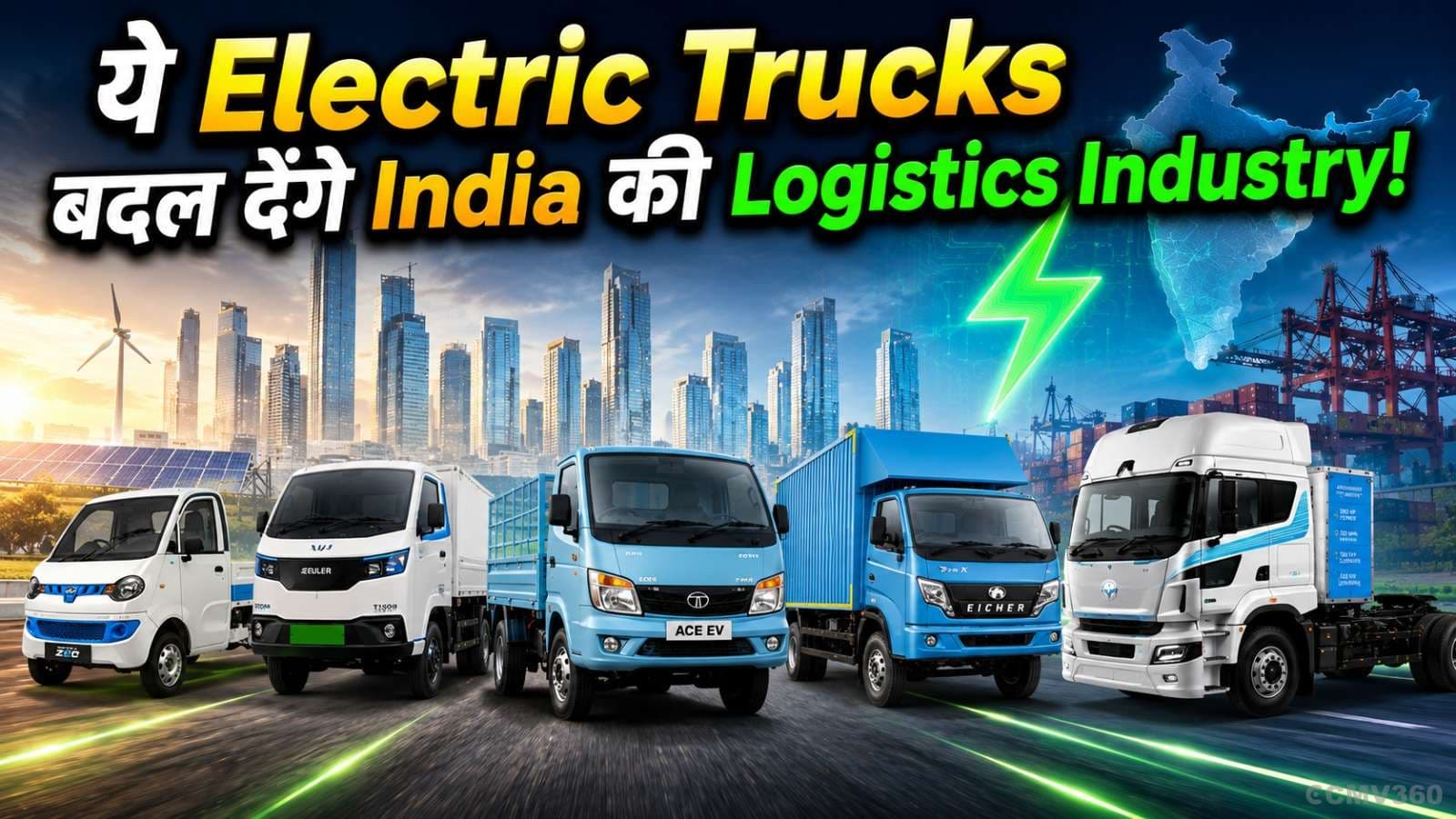
PM E-Drive Scheme for Electric Trucks: 5,600 Vehicles to Get Incentives in FY2026
 Add CMV360 on Google
The PM E-Drive scheme aims to boost electric truck adoption in India with ₹500 crore support, offering cost savings, infrastructure growth, and cleaner freight mobility.

By Priya Singh

Key Highlights:
- PM E-Drive scheme launched with ₹500 crore to support over 5,600 electric trucks in FY2026.
- Buyers can save 8–10% on e-truck prices through demand incentives.
- Focus on N2 (3.5–12T) and N3 (12–55T) trucks with strict performance criteria.
- Plan includes support for EV parts manufacturing, charging, and testing infrastructure.
- E-trucks are expected to cost 15–20% less to own than diesel trucks, says ICRA.
India is stepping up its push for cleaner transport with the launch of the PM Electric Drive Revolution in Innovative Vehicle Enhancement (PM E-Drive) scheme. Announced on July 10, 2025, by the Ministry of Heavy Industries, the scheme is specially focused on electric trucks, a segment that has been less explored so far.
Rs 500 Crore Allocation to Support E-Truck Buyers
Under the PM E-Drive scheme, the government has allocated Rs 500 crore for the financial year 2026. This fund will support the procurement of over 5,600 electric trucks, helping reduce the high upfront cost for buyers.
According to ICRA, this could help truck electrification reach around 2% by the end of FY2026, up from almost negligible levels today. The scheme provides demand-side incentives, reducing e-truck purchase costs by 8–10%, depending on the vehicle weight category.
Focus on N2 and N3 Category Trucks
The PM E-Drive scheme targets N2 (3.5–12 tonne GVW) and N3 (12–55 tonne GVW) trucks. These categories are widely used for medium and heavy-duty freight transport in India. To qualify for incentives, the trucks must meet strict technical performance benchmarks, such as:
- Minimum driving range
- Maximum electric energy consumption limits
- Required acceleration and gradeability
- Minimum top speed
Building the EV Ecosystem for Trucks
The initiative is not just about discounts. A significant portion of the scheme also focuses on developing India’s EV ecosystem. This includes:
- Promoting local manufacturing of EV components
- Supporting charging infrastructure expansion to reduce range anxiety
- Establishing testing facilities for commercial electric vehicles
This ecosystem-based approach will help lay the foundation for wider adoption of electric trucks in the coming years.
Challenges Still Exist
While the scheme has received positive reactions, ICRA points out several challenges:
- Limited localisation of EV parts could increase spare part costs
- High dependency on imported rare earth metals
- Inadequate charging infrastructure in many parts of India
Despite these hurdles, the benefits outweigh the concerns, especially in the long term. Electric trucks offer a cleaner and more efficient solution for freight movement, which is vital for reducing transport-related emissions in India.
Cost Benefits for Truck Owners
One of the key highlights of the scheme is the lower total cost of ownership (TCO). ICRA estimates that e-trucks under the PM E-Drive scheme are 15–20% cheaper to operate over time compared to diesel trucks. This makes a strong financial support for fleet owners and logistics companies to consider switching to electric.
Recent advancements in electric vehicle technology have also addressed many of the earlier issues, such as load capacity and range. E-trucks today are far more suited for commercial use than they were a few years ago.
Also Read: PM E-DRIVE Scheme to Boost Electric Truck Adoption, Says VECV CEO Vinod Aggarwal
CMV360 Says
India’s electric vehicle revolution has seen momentum in the two-wheeler, three-wheeler, and passenger car segments. However, truck electrification has lagged, mainly due to high costs and a lack of charging networks. The PM E-Drive scheme is a targeted and timely intervention. By combining upfront purchase incentives with ecosystem development, it creates a more favourable environment for electric trucks. With better technology, cost savings, and government support, the scheme could mark a major turning point for clean freight transport in India.

Hi there! I'm Priya. From trucks to vans and everything in between, I'm here to provide you with up-to-date in .....