Maharashtra Chief Minister Promotes Bamboo Farming as a Green Solution to Environmental Challenges and pollution
 Add CMV360 on Google
Maharashtra Chief Minister, Eknath Shinde, also highlighted the government's commitment to promoting water tourism in the Koyna reservoir.

By Priya Singh
Bamboo Farming has significant environmental benefits in addition to its economic benefits. Bamboo is an abundant source of oxygen, emitting 320 kg of oxygen into the atmosphere each year. One acre of bamboo farm can produce 60 tons of oxygen on average.
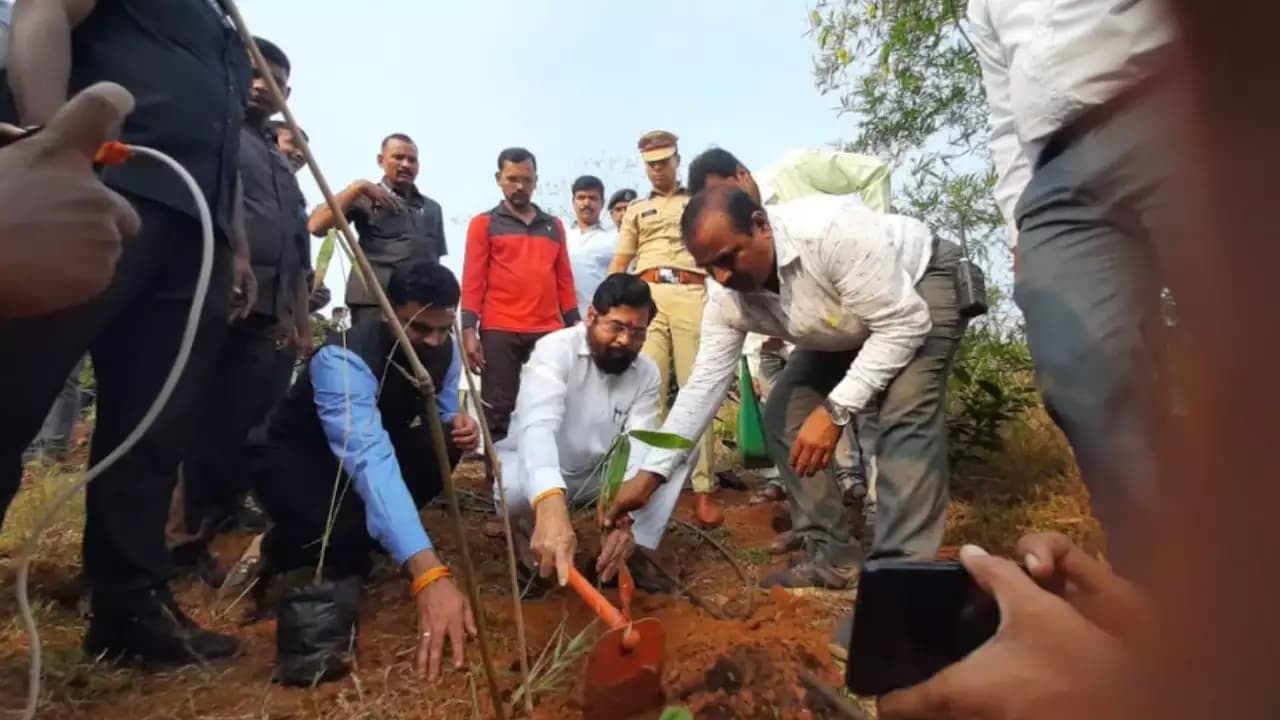
Eknath Shinde, the Chief Minister of Maharashtra, has requested farmers to engage in large-scale bamboo planting through cooperative farming. He made this plea at a bamboo cultivation ceremony in Dare Taluka, Mahabaleshwar.
At the event, Chief Minister Shinde also announced an ambitious plan to set up bamboo parks in urban areas with an aim to tackle the rising air quality index. Chief Minister Shinde emphasized the adaptability of bamboo as a crop, highlighting its potential to provide many benefits to farmers. The government is actively seeking to expand farmers' economic options through bamboo farming.
Bamboo production begins in the third year, making it an important asset for soil conservation. In addition, bamboo is being used to boost the agricultural economy by manufacturing ethanol. Shinde highlighted the disparity in water requirements for sugarcane and bamboo growth.
One hectare of sugarcane requires two crore litres of water, whereas one hectare of bamboo necessitates 20 lakh litres. Moreover, crushing one ton of sugarcane produces 80 litres of ethanol, whereas one ton of bamboo produces 400 litres of ethanol.
Bamboo has significant environmental benefits in addition to its economic benefits. Bamboo is an abundant oxygen producer, emitting 320 kg of oxygen into the atmosphere each year. One acre of bamboo land can produce 60 tons of oxygen on average.
Furthermore, bamboo can absorb around 200 tons of CO2 from the air in every hectare of soil. As a result, bamboo farming helps to reduce temperature.
By comparing bamboo farming to sugarcane farming, Shinde provides the economic benefits of bamboo cultivation. Sugarcane normally produces around 100 tons per hectare and sells for at least Rs 2,500 per ton and bamboo produces at least 100 tons per hectare and sell for at least Rs 4,000 per ton.
Also Read: Congress Leader Rahul Gandhi Joins Farmers in Paddy Harvesting to Raise Agricultural Issues
To capitalize on the potential of bamboo, the government will build a bamboo-based manufacturing plant which will create employment opportunities for the youth in the Kandati Valley.
Chief Minister Shinde also highlighted the government's commitment to promoting water tourism in the Koyna reservoir. A Rs 45 crore project is currently underway in Munawale, Jawli taluka, which will include activities such as scuba diving, paragliding, speed boating, and adventure water sports. Essential facilities for tourists will be provided. It will generate employment opportunities for locals within their own villages.
These initiatives reflect a deliberate effort to leverage the potential of bamboo for economic development, environmental protection and employment generation in Maharashtra.

Hi there! I'm Priya. From trucks to vans and everything in between, I'm here to provide you with up-to-date in .....