Daimler Truck’s GenH2 Fuel Cell Trucks Pass Extreme Winter Testing
 Add CMV360 on Google
These winter tests are part of a program backed by €226 million from Germany’s Federal Ministry for Digital Affairs and Transport (BMDV) and the federal states of Baden-Württemberg and Rhineland-Palatinate, under the EU’s IPCEI Hydrogen programme.

By Priya Singh

Key Highlights:
- Daimler Truck’s GenH2 fuel cell trucks completed extreme winter testing in the Alps.
- The trucks handled snow, ice, and steep slopes of up to 12%.
- The main focus of testing was on the Predictive Powertrain Control system.
- The project is backed by €226 million in funding.
- The trucks will be assembled at Mercedes-Benz’s Wörth plant.
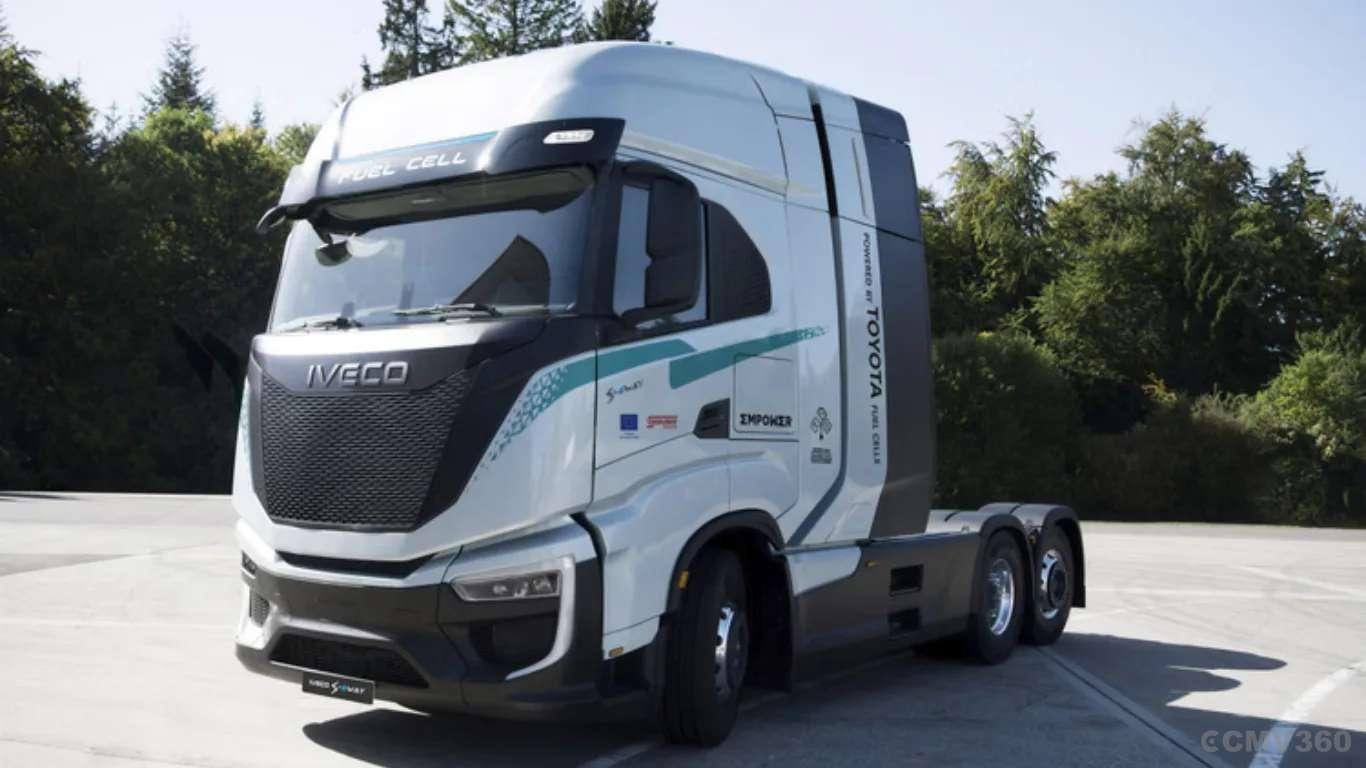
Daimler Truck has successfully tested its next-generation Mercedes-Benz GenH2 fuel cell trucks in extreme winter conditions. Hydrogen-powered trucks are being tested in real conditions, showing they can handle extreme weather and tough roads. Two advanced prototypes were driven through the Alps, facing snow, ice, and steep slopes of up to 12%. The trucks reached heights of over 2,000 metres and covered 6,500 kilometres in 14 days. With a total elevation gain of 83,000 metres, the test proved that the liquid hydrogen-powered trucks are strong and reliable in tough conditions.
These winter tests are part of a program backed by €226 million from Germany’s Federal Ministry for Digital Affairs and Transport (BMDV) and the federal states of Baden-Württemberg and Rhineland-Palatinate, under the EU’s IPCEI Hydrogen programme. The funding supports the development, small-scale production, and customer trials of 100 GenH2 trucks, making it one of Europe’s biggest hydrogen vehicle projects.
The funding also includes studies on the hydrogen supply chain and investments in production infrastructure. The final assembly of the GenH2 trucks will take place at the Mercedes-Benz Wörth plant, with customer trials set to begin by late 2026.
One key focus was the Predictive Powertrain Control system, which helps the truck save energy by adjusting how the fuel cell and battery work based on the terrain. Engineers made sure the trucks could balance power and energy recovery, especially on steep slopes. Even though the trucks weighed 40 tonnes, they still managed to drive 1,600 kilometers through tough mountain roads, which is like the conditions of real freight transport. The trucks were refueled using a mobile hydrogen station from Air Products set up at the base camp in Valais. This highlighted the practicality of hydrogen-powered freight transport and its potential for real-world use.
Dr. Rainer Müller-Finkeldei, Head of Mercedes-Benz Trucks Product Engineering, said that the team is improving on earlier prototypes and testing the new technology to its limits. The Simplon Pass provided the perfect conditions to check how the fuel cell system works with the high-voltage battery, e-axle, tank system, and thermal management.
Also Read: Daimler Truck Reports Strong Performance in 2024 Despite Market Challenges
CMV360 Says
Hydrogen is seen as a main solution for reducing emissions in long-haul transport, and Daimler Truck’s GenH2 project marks a big step toward sustainable freight mobility. These tests show that fuel-cell trucks can handle extreme conditions while delivering reliable performance, moving zero-emission transport closer to reality. The investment in this technology proves that companies and governments are serious about making freight transport cleaner. Fuel cell trucks still have challenges, but these tests bring them closer to real-world use.

Hi there! I'm Priya. From trucks to vans and everything in between, I'm here to provide you with up-to-date in .....