Domestic CV OEMs Master Heavy-Duty Physics for India’s Growing Infrastructure Push
 Add CMV360 on Google
Indian CV OEMs showcase strong engineering as local chassis, electric mixers, and advanced construction equipment support faster, greener infrastructure growth despite supply chain challenges.

By Robin Kumar Attri

Key Highlights
Indigenous chassis now support high-reach boom pumps.
CV and construction OEM collaboration is deepening.
Schwing Stetter launched 20+ advanced equipment models.
Battery electric mixers using a blade battery were introduced.
Infrastructure demand to drive steady sector growth.
India’s commercial vehicle (CV) and construction equipment industries are entering a new phase of collaboration as domestic manufacturers prove their ability to handle some of the most demanding heavy-duty applications. What was once dependent on imported platforms is now increasingly supported by locally engineered chassis and engines, reflecting a major shift in Indian automotive capability.
Homegrown Chassis Power Mega Construction Equipment
For many years, large boom pumps, machines with long, multi-section robotic arms used to pour concrete at great heights, were almost always mounted on imported truck chassis. The reason was simple: domestic frames struggled to meet the extreme stability, load-bearing, and balance requirements of such equipment.
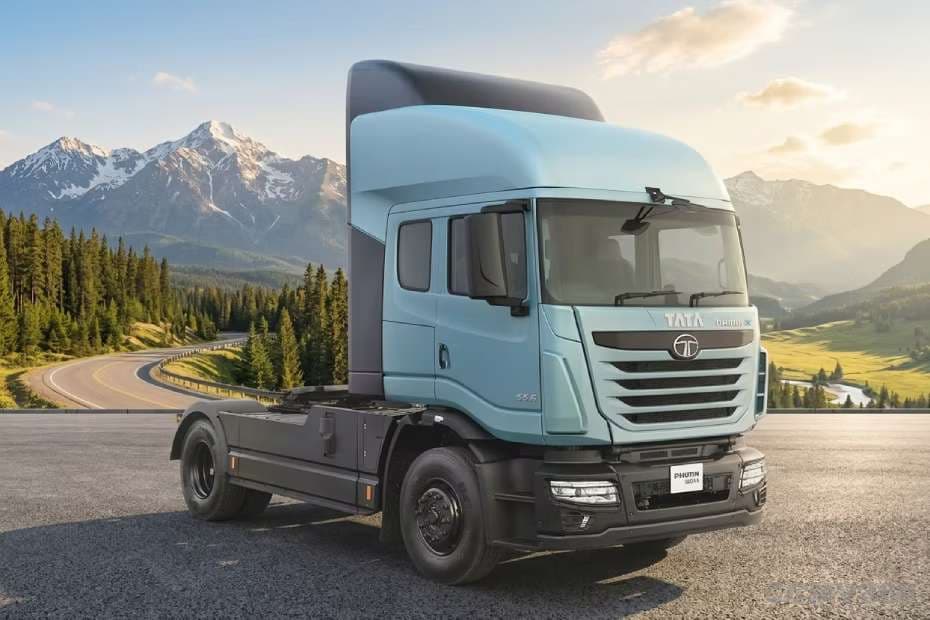
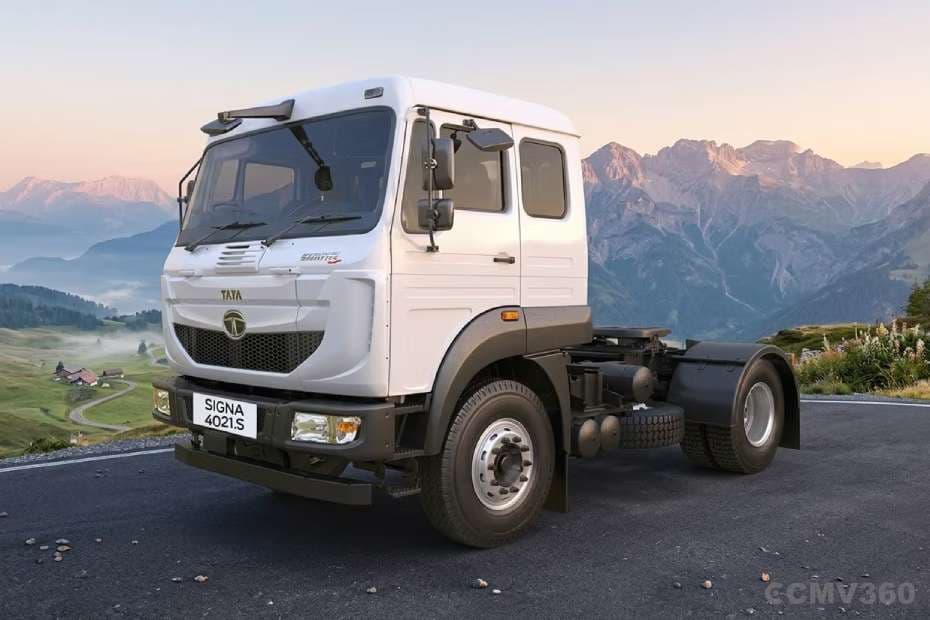
This perception began to change at Excon, where a 56-metre boom pump mounted on an indigenous Tata chassis stood as clear evidence of progress. The ability of Indian-made chassis to support such heavy and complex machinery highlights how domestic OEMs have moved beyond basic haulage and into mastering the physics of heavy-duty stability and weight distribution.
Earlier, these skeletal frames had to be specially designed or sourced from overseas. Their successful localization now marks an important milestone in “right-sizing” Indian vehicles for global-scale infrastructure needs.
Market Maturity Signals Long-Term Change
V.G. Sakthikumar, Chairman and Managing Director of Schwing Stetter India, described this development as a sign of a maturing market. He explained that chassis requirements for such equipment were very different in the past, but with increasing localization, these configurations are expected to become more common in the future.
Boom pumps play a crucial role in modern infrastructure by placing liquid concrete quickly and accurately in hard-to-reach areas such as high-rise buildings, bridges, and large urban projects. By reducing manual labour and construction time, they help save both cost and effort. In India, major truck brands such as Tata Motors, Ashok Leyland, BharatBenz, and Eicher now dominate the large boom pump chassis segment.
Schwing Stetter Showcases New-Age Construction Solutions
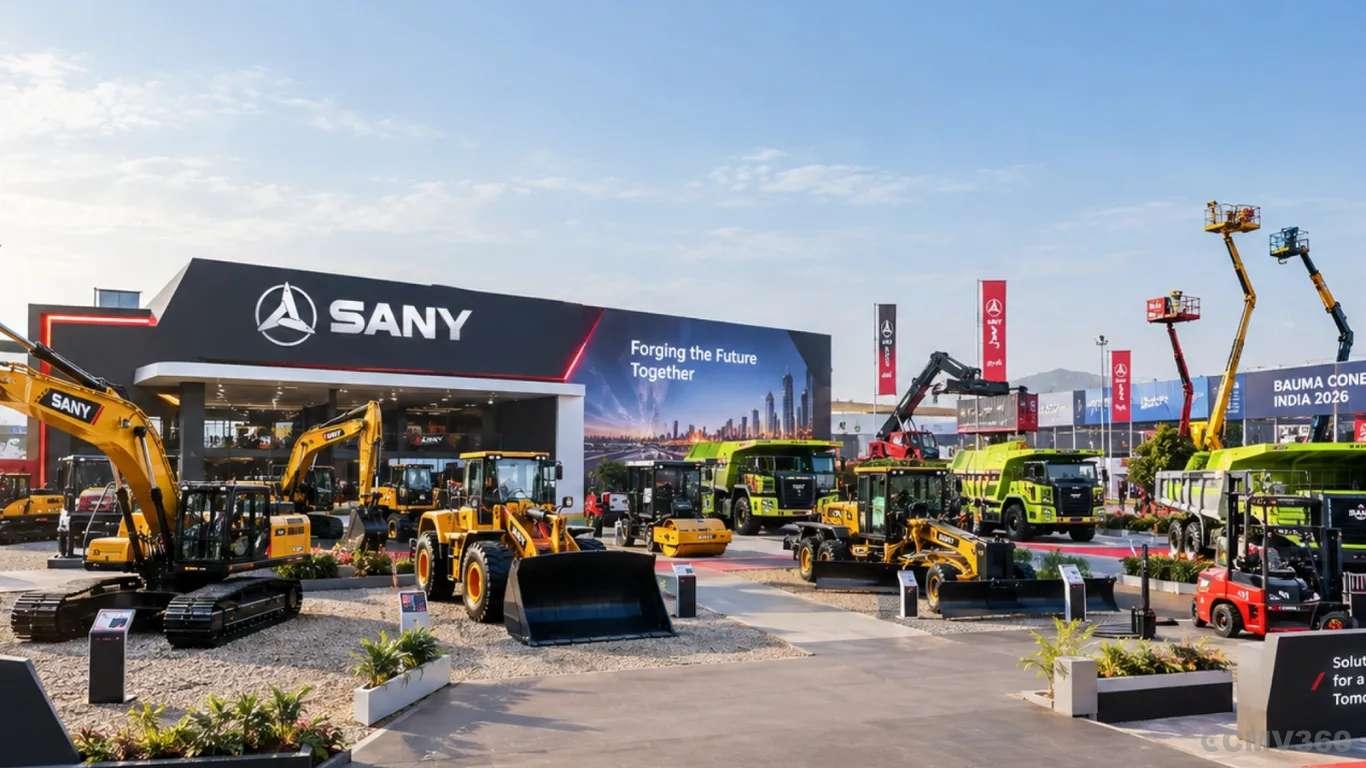
At Excon 2025, Schwing Stetter India unveiled more than 20 new construction equipment products aimed at supporting India’s demand for faster, greener, and taller infrastructure. These launches included a fully electric truck mixer, the country’s first CNG mixer variant, and a hybrid boom pump.
The company also introduced advanced precast technology in partnership with MAXtruder GmbH, along with new crusher solutions designed for aggregate production and construction waste recycling. These offerings reflect a broader focus on clean energy solutions, advanced engineering, and circular use of materials.
Founded in 1999, Schwing Stetter India manufactures concrete batching plants, pumps, mixers, and recycling equipment. Its parent company operates manufacturing facilities in 12 countries and has a sales presence across more than 150 countries worldwide.
Interdependence Brings Supply Chain Challenges
As collaboration between the automotive and construction sectors deepens, so does their interdependence. Any disruption in one industry now directly impacts the other. Earlier this year, the construction equipment segment experienced slower dispatches, partly due to regulatory changes affecting the automotive sector.
Industry leaders pointed out that mid-year issues related to AC cabin regulations delayed chassis production. As truck makers took time to ramp up compliant cabin manufacturing, construction equipment like mixers and pumps were left without suitable platforms, clearly exposing supply chain vulnerabilities.
Blade Battery Pushes Electrification Forward
Electrification in heavy-duty construction equipment depends more on battery chemistry than on electric motors alone. During the same event, Schwing Stetter India announced a collaboration with Qucev Technologies to develop a battery electric transit concrete mixer (eRMC).
This project uses BYD’s patented blade battery technology, known for improved energy density and thermal safety. Already proven in passenger vehicles and buses, the blade battery is now being adapted for high-torque, demanding construction applications. The expected operational life of the battery is between six and eight years.
NK Rawal, MD and CEO of Qucev Technologies, explained that the blade battery design ensures safety while delivering higher battery density. This allows a seven-cubic-metre electric mixer to operate efficiently in dense urban areas, where strict emission norms are increasingly limiting diesel-powered vehicles.
Growth Outlook Remains Positive
Although the market has recently been flat or slightly negative due to an extended monsoon, industry sentiment remains optimistic. The sector is expected to grow at around 6% in 2025. As India continues to build taller structures and accelerate project timelines, demand for high-reach, efficient, and cleaner construction equipment is set to rise steadily.
Also Read: Construction Equipment OEM Market Share December 2025: JCB Leads as Retail Sales Reach 5,820 Units
CMV360 Says
India’s infrastructure growth is driving a strong shift toward advanced, locally engineered commercial vehicles and construction equipment. Domestic OEMs are now capable of supporting heavy-duty, high-reach machinery that was once dependent on imports. With growing focus on clean energy, battery innovation, and closer OEM collaboration, the sector is becoming more self-reliant, efficient, and future-ready despite short-term supply chain and regulatory challenges.

Robin Kumar Attri is a content and video professional with 2.7 years of experience in the commercial vehicle d .....