Construction Machine Road Tax in India: State-Wise Rates, Road Tax, Rules and Registration Explained
 Add CMV360 on Google
Check construction machine road tax in India, including JCB road tax, state-wise rates, RTO registration, Supreme Court ruling, exemptions and public-road usage rules.

By Robin Kumar Attri

Buying a construction machine in India involves more than just checking its ex-showroom price, engine capacity, operating performance and lifting capabilities. Buyers also need to consider the road tax, RTO registration, insurance and other charges that can significantly increase the final on-road cost. Whether you are planning to purchase a backhoe loader, an excavator, a wheel loader, a compactor or a mobile crane, understanding the applicable construction machine road tax is important before making a purchase.
Unlike passenger cars and regular commercial vehicles, construction equipment operates under a different set of taxation and registration requirements. The road tax payable depends on the state of registration, machine category, purchase value and whether the equipment is driven on public roads or operates exclusively within enclosed premises.
For example, a JCB backhoe loader purchased in Haryana may attract a different road tax compared to the same machine registered in Rajasthan or Himachal Pradesh. Moreover, a significant legal development in January 2026 has clarified when construction equipment used exclusively within factories, mines and other enclosed premises can be exempt from road tax.
So, how much road tax does a construction machine attract in India? What are the state-wise rates, and can states still charge tax on equipment used on public roads? Here is everything buyers, contractors and construction businesses need to know.
Also Read: Crane Lifting Accidents: 8 Hidden Hazards and Safety Measures Every Construction Site Must Know
What Is Construction Machine Road Tax in India?
Construction machine road tax is a state-level tax imposed on eligible construction equipment vehicles when they are registered or used on public roads. It is generally collected by the respective Regional Transport Office (RTO) under the applicable state Motor Vehicles Taxation Act and Rules.
Under the Central Motor Vehicles Rules, construction equipment vehicles include self-propelled machines designed primarily for off-highway operations but capable of travelling on roads.
These machines are mainly used for construction, mining, industrial operations, irrigation and infrastructure development. However, when they are adapted for and used on public roads, they may come under the definition of motor vehicles under Section 2(28) of the Motor Vehicles Act, 1988.
Road tax is different from GST, RTO registration charges and insurance premiums. While GST is included in the purchase invoice, road tax is collected by the state government according to its taxation rules.
How Much Road Tax Do Construction Machines Attract in India?
There is no fixed nationwide road tax rate for construction equipment in India. Each state determines its own tax structure, which means buyers may pay different amounts depending on where the machine is registered.
In several states, construction equipment attracts a one-time road tax calculated as a percentage of its taxable value. However, certain states may follow different taxation periods or payment structures depending on the vehicle category.
For a better understanding, consider a construction machine with an illustrative ex-showroom price of ₹30 lakh.
Road Tax Rate | Tax Amount |
6% | ₹1,80,000 |
7% | ₹2,10,000 |
8.5% | ₹2,55,000 |
Therefore, depending on the applicable state rate, the road tax on a ₹30 lakh construction machine could range from ₹1.8 lakh to ₹2.55 lakh.
The final on-road price will also include other applicable expenses.
Construction machine on-road price generally includes:
Ex-showroom price, including applicable GST
State road tax
RTO registration charges
Insurance premium
Dealer and handling charges
Transportation and documentation expenses
Optional equipment and accessories
For instance, if a ₹30 lakh machine attracts 6% road tax and approximately ₹1.5 lakh in other on-road expenses, its estimated on-road price would be ₹33.3 lakh.
State-Wise Construction Machine Road Tax Rates in India
Construction equipment road tax varies considerably across Indian states. Buyers should understand the taxation structure of their registration state before finalising a machine purchase.
The following table highlights the applicable provisions and examples for selected states.
State | Construction Equipment Road Tax |
Rajasthan | 7% of vehicle cost for a complete construction equipment vehicle and 8.5% of chassis cost for a chassis purchase |
Haryana | One-time road tax of 6% of vehicle cost for specified construction equipment categories |
Himachal Pradesh | Taxation for up to 15 years, with rates ranging from 6% to 15%, depending on applicable notifications |
Maharashtra | Tax schedules cover certain tractor, crane, compressor and related categories. Exact classification and rates should be confirmed with the RTO |
Gujarat | The Supreme Court's January 2026 ruling addressed the absence of a corresponding prescribed tax rate in the relevant statutory schedule in the case before it |
Other States | Tax rates and payment requirements vary according to individual state taxation laws |
1. Rajasthan Construction Machine Road Tax
Rajasthan follows a one-time taxation system for specified construction equipment vehicles.
The applicable rates are:
7% of the vehicle cost for a complete construction equipment vehicle.
8.5% of the chassis cost when purchasing a chassis.
The taxable vehicle cost generally considers the ex-showroom price, including applicable taxes and levies, while excluding discounts.
Additionally, construction equipment regularly used on public roads for commercial activities may be classified as a transport vehicle, depending on the circumstances.
2. Haryana Construction Machine Road Tax
Haryana charges a one-time road tax of 6% of the vehicle cost for specified construction equipment vehicles.
The covered categories include excavators, loaders, backhoe loaders, compactors, rollers, motor graders, mobile cranes, dozers, forklifts and self-loading concrete mixers.
This makes Haryana's 6% rate an important consideration for contractors and businesses purchasing construction machinery in the state.
3. Himachal Pradesh Construction Machine Road Tax
Himachal Pradesh follows a different taxation structure for construction equipment.
The applicable tax can extend up to 15 years from the date of purchase, with statutory rates ranging between 6% and 15%. The exact amount depends on the machine's price and the relevant state notification.
Buyers should confirm the applicable rate with the local RTO before registration.
4. Maharashtra Construction Machine Road Tax
Maharashtra's transport department includes several equipment-related categories in its taxation schedule, including tractor, crane and compressor-type vehicles.
However, the exact tax applicable to a construction machine depends on its classification. Buyers should confirm the relevant category and rate with the Maharashtra RTO before completing registration.
5. Gujarat Construction Machine Road Tax
Gujarat has an important legal distinction following the January 2026 Supreme Court ruling.
The Court observed that although the relevant Gujarat Motor Vehicles Tax Act schedule referred to construction equipment vehicles, it did not prescribe a corresponding tax rate in the case under consideration. Consequently, the tax could not be levied or collected in that particular matter.
However, this does not mean that every construction machine operating in Gujarat is automatically exempt from road tax. Actual public-road use and the applicable legal provisions remain important.
JCB Road Tax in India: What Buyers Should Know
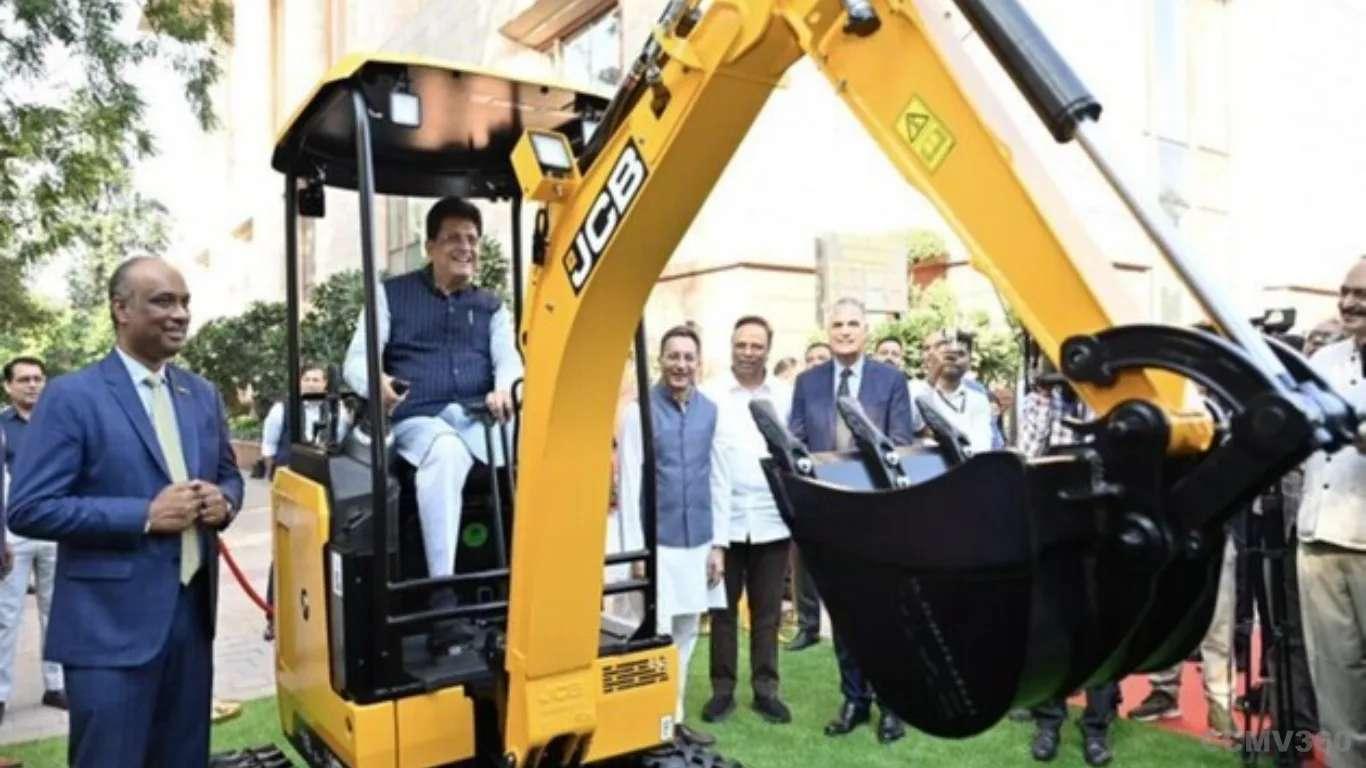
JCB machines are widely used across India's construction, infrastructure, mining and material-handling sectors. Popular equipment categories include backhoe loaders, excavators, wheel loaders and other earthmoving machines.
However, there is no separate nationwide JCB road tax rate in India. The applicable tax depends on the machine's category, invoice value, registration state and intended usage.
For example, a JCB backhoe loader registered in Haryana may attract a 6% one-time road tax under the applicable construction equipment category. In Rajasthan, a complete construction equipment vehicle may attract 7% of its taxable cost.
Therefore, buyers searching for JCB road tax in India or JCB road tax should consider the following factors:
Machine price: Higher invoice values can result in higher percentage-based road tax.
Registration state: The same JCB machine can attract different taxes in different states.
Machine classification: Backhoe loaders, excavators and other equipment may fall under different categories.
Usage: Public-road operation can trigger registration and road-tax requirements.
Additional charges: Insurance, RTO fees and dealer expenses increase the final on-road price.
It is advisable to obtain a written tax calculation from the dealer and confirm it with the concerned RTO before purchasing the machine.
Supreme Court's 2026 Ruling: When Are Construction Machines Exempt From Road Tax?
One of the most important developments concerning construction equipment taxation came in January 2026.
In the case of Ultratech Cement Ltd. v. State of Gujarat, the Supreme Court clarified the position of heavy earthmoving machinery and construction equipment used exclusively within factories and other enclosed premises.
The Court held that machinery used exclusively within a factory, mine or enclosed premises does not qualify as a motor vehicle under Section 2(28) of the Motor Vehicles Act, 1988, and is therefore not liable for road tax under the circumstances considered.
This decision is particularly relevant for cement plants, mining companies, industrial facilities and construction businesses operating heavy machinery within restricted premises.
However, the exemption is not universal. If the same equipment is driven on public roads, it may fall within the definition of a motor vehicle and become subject to registration, state road tax and other applicable provisions.
Can States Still Tax Construction Machines Used on Public Roads?
Yes. States can still impose applicable road tax on construction equipment that is adapted for and used on public roads.
The Supreme Court's January 2026 ruling does not provide a blanket exemption to all construction machinery. It specifically addresses equipment used exclusively within enclosed premises.
For example, consider the following situations:
Machine Usage | Road Tax Position |
Excavator operating exclusively inside an enclosed factory | Generally protected under the 2026 ruling |
Dumper operating within a restricted mining area | Generally protected under the ruling |
Backhoe loader travelling between construction sites using public roads | Registration and applicable road tax may apply |
Excavator driven on a public highway | Subject to applicable motor vehicle requirements |
Forklift used exclusively inside an enclosed factory | May qualify for the enclosed-premises exclusion, depending on its design and use |
Construction machine transported on a trailer | Different from self-propelled public-road movement; actual vehicle classification and circumstances matter |
The Court also clarified that construction machines found operating on public roads cannot automatically claim exemption from the Motor Vehicles Act or state taxation laws.
Therefore, contractors and equipment owners should carefully consider how their machines are transported and operated.
What Types of Machines Are Covered Under Section 2(28) of the Motor Vehicles Act?
Section 2(28) of the Motor Vehicles Act, 1988, defines a motor vehicle as a mechanically propelled vehicle adapted for use upon roads. This definition also includes an unbodied chassis and a trailer.
However, the Act excludes certain categories, including:
Vehicles running on fixed rails.
Special-type vehicles adapted for use only within factories or other enclosed premises.
Vehicles having fewer than four wheels and an engine capacity not exceeding 25 cc.
Construction equipment vehicles can fall within this definition when their design and actual use satisfy the requirements of road adaptability.
Types of Construction Machines Covered
The Central Motor Vehicles Rules identify several categories of construction equipment vehicles.
Machine Category | Examples |
Earthmoving Equipment | Excavators, backhoe loaders, wheel loaders, dozers and motor graders |
Road Construction Equipment | Compactors and road rollers |
Material Transportation | Dumpers |
Lifting Equipment | Mobile cranes and forklift trucks |
Concrete Equipment | Self-loading concrete mixers |
Other Construction Machinery | Comparable self-propelled equipment designed for off-highway operations but capable of on/off-highway movement |
The important distinction is that a machine's classification depends not only on its name but also on its design, road adaptability and actual usage.
For example, an excavator operating exclusively inside a cement plant may qualify for the enclosed-premises exclusion. However, the same machine driven on a public road may become subject to motor vehicle registration and taxation requirements.
Factors That Affect Construction Machine On-Road Price
Apart from the applicable road tax percentage, several other factors influence the final purchase cost of construction machinery.
1. Machine Invoice Value: Percentage-based road taxes are generally calculated using the applicable taxable vehicle cost. A more expensive machine can therefore attract a higher tax amount.
2. State of Registration: Road tax varies between states. A machine purchased in one state may attract a different tax when registered in another.
3. Machine Type and Configuration: A complete construction machine and a separately purchased chassis may have different taxation requirements. Optional attachments, including additional buckets, breakers and cabins, can also increase the invoice value.
4. Public-Road Usage: Regular commercial movement on public roads can affect the machine's classification and applicable taxation.
5. Insurance Premium: Insurance costs depend on the machine's value, model, coverage requirements and insurer.
6. RTO and Dealer Charges: Registration certificates, number plates, documentation, handling and transportation expenses can increase the final on-road price.
7. Financing Charges: Loan processing fees and interest add to the overall ownership cost, although these are not part of road tax.
Documents Required for Construction Machine Registration
If a construction machine is intended for public-road use, buyers should keep the necessary documents ready for RTO registration.
The commonly required documents include:
Form 20: Application for vehicle registration, including chassis and engine number details.
Form 21: Sale certificate issued by the dealer.
Form 22: Manufacturer's roadworthiness certificate.
Sales Invoice: Purchase invoice mentioning the machine's price, GST and buyer details.
Insurance: Valid insurance policy or cover note.
Address Proof: Aadhaar card, passport, voter ID or bank passbook.
PAN Card: Particularly relevant for high-value purchases and company registrations.
Company Documents: Authorisation letter and relevant company records when purchasing in a business's name.
Form 34: Required for hypothecation endorsement when the machine is financed.
Temporary Registration: Applicable documents when the machine needs to be moved before permanent registration.
Document requirements may vary depending on the state, machine category and registration circumstances. Buyers should confirm the final checklist with their respective RTO.
Buying a Construction Machine in One State and Using It in Another
Construction equipment purchased in one state but primarily operated in another may require additional registration and taxation formalities.
Generally, the machine should be registered in the state where it will be principally kept or used. If it is permanently moved to another state, assignment or re-registration requirements and applicable destination-state taxes may arise.
Buyers should consider the following points:
Obtain temporary registration if the machine needs to travel before permanent registration.
Confirm the permitted period for completing permanent registration formalities.
Ask the dealer whether the quotation includes the tax applicable in the selling state or destination state.
Confirm the destination state's road tax before moving the equipment.
In Rajasthan, tax on a machine brought from outside the state is calculated using the prevailing cost of a similar machine in Rajasthan when the tax becomes due.
If the machine only passes through another state but is principally kept and operated elsewhere, the destination state will generally be the relevant registration and taxation jurisdiction, subject to applicable rules.
Also Read: Top 10 Most Popular JCB Attachments in India in 2026: Uses, Features and Buying Guide
CMV360 Says
Construction machine road tax in India depends on the state of registration, equipment category, taxable value and actual road usage. In states such as Haryana and Rajasthan, buyers may encounter one-time tax rates of 6% and 7%, respectively, for specified construction equipment categories. The Supreme Court's January 2026 ruling has also clarified that machinery used exclusively within enclosed premises can qualify for road-tax exemption. However, public-road usage can bring registration and taxation obligations back into effect. Buyers should always confirm the latest applicable rates and registration requirements with the concerned RTO before purchasing a JCB, excavator, loader or any other construction machine.

Robin Kumar Attri is a content and video professional with 2.7 years of experience in the commercial vehicle d .....