Tractors
Trucks
- Find by Budget
- Find by Type

English
 New Delhi
Learn how LED lights help farmers control flowering time, improve yield, and boost crop quality using smart photoperiod techniques in modern agriculture.

By Robin Kumar Attri

LED lights help control flowering using photoperiod and spectrum
Red and far-red light accelerate flowering; blue delays it
Night interruption is a powerful method for growth control
PPFD and timing are critical for best results
Indian farmers are successfully adopting this technology
In today’s fast-changing agriculture landscape, farmers are no longer fully dependent on seasons or natural daylight. A quiet revolution is happening across flower farms, greenhouses, and even open fields, powered by LED lighting technology. From advanced greenhouse systems in countries like the Netherlands, Japan, and the United States to innovative open-field farming in Tamil Nadu and West Bengal, growers are now controlling when plants bloom, how fast they grow, and even the quality of flowers.
This technique, known as photoperiod control, allows farmers to manipulate plant behavior using artificial light. Instead of waiting for nature to decide flowering time, farmers can now schedule blooms based on market demand, festivals, and pricing trends.
But how exactly are farmers doing this? What role do LED spectrum, photoperiod, and night lighting play? And most importantly, how can this technology improve yield, quality, and income?
Let’s explore this fascinating blend of science and farming in detail.
Also Read: India’s Farm Dilemma: The Hidden Cost of Hazardous Pesticides and the Urgent Need for Safer Farming
Photoperiod control is the method of adjusting the length of day and night using artificial lighting to influence plant growth and flowering.
Plants use internal biological clocks controlled by light-sensitive receptors:
Phytochromes respond to red and far-red light
Cryptochromes respond to blue light
These receptors help plants “understand” whether days are long or short, which directly determines when they will flower.
Plant Type | Behavior |
Short-Day Plants (SD) | Flower when nights are long (e.g., chrysanthemum, poinsettia) |
Long-Day Plants (LD) | Flower when nights are short (e.g., snapdragon, verbena) |
By using LED lights, farmers can manipulate this natural system to either delay or accelerate flowering.
Farmers are not just experimenting, this is a strategic move driven by clear benefits.
Key Advantages of LED-Based Farming
Control over flowering time to match market demand
Better flower quality with stronger stems and brighter blooms
Higher yield, sometimes up to double
Reduced pest attacks due to night lighting
Energy-efficient solution compared to traditional lighting
In regions like Tamil Nadu (Hosur and Krishnagiri belts), farmers have successfully adopted this method across hundreds of acres, even in open fields.

In parts of West Bengal and Tamil Nadu, farmers install low-watt LED bulbs (around 9W) across fields.
How They Use It:
Lights are turned ON from sunset to sunrise
Used only during the bud development stage (7–10 days)
Then switched OFF to allow natural flowering
Results Observed:
Faster plant growth
More uniform flowering
Almost double yield
Better quality flowers
At night, these fields look like glowing landscapes, almost magical, but backed by solid science.
LEDs allow precise control over three critical factors:
1. Photoperiod (Light Duration)
Total hours of light per day
Controls flowering trigger
2. Night Interruption (Night Break)
Short light exposure during night
Tricks plants into thinking nights are shorter
3. Light Spectrum
Different colors affect plant behavior differently
Different light wavelengths influence plants in unique ways.
Ideal Spectrum for Flowering
Light Type | Role | Recommended Percentage |
Red (600–700 nm) | Promotes flowering | 50–70% |
Blue (400–500 nm) | Controls plant shape | 20–30% |
Far-Red (700–750 nm) | Accelerates flowering | 5–12% |
Best Ratio for Short-Day Crops (Like Chrysanthemum)
60–65% Red
25–30% Blue
8–10% Far-Red
This balance ensures faster flowering without compromising plant quality.
Key Effects:
High blue light delays flowering
Keeps plants in vegetative stage longer
Improves leaf quality and compact growth
Practical Use:
Use blue light when you want to delay flowering
Reduce blue light when aiming for faster blooming
Far-red light is a powerful tool in controlling flowering speed.
Effects of Far-Red:
Low R:FR ratio (more far-red) → faster flowering
High R:FR ratio → slower flowering, compact plants
Recommended Use:
Keep far-red at 5–12%
Use more far-red for early flowering
Use less for better plant structure
For crops like chrysanthemum:
Objective | Light Hours | Dark Hours |
Early flowering | 9–10 hours | 14–15 hours |
Standard flowering | 10–12 hours | 12–14 hours |
Delay flowering | 12–14 hours | ≤10 hours |
Key Tip:
Even a small light exposure during night can disrupt flowering, so complete darkness is critical.
PPFD (Photosynthetic Photon Flux Density) determines how much usable light plants receive.
Recommended PPFD for Chrysanthemum
Stage | PPFD Level |
Vegetative | 400–600 µmol/m²/s |
Flowering | 500–800 µmol/m²/s |
Minimum (trigger only) | 100–200 µmol/m²/s |
Higher PPFD improves yield, but must be balanced with temperature and cost.
Night interruption (NI) is one of the most effective LED strategies.
How It Works:
Provide 4-hour light pulse in the middle of the night
Example: 10 PM to 2 AM
Effects:
Plant Type | Result |
Long-Day Plants | Flower faster |
Short-Day Plants | Flowering delayed |
Feature | Red LEDs | White LEDs |
Efficiency | High | Moderate |
Heat | Very low | Slightly higher |
Effectiveness | Excellent | Very good |
Best Use | Pure photoperiod control | Dual use (growth + NI) |
Conclusion: Red LEDs are the best choice for night interruption due to precision and efficiency.
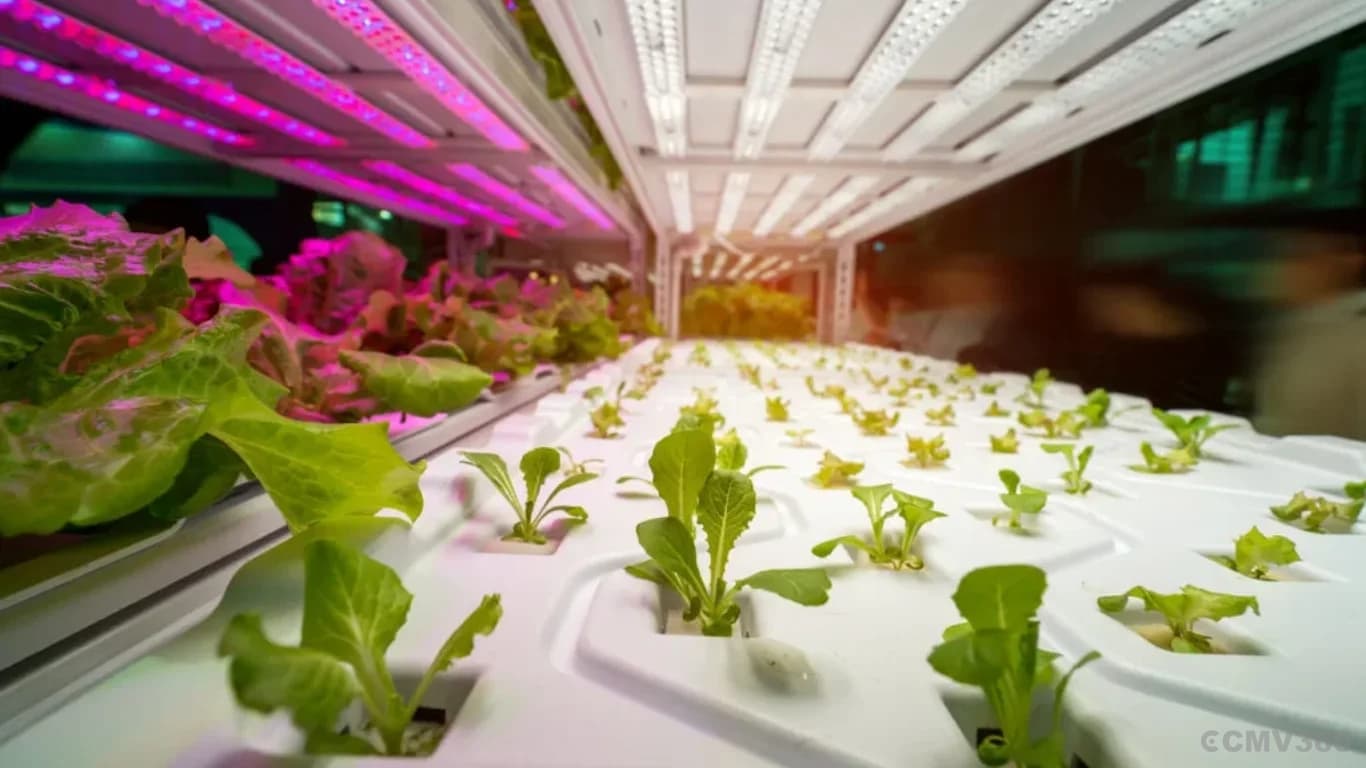
Ideal Configuration:
Light duration: 10 hours
PPFD: 500–800 µmol/m²/s
Distance: 0.6–1.2 meters above canopy
Example Setup:
LED bar: 100–200W
Spacing: 1–2 meters
Timer-controlled system
Step-by-Step Approach
Identify crop type (short-day or long-day)
Choose correct LED spectrum
Set photoperiod timing
Install timer-based lighting system
Use night interruption if required
Monitor plant response and adjust
This LED-based farming approach is especially useful in India because:
Works in open fields and greenhouses
Requires low investment (simple LED bulbs)
Helps farmers earn better prices
Reduces dependency on unpredictable weather
Even small farmers can adopt this system and compete with global standards.
Customized LED spectra for specific crops
AI-based light control systems
Faster flowering cycles (up to 21 days reduction)
Expansion in Indian floriculture sector
The use of LED lights in farming is not just an innovation, it’s a transformation. Farmers are moving from traditional practices to precision agriculture, where light becomes a tool to control plant life cycles.
This technology allows growers to:
Decide when crops bloom
Improve quality and yield
Maximize profits
From glowing flower fields in Tamil Nadu to advanced greenhouses worldwide, LED farming is proving that science and agriculture together can reshape the future of farming.
LED-based photoperiod control is changing how farmers manage flowering crops. By adjusting light duration, spectrum, and timing, growers can decide when plants bloom, improve quality, and increase yields. From simple field setups in India to advanced global greenhouses, this method offers both flexibility and profit advantages. As technology becomes more affordable, LED smart farming is set to play a key role in modern agriculture and help farmers meet market demand more effectively.

About the author
Robin Kumar Attri is a content and video professional with 2.7 years of experience in the commercial vehicle domain. At CMV360, he creates news articles and videos covering trucks, tractors, buses, three-wheelers, and infrastructure machines.






 Add CMV360 on Google