JCB AgriMax vs Tractor Loader: Price, Lifting Capacity, Fuel Efficiency and Key Differences
 Add CMV360 on Google
Compare JCB AgriMax vs tractor loader on price, lifting height, reach, fuel efficiency, operating costs and specifications to find the best machine for your farming requirements in India.

By Robin Kumar Attri

Farmers today need machines that can do more than just plough fields and prepare soil. From loading sugarcane and cotton bales to moving harvested crops, manure, fodder and other agricultural materials, material handling has become an important part of modern farming. Choosing the right loading machine can save time, reduce labour requirements and improve overall farm productivity.
Two popular options worth considering are the JCB AgriMax front-end loader and a tractor with a front-end loader attachment. Both machines help farmers lift, move and load agricultural materials, but their working capabilities, prices and operating costs are quite different.
The JCB AgriMax is a dedicated agricultural loading machine with a 49 HP engine, a purpose-built loader arm and both 2WD and 4WD options. Its higher lifting height makes it suitable for handling bulk materials and loading high-sided trailers. On the other hand, a tractor loader offers greater versatility because the same tractor can be used for cultivation, rotavation, sowing and transportation simply by changing attachments. Brands such as Mahindra and BULL offer tractor front-end loaders for different agricultural requirements.
However, with the JCB AgriMax costing around Rs. 17 lakh and tractor-loader combinations generally requiring a considerably lower investment, which machine offers better value? More importantly, which one delivers better fuel efficiency, lifting performance and long-term savings?
Let's compare the JCB AgriMax with tractor loaders in detail to understand which machine is better for different farming requirements.
Also Read: Top 10 Most Popular JCB Attachments in India in 2026: Uses, Features and Buying Guide
JCB AgriMax vs Tractor Loader: Key Differences
The biggest difference between these machines is their purpose. The JCB AgriMax is designed primarily for repetitive material-handling operations, while a tractor loader is an attachment that converts a regular agricultural tractor into a loading machine.
Parameter | JCB AgriMax | Tractor Loader |
Machine type | Dedicated agricultural loader | Tractor with front-end loader attachment |
Engine power | 49 HP | Depends on tractor |
Drivetrain | 2WD and 4WD options | Depends on tractor |
Primary purpose | Agricultural material handling | Farming and material handling |
Loader attachment | Front-mounted loader arm | Front-mounted loader attachment |
Price | Around Rs. 17 lakh | Around Rs. 2-3 lakh for loader attachment |
Best suited for | Frequent and bulk loading | Occasional loading and regular farming |
JCB AgriMax
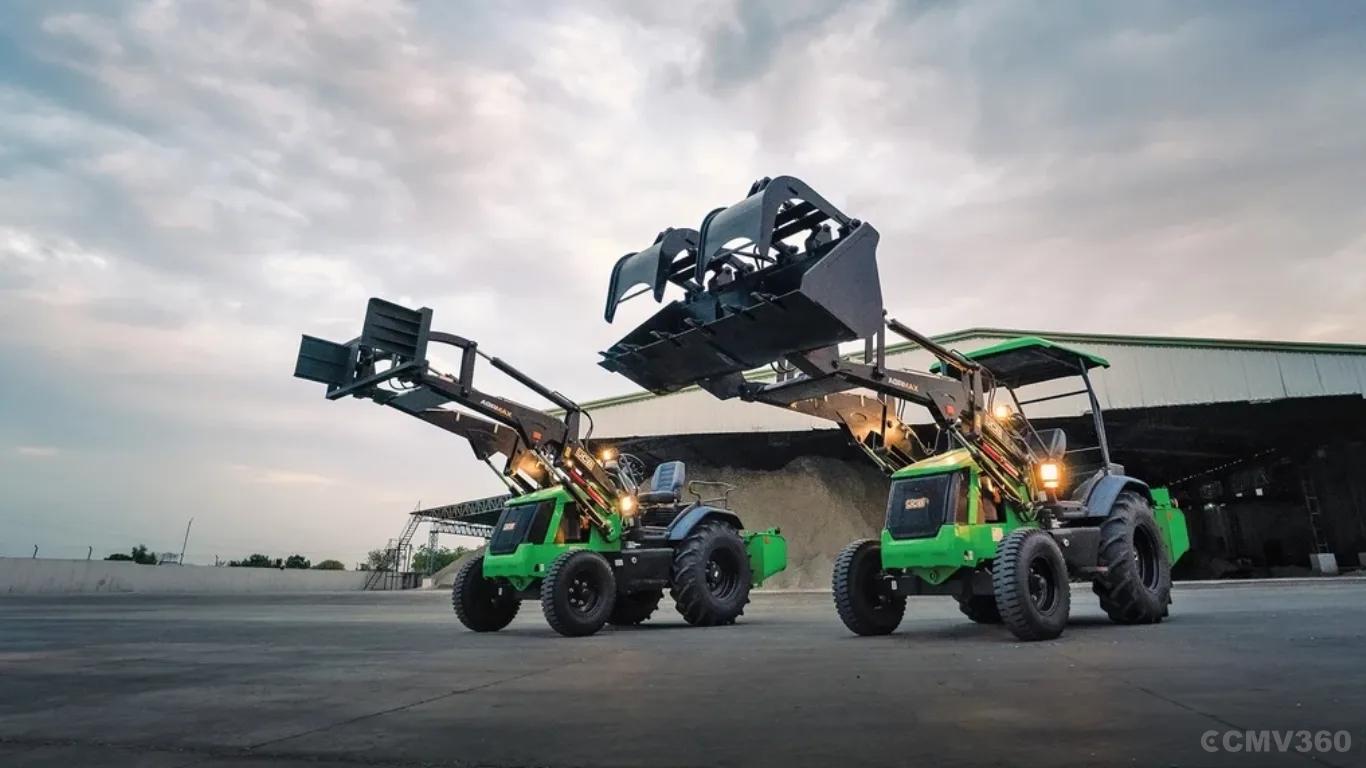
The JCB AgriMax is designed specifically for agricultural material-handling applications. Unlike a regular tractor, which performs multiple farming operations, the AgriMax focuses mainly on lifting, loading and moving materials.
It comes with a front-mounted loading arm that helps operators handle sugarcane, cotton bales, grain bags, fodder, manure and other agricultural materials. This makes it particularly useful for farmers and agricultural businesses that regularly move large quantities of materials.
The machine is available in both 2WD and 4WD configurations. The 4WD variant can be particularly useful when working on uneven, muddy or soft agricultural surfaces where additional traction is required.
JCB AgriMax specifications
Specification | Details |
Engine power | 49 HP |
Engine output | 36 kW |
Transmission | 4 Forward + 2 Reverse |
Fuel tank capacity | 60 litres |
Drivetrain | 2WD and 4WD |
Approximate price | Rs. 17 lakh |
Service interval | 500 hours (JCB claim) |
One of its major advantages is its dedicated loading design. JCB also offers attachments such as sugarcane grabbers and high-dump grab buckets, allowing farmers to choose equipment based on their material-handling needs.
Tractor Loader
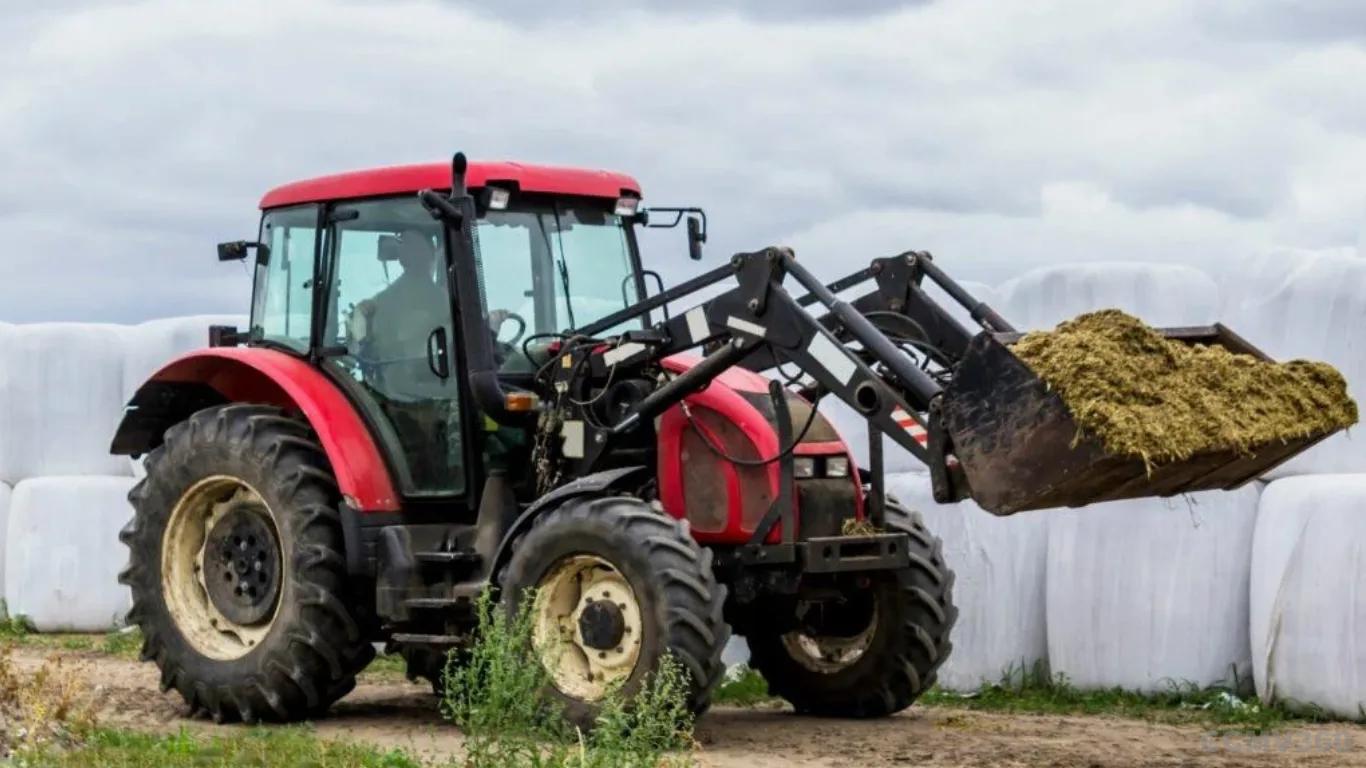
A tractor loader is a front-end attachment fitted to a regular agricultural tractor. It uses the tractor's engine, hydraulic system and powertrain to lift and transport different materials.
Brands such as Mahindra and BULL offer front-end loader solutions that can be paired with compatible tractors.
The biggest advantage is versatility. Once loading work is done, farmers can use the same tractor with other implements, including rotavators, cultivators, and seed drills.
Tractor loaders can be used for:
Loading manure and compost.
Moving soil, sand and loose materials.
Handling fodder and agricultural waste.
Loading suitable materials into trailers.
Moving cotton bales and other farm products with compatible attachments.
Handling materials around farm storage areas.
Popular tractor loader options to consider
Loader model | Maximum pin height | Key capability |
Mahindra 9.5 FX | 2.90 m | General-purpose loading |
Mahindra 10.2 FX | 2.898 m | Material handling and loading |
These specifications help buyers understand the lifting capabilities of different tractor-loader combinations. Actual performance depends on tractor compatibility, bucket configuration and working conditions.
JCB AgriMax vs Tractor Loader: Lifting Height and Reach
Lifting height is one of the most important factors when selecting a loading machine. Farmers who regularly load sugarcane, cotton bales, grain bags and other materials into high-sided trucks or trailers need sufficient lifting height and reach.
The JCB AgriMax offers a maximum pin height of 3.71 metres, which is considerably higher than the 2.90 metres offered by the Mahindra 9.5 FX.
Lifting height and reach comparison
Specification | JCB AgriMax | Mahindra 9.5 FX | Mahindra 10.2 FX |
Maximum pin height | 3.71 m | 2.90 m | 2.898 m |
Horizontal bucket height | - | 2.65 m | - |
Dumped bucket height | - | 2.20 m | - |
Booster bucket height | Not applicable to standard specification | 3.30 m | - |
Dump height at 45° | - | - | 3.110 m |
Reach at full height | - | - | 952 mm |
Reach at ground level | - | - | 2,150 mm |
Working depth | - | 0.15 m | 0.15 m |
The AgriMax's 3.71-metre pin height gives it an advantage when loading high-sided vehicles and agricultural trailers. Meanwhile, the Mahindra 9.5 FX offers a maximum height of 3.30 metres with its booster bucket, which is a different bucket configuration from the standard general-purpose setup.
The Mahindra 10.2 FX offers a dump height of 3.110 metres at 45 degrees and a ground-level reach of 2,150 mm. It is important to understand that pin height, bucket dump height and actual loading height are different measurements. Buyers should check the exact bucket configuration before making a purchase.
Operating Cost and Fuel Efficiency: Which Is More Economical?
Fuel consumption and maintenance expenses play an important role in determining the long-term cost of owning a loading machine.
The JCB AgriMax comes with a 49 HP diesel engine and a 60-litre fuel tank. JCB claims lower fuel consumption and extended 500-hour service intervals to help reduce operating expenses. However, an official litres-per-hour fuel consumption figure is - for the Indian model.
A tractor loader, meanwhile, uses the fuel consumed by its host tractor. Its actual consumption depends on engine horsepower, load weight, ground conditions, operator technique and the type of attachment being used.
Cost factor | JCB AgriMax | Tractor Loader |
Fuel consumption | JCB claims fuel-efficient performance; no official L/hour figure published | Depends on the tractor |
Fuel tank | 60 litres | Depends on tractor |
Service interval | 500 hours claimed | Depends on tractor manufacturer |
Maintenance | Integrated machine components | Tractor and loader require maintenance |
Tyre wear | Heavy-duty loader tyres | Additional wear during loading operations |
Versatility | Primarily loading operations | Farming, transportation and loading |
The AgriMax has one integrated machine system covering its engine, transmission, torque converter, hydraulics, loader arm and axles. A tractor-loader combination requires maintenance of both the tractor and the attachment, including hydraulic hoses, pins, cylinders and mounting hardware.
However, a tractor-loader can offer better overall value because the tractor remains useful for other agricultural activities.
An important factor is fuel consumption per tonne loaded. A machine consuming more diesel per hour may still be more economical if it completes loading work faster and moves more material in the same period.
For example:
A tractor loader consuming 2.5 litres per hour and loading 4 tonnes per hour uses approximately 0.63 litres per tonne.
A dedicated loader consuming 3 litres per hour and loading 6 tonnes per hour uses approximately 0.50 litres per tonne.
These are illustrative figures, not certified manufacturer fuel-consumption figures. Actual performance should be checked through a practical demonstration.
JCB AgriMax vs Tractor Loader: Price Comparison
Price is another major difference between these machines.
The JCB AgriMax has an approximate starting price of Rs. 17 lakh. Meanwhile, a tractor loader attachment generally costs around Rs. 2-3 lakh.
A regular tractor can cost around Rs. 2.44 lakh onwards, while 40-50 HP tractor models are generally available in the Rs. 6-8 lakh range, depending on the brand and model.
Purchase requirement | Approximate price |
JCB AgriMax | Rs. 17 lakh |
Tractor loader attachment | Rs. 2-3 lakh |
40-50 HP tractor | Rs. 6-8 lakh |
Tractor and loader combination | Rs. 8-11 lakh |
These are indicative prices and can vary depending on the model, location, dealer, attachments and taxes.
Buyers should also remember that the standard AgriMax price may not include the front attachment, canopy/hood and LiveLink. Therefore, the final ready-to-work price should be confirmed with the dealer.
Which Machine Is Better for Different Farming Requirements?
Both machines have their own advantages, and the right choice depends on how frequently loading work is performed.
Farming requirement | Better choice | Reason |
Loading high-sided trucks | JCB AgriMax | Higher 3.71 m pin height |
Regular sugarcane loading | JCB AgriMax | Dedicated loading design and grab attachments |
Handling cotton bales | JCB AgriMax | Suitable material-handling attachments |
Occasional farm loading | Tractor loader | Lower initial investment |
Cultivation and loading | Tractor loader | Supports multiple farming implements |
Working on soft or uneven ground | JCB AgriMax 4WD | Dedicated 4WD configuration |
Lower purchase budget | Tractor loader | More affordable combination |
Continuous bulk loading | JCB AgriMax | Designed for repetitive loading operations |
For example, a sugarcane farmer handling several trolley loads every day may benefit from the AgriMax's higher lifting height and dedicated loading capabilities.
However, a farmer who primarily uses a tractor for ploughing, rotavation, cultivation and transportation may find a tractor loader more practical.
Can JCB AgriMax Be Used for Construction Work?
The JCB AgriMax is primarily designed for agricultural material handling, but it can also help with certain small material-moving activities.
With suitable attachments, operators can move sand, soil and other loose materials around a worksite. However, it cannot replace a dedicated backhoe loader or excavator.
Backhoe loaders and excavators are designed for digging trenches, removing soil and excavating foundations. The AgriMax does not have the same digging arrangement.
Therefore, buyers should consider it primarily for agricultural loading rather than expecting it to perform every construction-related operation.
What Should Buyers Check Before Purchasing?
Before investing in either machine, farmers should compare the actual performance and ownership costs rather than relying only on engine power or purchase price.
Important points to check include:
Fuel consumption in litres per hour at different load conditions.
Fuel consumed per tonne of material loaded.
Maximum lifting height, bucket dump height and reach.
Safe lifting capacity for the selected attachment.
Bucket capacity and compatibility with the tractor or loader.
Hydraulic hose, quick-coupler and additional spool-valve costs.
Service-kit prices, labour charges and warranty coverage.
Tyre replacement expenses and expected maintenance requirements.
A practical demonstration using the actual material and trailer.
These checks can help buyers understand how the machine will perform in their daily operations.
Also Read: Types of Road Rollers in India: Best Models, Specifications, Uses and Prices in 2026
CMV360 Says
The JCB AgriMax and tractor loader serve different agricultural requirements. The AgriMax is a stronger consideration for farmers and agricultural businesses involved in frequent bulk loading, high-sided trailer operations and repetitive material handling. Its 3.71-metre pin height and dedicated loading design offer important advantages. Meanwhile, a tractor loader is a more affordable and versatile option for farmers who need loading support alongside regular farming activities. Ultimately, the right choice depends on daily workload, lifting requirements, existing machinery and budget.

Robin Kumar Attri is a content and video professional with 2.7 years of experience in the commercial vehicle d .....