Tata Motors Says EV Penetration in SCV-Pickup Segment Nears 10%
 Add CMV360 on Google
Tata Motors says EV penetration in SCV pickups nears 10%, with demand rising as charging expands and higher fuel prices improve electric vehicle economics.

By Akansha Trivedi

Key Highlights
EV penetration in SCV pickups nears 10%.
Adoption is expected to rise in H2 FY27.
Demand is growing in Tier 2 and Tier 3 towns.
Tata Motors received over 3,400 electric CV orders.
Battery cell shortages are affecting EV supply.
Electric vehicle (EV) adoption in India’s small commercial vehicle (SCV) and pickup segment is gaining momentum, with penetration now reaching close to 10%, according to Tata Motors. The company expects electric commercial vehicle demand to grow further in the second half of FY27, supported by improving cost economics, higher diesel and CNG prices and a wider charging network.
EV Adoption Gains Momentum in SCV Pickups
Girish Wagh, Managing Director and CEO of Tata Motors, said during the company’s Q1 FY27 media call that EV penetration in the SCV pickup segment has reached nearly 10%.
He explained that rising diesel and CNG prices have made electric commercial vehicles more attractive for customers. The higher running costs of conventional vehicles are helping EVs achieve total cost of ownership (TCO) parity earlier in their operating life.
As a result, customers can recover the higher initial cost of an electric vehicle more quickly through lower operating expenses.
Tata Motors has also witnessed a significant increase in demand for smaller electric commercial vehicles. At the same time, the company is receiving more enquiries from customers looking to electrify their light, intermediate and heavy commercial vehicle fleets.
The company expects EV penetration to improve further as the financial year progresses, particularly during the latter half of FY27.
EV Demand Expands to Tier 2 and Tier 3 Towns
Electric commercial vehicle demand is no longer limited to major cities. Tata Motors said its electric SCVs are increasingly being sold in Tier 2 and Tier 3 towns as charging infrastructure continues to expand.
The company is working with several partners to improve charging availability across different markets. According to Tata Motors, the expansion of the charging network has gathered momentum and is helping electric commercial vehicles gain acceptance outside metros and major urban centres.
Better charging access, combined with improving vehicle economics, could further support EV adoption among small businesses, fleet operators and logistics customers in smaller cities and towns.
Tata Motors Gets Over 3,400 Electric CV Orders
Tata Motors received orders for more than 3,400 electric commercial vehicles during the June quarter. These orders cover freight, logistics and passenger mobility applications.
The company also has an electric bus order book of around 850-900 units from government and private customers.
Government orders include electric buses for Chennai, Ahmedabad, Odisha and Hyderabad. Tata Motors has already started deliveries of these buses and expects to execute most of the existing order book during Q2 and Q3 of FY27. Some deliveries are expected to continue into Q4.
Battery Cell Shortage Creates Supply Challenges
The strong growth in EV demand is also putting pressure on the electric vehicle supply chain. Tata Motors is currently facing shortages of some imported components, particularly battery cells.
Battery cells have longer procurement lead times, making it difficult to immediately match rising demand with supply. The company has started taking measures to improve the availability of key components and expects the supply bottlenecks to ease gradually.
Tata Motors expects the EV supply chain situation to improve towards the end of Q2 FY27, which should help increase vehicle availability.
EV Range Covers SCVs to Heavy Commercial Vehicles
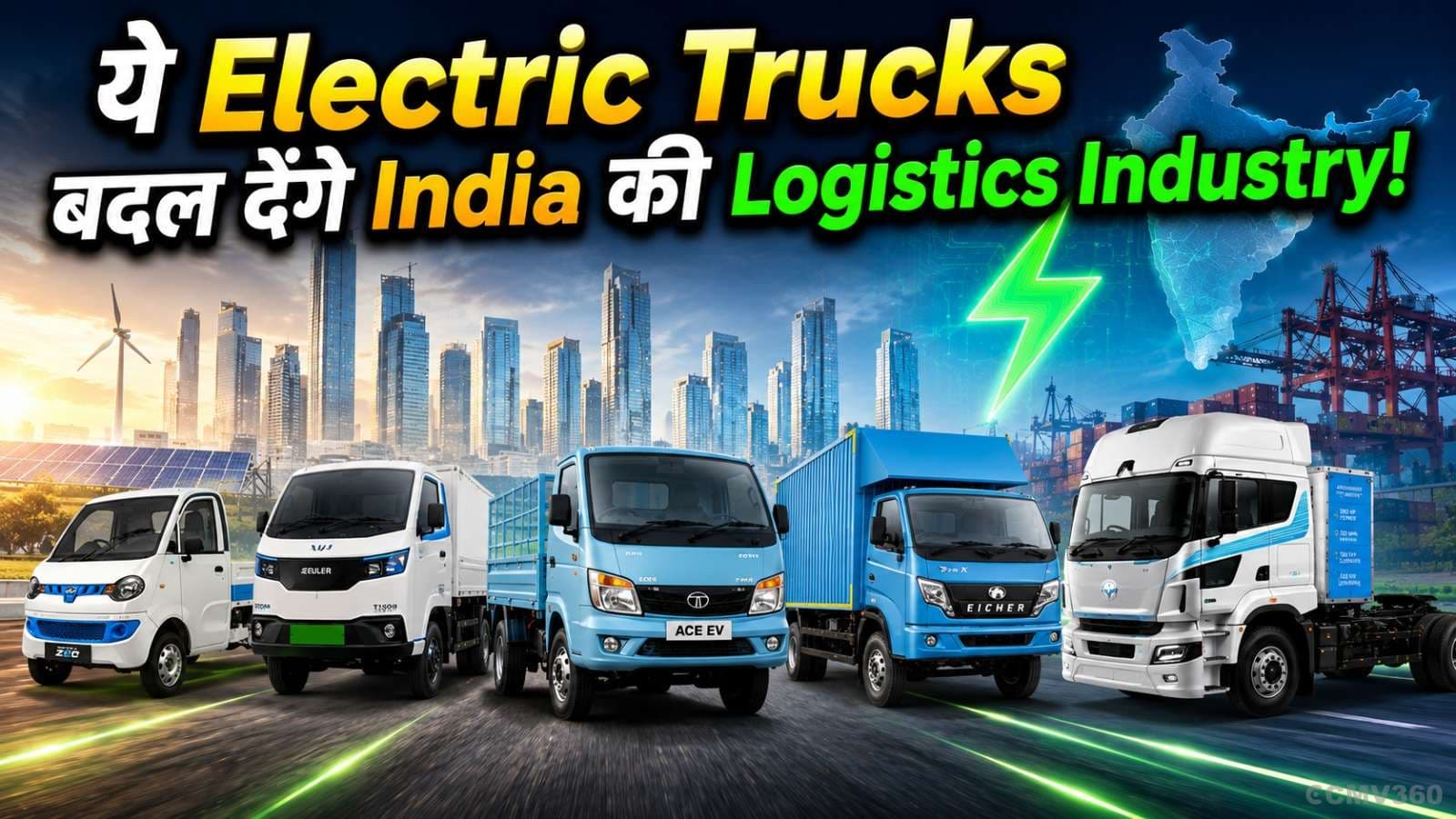
Tata Motors said its electric commercial vehicle portfolio has been developed in India and covers a wide range of applications. The lineup extends from the Ace Pro in the small commercial vehicle category to a 55-tonne electric tractor.
The company also stated that its electric commercial vehicle range meets domestic value-addition requirements, highlighting the extent of local engineering and manufacturing involved in its EV portfolio.
What This Means for India's Electric CV Market
The near-10% EV penetration in the SCV-pickup segment shows that electric commercial vehicles are moving beyond the early adoption stage. Higher diesel and CNG prices, lower running costs and expanding charging infrastructure are making EVs increasingly viable for commercial users.
With demand spreading to Tier 2 and Tier 3 towns, fleet electrification enquiries increasing and Tata Motors expecting stronger adoption in the second half of FY27, the electric commercial vehicle market could see further growth. However, resolving battery cell and component supply constraints will remain important for meeting the rising demand.
Also Read: Tata Motors CV Exports Jump 35% as Indonesia, Africa Offset West Asia Disruption
CMV360 Says
Tata Motors expects electric commercial vehicle adoption to accelerate in the second half of FY27 as higher diesel and CNG prices improve EV economics. Near-10% penetration in SCV pickups, growing demand from smaller cities, expanding charging infrastructure and strong electric CV orders indicate rising customer acceptance. However, battery cell shortages remain a challenge. Easing supply constraints could help Tata Motors meet growing demand across freight, logistics, passenger mobility and electric buses.

Hello! I'm Akansha. I write news and articles on buses, three-wheelers, trucks, and everything in between at C .....