Ashok Leyland's Ambitious Plan: From 30 to 200 Software Engineers in 3 Years
 Add CMV360 on Google
Strict rules and the ADAS (Advanced Driver Assistance System) trend are projected to be significant drivers of softwarisation in commercial vehicles.

By Priya Singh
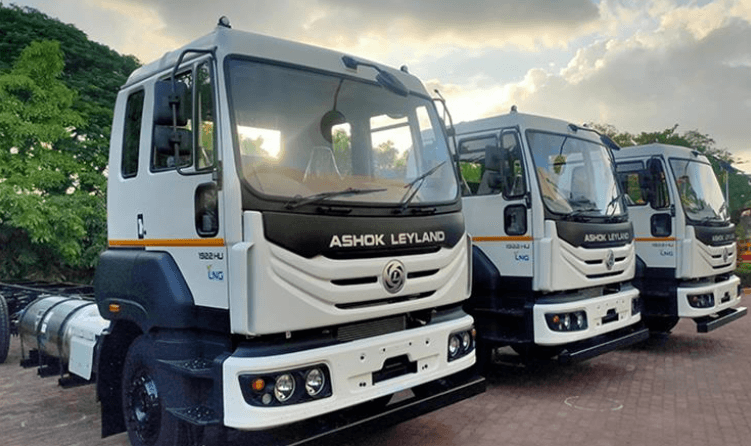
Key Highlights:
• Ashok Leyland aims to grow its software engineering team from 30 to 200 engineers within three years.
• The company is embracing the software-defined vehicles trend to stay competitive in the commercial vehicle industry.
• Engineers prioritize software for driver monitoring and emission regulation over traditional entertainment systems.
• Ashok Leyland adopts a multi-level approach to build software capabilities, including hiring, commissioning projects, and training fresh graduates.
• With a long-term vision, the company seeks to lead in innovation and efficiency within the commercial vehicle sector.
In a strategic move that signals a transformative shift in the commercial vehicle industry, Ashok Leyland is steering towards the future with a significant expansion of its software engineering team.
The Chennai-based technical center of this commercial vehicle giant is buzzing with activity as it gears up to embrace the software-defined vehicles (SDVs) trend, which has already made its mark in the passenger vehicle sector.
Softwarisation and decarbonisation are the two primary concepts that are redefining vehicle OEMs' technology plans. Together, these two developments are keeping engineers busier than ever at Chennai's technical centre for commercial vehicle manufacturer Ashok Leyland.
Softwarisation or the SDV (Software-Defined Vehicle) trend is currently evident in passenger vehicles but is also entering the commercial vehicle market. Softwarisation levels in India may be lower than those in Europe or North America. However, it is predicted to be much higher than current levels.
Ashok Leyland’s Leap into the Future: The company has recently formed a dedicated team of around 30 software engineers, a move that took place just 9 or 10 months ago. This team is at the forefront of preparing for the major softwarisation of commercial vehicles.
"Our ambition is to grow it to at least 150-200 engineers in the next three years," N Saravanan, Ashok Leyland's CTO, told ETAuto.
Software Over Mechanics: Instead of developing software for high-end entertainment systems like those found in automobiles, these engineers are working on more important projects like sophisticated software for driver monitoring systems, after-treatment systems that regulate emission levels, and slightly less important instrument clusters, among other things.
Strict rules and the ADAS (Advanced Driver Assistance System) trend are projected to be significant drivers of softwarisation in commercial vehicles.
Building Capabilities from Scratch: Saravanan acknowledges the challenges in building software capabilities from the scratch, especially in a predominantly mechanical industry.
The talent hunt is on, and instead of hiring entire teams from the market, which can be prohibitively expensive, Ashok Leyland is adopting a multi-level approach. This includes hiring key talent for specific areas, commissioning projects for engineering services firms, engaging independent technology experts, and hiring fresh graduates in large numbers to invest in their training.
A Roadmap for Control and Innovation: With a medium and long-term roadmap, Ashok Leyland aims to have much better control over the future of its vehicles. The company’s technical center, which already boasts a team of around 2,000 people, including contract engineers, is set to see a rise in the proportion of software engineers as the SDV trend gradually encompasses commercial vehicles as well.
The strategy involves hiring key talent for specific areas, commissioning projects to engineering services firms like Hinduja Tech, engaging independent technology experts, and hiring and training fresh graduates to build capabilities previously not required in the highly mechanical commercial vehicle industry, such as OTA (Over the Air) updatability, which is becoming more common in passenger vehicles.
With the introduction of the BSVI era in April 2020, Ashok Leyland claims to be the first CV OEM in India to provide OTA updates for some of its vehicles' ECUs (Electronic Control Units).
Ashok Leyland's efforts to establish in-house expertise follow an industry trend that has seen the world's largest truck manufacturer, Daimler Truck, produce its own OS (Operating System). The operating system, which is currently being developed at the OEM's global technology center in Bengaluru, is scheduled to be available in Daimler's truck brands by the end of this decade or early in the next.
Saravanan predicts that in the next five years, OEMs would prioritize providing value in-house for electronics and software in CVs, rather than simply purchasing and integrating them. And the motivating reason may not be solely money. It may also be to save time that would otherwise be spent troubleshooting in the integration process.
By building in-house software capabilities, Ashok Leyland is positioning itself to be at the cutting edge of vehicle technology, ensuring that its future medium and heavy commercial vehicles (M&HCVs) are not only compliant with the latest standards but are also leading the way in innovation and efficiency.
Also Read: Ashok Leyland Inks MoU with South Indian Bank for Dealer Finance Program
CMV360 Says
Ashok Leyland's ambitious plan to expand its software engineering team from 30 to 200 engineers within three years marks a strategic move towards embracing software-defined vehicles (SDVs) in the commercial vehicle industry.
By prioritizing in-house expertise and innovation, the company aims to lead the way in developing sophisticated software for essential vehicle systems, positioning itself at the forefront of automotive technology.

Hi there! I'm Priya. From trucks to vans and everything in between, I'm here to provide you with up-to-date in .....