Tata Motors Flags 10% Import Duty Anomaly on Electric Truck Tractors
 Add CMV360 on Google
Tata Motors seeks review of 10% import duty on electric truck tractors to boost local EV engineering, manufacturing and supply chain development in India.

By Robin Kumar Attri

Key Highlights
Tata Motors flags 10% import duty as an anomaly.
Issue raised with government through SIAM.
MHI has taken up the matter with Finance Ministry.
Tata’s EV range is engineered completely in India.
EV penetration in small CVs nears 10%.
Tata Motors has raised concerns over India’s current 10% basic customs duty on electric truck tractors, calling the tariff structure an “anomaly” that needs to be corrected to support local engineering and manufacturing of electric commercial vehicles.
The company has taken up the matter with the government through the Society of Indian Automobile Manufacturers (SIAM). Tata Motors Managing Director and CEO Girish Wagh said during the company’s Q1 FY27 earnings call that the Ministry of Heavy Industries (MHI) has also raised the issue with the Ministry of Finance.
Tata Motors Seeks Correction in Electric Tractor Duty Structure
According to Wagh, electric tractors used to pull semi-trailers appear to have been missed from the existing duty structure, allowing them to attract only a 10% basic customs duty.
In commercial vehicle terminology, a tractor refers to the powered truck unit that pulls a semi-trailer and is different from an agricultural tractor.
SIAM’s current tax and duty database places electric semi-trailer tractors under HS heading 8701, with a 10% basic customs duty. Diesel, diesel-hybrid and petrol-hybrid semi-trailer tractors are also listed with a 10% basic customs duty.
Tata Motors has not disclosed what revised tariff it wants or whether it is seeking a separate duty structure specifically for electric tractor units. The company’s position is that the existing 10% duty should be reviewed to encourage domestic engineering and manufacturing.
Wagh said Tata Motors appreciates that MHI has already taken up the issue and requested the Ministry of Finance to correct what the company considers a tariff anomaly.
Tata Motors Highlights India-Engineered EV Portfolio
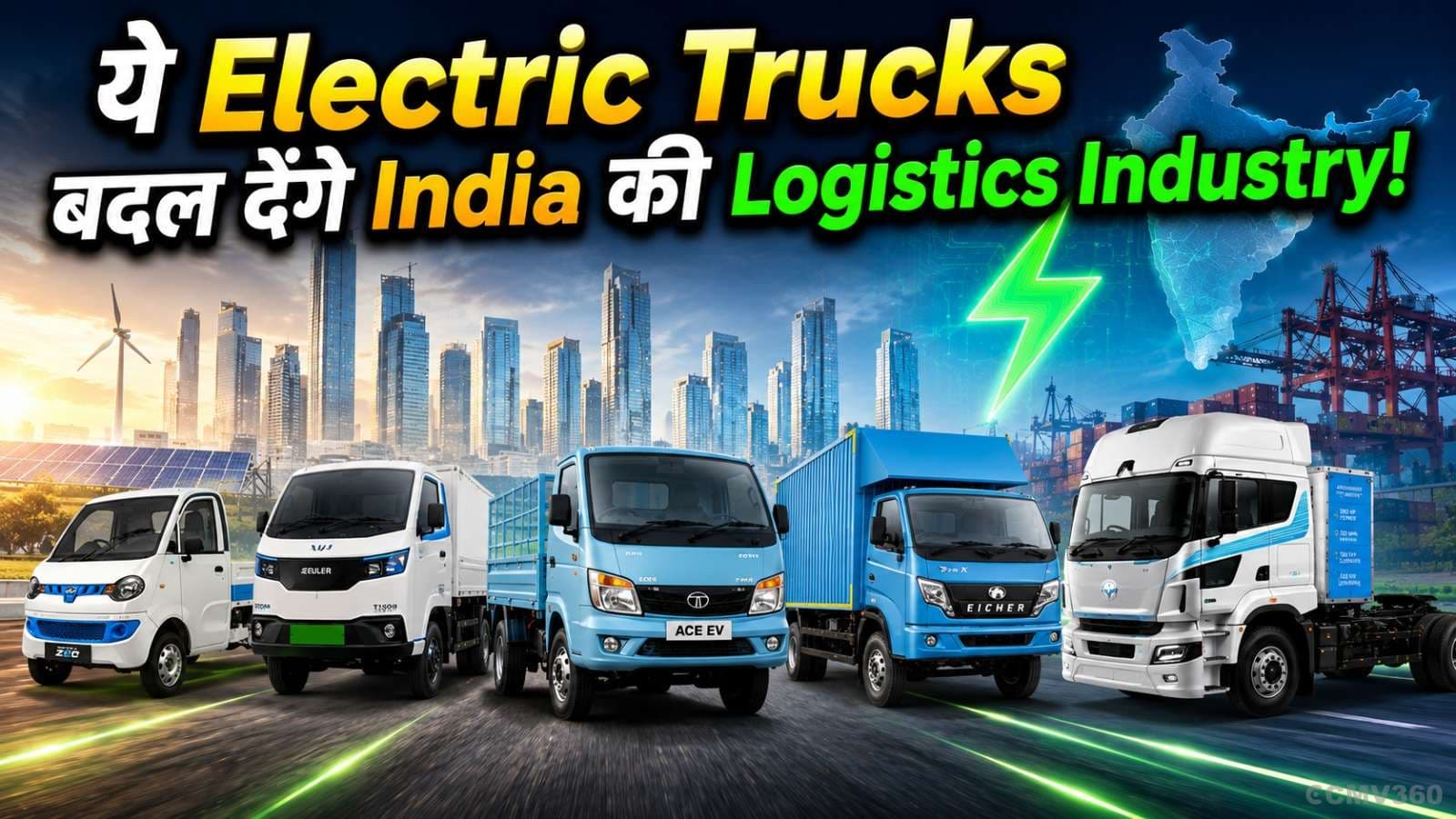
The issue has gained importance as India’s electric commercial vehicle market expands beyond smaller urban cargo vehicles into buses and heavier freight applications.
Tata Motors said its electric commercial vehicle portfolio, ranging from the Ace Pro to a 55-tonne electric tractor, has been completely engineered in India.
The company also said its electric commercial vehicles meet domestic value-addition requirements. According to Tata Motors, its strategy is not limited to vehicle electrification for decarbonisation but also includes developing a strong domestic supply chain and building a sustainable electric vehicle ecosystem in India.
Wagh said correcting the duty structure is important for promoting local engineering and a vertically integrated electric vehicle value chain.
Tata Motors did not name any overseas manufacturer or imported electric truck platform while making its case. It also did not disclose how many electric tractor units are currently being imported into India.
Electric Commercial Vehicle Adoption Is Expanding
Tata Motors is seeing electric vehicle adoption spread across multiple commercial vehicle applications.
During the quarter, the company secured more than 3,400 electric vehicle orders across freight, logistics and passenger mobility segments.
Electric adoption is also increasing in the smaller commercial vehicle and pickup segment. Wagh said EV penetration in this category has reached close to 10% for Tata Motors.
The company believes changes in operating economics are helping drive this demand. Higher diesel and CNG prices have improved the relative economics of electric commercial vehicles, bringing the point of total cost of ownership parity with conventional vehicles closer.
Tata Motors said it has witnessed a significant rise in demand for smaller electric vehicles and increasing customer interest in electrification across light, medium and heavy commercial vehicles. The company expects EV penetration to improve further during the second half of the financial year.
Imported Battery Cells Remain a Supply Chain Challenge
While Tata Motors is pushing for greater localisation of electric commercial vehicles, the company continues to face challenges in parts of the EV supply chain.
During the earnings call, Tata Motors acknowledged a shortage of some imported materials, particularly battery cells, which have long lead times.
The company said it has taken measures to address the shortage and expects these EV supply-chain bottlenecks to gradually ease towards the end of the second quarter.
This highlights a wider challenge for India’s EV industry. Localising vehicle engineering and manufacturing needs to go hand in hand with increasing domestic content across critical components and raw materials.
What Tata Motors Import Duty Demand Means for India’s EV Industry
Tata Motors call for a review of the 10% import duty comes at a time when India is trying to expand electric commercial vehicle adoption while building a stronger domestic manufacturing ecosystem.
The company wants the tariff structure to support locally engineered electric commercial vehicles rather than create an advantage for imported products. At the same time, its comments on imported battery cells show that localisation remains a work in progress across the wider EV supply chain.
For now, Tata Motors has not specified the tariff rate it wants. Its stated position is that the existing 10% basic customs duty on electric truck tractors should be revisited.
The broader objective is to encourage domestic engineering, increase local value addition and build a vertically integrated electric commercial vehicle ecosystem in India as electrification moves into heavier freight applications.
Also Read: Tata Motors Says EV Penetration in SCV-Pickup Segment Nears 10%
CMV360 Says
Tata Motors call to review the 10% import duty on electric truck tractors highlights the need for a tariff structure that supports domestic EV engineering and manufacturing. As electric commercial vehicle adoption expands, stronger local supply chains will become increasingly important. While Tata Motors continues to face imported battery cell shortages, its focus remains on building India-engineered electric CVs and a sustainable, vertically integrated EV ecosystem.

Robin Kumar Attri is a content and video professional with 2.7 years of experience in the commercial vehicle d .....