JBM Auto Climbs the Electric Bus Ladder in FY26, Emerges as a Strong Market Leader
 Add CMV360 on Google
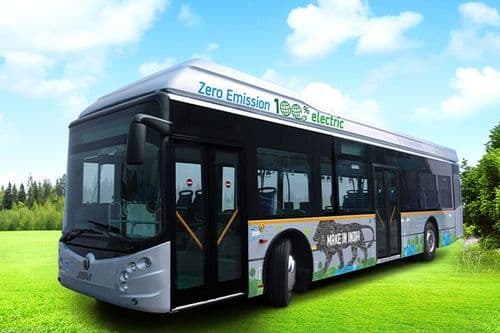
JBM Auto emerges as a leader in the FY26 electric bus market. With Telangana included, it secures the No.1 position, highlighting strong growth and rising dominance in India’s EV bus segment.

By Robin Kumar Attri

Key Highlights
JBM Auto ranks No. 2 with 1,149 e-buses (22.8% share) as per Vahan data excluding Telangana.
Including Telangana, the total rises to 1,282 e-buses with ~24% market share.
JBM Auto moves to the No. 1 position when full data is considered.
Telangana’s non-inclusion in Vahan significantly impacts market rankings.
Strong FY26 performance highlights JBM’s growing dominance in the electric bus segment.
India’s electric mobility journey is picking up serious pace, and the electric bus segment is quietly becoming one of its strongest pillars. As FY26 closes, fresh data reveals a significant shift in market dynamics, one that places JBM Auto firmly among the top players, and in some cases, right at the top.
A Closer Look at the Numbers
Based on data from the Vahan Portal, JBM Auto has secured the No. 2 position in India’s electric bus market for FY26, if Telangana registrations are excluded.
1,149 electric buses registered
22.8% market share
These numbers alone highlight the company’s strong execution and growing presence across key state transport undertakings and urban mobility projects.
However, the real story unfolds when Telangana is factored in.
The Telangana Factor Changes the Game
Telangana, one of the early adopters of electric buses in public transport, does not fully reflect in the Vahan database. When its numbers are included, the market standings shift notably.
With Telangana added:
Total electric buses: 1,282 units
Market share: ~24%
JBM Auto moves to the No. 1 position
This adjustment is more than just statistical, it reshapes the competitive narrative. It shows that JBM Auto’s footprint is deeper than what standard datasets suggest, especially in states aggressively pushing EV adoption.
A Market in Transition
From a broader lens, FY26 has been a defining year for India’s electric bus ecosystem. Government-backed initiatives, city-level electrification drives, and rising demand for sustainable public transport have all contributed to strong deployment numbers.
JBM Auto’s rise reflects a combination of:
Early investments in EV technology
Strong partnerships with state transport bodies
Scalable manufacturing and delivery capabilities
What This Means for the Industry
For industry watchers, this development signals two key trends:
1. Data gaps still influence perception: Market rankings can shift significantly depending on data coverage. Telangana’s exclusion from Vahan highlights the need for more unified and transparent reporting systems.
2. Competition is intensifying: With players like JBM Auto scaling rapidly, the electric bus segment is moving from early adoption to a more competitive, volume-driven phase.
Also Read: Mahindra Last Mile Mobility Leads Indian Electric Commercial Vehicle Market in FY2026
CMV360 Says
As a senior observer of India’s commercial vehicle landscape, one thing is clear, FY26 is not just about growth, but about redefining leadership.
JBM Auto’s performance, especially when viewed with complete data, positions it not just as a participant but as a front-runner shaping the future of electric public mobility in India.

Robin Kumar Attri is a content and video professional with 2.7 years of experience in the commercial vehicle d .....