Tractors
Trucks
- Find by Budget
- Find by Type

English
 New Delhi
Ashok Leyland, a leading player in the commercial vehicle industry, has announced its highly anticipated roadmap for the future.

By Priya Singh
The company hopes to enter the sub-2.0 tonne segment, where it is currently absent and has set a market share objective of 25% in the 2.0-5.0 tonne segment.
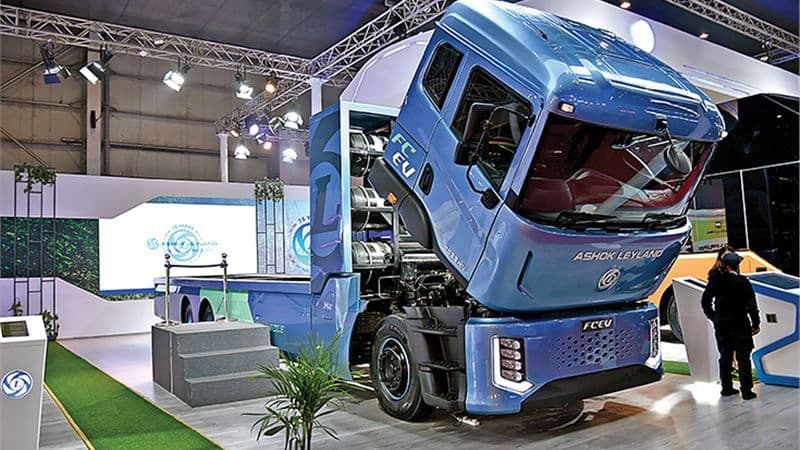
In an exciting development, Ashok Leyland, a leading player in the commercial vehicle industry, has announced its highly anticipated roadmap for the future. The company, known for its innovative approach and commitment to sustainable mobility solutions, aims to revolutionize the industry with a series of strategic initiatives.
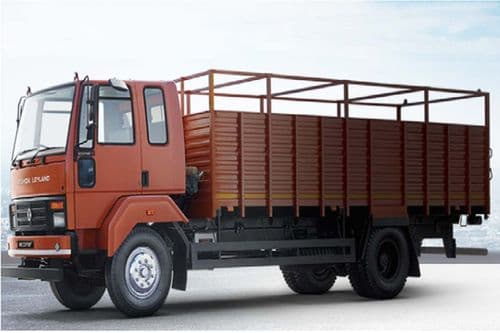
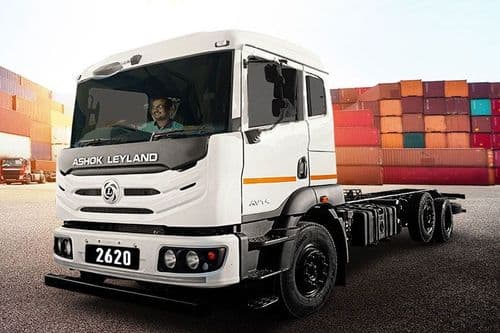
In a June investor meeting, the business stated its goal of achieving a 35 per cent market share in intermediate, medium, and heavy commercial vehicles weighing 11 to 55 tonnes. This will put the company on track to eventually break into the top ten worldwide commercial vehicle manufacturers.
To increase its volumes even further, the company stated its plan to enter the sub-2.0 tonne class, potentially entering 35 per cent of the overall Indian commercial vehicle market.
Along with the product portfolio expansion, a variety of new energy vehicles such as CNG, LNG, Hydrogen-ICE, Hydrogen Fuel Cell, and EVs will be developed to assist the company remain competitive as the market shifts toward lower carbon emission technologies.
Shenu Agarwal, Managing Director and Chief Executive Officer of Ashok Leyland presented six future goals during the investor presentation.
According to the corporation, the rapidly expanding Indian commercial vehicle industry provides a favourable environment for Ashok Leyland to accelerate its growth.
Furthermore, the business believes that the truck market in India will rise fourfold by 2050. The light commercial vehicle (LCV) market is predicted to rise three and a half times to 1.35 million by 2042, with the 2-3.5-tonne sector strengthening its dominance.
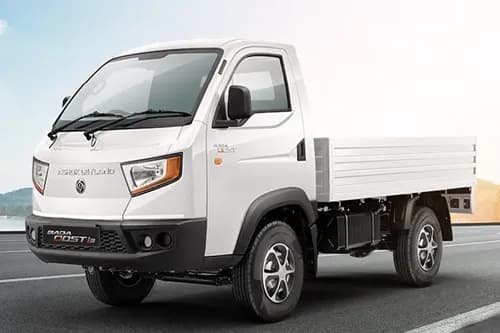
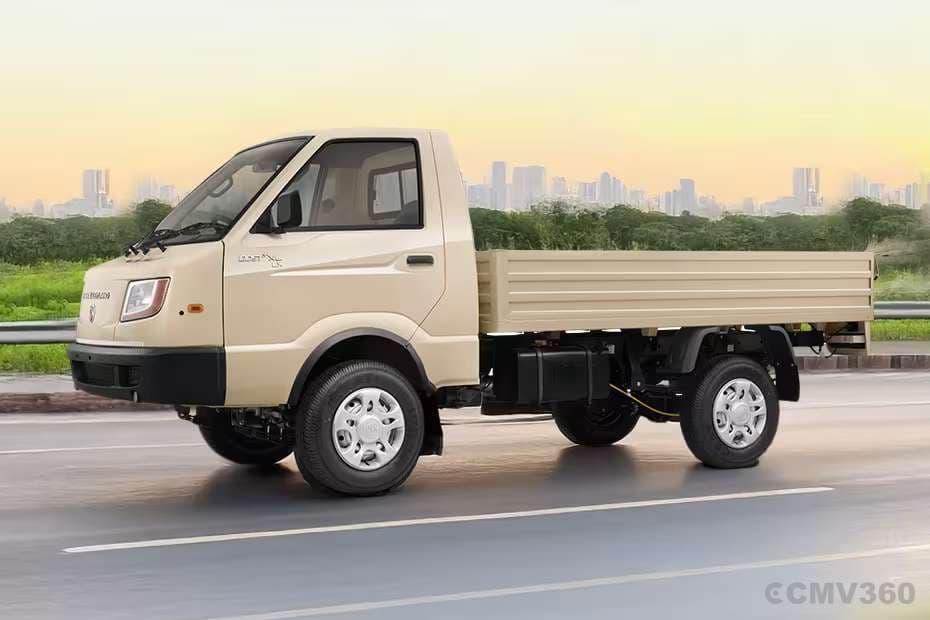
The Indian small commercial vehicle market, which includes pick-up trucks, is divided into three key segments. There is a sub-one tonne market dominated by Tata Ace, a 1-2 tonne segment with products from Mahindra pickup trucks and Tata Intra and a 2-3.5 tonne segment with Ashok Leyland's own Dost.
The company hopes to enter the sub-2.0 tonne area, where it is currently absent and has set a market share objective of 25% in the 2.0-5.0 tonne segment.
The upbeat remarks follow the company's record achievement in fiscal year 23. Revenue increased by 67 per cent year on year to Rs 36,144 crore, while EBITDA increased threefold to Rs 2,931 crore and operating profit increased 119 times to Rs 2,026 crore. The company's highest-ever material cost cuts aided the solid profit. At the end of the fiscal year, the company had no debt and a solid cash surplus of Rs 273 crore.
Over the last six quarters, Ashok Leyland's market share for medium and heavy commercial vehicles has increased by 1,000 basis points, or 10 percentage points, to 32 per cent. The EBIDTA margin (earnings before interest, depreciation, taxes, and amortisation) was 11 per cent at the end of the previous fiscal year.
Ashok Leyland also increased its foreign volumes by 2%, despite the fact that the industry's overall commercial vehicle exports fell by more than 30% due to the worldwide recessionary trend. The company noted that the desire for renewable energy sources and electric automobiles was what motivated this.
Also Read: Ashok Leyland Is Set To Launch Its First Four-Wheeled Electric Small CVs Soon
While Ashok Leyland's conventional fuel expansion continues, the company is planning to complete its new energy portfolio within the next few years. The business intends to sell a variety of clean-fuel automobiles, including CNG, LNG, hydrogen ICE, hydrogen-powered fuel cell electric vehicles, and six battery electric vehicles.
For the past eight years, the corporation claims to have invested extensively in research and development (R&D) for new energy technology. It has already developed prototypes for vehicles powered by compressed natural gas (CNG), liquefied natural gas (LNG), hydrogen, and batteries.
The announcement comes after the Hinduja Group's flagship company unveiled a slew of products at the Auto Expo 2023 in Delhi earlier this year, including a battery electric vehicle, a fuel cell electric vehicle, a hydrogen internal combustion engine (ICE), an LNG vehicle, an intercity CNG bus, and a mini passenger bus.
With its domestic expansion ambitions on track, Ashok Leyland hopes to expand its foreign business by gradually approaching more complex markets with a new product line. With the extension of its product line, the company will be able to participate in 2.5 lakh units of addressable markets in SAARC, Africa, the GCC, ASEAN, the CIS, and North Africa.
Ashok Leyland has added 10 more nations in West Africa and Southern Africa in the previous several years, bringing the total number of countries where its trucks and buses are available to 38. In the coming years, the country hopes to grow to 50 nations, doubling its potential market.
In 2022, Ashok Leyland and Aidrivers, a pioneer in AI-enabled autonomous solutions spanning industrial mobility, announced a collaboration to create autonomous electric terminal trucks to meet the port industry's net-zero emissions requirements. The device will be built on an Ashok Leyland chassis and will include Aidrivers' self-driving eco-system. The first fleet of vehicles will be ready for 'real time' port terminal operations in 2024.
Stay tuned for more updates as Ashok Leyland strives to transform the commercial vehicle landscape, delivering greener, safer, and smarter mobility solutions for a rapidly evolving world.

About the author
Hi there! I'm Priya. From trucks to vans and everything in between, I'm here to provide you with up-to-date information, expert analysis, and actionable insights. Let's navigate the world of commercial vehicles together!


 Add CMV360 on Google