Tractors
Trucks
- Find by Budget
- Find by Type
Buses
- Find by Budget
- Find by Type

English

Rajasthan, Gujarat, Uttar Pradesh, West Bengal, Haryana, Madhya Pradesh, and Assam are the major mustard seed-producing states in India.

By Priya Singh
Mustard seeds, a versatile spice widely used in Indian cuisine. In this article, we have discussed mustard farming in India, from choosing the right variety to harvesting and processing.
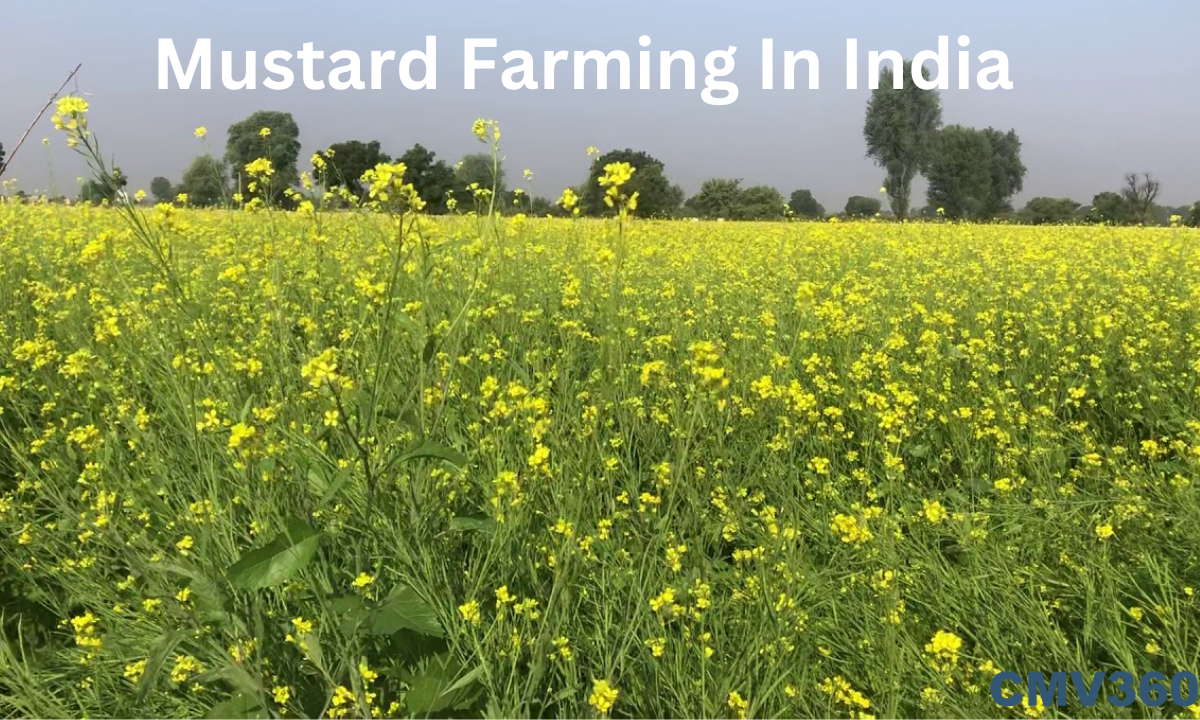
Mustard farming is an ancient practice that has sustained agricultural communities for centuries. Mustard (Brassica juncea) belongs to the family of Cruciferae and is popularly used in Indian dishes. India is the number one producer of mustard globally.
Mustard seeds are used as a condiment in vegetables, curries and especially in south Indian dishes. The edible oil extracted from mustard seeds is widely used for cooking in India. In this article, we have discussed mustard farming in India, from choosing the right variety to harvesting and processing.
Mustard seeds, a versatile spice widely used in Indian cuisine, go by different regional names across the diverse landscape of India. Here are the regional names of mustard seeds in various Indian languages:
Hindi:- Rai- Banarasi Rai- Kalee Sarson
Gujarati:- Rai
Kashmiri:- Sarisa- Issue
Telugu:- Avalu
Tamil:- Kadugo
Malayalam:- Kaduku
Punjabi:- Rai- Banarasi Rai- Kalee Sarson
The multiplicity of names reflects the rich cultural and linguistic diversity of India, where different regions have unique languages and dialects. Mustard seeds are not only a staple in Indian cooking but also hold cultural significance, adding a distinct flavour to various dishes.
Also Read: Potato Farming in India: Role of Potatoes in Indian Agriculture
Rajasthan, Gujarat, Uttar Pradesh, West Bengal, Haryana, Madhya Pradesh, and Assam are the major mustard seed-producing states in India.
Several varieties of mustard are cultivated worldwide, each with unique characteristics suited to specific climates and purposes. The primary Types of Mustard in India include:
Yellow Mustard (Brassica juncea): This is the most common variety used for condiments. It has bright yellow seeds and a pungent flavour.
Brown Mustard (Brassica juncea): Known for its spicier taste, brown mustard seeds are darker in color and are often used to make Dijon mustard.
Black Mustard (Brassica nigra): Black mustard seeds are smaller and have a stronger flavour. They are widely used in Indian cuisine.
White Mustard (Sinapis alba): It has mild-flavoured seeds used in pickling and as a spice.
Mustard grows well in subtropical climates. It is primarily grown as a Rabi season crop. Optimal temperatures for mustard cultivation range from 10°C to 25°C. The crop requires an annual rainfall of 625 - 1000 mm. Mustard does not tolerate frost, so it needs clear skies with frost-free conditions.
Mustard can be grown in a wide range of soils, from light to heavy loamy soils. Medium to deep soils with good drainage are best suited for mustard cultivation. Mustard prefers well-drained, fertile soils with a slightly acidic to neutral pH (6.0-7.5).
Adequate soil preparation is essential for a successful mustard crop. Farmers should plough the land deeply and incorporate well-rotted manure or compost to improve soil structure and fertility.
Plough the field 1 to 2 times and give two harrowings as part of field preparation. For second-crop cultivation, prepare the field by giving 2 crosswise harrowings after the Kharif crop.
Treat mustard seeds with thiram at 3 grams per kg to protect plants from seed diseases. Mustard has moderate nutrient requirements. Nitrogen is particularly crucial for its growth, and farmers often apply fertilizers containing nitrogen, phosphorus, and potassium. The application of organic manure or compost can also enhance soil fertility.
Mustard requires consistent moisture, especially during the germination and flowering stages. Adequate irrigation is essential, and the crop should receive water at regular intervals. However, waterlogging should be avoided, as mustard is susceptible to diseases in excessively wet conditions. Mustard is usually sown in September to October months.
Mustard plants are ready for harvest when the seeds have matured, and the pods turn yellow or brown. Harvesting should be done when the moisture content of the seeds is between 8-10%. The traditional method involves cutting the plants and letting them dry in the field before threshing.
Also Read: Barley Farming In India: A Promising Crop for Indian Farmers
After harvesting, mustard seeds can be processed to obtain mustard oil. The leftover seed cake can be used as a high-protein animal feed. Mustard green leaves are also edible and can be used in salads or cooked as a vegetable.
Conclusion
Mustard farming in India is a profitable venture with a rich history and diverse applications. Successful cultivation requires consideration of factors such as climate, soil, and pest management. Whether grown for condiments, oil, or animal feed, mustard continues to be a valuable and versatile crop for farmers worldwide. Remember, mustard farming is not only economically viable but also contributes significantly to our cooking foods and health.







 Add CMV360 on Google