Tractors
Trucks
- Find by Budget
- Find by Type

English
 New Delhi
The Act gives the central government the authority to set consumption guidelines for energy derived from non-fossil sources. Different consumption levels might be set for various non-fossil sources and consumer groups. According to the schedule, designate

By Priya Singh
On Monday, the Lok Sabha passed a bill to alter the Energy Conservation Act of 2001
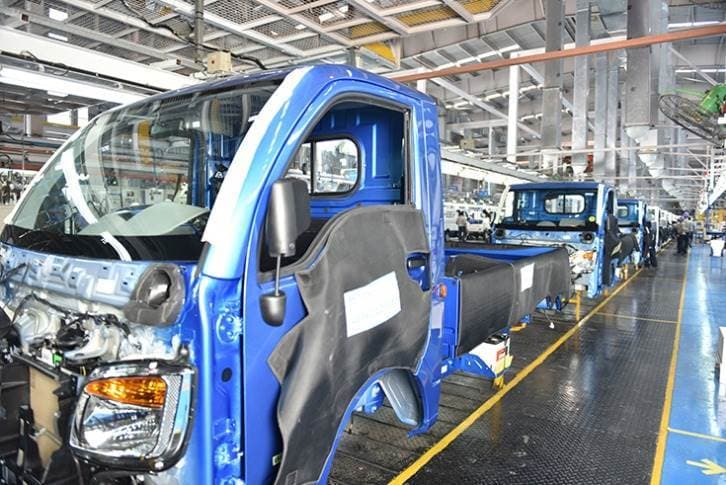
The updated legislation regulates energy use by equipment, appliances, buildings, and industries, and broadens the scope to include autos. Furthermore, failing to comply with regulations will be penalized by a fine of up to Rs 10 lakh, and OEMs who violate fuel consumption norms would be fined up to Rs 50,000 per unit of vehicle sold.
The Act gives the central government the authority to set consumption guidelines for energy derived from non-fossil sources. Different consumption levels might be set for various non-fossil sources and consumer groups. According to the schedule, designated customers include mining, steel, cement, textile, chemicals, and petrochemicals, as well as the transportation industry, which includes railways and commercial structures.
In terms of penalties, the Act states that if a vehicle manufacturer fails to comply with the fuel consumption norms, it will be liable to pay an additional penalty per unit of vehicles sold in the corresponding year, as follows: Rs 25,000 per vehicle for non-compliance of norms up to 0.2 liters per 100km; Rs 50,000 per vehicle for non-compliance of norms above 0.2 liters per 100km.
"With the passage of time, and in the context of the energy transition, with a particular emphasis on the promotion of new and renewable energy, and the National Green Hydrogen Mission, it has become necessary to further alter the aforementioned Act to Facilitate the achievement of “Panchamrit”— as five nectar elements presented by India in COP-26 in Glasgow 2021, To combat climate change, promote renewable energy and the creation of a domestic carbon market. Introduce new concepts such as carbon trading and mandate use of non-fossil sources to ensure faster decarbonization of Indian economy and help in achieving sustainable development goals in line with the Paris Agreement and various other actions related to climate change" the statement of the object of the bill reads.

About the author
Hi there! I'm Priya. From trucks to vans and everything in between, I'm here to provide you with up-to-date information, expert analysis, and actionable insights. Let's navigate the world of commercial vehicles together!




 Add CMV360 on Google