Shakti Pumps Wins Big order of Rs 150-Crore under PM-KUSUM Scheme
 Add CMV360 on Google
Pradhan Mantri Kisan Urja Suraksha evam Utthaan Mahabhiyan has the potential to have a significant positive impact on farmers across India. It claims to improve irrigation capacities with advanced and energy-efficient technology.

By Priya Singh
Shakti Pumps will be assigned with the mission of replacing inefficient electric pump sets with sophisticated BLDC (brushless DC) solar pump sets as part of Pradhan Mantri Kisan Urja Suraksha evam Utthaan Mahabhiyan.
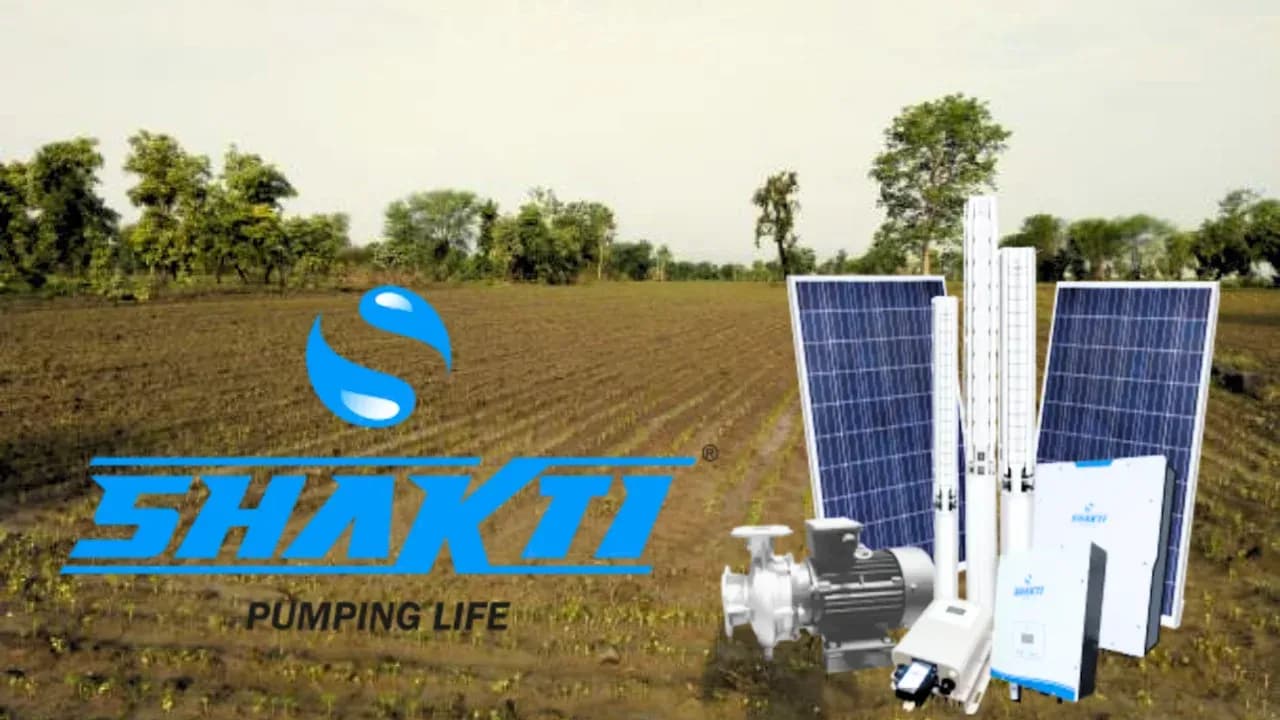
Shakti Pumps, a well-known name in the water pump industry, recently made an announcement of securing an order of Rs 149.71 crore under the Pradhan Mantri Kisan Urja Suraksha evam Utthaan Mahabhiyan (PM-KUSUM) scheme. This significant announcement marks Shakti Pumps' first order under the scheme's Component C, an important milestone for the company.
This program has the potential to have a significant positive impact on farmers across India. It claims to improve irrigation capacities by modernizing irrigation infrastructure with contemporary, energy-efficient technology. It also minimizes reliance on traditional energy sources, which is an important step toward more sustainable agricultural practices. Perhaps most crucially, it also opens a new door of revenue generation for farmers by selling excess power to distribution firms.
Shakti Pumps will be assigned to replace inefficient electric pump sets with sophisticated BLDC (brushless DC) solar pump sets as part of this project. These solar-powered pump sets are designed to collect solar energy and run on it. Furthermore, any excess electricity generated can be smoothly fed back into the system.
Shakti Pumps Chairman Dinesh Patidar called the development "revolutionary," noting how it changes farmers from simply food producers ('Annadata') to energy providers ('Urja data'). He emphasized that discoms would return their investment in these pump sets, which are normally about Rs 10 lakh, within five years.
This is made possible by significant annual energy bill reductions, which might amount to Rs 2 lakh. Farmers have the possibility to earn up to Rs 50,000 per year and a total of up to Rs 2.5 lakh over five years through surplus power sales to the electricity board.
Also Read: NRFMTTI and Mahindra Collaborate for Skill Development Initiatives
The PM-KUSUM project, which was introduced in 2019, is a bold initiative aiming at increasing India's solar capacity. It has set a target of installing 30,800 MW of solar power by 2022, with a significant central financial contribution of Rs 34,422 crore, including service charges to implementing agencies.
Acknowledging the substantial obstacles faced by the Covid-19 outbreak in February, the government extended the PM-KUSUM scheme's timetable to March 2026. The scheme's significance in promoting sustainable agriculture and energy security for farmers across India is reflected in this extension.
It gives farmers more control over their livelihoods, improves irrigation capacity, and reduces reliance on traditional energy sources while contributing to India's energy security and environmental goals. The scheme is divided into three components, each of which plays a critical part in reaching this ambitious goal.
Three main components of the PM-KUSUM project
- Component A focuses on the installation of small-scale power plants with capacities of up to 2 MW, which will contribute to the total increase of solar capacity.
- Component B is devoted to the installation of a startling 20 lakh standalone solar-powered farm pumps, which is a critical step toward upgrading irrigation operations.
- Finally, Component C, under which Shakti Pumps received its first order, is devoted to the solarization of 15 million grid-connected agriculture pumps.

Hi there! I'm Priya. From trucks to vans and everything in between, I'm here to provide you with up-to-date in .....