New Initiatives Launched to Enhance EV Skills in Battery Management Systems
 Add CMV360 on Google
EV firm Raptee is concentrating on battery management systems through apprenticeship programs.

By Priya Singh
Key Highlights:
- India targets 30% EV market share by 2030, increasing demand for specialized skills.
- EV shift could create 5 million jobs by 2030 in manufacturing and charging infrastructure.
- Tata Motors aims to upskill 50% of its workforce in advanced auto tech within five years.
- Tata Technologies offers scholarships and specialized courses to prepare for the EV revolution.
- Companies like Raptee partner with institutions to develop EV curriculums and certification programs.
As we all know, India's electric vehicle industry growing, and there is an increasing demand for specific skill sets in this sector, particularly given the government's objective of achieving a 30% market share for electric vehicles by 2030.
As the world's third-largest auto market transitions to EVs, skilling and upskilling will be critical in employment development, given the wide range of services this industry provides, not just in automobiles but also in the EV charging environment.
According to the NITI Aayog, the expansion of India's EV industry will create around 5 million direct and indirect job possibilities by the end of the next decade.
"The unique demands of EV technology—high-density batteries, intricate software integration, and complex electrical components—require an additional skillset," says Sitaram Kandi, Chief Human Resources Officer at Tata Motors.
Speaking specifically about what Tata Motors is doing to train the workforce in electric vehicles, he adds that their capability-building roadmap consists of three progressive stages: awareness, specialist, and expert, addressing the capability development needs of the entire employee base, from entry-level engineers to executive leaders.
He has previously stated that as the Indian automotive sector moves to zero-emission transportation, there is a war for talent in the EV space. He reiterates that their goal is to equip half of their workers with advanced automotive technology capabilities within the next five years.
"Our activities include in-house training and collaboration with academic institutions to provide certification programs in CESS technologies, building a talented and forward-thinking staff. We've also created a "Future of Workplace" strategy, which focuses on upskilling our personnel in fields such as Mechatronics (Industry 4.0), Auto Electronics, and Vehicle Communications," he adds.
"We also collaborate with major institutes to recruit MTech and PhD candidates to minimize EV manpower shortages. Along with this, we run a full-time apprenticeship "Learn and Earn" program that provides classroom and practical EV technology training, ensuring our technicians stay ahead in this electrifying journey," Kandi says.
Tata Motors' Skilling Initiatives
Tata Technologies, too, is focusing on skills development with EV at its core. The company offers several engineering programs, including the Ready Engineer Program and the Empower via Education program, which provides scholarships to female engineers from low-income families for degree, postgraduate, and high school courses, promoting diversity and inclusion in the engineering field, to name a few.
Focus on Battery Management and Practical Training
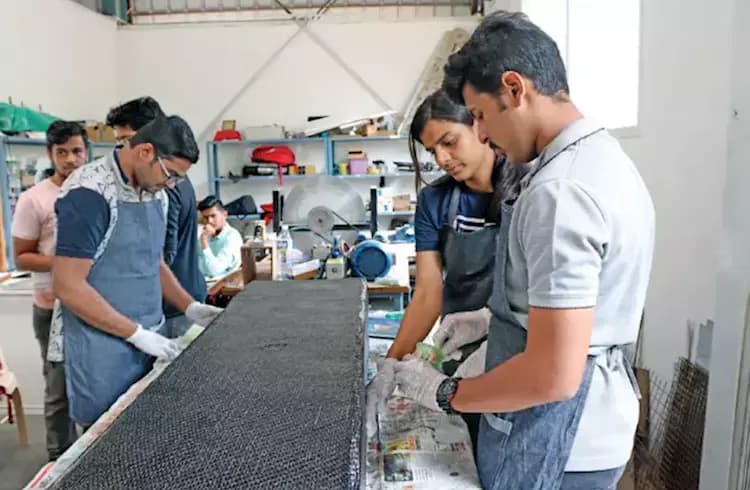
EV firm Raptee is concentrating on battery management systems through apprenticeship programs. The company collaborates with the Tamil Nadu Skill Development Corporation (TNSDC) to create specialized EV curriculums and certification programs.
CEO Dinesh Arjun notes that the company also offers in-house training and continuous learning initiatives using online platforms.
Student Training and Industry Partnerships
Courses on EV charging are gaining traction among students. Ramesh Alluri, CEO of Teamlease Degree Apprenticeship, discusses the company's collaboration with the Electronics Sector Skills Council (SSC) and the Power Sector Skills Council (SSC) to create courses focused on essential electrical components for EVs.
These courses cover the design, manufacturing, and maintenance of electronic systems and EV charging infrastructure.
Also Read: CNG Vehicle Sales Surge in the First Half of 2024
CMV360 Says
The EV industry in India is growing fast, and there's a big need for people with the right skills to support this change. Companies like Tata Motors, Tata Technologies, and Raptee are leading the way with their training programs and partnerships with schools and colleges.
These efforts show how important it is to prepare our workforce for the future. As India works towards its goal of having 30% electric vehicles by 2030, investing in training and skill development is essential.

Hi there! I'm Priya. From trucks to vans and everything in between, I'm here to provide you with up-to-date in .....