Farmers in France utilize methane gas to power their tractors.
 Add CMV360 on Google
Methane has a substantially higher warming potential than carbon dioxide and contributes significantly to the climate impact of animal husbandry.

By Priya Singh
Methane has a substantially higher warming potential than carbon dioxide and contributes significantly to the climate impact of animal husbandry.
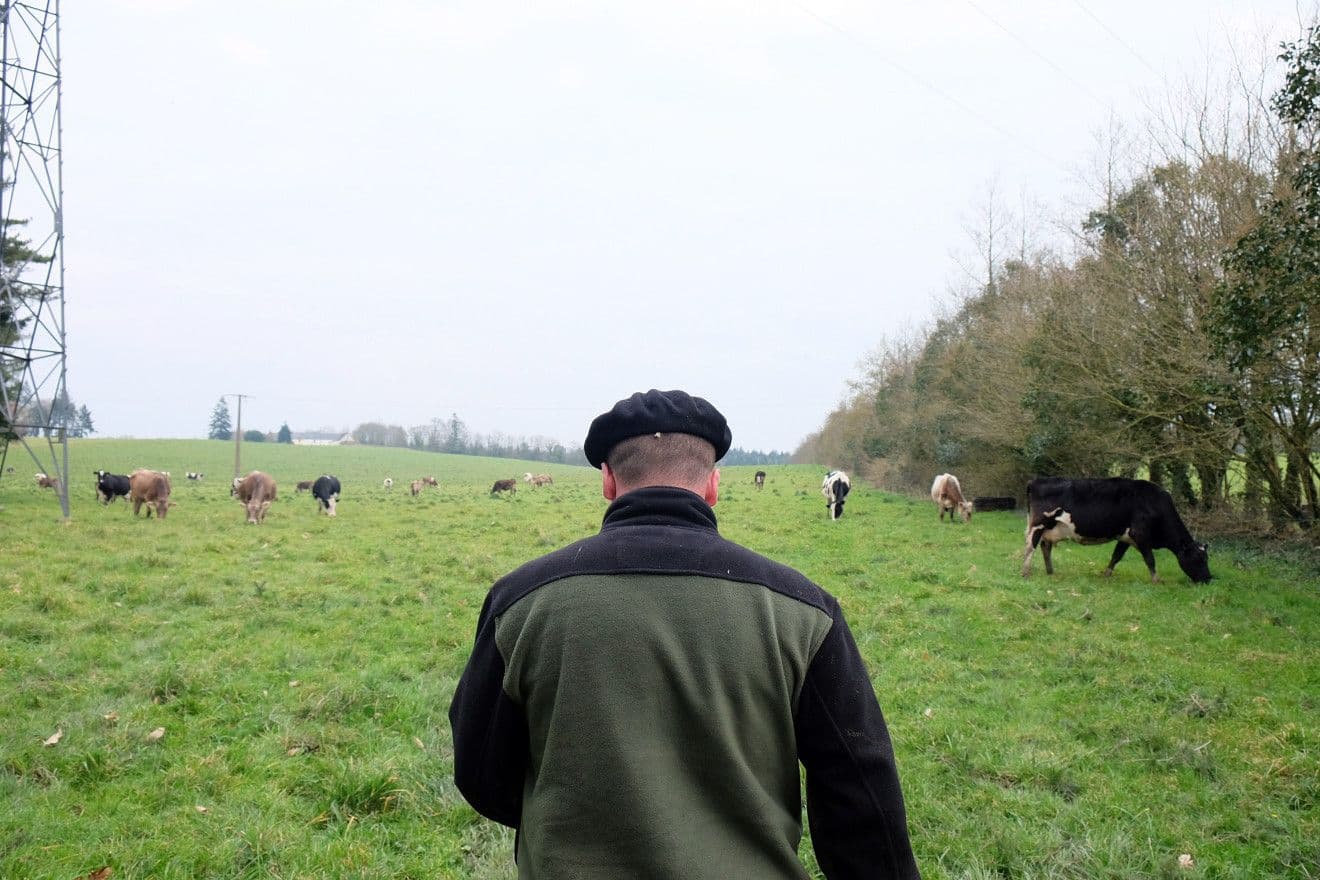
A French farmer fills his tractor with fuel made from his cows' manure. This is an attempt to utilize their climate-damaging methane. Methane has a substantially higher warming potential than carbon dioxide and contributes significantly to the climate impact of animal husbandry. To lower the carbon footprint, that source of harmful pollution is converted into a cleaner fuel, allowing him to save money.
Bertrand Guerin, the farm's owner, believes that the vehicle he uses to gather milk will soon be full at his location.The 59-year-old is also hoping to encourage visitors from the United Kingdom and the Netherlands, where natural gas vehicles are more widespread.
Filling station
There is a filling station with a pump and a bank card payment terminal connected to the facilities, however, the nozzle does not produce diesel. The filling station is part of Biogaz de France, a new network founded by an association of methane-producing farmers, of whom Guerin is vice president.
Since 1926, the renewable natural gas bioNGV has used methane from cow manures to power tractors. It contributes to pollution reduction at a time when the world is attempting to reduce carbon emissions.
Instead, bioNGV (renewable natural gas for vehicles) is produced on the farm, which is essentially methane. It is cleaner and less expensive than diesel, and it now powers all of the farm's vehicles as well as a new tractor.
His concern is that market behemoths like Engie and TotalEnergies, which are eager to diversify away from fossil fuels, would enter and monopolize the market for agricultural methane. However, he suggested that farmers have to grow in this area.
Process of producing methane
The plant has two massive, partially submerged tanks enclosed with rounded domes that catch methane released by cow waste. Before any methane is emitted, the dung, urine, and any hay on the floor are pumped into the domes.
Methane, whether from cow burps or dung, accounts for about half of all agricultural emissions in France.
Every day, 40 tonnes of organic material, consisting of two-thirds manure and one-third food waste, are pushed into the methane dome and fermented at 38 degrees Celsius (100 degrees Fahrenheit). After this, they combine it and ferment it. Bacteria degrade materials and start releasing CO2 and methane.
The majority of the gas produced at the farm is burned to generate energy that is fed into the power grid and is enough to power a thousand houses.
Only a small portion is retained to be processed into methane and compressed for use in automobiles.
What remains after the methane dome digests is used as fertilizer on the farm, allowing for a reduction in synthetic fertilizers derived from fossil fuels.
The farm's five linked families and three staff hope to replace their diesel-powered tractors as soon as possible.

Hi there! I'm Priya. From trucks to vans and everything in between, I'm here to provide you with up-to-date in .....