Electric Bus Sales in India - April 2026: PMI Leads as Market Sees Sharp Decline
 Add CMV360 on Google
India's electric bus sales drop 38% in April 2026 to 347 units. PMI leads, while JBM and Switch see sharp declines. Pinnacle and JSW show strong growth.

By Robin Kumar Attri

Key Highlights
Total electric bus sales fell to 347 units in April 2026, down 38% MoM from 559 units in March.
PMI Electro Mobility led the market with 111 units and 32% share.
JBM Electric Vehicles and Switch Mobility saw steep monthly declines.
Pinnacle Mobility recorded a strong growth of 48.6%.
New activity from JSW Greentech boosted market entries in April.
India’s electric bus market witnessed a sharp slowdown in April 2026. As per Vahan Dashboard data (as of May 2, 2026; Telangana not included), total sales dropped to 347 units, compared to 559 units in March 2026.
April 2026 Sales: 347 units
March 2026 Sales: 559 units
Difference: -212 units
MoM Change: -38%
This decline comes after a relatively stable March, indicating demand fluctuations and possible order delays in the public transport electrification segment.
Also Read: Electric Bus Sales in India - March 2026: JBM Leads as Overall Market Dips Slightly
Table for OEM-wise electric bus sales in April 2026:
OEM / Brand | Apr 2026 Sales | Mar 2026 Sales | Difference | % Change | Market Share (Apr 2026) |
PMI Electro Mobility | 111 | 123 | -12 | -9.8% | 32% |
JBM Electric Vehicles | 62 | 206 | -144 | -69.9% | 17.9% |
Switch Mobility | 62 | 161 | -99 | -61.5% | 17.9% |
Pinnacle Mobility | 52 | 35 | +17 | +48.6% | 15% |
Aeroeagle Automobiles | 28 | 22 | +6 | +27.3% | 8.1% |
JSW Greentech | 25 | 0 | +25 | - | 7.2% |
Tata Motors | 3 | 2 | +1 | +50% | 0.9% |
VE Commercial Vehicles | 2 | 0 | +2 | - | 0.6% |
Neuton Auto | 1 | 0 | +1 | - | 0.3% |
Olectra Greentech | 1 | 0 | +1 | - | 0.3% |
Azad India Mobility | 0 | 10 | -10 | -100% | - |
Total | 347 | 559 | -212 | -38% | 100% |
OEM-wise Electric Bus Sales - April 2026
PMI Electro Mobility
PMI Electro Mobility remained the market leader in April 2026, selling 111 electric buses. Although this was slightly lower than 123 units in March, the decline was limited to 9.8%, allowing the company to retain a strong 32% market share. Its consistent performance highlights stable order execution even during a weak market month.
JBM Electric Vehicles
JBM Electric Vehicles experienced a sharp slowdown in April, with sales dropping to 62 units from 206 units in March. This represents a steep 69.9% decline, significantly impacting its position. Despite the fall, the company still held a 17.9% market share, indicating its strong base in the segment.
Switch Mobility
Switch Mobility also faced a major dip, reporting 62 units in April compared to 161 units in March. The 61.5% decline reflects a slowdown in deliveries or order cycles. However, with a 17.9% share, the company continues to be one of the key players in India’s electric bus market.
Pinnacle Mobility
Pinnacle Mobility emerged as one of the biggest gainers in April 2026. The company sold 52 units, up from 35 units in March, marking a strong 48.6% growth. This growth helped it capture a solid 15% market share, showcasing rising momentum.
Aeroeagle Automobiles
Aeroeagle Automobiles recorded steady growth in April, selling 28 units compared to 22 units in March. With a 27.3% increase, the company improved its presence and secured an 8.1% market share, reflecting gradual expansion.
JSW Greentech
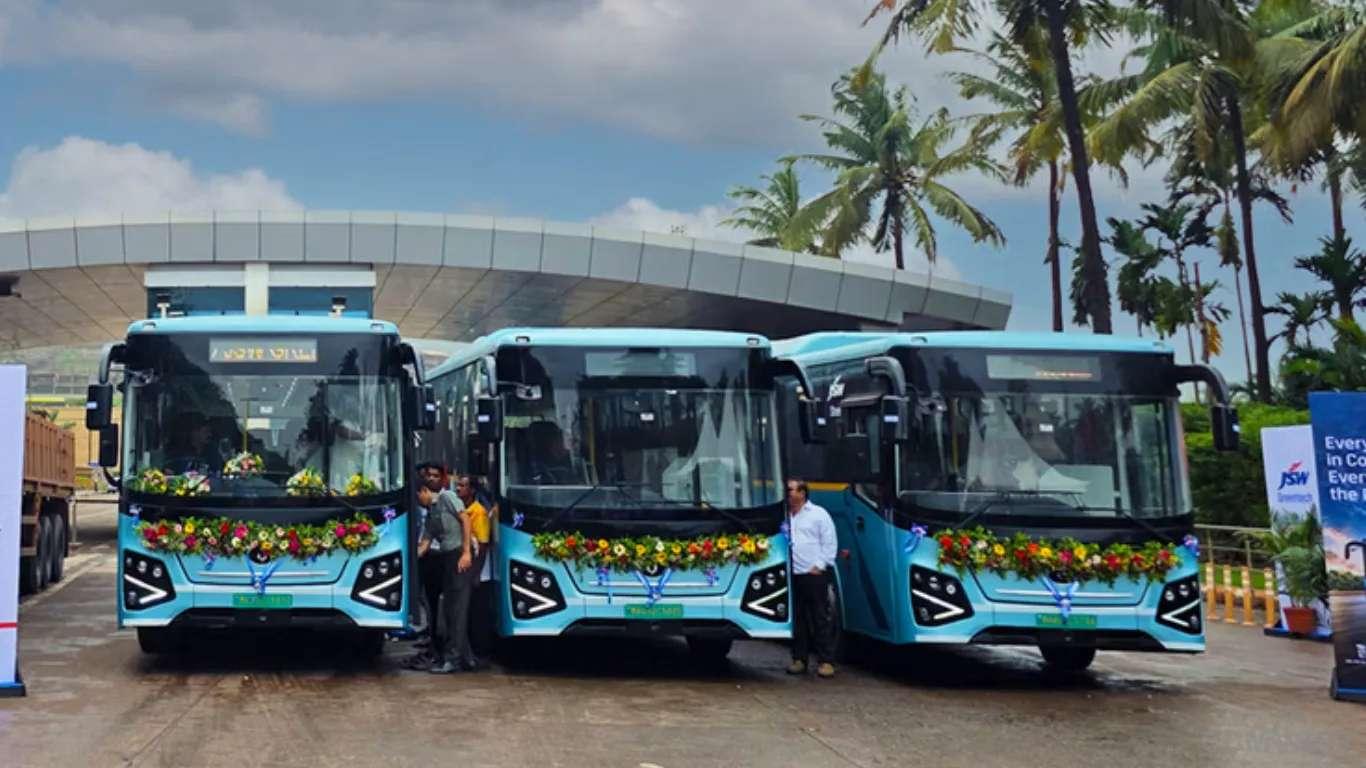
JSW Greentech made a notable entry in April 2026 by selling 25 units, compared to zero sales in March. This fresh addition gave the company a 7.2% market share, signaling its growing interest and participation in the electric bus segment.
Tata Motors
Tata Motors posted marginal growth in April, with 3 units sold compared to 2 units in March. While the numbers remain small, the 50% increase shows slight improvement. The company held a 0.9% share in the overall market.
VE Commercial Vehicles
VE Commercial Vehicles reported 2 units in April, improving from zero sales in March. Though the volumes are low, this marks a positive re-entry into the electric bus market for the month.
Neuton Auto
Neuton Auto recorded 1 unit in April 2026, compared to no sales in March. The company maintained a minimal 0.3% market share, indicating limited but active participation.
Olectra Greentech
Olectra Greentech also reported 1 unit in April after zero sales in March. While volumes remain very low, the company continues to stay present in the market with a 0.3% share.
Azad India Mobility
Azad India Mobility saw a complete drop in April, reporting zero sales compared to 10 units in March. This marks a 100% decline, indicating a pause in deliveries or order execution for the month.
Market Insights
April 2026 clearly reflects a demand correction phase in India’s electric bus segment. While leaders like PMI maintained stability, major players like JBM and Switch saw steep declines, pulling the overall market down.
At the same time, emerging and mid-level players gained traction, showing that the market is becoming more competitive and diversified.
CMV360 Says
Despite the sharp drop in April, the long-term outlook for India’s electric bus market remains positive. Government push, city electrification targets, and rising focus on clean mobility will continue to drive growth. However, monthly volatility is expected, especially due to bulk order cycles and tender-based deployments.

Robin Kumar Attri is a content and video professional with 2.7 years of experience in the commercial vehicle d .....