Ashok Leyland Sales April 2026: 14% Domestic Growth Driven by LCV and Trucks, Bus Segment Declines
 Add CMV360 on Google
Ashok Leyland reports 14% domestic sales growth in April 2026, driven by strong LCV and truck demand, while the bus segment decline continues to impact overall performance and growth.

By Robin Kumar Attri

Key Highlights
Ashok Leyland domestic sales up 14% to 14,242 units in April 2026.
LCV segment leads growth with 23% rise to 6,265 units.
M&HCV truck sales grow 15%, bus sales fall 22% domestically.
Total sales (with exports) increase 9% to 14,646 units.
Bus segment declines sharply by 30%, impacting overall M&HCV growth.
Ashok Leyland has reported a steady start to FY2026, registering a 14% year-on-year (YoY) growth in domestic vehicle sales for April 2026. The company’s performance was largely supported by strong demand in the light commercial vehicle (LCV) segment and consistent growth in truck sales, even as the bus segment continued to face pressure.
Strong Domestic Sales Growth in April 2026
Ashok Leyland’s total domestic vehicle sales reached 14,242 units in April 2026, compared to 12,509 units in April 2025, reflecting a healthy 14% YoY growth.
This growth highlights improving demand in the commercial vehicle space, particularly in goods transportation segments, which played a key role in driving volumes higher during the month.
M&HCV Trucks Drive Momentum, Bus Sales Decline
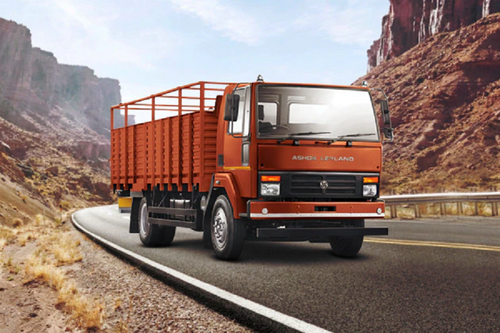
In the medium and heavy commercial vehicle (M&HCV) category, truck sales remained a strong contributor. Domestic M&HCV truck sales increased 15% to 6,814 units, up from 5,915 units in April last year.
However, the bus segment continued to underperform. Domestic M&HCV bus sales dropped 22%, falling to 1,163 units. Due to this decline, overall M&HCV sales grew at a slower pace of 8%, reaching 7,977 units.
This trend indicates that while freight movement and logistics demand remain strong, passenger transport recovery is still uneven.
LCV Segment Emerges as Top Growth Driver
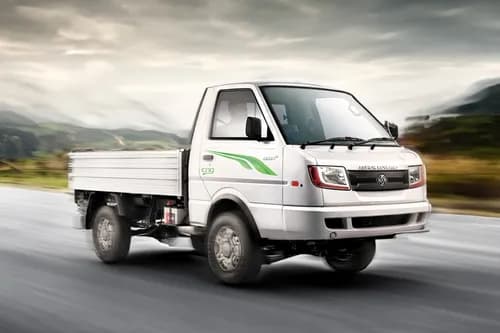
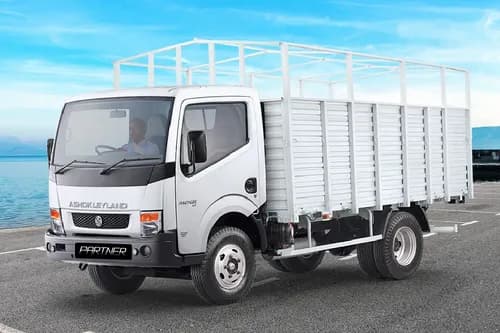
The LCV segment recorded the highest growth among all categories. Sales increased 23% YoY to 6,265 units, compared to 5,103 units in April 2025.
This sharp rise underlines strong last-mile delivery demand, driven by e-commerce, urban logistics, and small business transportation needs. The segment’s performance played a crucial role in boosting the company’s overall domestic volumes.
Total Sales Including Exports See 9% Growth
When exports are included, Ashok Leyland’s total vehicle sales stood at 14,646 units in April 2026, marking a 9% increase over 13,421 units in April 2025.
Growth in total volumes was again led by trucks and LCVs:
M&HCV truck sales (including exports) rose 15% to 7,007 units
LCV sales (including exports) grew 16% to 6,344 units
Bus Segment Continues to Weigh on Overall Growth
Despite strong gains in other segments, the bus category remained a concern. Combined domestic and export bus sales declined sharply by 30%, dropping to 1,295 units.
As a result, total M&HCV sales (including exports) saw a modest 4% increase, reaching 8,302 units.
This continued decline suggests that demand recovery in the bus segment is still lagging behind the broader commercial vehicle market.
Mixed Performance Reflects Market Reality
Ashok Leyland’s April 2026 sales performance presents a mixed but stable outlook. Growth in goods carriers, especially LCVs and trucks, continues to drive the company forward, supported by strong logistics and transportation demand.
At the same time, weak bus sales highlight ongoing challenges in the passenger transport segment. The overall trend shows that while the commercial vehicle industry is growing, recovery is uneven across different categories.
Also Read: VECV April 2026 Sales: 7,318 Units Sold, Registers 6.9% Growth
CMV360 Says
Ashok Leyland has begun FY2026 on a positive note with solid growth in domestic and overall sales. However, the continued decline in bus volumes remains a key area to watch in the coming months, as it could influence the company’s overall growth momentum.

Robin Kumar Attri is a content and video professional with 2.7 years of experience in the commercial vehicle d .....