Agriculture Ministries Unveil Krishi Sakhi Training Program for Sustainable Agriculture Practices
 Add CMV360 on Google
The National Centre for Organic and Natural Farming (NCONF) will play a crucial role in coordinating and overseeing the training modules.

By Priya Singh
In this initiative of training ‘Krishi Sakhis’, women actively engaged in farming and rural development will be trained. These Krishi Sakhis will be equipped with knowledge and skills related to natural or organic farming in India practices.
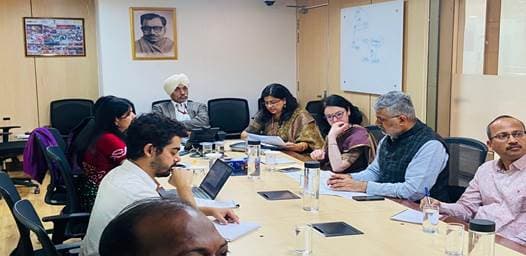
In a collaborative effort, the Ministries of Rural Development and Agriculture have unveiled a transformative initiative aimed at sustainable agricultural practices across rural India. The program, known as the Krishi Sakhi Training Program, seeks to educate 50,000 ‘Krishi Sakhis’ who are engaged in natural farming.
The primary objective of the program is to empower farmers with the knowledge and skills required to adopt and implement sustainable and eco-friendly farming practices. Natural farming, also known as organic farming, emphasizes the use of natural inputs and techniques to enhance soil fertility, minimize environmental impact, and produce healthier crops.
Objective and Collaboration
The program is a joint venture between the Ministry of Rural Development and the Ministry of Agriculture and Farmers’ Welfare. It operates under the Deendayal Antyodaya Yojana – National Rural Livelihoods Mission (DAY-NRLM).
This mission will be run by the National Centre for Organic and Natural Farming (NCONF), a subordinate office of the agriculture ministry. The National Centre for Organic and Natural Farming (NCONF) will play a crucial role in coordinating and overseeing the training modules.
As a nodal institution, it will work closely with both ministries to ensure the seamless execution of the program and monitor its impact on rural livelihoods.
Empowering Krishi Sakhis
In this 'Krishi Sakhi' training initiative, women actively engaged in farming and rural development will be trained. These Krishi Sakhis will be equipped with knowledge and skills related to natural farming practices. By empowering them, the program aims to transform villages and enhance agricultural productivity.
Technology Transfer and Field Implementation
Smriti Sharan, Joint Secretary of Rural Livelihoods, emphasized the importance of transferring technology from laboratories to the field. CRPs will play a crucial role in bridging this gap, ensuring that scientific knowledge translates into practical benefits for farmers.
Also Read: Kerala Launches Ambitious Organic Farming Mission to Transform 5,000 Hectares in Five Years
Financial Stability for Self-Help Groups (SHGs)
The ministries have also committed to supporting Self-Help Groups (SHGs) financially. A Memorandum of Understanding (MoU) was signed on August 30, 2023, to facilitate this collaboration. The goal is to certify Krishi Sakhis as Para-Extension Workers by MANAGE, MoA&FW.
This certification will empower individuals in the agricultural sector and promote sustainable and natural farming practices. In short, the Krishi Sakhi Training Program is a commendable step toward a greener, more prosperous rural India. By nurturing knowledge, empowering women, and fostering sustainable practices, it aims to create a resilient agricultural ecosystem.
The collaboration between the Ministry of Rural Development and the Ministry of Agriculture reflects a commitment to promoting environmentally friendly agricultural practices and improving the overall well-being of farmers across the country.
By investing in the training of 'Krishi Sakhis,' the government aims to create a positive effect, positively influencing farming communities and contributing to the broader goal of sustainable agriculture.

Hi there! I'm Priya. From trucks to vans and everything in between, I'm here to provide you with up-to-date in .....