Electric Bus Adoption Accelerates with New Payment Security Mechanism
 Add CMV360 on Google
The introduction of the new payment security mechanism is expected to stimulate greater competition in the e-bus sector.

By Priya Singh
The National Electric Bus Program (NEBP) was launched in 2022. The PM-eBus Sewa schemes were introduced in 2023. Both the schemes aim to deploy 50,000 and 10,000 e-buses, respectively, by 2030.
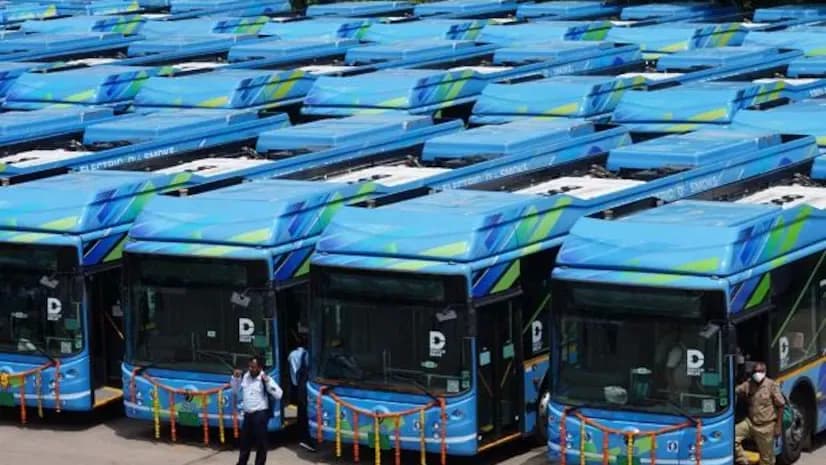
India Ratings and Research (Ind-Ra) predicts that the Indian government’s introduction of a payment security mechanism (PSM) in the 2024 interim budget will have significant implications for the adoption of electric buses (e-buses).
The implementation of a PSM is expected to improve project developers' risk profiles, allowing them to meet the upgrading and expansion demands of state transport undertakings (STUs) at competitive rates, particularly given STUs' collective deficit condition.
This move is expected to inject dynamism into the e-bus sector, fostering innovation and efficiency while catering to the growing demand for sustainable urban transport. Given that STUs often operate at a loss, the PSM becomes crucial in ensuring project viability.
Impact on E-Bus Concessions
- The introduction of the PSM is expected to stimulate greater competition in the e-bus sector.
- It will specifically target the per kilometre fee, a critical parameter in e-bus bidding processes.
- By reducing this fee, the PSM will encourage more competitive pricing and better value for money.
Benefits for Project Developers
Divya Charen C, Associate Director of Infrastructure at Ind-Ra, highlights the potential benefits of proposed Payment Security Mechanisms (PSMs) in enhancing the risk profile of e-bus concession contracts. This move is expected to address counterparty risk and improve project bankability. Benefits for Project Developers are listed below:
- The PSM will improve project bankability by addressing counterparty risk.
- Original equipment manufacturers (OEMs) and operators will gain balance sheet flexibility.
- Lower contracted prices under gross cost contracts may become possible.
Mechanisms Under PSM
Future e-bus bids are expected to benefit from various PSMs, including:
- Payment security funds
- Direct debit mechanisms from state government accounts
- State guarantees for payments (contingent upon state consent)
The involvement of Convergence Energy Services Limited as the program manager for GoI’s schemes will ensure reliable PSM creation and invocation.
Ind Ra's Expectations
Ind-Ra anticipates forthcoming bids for e-bus concessions by the Government of India (GoI) to benefit from various PSMs, including payment security funds, direct debit mechanisms, and state guarantees for payments. The reliability of PSM creation and invocation could be ensured through the involvement of Convergence Energy Services Limited as the program manager for GoI's schemes.
Government Initiatives
The National Electric Bus Program (NEBP) was launched in 2022. The PM-eBus Sewa schemes were introduced in 2023. Both the schemes aim to deploy 50,000 and 10,000 e-buses, respectively, by 2030. Competitive pricing observed in NEBP 1 bids for 6,465 buses in January 2023, without subsidies, indicates a growing preference among State Transport Undertakings (STUs) for e-buses over diesel buses.
As of January 2024, India is experiencing a remarkable surge in the adoption of electric buses (e-buses), with an impressive order book tallying over 20,000 units slated for delivery within the next two years. This surge reflects a significant stride towards sustainable transportation in the country.
Rs 26.71 Billion Allocated for FAME Scheme in FY25
In a bid to boost the transition towards eco-friendly transportation, the Government of India (GoI) has allocated a substantial sum of Rs 26.71 billion for the Fiscal Year 2025 under the Faster Adoption and Manufacturing of (Hybrid &) Electric Vehicles (FAME) scheme.
This allocation underscores the government's commitment to incentivize the adoption of electric vehicles (EVs) and promote indigenous manufacturing in the automotive sector.
The landscape of electric mobility in India is evolving rapidly, with over 6,500 e-buses already operational across the nation. Notably, in the current financial year, as of January 24, 2024, 2,739 e-buses have been registered, further highlighting the momentum towards sustainable transportation solutions.
Also Read: January 2024 Sales Report: JBM Auto Emerges as Top Choice for E-Buses
Ind-Ra Stresses Need for Uniform Contract Provisions
Ind-Ra, a leading credit rating agency, underscores the critical importance of standardizing contract provisions and facilitating the seamless integration of e-buses into State Transport Undertakings (STUs). As the share of e-buses continues to rise, ensuring uniformity in contract terms becomes paramount to streamline operations and optimize efficiency.
Gross Cost Contracts Mitigate Upfront Cost Disadvantages
State Transport Undertakings (STUs) have emerged as key drivers in the adoption of e-buses, particularly through the implementation of gross cost contracts. These contracts help alleviate the upfront cost disadvantages associated with e-buses while leveraging subsidies under the FAME scheme to stimulate demand.
The government's initiative to introduce performance-linked incentives aimed at advancing automotive and energy storage technologies is poised to create a conducive ecosystem for both STUs and private bus operators.
By promoting indigenous manufacturing and incentivizing technological innovation, the government aims to catalyze the growth of the electric mobility sector, paving the way for a cleaner and sustainable future.

Hi there! I'm Priya. From trucks to vans and everything in between, I'm here to provide you with up-to-date in .....