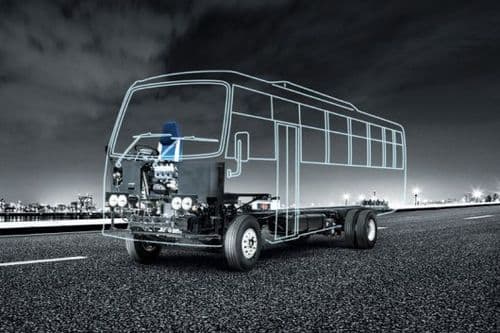
EGROW Foundation and Primus Partners Release Study on Retrofitting Diesel Buses
 Add CMV360 on Google
The research recommends combining regulatory reforms, government funding, and technological innovation to address challenges in retrofitting diesel buses.

By Priya Singh
Key Highlights:
- Retrofitting diesel buses to electric significantly reduces costs and carbon emissions.
- Retrofitting 20,000 buses yearly can save 500,000 tons of diesel and reduce crude oil imports by 12.7 million barrels.
- A 9-meter retrofitted bus costs 32.1% less per kilometer than a new electric bus.
- Retrofitting buses can create 6,000-7,000 direct jobs and 36,000-42,000 indirect jobs.
- Policy recommendations include government subsidies, revising vehicle scrapping policies, and incorporating retrofitting incentives into EV adoption programs.
The Foundation for Economic Growth and Welfare (EGROW Foundation), a non-profit, multidisciplinary public policy organization, collaborated with Primus Partners, India's leading home-grown consultancy firm, to release a comprehensive study titled Retrofitting of Inter-City Diesel Passenger Buses: An Economic Analysis and Policy Prescriptions.
The study emphasizes the economic and environmental benefits of retrofitting diesel-powered buses, which contribute significantly to carbon emissions.
Key Findings of the Report
Cost Reduction: Retrofitting a standard 9-meter bus can reduce cost per kilometer by 34.48% compared to an internal combustion engine (ICE) bus.
Diesel and Crude Oil Savings: Retrofitting 20,000 buses annually could save 500,000 tons of diesel and reduce crude oil imports by 12.7 million barrels each year.
Green Jobs: The initiative could significantly contribute to India’s goal of creating 30-35 million new green jobs by 2047.
Economic and Environmental Benefits
Global E-Mobility Growth: The e-mobility market has expanded from 2 million vehicles in 2016 to 7.2 million in 2019.
Cost Efficiency: A retrofitted 9-meter bus costs Rs19/- per km, making it 32.1% more cost-effective than a new electric bus.
Long-Term Savings: With a retrofitted bus lasting 10 years, the cost per km can drop to less than Rs15/-.
The joint report states that the number of buses in India is predicted to reach 3 million by 2030, necessitating a change to greener technologies, particularly in pollution-intensive domains such as transportation.
The complete research calls for an integrated strategic approach that includes regulatory reforms, government funding, and technology innovation to overcome the challenges of retrofitting diesel buses.
Decarbonisation Strategy for Retrofitted Buses
To effectively reduce carbon emissions in India’s transport sector:
Current Electricity Source: Over 75% of domestic electricity is from coal-based thermal power.
Recommendation: Retrofitted buses should ideally use electricity from renewable sources, not fossil fuels, to achieve a successful decarbonization strategy.
Cost Comparison of Buses
- ICE Bus: Costs more than Rs 29 per km.
- Electric Bus: Costs Rs 28 per km.
- 9-Meter Retrofitted Bus: Costs Rs 19 per km.
- 12-Meter Retrofitted Bus (2 Batteries): Costs Rs 22 per km.
- 12-Meter Retrofitted Bus (3 Batteries): Costs Rs 23 per km.
A 9-meter retrofitted bus is 32.1% more cost-effective than a new electric bus, making it the most economical option.
Return on Investment for Retrofitted Buses
Retrofitted buses offer significant returns on investment (RoI).
- 9-Meter Retrofitted Bus: With a lifespan of 10 years, the cost per km drops to less than Rs 15.
- 12-Meter Retrofitted Bus (2 Batteries): The cost per km decreases to less than Rs 17.
- 12-Meter Retrofitted Bus (3 Batteries): The cost per km reduces to less than Rs 19.
Policy Recommendations
Pilot Projects: Implementing large-scale pilot projects to convert ICE buses to EVs.
Vehicle Scrapping Policy: Reducing re-registration fees for retrofitted buses.
Subsidies and Incentives: Government subsidies and incentives under the FAME policy to encourage retrofitting.
GST Rebates: Rebating GST norms for retrofitting and using old components.
State-Level Policies: Developing state-level Retrofit EV Policies with interest rate subsidies and charging infrastructure support.
Also Read: Chalo Expands Fleet by 44% Amidst Growing Demand for Luxury AC Buses
CMV360 Says
Retrofitting diesel buses to electric can be a game-changer for India's transportation sector. It offers a cost-effective and environmentally friendly solution, aligning with the global push towards sustainability.
However, substantial policy support and investment in infrastructure are crucial for this transition to be successful. The potential job creation and long-term economic benefits make this initiative not just a necessity but a strategic opportunity for India's future.

Hi there! I'm Priya. From trucks to vans and everything in between, I'm here to provide you with up-to-date in .....