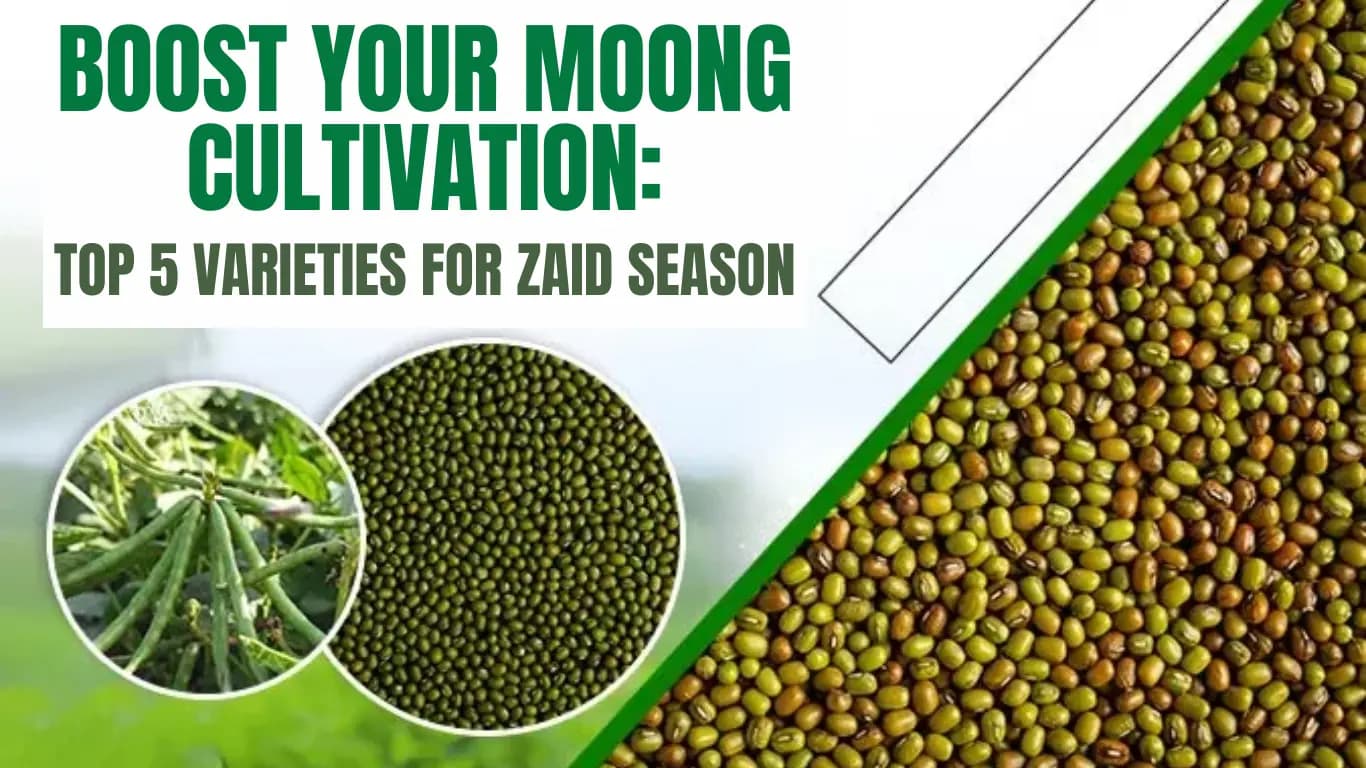
Boost Your Moong Cultivation: Top 5 Varieties for Zaid Season
 Add CMV360 on Google
Choose the right moong variety and follow proper cultivation methods for a successful Zaid season harvest, ensuring high yields.

By Robin Kumar Attri
Key Highlights
- Zaid season offers an opportunity for profitable moong cultivation post-wheat harvest.
- Top 5 moong varieties: Pant Moong 1, Mohini, Pant Moong 3, Pusa Vaisakhi, Krishna 11.
- Resilience to diseases, short maturity periods, and high yields characterize these varieties.
- Proper soil preparation and seed treatment are crucial for successful cultivation.
- Optimal use of nutrients ensures healthy growth and maximum output.
As the wheat harvesting season draws to a close, farmers across the region are turning their attention to the cultivation of moong in their now vacant fields. Moong, also known as green gram, not only fetches a good price in the market but also revitalizes the soil, ensuring its fertility for future crops. Sensible farmers often choose to sow pulses like moong after wheat to maintain the nutrient balance in their fields.
Also Read: Cloud Seeding: Techniques, Impact, and More - Unveiling Dubai's Rain Mystery
Understanding Zaid Season
In the farming calendar, the transitional period between the Rabi and Kharif seasons is known as Zaid. Crops sown during this period are called Zaid crops. It's an opportune time for moong cultivation, promising lucrative returns for farmers, especially those with irrigation facilities.
Top 5 Moong Varieties for Zaid Season
Here are five high-yielding varieties of moong that farmers can consider for a successful Zaid season:
- Pant Moong 1 Variety: This variety, suitable for both Kharif and Zaid seasons, boasts a maturity period of 65 to 75 days. Farmers can expect a commendable yield of 10 to 12 quintals per hectare from this variety. Its adaptability to different seasons makes it a versatile choice for farmers aiming for consistent production.
- Mohini Variety: With a maturity period of 70 to 75 days, the Mohini variety stands out for its resilience against yellow mosaic disease, a common threat to moong crops. Farmers can rely on this variety to deliver a yield of 10 to 12 quintals per hectare, providing a stable income while mitigating the risk of crop loss due to diseases.
- Pant Moong 3 Variety: Designed for summer farming, the Pant Moong 3 variety matures in 60 to 70 days. Its resistance to yellow mosaic and powdery mildew diseases ensures minimal crop damage, offering farmers peace of mind and a potential yield of 10 to 12 quintals per hectare.
- Pusa Vaisakhi Variety: Maturing in 60 to 70 days, the Pusa Vaisakhi variety is renowned for its consistent performance. Although yielding approximately 8 to 10 quintals per hectare, its reliability makes it a preferred choice for farmers seeking stability in their harvests.
- Krishna 11 Variety: Tailored for early sowing, the Krishna 11 variety matures in 65 to 70 days. Despite its shorter growth period, farmers can expect a yield of 10 to 12 quintals per hectare, making it a lucrative option for those looking to maximize their returns in a shorter timeframe.
Sowing Guidelines for Summer Moong
Preparing the field for moong cultivation involves crucial steps for optimal growth. Initially, the soil is leveled using plows, with Aldrin 5% powder added if termites are present. Zaid Moong seeds, treated with Carbendazim and Thairam, are then sown at 25 to 30 kg per hectare, after inoculation with Rhizobium culture. Fertilizers like 8 kg Nitrogen, 20 kg Phosphorus, 8 kg Potash, and 8 kg Sulfur per acre are applied. Regular monitoring for pests, diseases, and nutrient deficiencies ensures healthy growth. With proper care, farmers can expect a successful harvest during the Zaid season.
Also Read: Government’s Approval of Nano Urea Plus Fertiliser Production by IFFCO
CMV360 Says
Selecting the appropriate moong variety and sticking to recommended cultivation practices can lead to a successful Zaid season harvest. With varieties like Pant Moong 1, Mohini, Pant Moong 3, Pusa Vaisakhi, and Krishna 11, farmers can optimize yields and bolster both economic prosperity and soil fertility.

Robin Kumar Attri is a content and video professional with 2.7 years of experience in the commercial vehicle d .....