Journey of Tata Ace In India
 Add CMV360 on Google
The Tata Ace is a popular mini-truck in India, loved by customers since its launch in 2005. It's tough and reliable, perfect for delivering goods to every corner of the country.

By Priya Singh
How Tata Ace Reshaped India's Commercial Vehicle Industry
In the Indian commercial vehicles market, one name stands out as a game-changer: the Tata Ace. The turn of the century was difficult for Tata Motors. The recession in the commercial vehicle sector, which began in 1998/99, was long-term and severe. Recovery seemed a long way off.
Tata Motors has about 60% market share and a considerable manufacturing capacity. Even worse, the truck industry was experiencing frequent and severe recession cycles. Top management began to consider new approaches to dealing with the recession and protecting the company from future downturns.
Identifying the Market Gap
In the early 2000s, Tata Motors faced many challenges in the commercial vehicle market. To navigate through this, Ravi Kant, then in charge of the commercial vehicle business, initiated field research to understand evolving market demands. The teams focused mainly on four segments: intermediate commercial vehicles, light commercial vehicles, medium commercial vehicles and above, and the sub-four-tonne market.
Kant chose Girish Wagh, a mechanical engineer, to research the sub-four-tonne segment, which was dominated by three-wheelers manufactured by Bajaj Auto, Mahindra & Mahindra, and Piaggio.
At that time, no one in the business believed that four-wheeled vehicles could fit in that space. In early 2001, Wagh met a Bajaj Minidor owner in Coimbatore and discovered that he was looking for an economical four-wheeled truck with more stability, safety, comfort, all-weather protection, and the ability to carry more weight. The best alternative the man could think of, at almost Rs 5 lakh, was a light commercial vehicle with a carrying capacity of about four tonnes, but it was well beyond his budget.
During one such interaction with a Tata 407 truck driver in Ahmedabad, Wagh had the idea to launch a mini truck. According to him, the owner complained that three-wheeler commercial vehicles were driving away business from him because they were moving cargo more quickly and at lower prices. In short, the driver wanted a truck half the size of a Tata 407, weighing 2.25 tons. The market reaction indicated an increase in demand for mini trucks in India. Girish Wagh's team discovered a significant opportunity in the sub-four-tonne sector dominated by three-wheelers.
Tata Motors commissioned a macro projection of the commercial vehicle industry, which yielded interesting results. According to the study, the medium commercial vehicle, which has been Tata Motors' backbone, would not be the dominant sector in the future.
It stated that a hub-and-spoke model was evolving in road transportation, with the center of gravity shifting to large and light commercial vehicles. Tata Motors identified this market gap and launched Tata Ace.
Also Read: Benefits of Buying Tata Ace Ev In India
Milestones and Market Domination
The Tata Ace created an entirely new segment: the small light commercial vehicle (SLCV). It was positioned as a four-wheeled alternative to three-wheelers, offering better performance and utility.
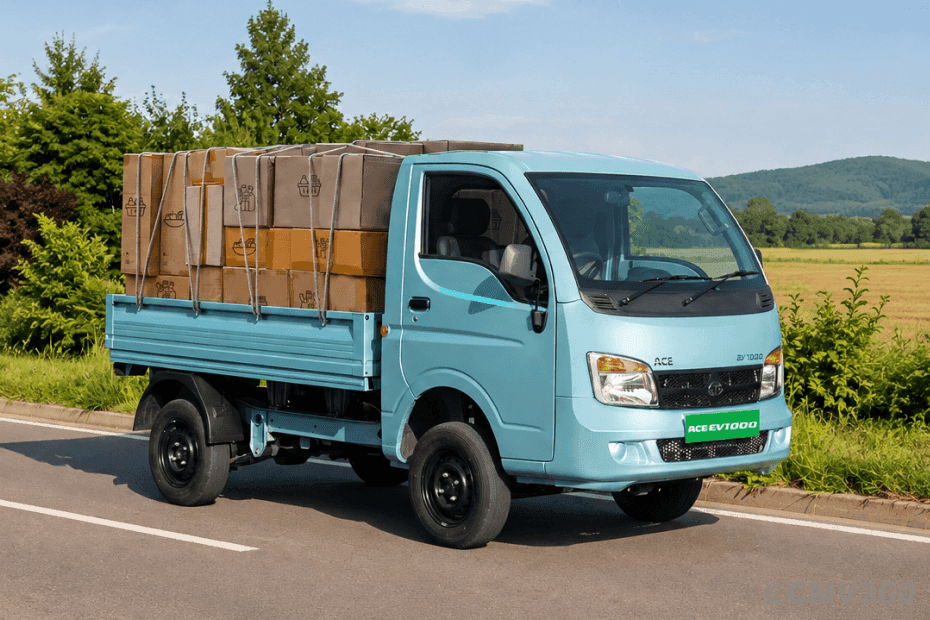
The success of the Tata Ace is evident in its sales figures, crossing the one-million mark in November 2012. It provided Tata Motors with a robust platform for top-line growth and played a crucial role in maintaining its market share. The Tata Ace has continued to evolve, with the introduction of the Tata Ace EV marking a significant leap forward.
Around the same time, then-chairman Ratan Tata pushed the group to find possibilities for growth in the domestic market, particularly at the bottom of the pyramid. The Tata Ace was an ideal vehicle for that purpose. Tata was thrilled when Wagh delivered a presentation in March 2001. A 10-minute presentation lasted for 45 minutes and at the end, Tata Motors decided to manufacture this product.
Conception and Challenges
Despite market demand, Tata Motors' upper management hesitated to introduce a four-wheeled vehicle in the sub-four-tonne segment. However, with Ratan Tata's encouragement, Wagh's team persisted. Despite a strong self-sufficient team and support from high management, the project encountered numerous challenges. It started with the engine.
Aside from a level of refinement, the team determined the engine's cost, fuel efficiency, and emission criteria. Without an engine, the project would have failed. Then the company decided to develop a two-cylinder version of the four-cylinder Indica engine in-house. It was an uncertain choice because the market offered either a single-cylinder or a four-cylinder engine.
Developing a two-cylinder engine proved difficult. Its original performance (in terms of noise levels, power, fuel efficiency, and pollution standards) was superior to that of a single-cylinder engine, but significantly lower than that of a four-cylinder powertrain. The team continued to refine the performance, and by mid-2002, the engine was ready.
This was an important development as many competitors were forced to drop the idea of a small truck because they did not have a suitable engine and a few were forced to deploy the costlier common-rail-direct-fuel-injection engine. The engine became Tata Ace's unique selling point.
The vehicle's engine costs one-third of its competitors, provides optimal performance, including the fuel efficiency of a three-wheeler, and meets BS II and BS III standards. Even after many years of launching and several competitors, Tata Ace is best selling truck in India because of this engine.
The team does not hesitate to push new boundaries in product development. Normally, roughly 60% of a new truck's parts (in value terms) are outsourced. For the Tata Ace, this was raised to 80%. Tata Motors provided the design and cost targets to the vendors, and the vendors innovated and delivered.
After this, the team decided to test a semi-monocoque structure for the Tata Ace. In this design, the body is welded to the frame, enhancing the vehicle's weight efficiency. For the first time in the history of Tata Motors, the team implemented a systematic new product introduction process designed by Warwick Manufacturing Group.
The entire development process was separated into seven stages, each with a set of criteria that must be completed before the project may proceed to the next level. As per the reports, Tata Ace failed to pass through the doorway more than once. The entire concept of the vehicle has to be modified extensively.
This process helped the company to reduce waste and save time. The vehicle was completed on time in early 2005, and it fulfilled inflation-indexed cost requirements. The cost of development was Rs 200 crore which includes the cost of establishing the 30,000-unit capacity in Pune.
When the Ace was introduced in May 2005, it took the market by storm. Tata Motors had the first-mover advantage. Other manufacturers rushed in to capitalize on Ace's success, but they are still unable to compete. Today, every fourth truck sold in India is a Tata Ace. It has created an entirely new segment, the small light commercial vehicle, pushing competitors to follow in its footsteps.
Journey of Tata Ace
The following are the significant milestones of the Tata Ace Journey:
2005: Tata Ace, India’s first mini-truck, launched.
2006: Tata Ace HT launched. Tata Ace wins the 'BBC-Top Gear' Design of the Year 2006 Award.
2007: Tata Ace crosses the 1 lakh sales mark. Tata Magic, for passenger transportation, launched.
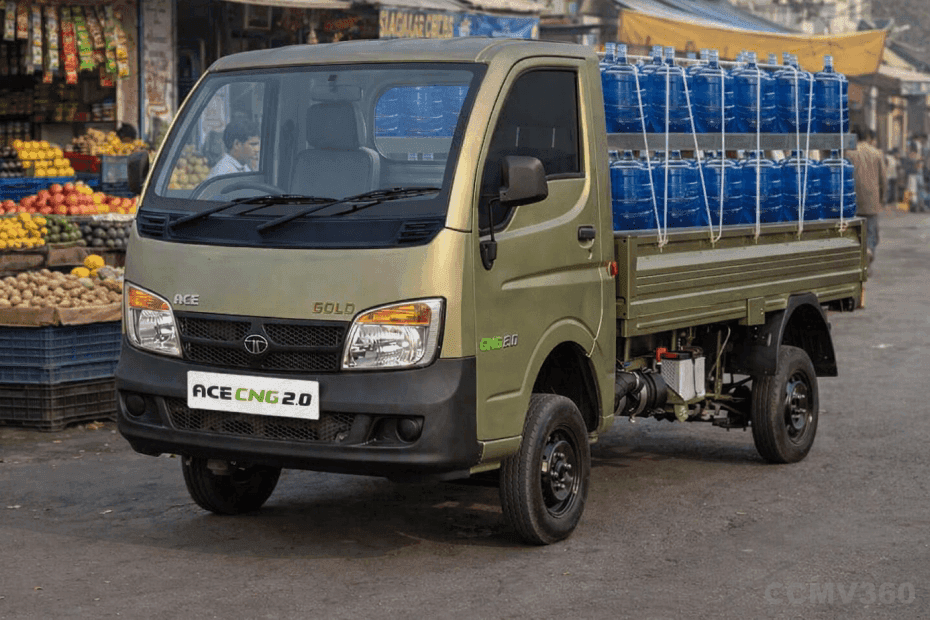
2008: Dedicated Plant set up at Pantnagar and Tata Ace CNG Mini trucks launched.
2009: Tata Super Ace and Tata Ace EX were launched and 5 Lakh Sales in 5 Years milestone achieved.
2010: Tata Ace becomes India's first 1-lakh-per-year CV brand. Total sales cross the 5 lakh mark and Tata Ace Zip Mini trucks were launched.
2011: Tata Magic IRIS and Tata Ace Zip launch.
2012: Total Ace Family celebrates 1 million units sold and in the same year Tata Super Ace Mint Mini trucks launched.
2014: New Super Ace Mint launches.
2015: Ace Mega Small Pickup and Tata Ace Mega Pickup launch.
2016: Ace Zip CNG and Tata Ace XL Mini Trucks launch.
2017: Introduction of XL range and Tata Ace Family crosses the 2 million mark.
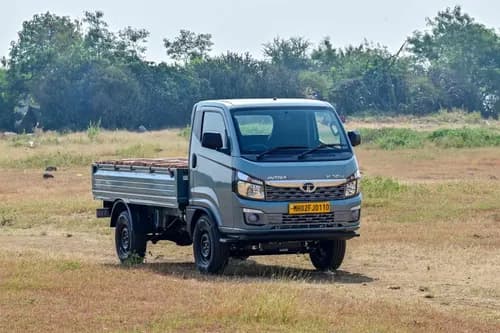
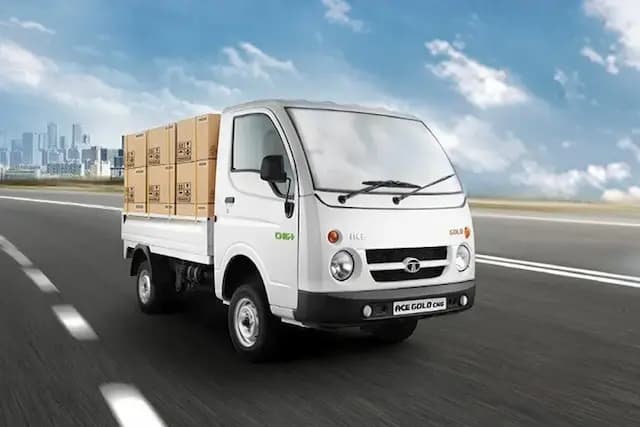
2018: Ace Gold launches.
2020: Ace Gold Petrol launches.
Today, the Tata Ace Gold Petrol BS6 and Tata ace ev are the latest additions.
Also Read: Tata Ace: The Best Option for Your Company
CMV360 Says
The Tata Ace is a popular mini-truck in India, loved by customers since its launch in 2005. It's tough and reliable, perfect for delivering goods to every corner of the country. From delivering online orders to running food trucks, the Tata Ace is everywhere, helping businesses grow and people succeed.
Experience the convenience and power of the Tata Ace for your business needs! Visit our website cmv360 today to explore the range of Tata Ace models tailored to suit your budget and demands. With just a click, you can book the perfect model that fits your requirements. Start your entrepreneurial journey with the Tata Ace by your side.

Hi there! I'm Priya. From trucks to vans and everything in between, I'm here to provide you with up-to-date in .....