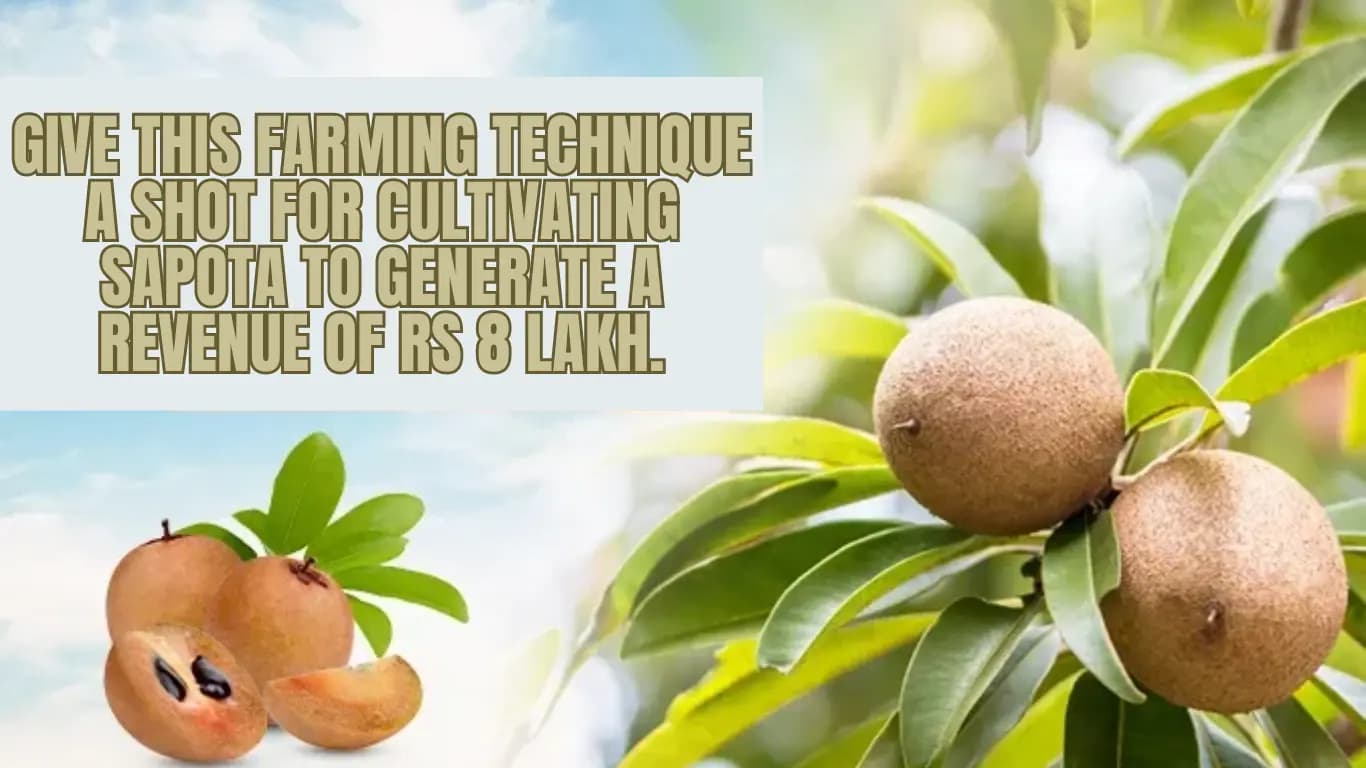
Give this farming technique a shot for cultivating Sapota to generate a revenue of Rs 8 Lakh
 Add CMV360 on Google
Sapota cultivation: Profitable venture for farmers. Government subsidies are available. High yields. Sustainable income. Ideal climate and soil are crucial.

By Robin Kumar Attri
Key Highlights
- Sapota cultivation yields double profits.
- Government subsidies reduce initial costs.
- Ideal climate: warm, humid; soil: sandy loam.
- High-yield varieties like PKM 2 are recommended.
In recent years, farmers across the nation have been exploring avenues beyond traditional crops like grains and pulses. Among these alternatives, sapota cultivation emerges as a promising venture, offering substantial returns with relatively low investment and effort.
Also Read: Are Zinc and Copper Essential for Better Crop Yield?
Doubling Profits with Sapota Cultivation
One of the key attractions of sapota cultivation is its remarkable profit potential. Compared to conventional crops, sapota farming can yield twice the profits, making it an attractive option for farmers looking to enhance their earnings. Moreover, with government subsidies available for sapota cultivation, the initial investment required is significantly reduced. The longevity of sapota trees further adds to its appeal, as a single tree can bear fruit for up to 50 years, ensuring a sustained and reliable income source for farmers. On average, farmers stand to earn between Rs 7 to 8 lakh per year from sapota cultivation, making it a lucrative venture.
Ideal Climate and Soil Conditions
Successful sapota cultivation relies on favorable climate and soil conditions. Sandy loam and medium black soil with a pH value between 6 to 8 are considered optimal for sapota growth. Being a tropical fruit, sapota thrives in warm, humid climates, with trees yielding fruits twice a year, typically from January to February and May to July.
Varieties for Enhanced Yield
Farmers have a plethora of sapota varieties to choose from, each with its unique characteristics and yield potential. Hybrid varieties like PKM 2 are renowned for their high yields and robust growth, making them popular choices among cultivators. Selecting the right variety tailored to specific soil and climate conditions can significantly impact production and profitability.
Cultivation Techniques
Sapota cultivation involves several steps, starting from nursery preparation to planting saplings and subsequent maintenance. Proper pit preparation, timely application of manure, and judicious use of fertilizers are crucial for healthy tree growth and optimal fruit production. Drip irrigation, a water-efficient method, is recommended for sapota cultivation, ensuring consistent moisture levels essential for tree health and fruit development.
Harvesting and Subsidy Benefits
Harvesting of sapota fruits occurs from July to September, with farmers exercising caution to ensure fruits are harvested at the right stage of ripeness. Government subsidies, often available through initiatives like the National Horticulture Mission, further incentivize sapota cultivation by covering a significant portion of the associated costs. Farmers can avail themselves of subsidies, reducing the financial burden and enhancing profitability.
Profit Projection
The profitability of sapota cultivation becomes visible as trees mature and begin to yield fruit. Typically, sapota trees start bearing fruit around four years after planting, with substantial yields achieved after five years. As the trees mature, they can produce over three quintals of fruit annually, translating to significant profits for farmers. In a hectare of land, earnings of up to Rs 8 lakh per year are achievable through sapota cultivation, making it a financially rewarding attempt.
Also Read: State Government Introduces Online Registration System for Farmer Schemes
CMV360 Says
Sapota cultivation presents a win-win opportunity for farmers, offering not only financial rewards but also contributing to diversification in agriculture. With the right techniques, support, and investment, farmers can harness the full potential of sapota cultivation, securing a sustainable income for years to come. As the agricultural landscape evolves, sapota farming stands out as a viable and profitable alternative, empowering farmers and driving economic growth in rural communities.

Robin Kumar Attri is a content and video professional with 2.7 years of experience in the commercial vehicle d .....