Assam’s Roads Empty: Transport Strike Against New Hit-and-Run Penalties Begins
 Add CMV360 on Google
Explore the impact of Assam’s 48-hour transport strike as commuters face challenges due to halted services. The protest against the new hit-and-run law has led to widespread disruption, with calls for the legislation’s withdrawal. Stay informed on the lat

By Ayushi Gupta
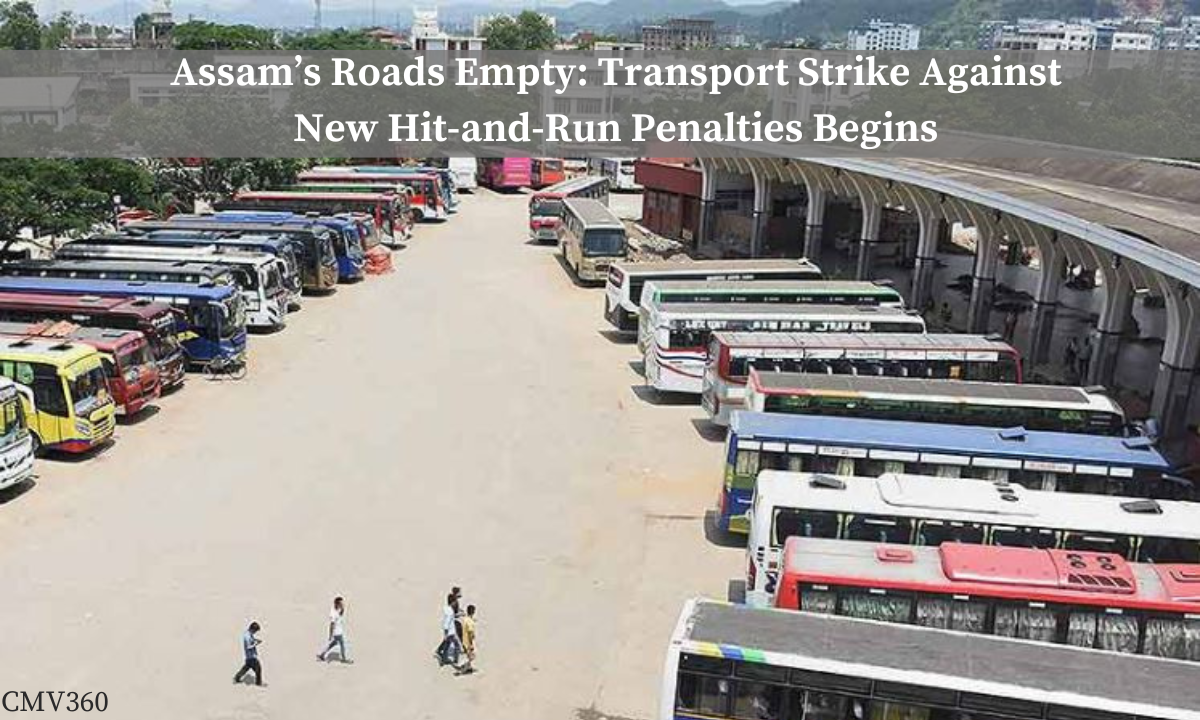
In Assam, a 48-hour transport strike has commenced, causing a major disruption in the state’s public and commercial transportation services. The strike, which began at 5 am on Friday and is scheduled to end at 5 am on Sunday, has left many commuters stranded as buses, taxis, and ride-sharing services ceased operations with the protest.
Ramen Das, the spokesperson for the Assam Motor Worker Associations’ Joint Platform, stated, “The government only wants to blame drivers for any unfortunate incident even if they may not have committed the crime. Instead of improving road conditions, they are penalizing the poor drivers.”
The strike is a direct response to the proposed Bharatiya Nyaya Sanhita (BNS), intended to replace the Indian Penal Code (IPC). The new legislation introduces stringent penalties for hit-and-run incidents, including up to a decade of imprisonment or a hefty fine of ₹7 lakh for drivers who flee accident scenes without notifying law enforcement or authorities. This marks a significant increase from the previous two-year sentence stipulated by the IPC.
Negotiations with state officials on Thursday night did not deliver any positive outcomes, leading to the decision to proceed with the strike. The transporters’ team has also called upon private vehicle owners to support the movement, emphasizing that the new law affects all drivers, regardless of vehicle type.
As a result of the strike, fuel stations across Assam have witnessed long queues as residents rush to fill their tanks amidst concerns over potential fuel shortages. The transport sector’s stand against the new hit-and-run law reflects the broader discontent with the current road safety measures and the legal framework governing driver accountability.

With over 5 years of experience, I craft engaging content on commercial vehicles, blending expertise and creat .....